


A Comparative Study of Whole Body Vibration Training and Pelvic Floor Muscle Training on Women's Stress Urinary Incontinence: Three- Month Follow- Up
- PMID: 27047560
- PMCID: PMC4818376
A Comparative Study of Whole Body Vibration Training and Pelvic Floor Muscle Training on Women's Stress Urinary Incontinence: Three- Month Follow- Up
Abstract
Objective: To determine whether Whole Body Vibration Training (WBVT) is effective at improving pelvic floor muscles strength in women with Stress Urinary Incontinence (SUI).
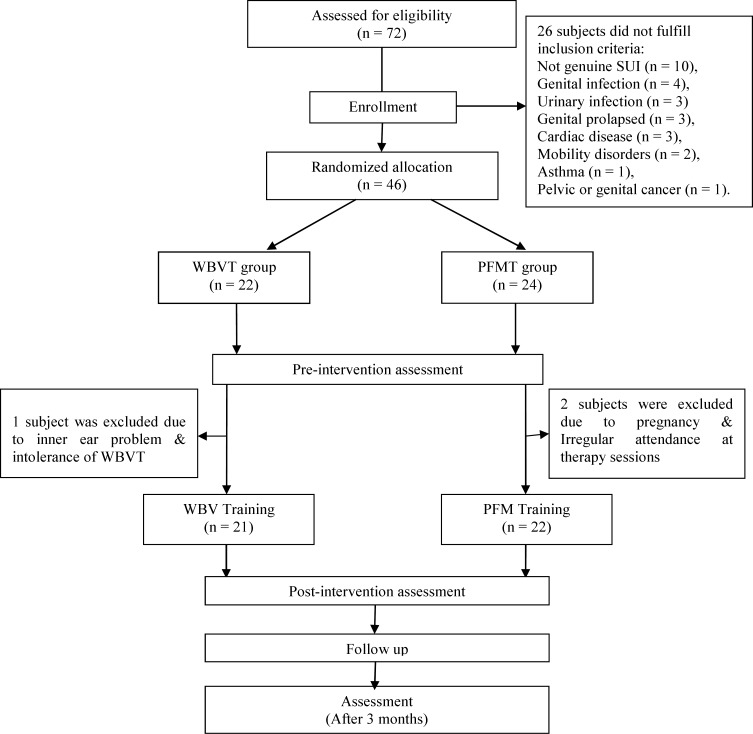
Materials and methods: The study was designed as a randomized clinical trial. 43 women with SUI were randomly assigned in two groups; WBVT and Pelvic Floor Muscle Training (PFMT) and received interventions for four weeks. Pelvic floor muscle (PFM) strength, quality of life and incontinence intensity were evaluated. All measurements were conducted pre and post intervention and also after 3 months in all participants. The ANOVA and the independent sample t test were applied respectively to determine the differences in each group and between the groups.
Results: This study showed the WBVT protocol in this study was effective in pelvic floor muscles strength similar to PFMT, and also in reducing the severity of incontinence and increasing I-QOL questionnaire score. We found significant differences in each group pre and post intervention (p = 0.0001); but no significant difference in comparison of two groups' outcomes. Also after three-month follow up, there was no significant difference between groups.
Conclusion: The findings of this study showed the beneficial effects of WBVT in improving pelvic floor muscles strength and quality of life in patients with urinary incontinence in four-week treatment period and after three months follow up.
Keywords: Pelvic Floor Muscle Training; RCT; Stress Urinary Incontinence; Whole Body Vibration Training.
Figures
References
-
- Viktrup L, Koke S, Burgio KL, Ouslander JG. Stress urinary incontinence in active elderly women. Southern medical journal. 2005;98:79–89. - PubMed
-
- Kashanian M, Ali SS, Nazemi M, Bahasadri S. Evaluation of the effect of pelvic floor muscle training (PFMT or Kegel exercise) and assisted pelvic floor muscle training (APFMT) by a resistance device (Kegelmaster device) on the urinary incontinence in women “comparison between them: a randomized trial”. European Journal of Obstetrics & Gynecology and Reproductive Biology. 2011;159:218–23. - PubMed
-
- Cammu H, Van Nylen M, Amy J. A 10‐year follow‐up after Kegel pelvic floor muscle exercises for genuine stress incontinence. BJU international. 2000;85:655–8. - PubMed
-
- Dumoulin C, Hay-Smith J. Pelvic floor muscle training versus no treatment for urinary incontinence in women. A Cochrane systematic review. European journal of physical and rehabilitation medicine. 2008;44:47–63. - PubMed
-
- Lo TS, Tseng LH, Lin YH, Liang CC, Lu CY, Pue LB. Effect of extracorporeal magnetic energy stimulation on bothersome lower urinary tract symptoms and quality of life in female patients with stress urinary incontinence and overactive bladder. Journal of Obstetrics and Gynaecology Research. 2013;39:1526–32. - PubMed
LinkOut - more resources
Full Text Sources
Medical