


Muscle, functional and cognitive adaptations after flywheel resistance training in stroke patients: a pilot randomized controlled trial
- PMID: 27052303
- PMCID: PMC4823904
- DOI: 10.1186/s12984-016-0144-7
Muscle, functional and cognitive adaptations after flywheel resistance training in stroke patients: a pilot randomized controlled trial
Abstract
Background: Resistance exercise (RE) improves neuromuscular function and physical performance after stroke. Yet, the effects of RE emphasizing eccentric (ECC; lengthening) actions on muscle hypertrophy and cognitive function in stroke patients are currently unknown. Thus, this study explored the effects of ECC-overload RE training on skeletal muscle size and function, and cognitive performance in individuals with stroke.
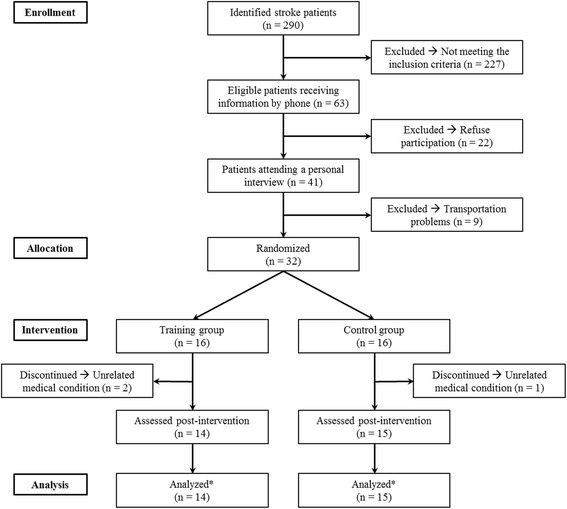
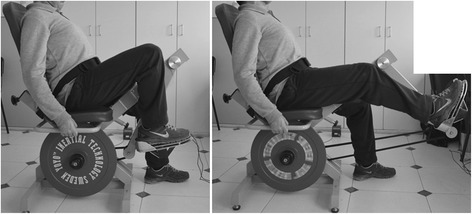
Methods: Thirty-two individuals with chronic stroke (≥6 months post-stroke) were randomly assigned into a training group (TG; n = 16) performing ECC-overload flywheel RE of the more-affected lower limb (12 weeks, 2 times/week; 4 sets of 7 maximal closed-chain knee extensions; <2 min of contractile activity per session) or a control group (CG; n = 16), maintaining daily routines. Before and after the intervention, quadriceps femoris volume, maximal force and power for each leg were assessed, and functional and dual task performance, and cognitive functions were measured.
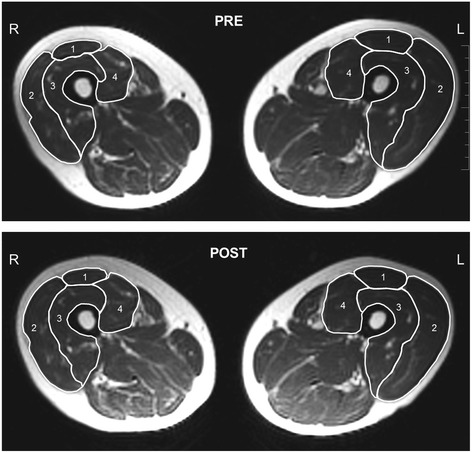
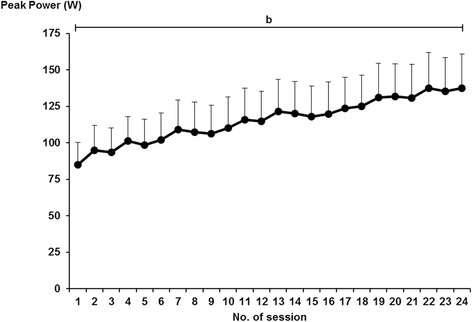
Results: Quadriceps femoris volume of the more-affected leg increased by 9.4 % in TG. Muscle power of the more-affected, trained (48.2 %), and the less-affected, untrained limb (28.1 %) increased after training. TG showed enhanced balance (8.9 %), gait performance (10.6 %), dual-task performance, executive functions (working memory, verbal fluency tasks), attention, and speed of information processing. CG showed no changes.
Conclusion: ECC-overload flywheel resistance exercise comprising 4 min of contractile activity per week offers a powerful aid to regain muscle mass and function, and functional performance in individuals with stroke. While the current intervention improved cognitive functions, the cause-effect relationship, if any, with the concomitant neuromuscular adaptations remains to be explored.
Trial registration: Clinical Trials NCT02120846.
Keywords: Eccentric overload; Executive function; Muscle hypertrophy; Muscle-brain interaction.
Figures
References
-
- Hedlund M, Sojka P, Lundstrom R, Lindstrom B. Insufficient loading in stroke subjects during conventional resistance training. Adv Physiother. 2012;14:18–28. doi: 10.3109/14038196.2012.658861. - DOI
Publication types
MeSH terms
Associated data
LinkOut - more resources
Full Text Sources
Other Literature Sources
Medical
Miscellaneous
