


Consumption of Quercetin and Quercetin-Containing Apple and Cherry Extracts Affects Blood Glucose Concentration, Hepatic Metabolism, and Gene Expression Patterns in Obese C57BL/6J High Fat-Fed Mice
- PMID: 27052533
- PMCID: PMC4841928
- DOI: 10.3945/jn.115.228817
Consumption of Quercetin and Quercetin-Containing Apple and Cherry Extracts Affects Blood Glucose Concentration, Hepatic Metabolism, and Gene Expression Patterns in Obese C57BL/6J High Fat-Fed Mice
Abstract
Background: Intake of polyphenols and polyphenol-rich fruit extracts has been shown to reduce markers of inflammation, diabetes, and hepatic complications that result from the consumption of a high-fat (HF) diet.
Objective: The objective of this study was to determine whether mice fed polyphenol-rich apple peel extract (AE), cherry extract (CE), and quercetin, a phytochemical abundant in fruits including apples and cherries, would modulate the harmful effects of adiposity on blood glucose regulation, endocrine concentrations, and hepatic metabolism in HF-fed C57BL/6J male mice.
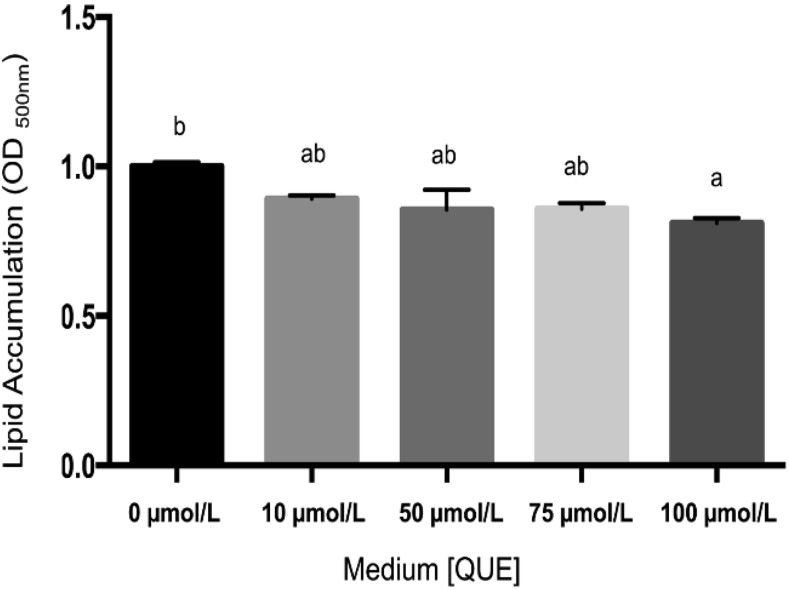
Methods: Groups of 8-wk-old mice (n = 8 each) were fed 5 diets for 10 wk, including low-fat (LF; 10% of total energy) and HF (60% of total energy) control diets and 3 HF diets containing polyphenol-rich AE, CE, and quercetin (0.2% wt:wt). Also, an in vitro study used HepG2 cells exposed to quercetin (0-100 μmol/L) to determine whether intracellular lipid accumulation could be modulated by this phytochemical.
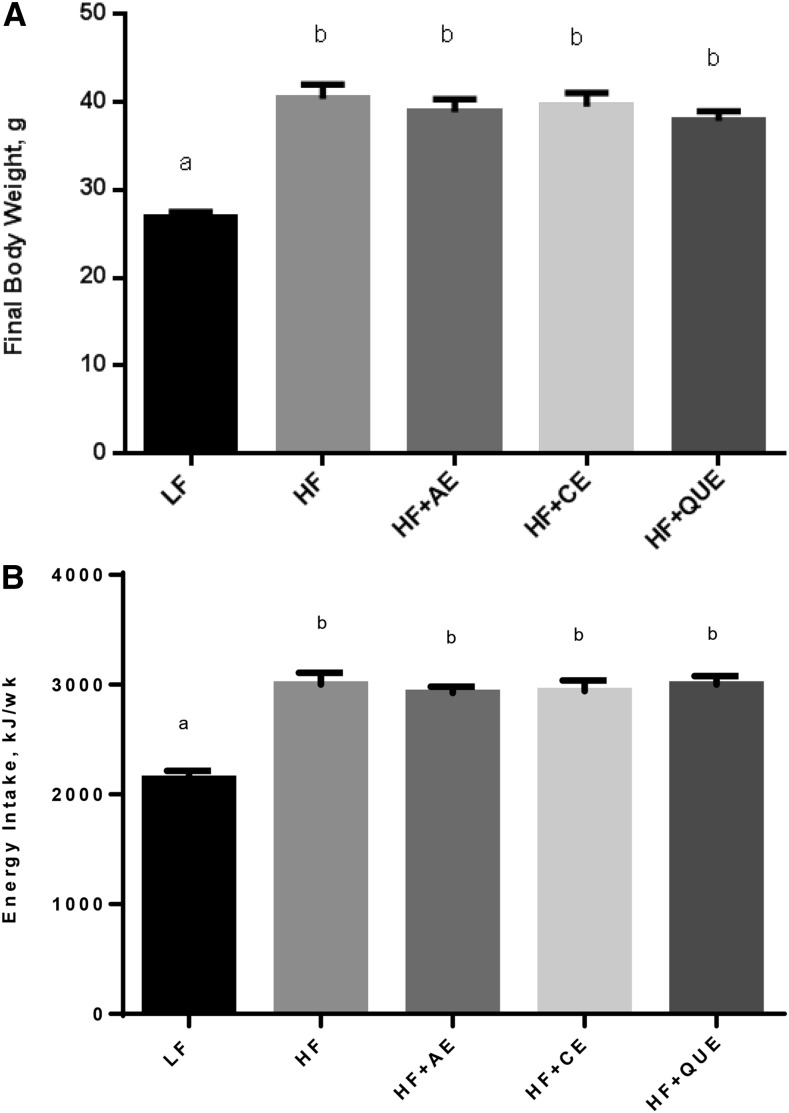
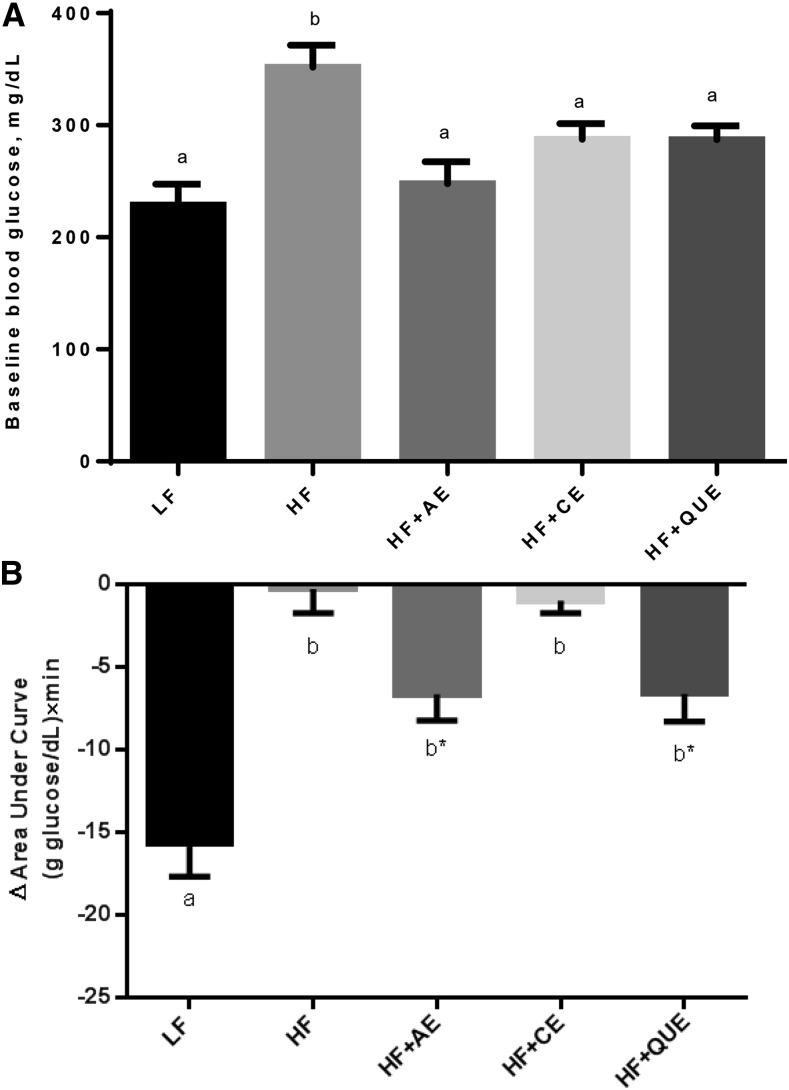
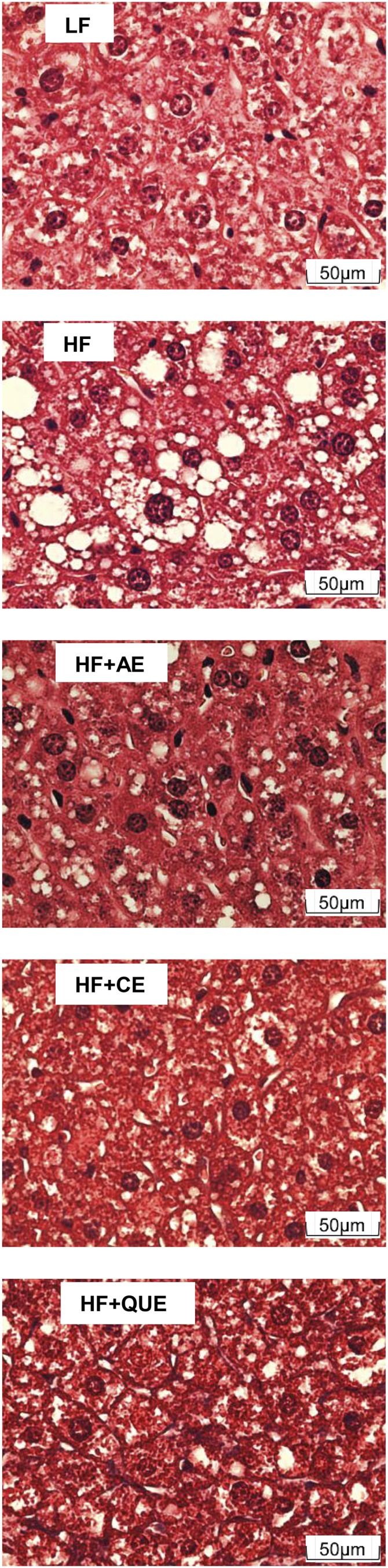
Results: Mice fed the HF control diet consumed 36% more energy, gained 14 g more body weight, and had ∼50% elevated blood glucose concentrations (all P < 0.05) than did LF-fed mice. Mice fed HF diets containing AE, CE, or quercetin became as obese as HF-fed mice, but had significantly lower blood glucose concentrations after food deprivation (-36%, -22%, -22%, respectively; P < 0.05). Concentrations of serum C-reactive protein were reduced 29% in quercetin-fed mice compared with HF-fed controls (P < 0.05). A qualitative evaluation of liver tissue sections suggested that fruit phytochemicals may reduce hepatic lipid accumulation. A quantitative analysis of lipid accumulation in HepG2 cells demonstrated a dose-dependent decrease in lipid content in cells treated with 0-100 μmol quercetin/L (P < 0.05).
Conclusions: In mice, consumption of AE, CE, or quercetin appears to modulate some of the harmful effects associated with the consumption of an obesogenic HF diet. Furthermore, in a cell culture model, quercetin was shown to reduce intracellular lipid accumulation in a dose-dependent fashion.
Keywords: C57BL/6J mice; PPAR-α; apples; cherries; high-fat diet; phytochemicals; polyphenols; quercetin.
© 2016 American Society for Nutrition.
Conflict of interest statement
Author disclosures: SM Snyder, B Zhao, T Luo, C Kaiser, G Cavender, J Hamilton-Reeves, DK Sullivan, and NF Shay, no conflicts of interest.
Figures
References
-
- Flegal KM, Carroll MD, Ogden CL, Curtin LR. Prevalence and trends in obesity among US adults, 1999–2008. JAMA 2010;303:235–41. - PubMed
-
- McCune LM, Kubota C, Stendell-Hollis NR, Thomson CA. Cherries and health: a review. Crit Rev Food Sci Nutr 2011;51:1–12. - PubMed
-
- Gourineni V, Shay NF, Chung S, Sandhu AK, Gu L. Muscadine grape (Vitis rotundifolia) and wine phytochemicals prevented obesity-associated metabolic complications in C57BL/6J mice. J Agric Food Chem 2012;60:7674–81. - PubMed
Publication types
MeSH terms
Substances
Grants and funding
LinkOut - more resources
Full Text Sources
Other Literature Sources
Medical
Research Materials
Miscellaneous
