


A systematic review of interventions to improve prevention of mother-to-child HIV transmission service delivery and promote retention
- PMID: 27056361
- PMCID: PMC4824870
- DOI: 10.7448/IAS.19.1.20309
A systematic review of interventions to improve prevention of mother-to-child HIV transmission service delivery and promote retention
Abstract
Introduction: The success of prevention of mother-to-child transmission of HIV (PMTCT) is dependent upon high retention of mother-infant pairs within these programmes. This is a systematic review to evaluate the effectiveness of interventions that aim to improve PMTCT service delivery and promote retention throughout the PMTCT steps.
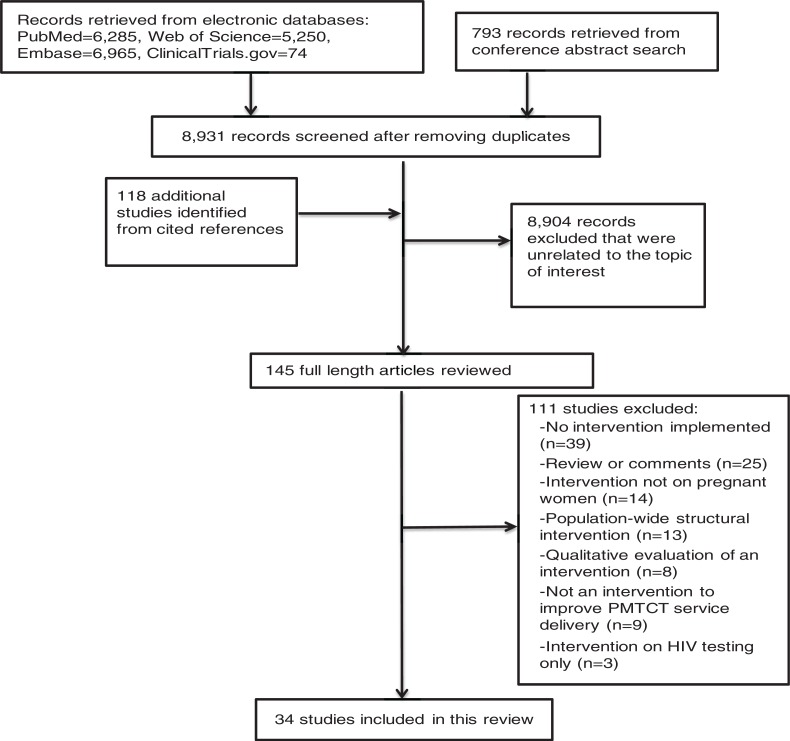
Methods: Selected databases were searched for studies published in English (up to September 2015). Outcomes of interest included antiretroviral (ARV) drugs or antiretroviral therapy (ART) initiation among HIV-positive pregnant and/or breastfeeding women and their infants, retention into PMTCT programs, the uptake of early infant diagnosis (EID) of HIV and infant HIV status. Risk ratios and random-effect meta-analysis were used in the analysis.
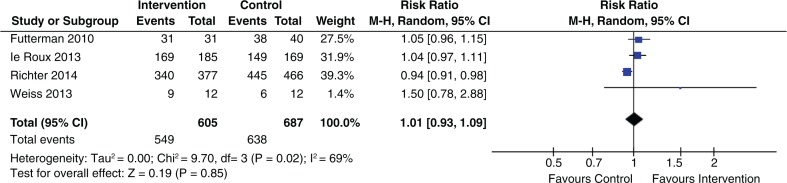
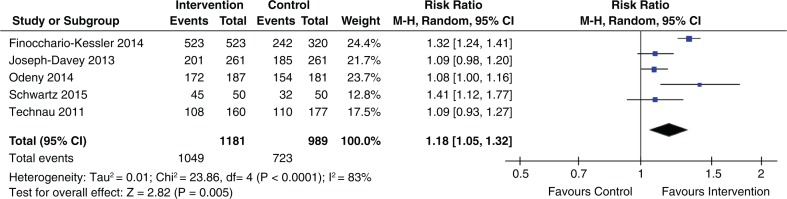
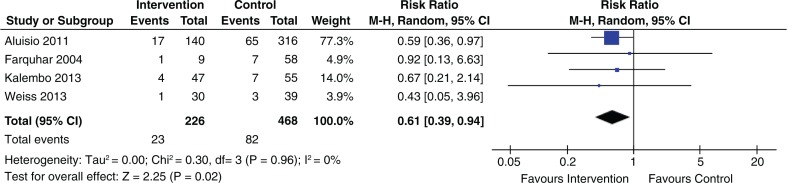
Results: Interventions assessed in the 34 identified studies included male partner involvement in PMTCT, peer mentoring, the use of community health workers (CHWs), mobile phone-based reminders, conditional cash transfer, training of midwives, integration of PMTCT services and enhanced referral. Five studies (two randomized) that evaluated mobile phone-based interventions showed a statistically significant increase (pooled RR 1.18; 95% CI 1.05 to 1.32, I(2)=83%) in uptake of EID of HIV at around six weeks postpartum. Male partner involvement in PMTCT was associated with reductions in infant HIV transmission (pooled RR 0.61; 95% CI 0.39 to 0.94, I(2)=0%) in four studies (one randomized). Four studies (three randomized) that were grounded on psychological interventions reported non-significant results (pooled RR 1.01; 95% CI 0.93 to 1.09, I(2)=69%) in increasing ARV/ART uptake among HIV-positive pregnant and/or breastfeeding women and infant HIV testing (pooled RR 1.00; 95% CI 0.94 to 1.07, I(2)=45%). The effect of the other interventions on the effectiveness of improving PMTCT uptake was unclear. Heterogeneity of interventions limits these findings.
Conclusions: Our findings indicate that mobile phone-based reminders may increase the uptake of EID of HIV. Studies on male partner involvement in PMTCT reported reductions in infant HIV transmission. Stronger evidence is needed and future studies should determine the long-term effects of these interventions in improving retention throughout the PMTCT steps.
Keywords: community health worker; conditional cash transfer; home visit; infant ART initiation; integrated PMTCT services; male involvement; mobile phone-based reminders; peer mentoring.
Figures


References
-
- UNAIDS. The Gap Report. Geneva, Switzerland: UNAIDS; 2014.
-
- Gourlay A, Birdthistle I, Mburu G, Iorpenda K, Wringe A. Barriers and facilitating factors to the uptake of antiretroviral drugs for prevention of mother-to-child transmission of HIV in sub-Saharan Africa: a systematic review. J Int AIDS Soc. 2013;16(1) 18588, doi: http://dx.doi.org/10.7448/IAS.16.1.18588. - DOI - PMC - PubMed
Publication types
MeSH terms
Substances
LinkOut - more resources
Full Text Sources
Other Literature Sources
Medical
