


Protein Interaction Networks Link Schizophrenia Risk Loci to Synaptic Function
- PMID: 27056717
- PMCID: PMC5049524
- DOI: 10.1093/schbul/sbw035
Protein Interaction Networks Link Schizophrenia Risk Loci to Synaptic Function
Abstract
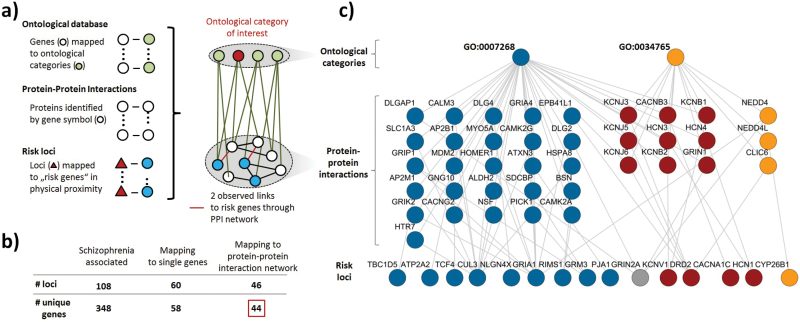
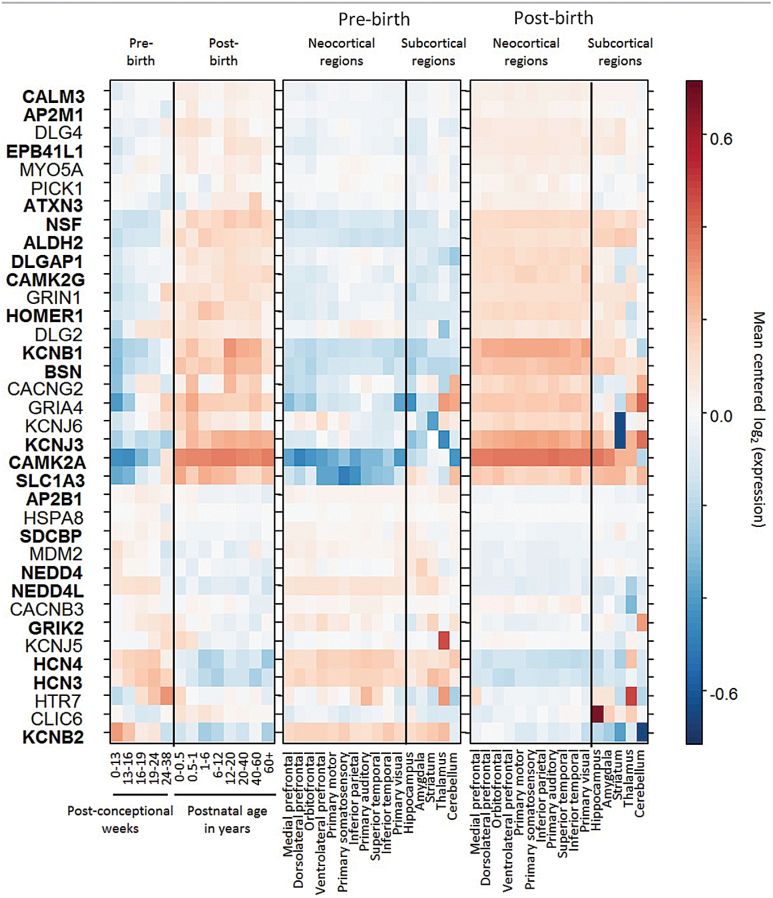
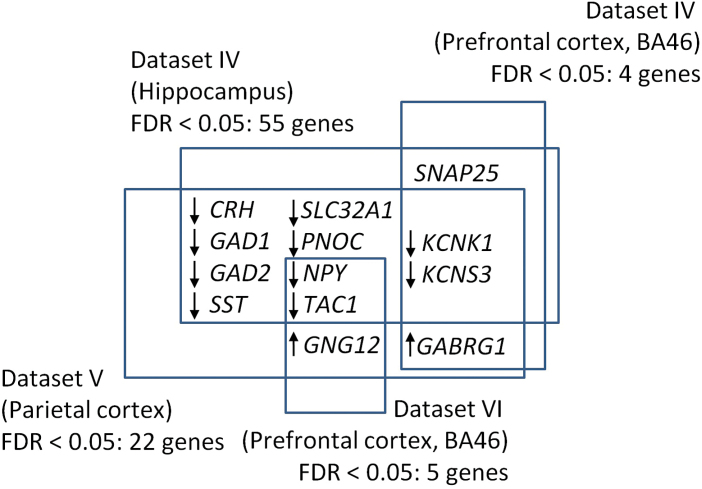
Schizophrenia is a severe and highly heritable psychiatric disorder affecting approximately 1% of the population. Genome-wide association studies have identified 108 independent genetic loci with genome-wide significance but their functional importance has yet to be elucidated. Here, we develop a novel strategy based on network analysis of protein-protein interactions (PPI) to infer biological function associated with variants most strongly linked to illness risk. We show that the schizophrenia loci are strongly linked to synaptic transmission (P FWE < .001) and ion transmembrane transport (P FWE = .03), but not to ontological categories previously found to be shared across psychiatric illnesses. We demonstrate that brain expression of risk-linked genes within the identified processes is strongly modulated during birth and identify a set of synaptic genes consistently changed across multiple brain regions of adult schizophrenia patients. These results suggest synaptic function as a developmentally determined schizophrenia process supported by the illness's most associated genetic variants and their PPI networks. The implicated genes may be valuable targets for mechanistic experiments and future drug development approaches.
Keywords: GWAS; functional analysis; genetics; pathway analysis.
© The Author 2016. Published by Oxford University Press on behalf of the Maryland Psychiatric Research Center.
Figures
References
-
- Sullivan PF, Kendler KS, Neale MC. Schizophrenia as a complex trait: evidence from a meta-analysis of twin studies. Arch Gen Psychiatry. 2003;60:1187–1192. - PubMed
-
- Purcell SM, Wray NR, Stone JL, et al. Common polygenic variation contributes to risk of schizophrenia and bipolar disorder. Nature. 2009;460:748–752. doi:http://dx.doi.org/10.1038/nature08185. - PMC - PubMed
Publication types
MeSH terms
LinkOut - more resources
Full Text Sources
Other Literature Sources
Medical
