


doi: 10.18632/oncotarget.8601.
How do the results of the RADIANT trials impact on the management of NET patients? A systematic review of published studies
Affiliations
- PMID: 27057638
- PMCID: PMC5190138
- DOI: 10.18632/oncotarget.8601
Item in Clipboard
How do the results of the RADIANT trials impact on the management of NET patients? A systematic review of published studies
Oncotarget.
.
Abstract
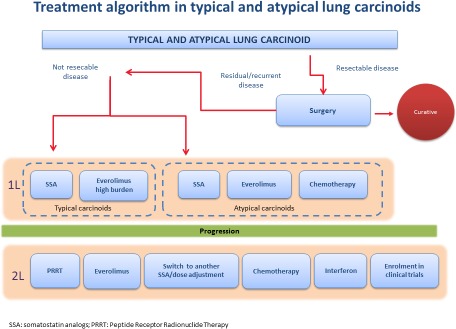
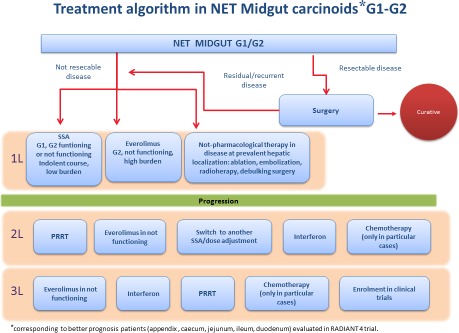
In the last five years, everolimus has demonstrated efficacy in the treatment of neuroendocrine tumors (NETs) of different origins; its efficacy and safety were explored in the RADIANT trials, the last of which (RADIANT-4) has been recently published (December 2015). Overall, evidence collected from the RADIANT studies holds promise to change clinical practice for the treatment of NETs.In this paper, we comment on the role of everolimus within the therapeutic algorithm for NETs treatment, based on the systematic analysis of the RADIANT trials and our experience.
Keywords: everolimus; neuroendocrine tumors.
Conflict of interest statement
There is no conflict of interest.
Figures
References
-
- Fraenkel M, Kim MK, Faggiano A, Valk GD. Epidemiology of gastroenteropancreatic neuroendocrine tumours. Best Pract Res Clin Gastroenterol. 2012;26:691–703. - PubMed
-
- Barbieri F, Albertelli M, Grillo F, Mohamed A, Saveanu A, Barlier A, Ferone D, Florio T. Neuroendocrine tumors: insights into innovative therapeutic options and rational development of targeted therapies. Drug Discov Today. 2014;19:458–68. - PubMed
-
- Manfredi GI, Dicitore A, Gaudenzi G, Caraglia M, Persani L, Vitale G. PI3K/Akt/mTOR signaling in medullary thyroid cancer: a promising molecular target for cancer therapy. Endocrine. 2015;48:363–70. - PubMed
-
- Yao JC, Phan AT, Chang DZ, Wolff RA, Hess K, Gupta S, Jacobs C, Mares JE, Landgraf AN, Rashid A, Meric-Bernstam F. Efficacy of RAD001 (everolimus) and octreotide LAR in advanced low- to intermediate-grade neuroendocrine tumors: results of a phase II study. J Clin Oncol. 2008;26:4311–8. - PMC - PubMed
Publication types
MeSH terms
Substances
LinkOut - more resources
Full Text Sources
Other Literature Sources
