


Omega-3 fatty acids for the treatment of dementia
- PMID: 27063583
- PMCID: PMC7117565
- DOI: 10.1002/14651858.CD009002.pub3
Omega-3 fatty acids for the treatment of dementia
Abstract
Background: Omega-3 polyunsaturated fatty acids (omega-3 PUFAs) from fish and plant sources are commonly considered as a promising non-medical alternative to improve brain functions and slow down the progression of dementia. This assumption is mostly based on findings of preclinical studies and epidemiological research. Resulting explanatory models aim at the role omega-3 PUFAs play in the development and integrity of the brain's neurons, their protective antioxidative effect on cell membranes and potential neurochemical mechanisms directly related to Alzheimer-specific pathology. Epidemiological research also found evidence of malnutrition in people with dementia. Considering this and the fact that omega-3 PUFA cannot be synthesised by humans, omega-3 PUFAs might be a promising treatment option for dementia.
Objectives: To assess the efficacy and safety of omega-3 polyunsaturated fatty acid (PUFA) supplementation for the treatment of people with dementia.
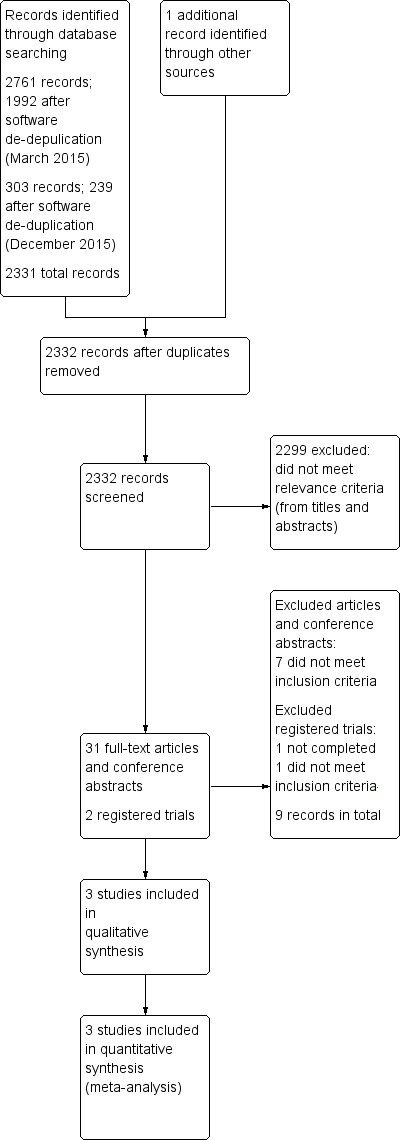
Search methods: We searched the Specialized Register of the Cochrane Dementia and Cognitive Improvement Group (ALOIS), MEDLINE, EMBASE, PsycINFO, CINAHL, ClinicalTrials.gov and the World Health Organization (WHO) portal/ICTRP on 10 December 2015. We contacted manufacturers of omega-3 supplements and scanned reference lists of landmark papers and included articles.
Selection criteria: We included randomised controlled trials (RCTs) in which omega-3 PUFA in the form of supplements or enriched diets were administered to people with Alzheimer's disease (AD), vascular dementia (VaD), dementia with Lewy bodies (DLB), Parkinson's disease dementia (PDD) or frontotemporal dementia (FTD).
Data collection and analysis: The primary outcome measures of interest were changes in global and specific cognitive functions, functional performance, dementia severity and adverse effects. Two review authors independently selected studies, extracted data and assessed the quality of trials according to the Cochrane Handbook for Systematic Reviews of Interventions. We rated the quality of the evidence using the GRADE approach. We received unpublished data from the trial authors and collected adverse effects information from the published articles. We conducted meta-analyses for available outcome measures at six months.
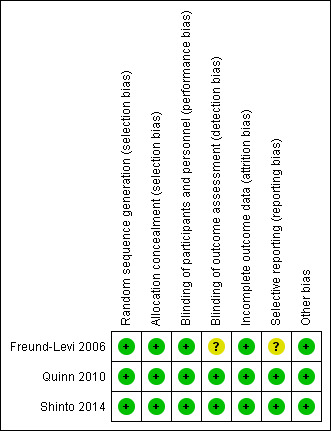
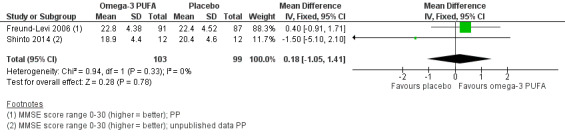
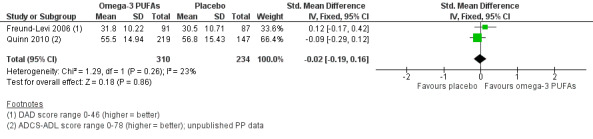
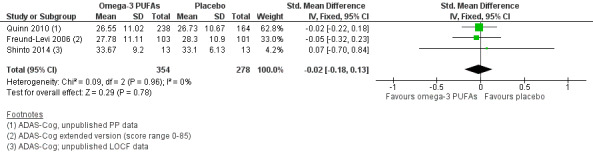
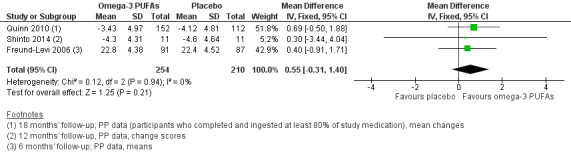
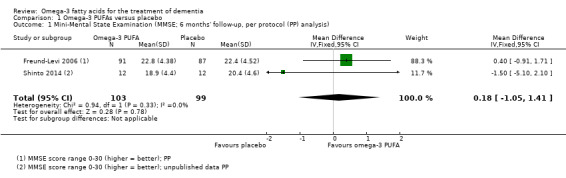
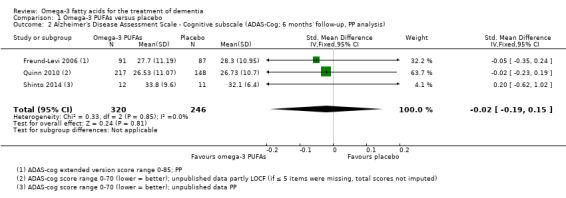
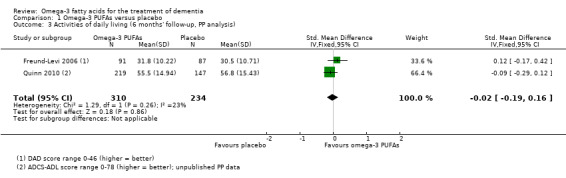
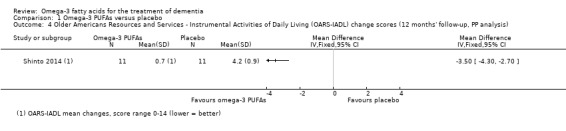
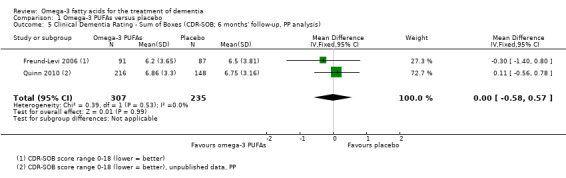
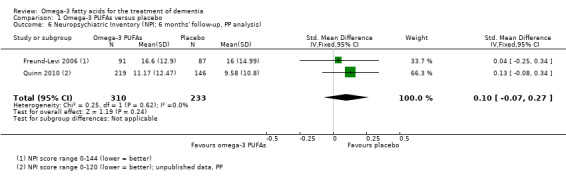
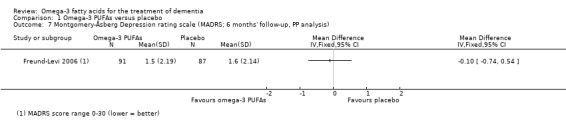
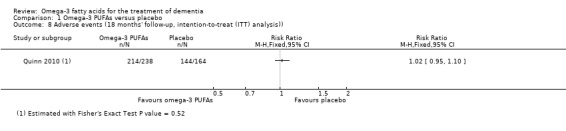
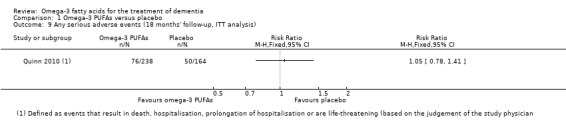
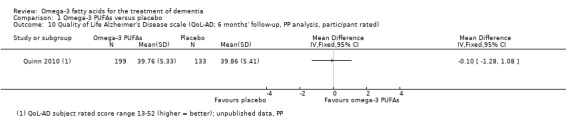
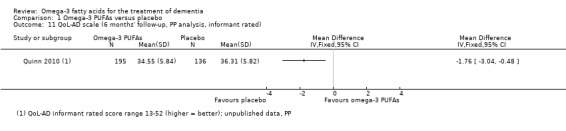
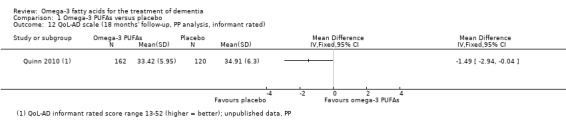
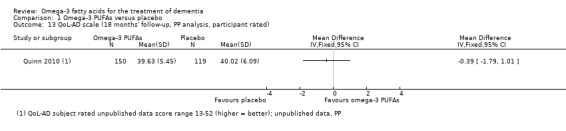
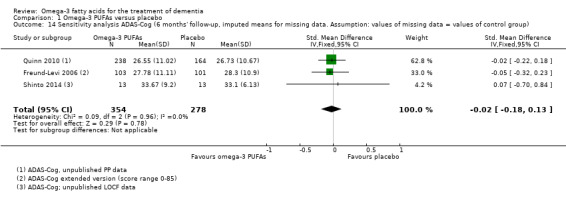
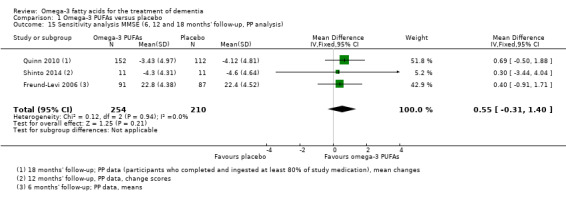
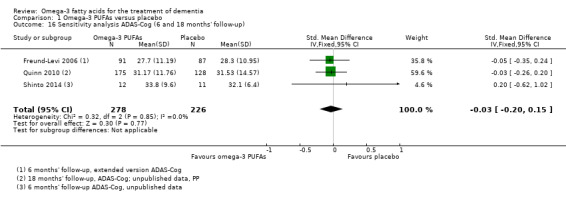
Main results: We included three comparable randomised, placebo-controlled trials investigating omega-3 PUFA supplements in 632 participants with mild to moderate AD over six, 12 and 18 months. We found no studies investigating other types of dementia. All trials were of high methodological quality. The overall quality of evidence for most of the outcomes was high.There was no evidence of a benefit from omega-3 PUFAs on cognitive function when measured at six months with the Alzheimer's Disease Assessment Scale - Cognitive subscale (standardised mean difference (SMD) -0.02, 95% confidence interval (CI) -0.19 to 0.15; 566 participants; 3 studies; high quality evidence) or Mini-Mental State Examination (mean difference (MD) 0.18, 95% CI -1.05 to 1.41; 202 participants; 2 studies; high quality evidence) or on activities of daily living (SMD -0.02, 95% CI -0.19 to 0.16; 544 participants; 2 studies; high quality evidence). There was also no effect at six months of treatment on severity of dementia measured with the Clinical Dementia Rating - Sum of Boxes (MD -0.00, 95% CI -0.58 to 0.57; 542 participants; 2 studies; high quality evidence) or on quality of life measured with the Quality of Life Alzheimer's Disease scale (MD -0.10, 95% CI -1.28 to 1.08; 322 participants; 1 study; high quality evidence). There was no difference at six months on mental health measured with the Montgomery-Åsberg Depression Rating Scale (MD -0.10, 95% CI -0.74 to 0.54; 178 participants: 1 study; high quality of evidence) or the Neuropsychiatric Inventory (SMD 0.10, 95% CI -0.07 to 0.27; 543 participants; 2 studies; high quality of evidence). One very small study showed a benefit for omega-3 PUFAs in instrumental activities of daily living after 12 months of treatment (MD -3.50, 95% CI -4.30 to -2.70; 22 participants; moderate quality evidence). The included studies did not measure specific cognitive function. The studies did not report adverse events well. Two studies stated that all adverse events were mild and that they did not differ in overall frequency between omega-3 PUFA and placebo groups. Data from one study showed no difference between groups in frequency of any adverse event (risk ratio (RR) 1.02, 95% CI 0.95 to 1.10; 402 participants; 1 study; moderate quality evidence) or any serious adverse event (RR 1.05, 95% CI 0.78 to 1.41; 402 participants; 1 study; high quality evidence) at 18 months of treatment.
Authors' conclusions: We found no convincing evidence for the efficacy of omega-3 PUFA supplements in the treatment of mild to moderate AD. This result was consistent for all outcomes relevant for people with dementia. Adverse effects of omega-3 PUFAs seemed to be low, but based on the evidence synthesised in this review, we cannot make a final statement on tolerability. The effects on other populations remain unclear.
Conflict of interest statement
None known.
Figures
Update of
References
References to studies included in this review
Freund‐Levi 2006 {published data only (unpublished sought but not used)}
-
- Eriksdotter M, Falahati F, Vedin I, Freund‐Levi Y, Hjorth E, Faxen‐Irving G, et al. Effects of omega‐3 fatty acid supplementation on plasma fatty acids, gender effects, and effects on cognition in Alzheimer's patients: the OmegAD study. Alzheimer's & Dementia 2014;40(4 Suppl):P455.
-
- Eriksdotter M, Vedin I, Falahati F, Freund‐Levi Y, Hjorth E, Faxen‐Irving G, et al. Plasma fatty acid profiles in relation to cognition and gender in Alzheimer's disease patients during oral omega‐3 fatty acid supplementation: the OmegAD study. Journal of Alzheimer's Disease 2015;48(3):805‐12. - PubMed
-
- Faxen‐Irving G, Freund‐Levi Y, Eriksdotter‐Jonhagen M, Basun H, Brismar K, Hjorth E, et al. Omega‐3 fatty acid supplementation effects on weight and appetite in patients with Alzheimer's disease: the Omega‐3 Alzheimer's Disease study. Journal of the American Geriatrics Society 2009;57:11‐7. - PubMed
-
- Faxen‐Irving G, Freund‐Levi Y, Eriksdotter‐Jonhagen M, Basun H, Hjorth E, Palmblad J, et al. Effects on transthyretin in plasma and cerebrospinal fluid by DHA‐rich n ‐ 3 fatty acid supplementation in patients with Alzheimer's disease: the OmegAD study. Journal of Alzheimer's disease 2013;36:1‐6. - PubMed
-
- Freund‐Levi Y, Basun H, Cederholm T, Faxen‐Irving G, Garlind A, Grut M, et al. Omega‐3 supplementation in mild to moderate Alzheimer's disease: effects on neuropsychiatric symptoms. International Journal of Geriatric Psychiatry 2008;23:161‐9. - PubMed
Quinn 2010 {published and unpublished data}
-
- Quinn J. Alzheimer's Disease Cooperative Study DHA primary analysis. Individual patient data (as supplied 22 May 2015). Data on file.
-
- Quinn J. Effects of docosahexaenoic acid (DHA) in slowing the progression of Alzheimer's disease. Neuropsychopharmacology 2006;31:S1‐69.
-
- Quinn J, Shinto L, Yurko‐Mauro K, Galasko D, Aisen P, Montine T. Biomarkers of fatty acid oxidation in a clinical trial of DHA for Alzheimer's disease. Alzheimer's & Dementia 2012;8(4):P585.
Shinto 2014 {published and unpublished data}
-
- Shinto L. Unpublished six months results. Individual patient data (as supplied 16 July 2015). Data on file.
References to studies excluded from this review
Carter 2006 {published data only}
-
- Carter J. A randomised placebo‐controlled trial of polyunsaturated omega‐3 fatty acid (PFA), in the treatment of dementia; a pilot study, 2006. www.isrctn.com/ISRCTN27372325 (accessed 31 March 2016).
Chiu 2008 {published data only}
-
- Chiu C‐C, Su K‐P, Cheng T‐C, Liu H‐C, Chang C‐J, Dewey ME, et al. The effects of omega‐3 fatty acids monotherapy in Alzheimer's disease and mild cognitive impairment: a preliminary randomized double‐blind placebo‐controlled study. Progress in Neuro‐psychopharmacology & Biological Psychiatry 2008;32:1538‐44. - PubMed
Corrigan 1991 {published data only}
-
- Corrigan FM, Rhijn A, Horrobin DF. Essential fatty acids in Alzheimer's disease. Annals of the New York Academy of Sciences 1991;640:250‐2. - PubMed
Hashimoto 2011 {published data only}
-
- Hashimoto M, Yamashita K, Kato S, Tamai T, Matsumoto I, Tanabe Y, et al. Beneficial effects of dietary docosahexaenoic acid intervention on cognitive function in elderly people with very mild dementia in Japan. Alzheimer's & Dementia 2011;7(4 Suppl):S610‐1.
Hashimoto 2012 {published data only}
-
- Hashimoto M, Yamashita K, Kato S, Tamai T, Mitarai M, Matsumoto I, et al. Beneficial effects of daily dietary omega‐3 polyunsaturated fatty acid supplementation on age‐related cognitive decline in elderly Japanese with very mild dementia: a 2‐year randomized, double‐blind, placebo‐controlled trial. Journal of Aging Research & Clinical Practice 2012;1(3):193‐201.
Mahmoudi 2014 {published data only}
NCT00867828 {published data only}
-
- NCT00867828. Multi‐center, double‐blind, placebo‐controlled, monotherapy study of Neptune Krill Oil (NKO™) in early stage Alzheimer's disease, 2009. clinicaltrials.gov/show/NCT00867828 (accessed 31 March 2016).
Terano 1999 {published data only}
-
- Terano T, Fujishiro S, Ban T, Yamamoto K, Tanaka T, Noguchi Y, et al. Docosahexaenoic acid supplementation improves the moderately severe dementia from thrombotic cerebrovascular diseases. Lipids 1999;34 Suppl:S345‐6. - PubMed
Additional references
APA 1987
-
- American Psychiatric Association. Diagnostic and StatisticalManual of Mental Disorders [American Psychiatric Association, 1987.]. Diagnostic and Statistical Manual of Mental Disorders. 3rd Edition. Washington D.C.: American Psychiatric Association, 1987.
APA 1994
-
- American Psychiatric Association. Diagnostic and Statistical Manual of Mental Disorders. 4th Edition. Washington D.C.: American Psychiatric Association, 1994.
APA 2013
-
- American Psychiatric Association. Diagnostic and Statistical Manual of Mental Disorders. 5th Edition. Arlington, VA: American Psychiatric Publishing, 2013.
Aranceta 2012
-
- Aranceta J, Perez‐Rodrigo C. Recommended dietary reference intakes, nutritional goals and dietary guidelines for fat and fatty acids: a systematic review. British Journal of Nutrition 2012;107 Suppl 2:S8‐22. - PubMed
Arterburn 2006
-
- Arterburn LM, Hall EB, Oken H. Distribution, interconversion, and dose response of n‐3 fatty acids in humans. American Journal of Clinical Nutrition 2006;83:1467S‐76S. - PubMed
Bailey 2013
-
- Bailey RL, Gahche JJ, Miller PE, Thomas PR, Dwyer JT. Why US adults use dietary supplements. JAMA International Medicine 2013;173:355‐61. - PubMed
Barnard 2014
-
- Barnard ND, Bush AI, Ceccarelli A, Cooper J, Jager CA, Erickson KI, et al. Dietary and lifestyle guidelines for the prevention of Alzheimer's disease. Neurobiology of Aging 2014;35:S74‐8. - PubMed
Bråne 2001
-
- Bråne G, Gottfries CG, Winblad B. The Gottfries‐Bråne‐Steen scale: validity, reliability and application in anti‐dementia drug trials. Dementia and Geriatric Cognitive Disorders 2001;12:1‐14. - PubMed
Burback 1999
-
- Burback D, Molnar FJ, John P, Man‐Son‐Hing M. Key methodological features of randomized controlled trials of Alzheimer's disease therapy. Dementia and Geriatric Cognitive Disorders 1999;10:534‐40. - PubMed
Burckhardt 2015
Campbell 2013
Cansev 2008
Cole 2009
Cummings 1994
-
- Cummings JL, Mega M, Gray K, Rosenberg‐Thompson S, Carusi D A, Gornbein J. The Neuropsychiatric Inventory: comprehensive assessment of psychopathology in dementia. Neurology 1994;44(12):2308‐14. - PubMed
Cummings 1997
-
- Cummings JL. The Neuropsychiatric Inventory: assessing psychopathology in dementia patients. Neurology 1997;48(5 Suppl 6):S10‐6. - PubMed
Cummings 2015
-
- Cummings J. Neuropsychiatric Inventory (NPI) setting the standard for Alzheimer research: FAQs. npitest.net/faqs.html (accessed 31 March 2016).
Dennis 2013
Dickinson 2014
-
- Dickinson A, Blatman J, El‐Dash N, Franco JC. Consumer usage and reasons for using dietary supplements: report of a series of surveys. Journal of the American College of Nutrition 2014;33:176‐82. - PubMed
Duru 2008
Dysken 2014
EFSA 2010
-
- EFSA Panel on Dietetic Products, Nutrition, Allergies (NDA). Scientific Opinion on Dietary Reference Values for fats, including saturated fatty acids, polyunsaturated fatty acids, monounsaturated fatty acids, trans fatty acids, and cholesterol. EFSA Journal 2010;8(3):1461. [DOI: 10.2903/j.efsa.2010.1461] - DOI
EFSA 2012
-
- European Food Safety Authority (EFSA). Scientific opinion on the tolerable upper intake level of eicosapentaenoic acid (EPA), docosahexaenoic acid (DHA) and docosapentaenoic acid (DPA). EFSA Panel on Dietetic Products, Nutrition and Allergies (NDA). EFSA Journal 2012;10(7):2815. [DOI: 10.2903/j.efsa.2012.2815] - DOI
Egger 1997
EMA 2014
-
- European Medicines Agency: Committee for Medicinal Products for Human Use (CHMP). Discussion paper on the clinical investigation of medicines for the treatment of Alzheimer's disease and other dementias. EMA/CHMP/539931/2014 Corr. www.ema.europa.eu/docs/en_GB/document_library/Scientific_guideline/2014/... (accessed 23 October 2014).
EndNote 2011 [Computer program]
-
- Thomson Reuters. EndNote X5. Thomson Reuters, 2011.
Eritsland 2000
-
- Eritsland J. Safety considerations of polyunsaturated fatty acids. American Journal of Clinical Nutrition 2000;71(Suppl):197S‐201S. - PubMed
FAO 2010
-
- Food, Agriculture Organization of the United Nations (FAO). Fats and fatty acids in human nutrition. Report of an expert consultation. 10‐14 November 2008, Geneva. FAO Food and Nutrition Paper 91. Rome, 2010:188. [ISBN 978‐92‐5‐106733‐8] - PubMed
Fillenbaum 1975
-
- Fillenbaum GG. OARS multidimensional functional assessment questionnaire complete activities of daily living section (ADL, IADL, Summary Scale), 1975. www.dementia‐assessment.com.au/symptoms/oars_adl_iadl.pdf (accessed 31 March 2016).
Fillenbaum 1981
-
- Fillenbaum GG, Smyer MA. The development, validity, and reliability of the OARS multidimensional functional assessment questionnaire. Journal of Gerontology 1981;36(4):428‐34. [PUBMED: 7252074] - PubMed
Folstein 1975
-
- Folstein MF, Folstein SE, McHugh PR. "Mini‐mental state". A practical method for grading the cognitive state of patients for the clinician. Journal of Psychiatric Research 1975;12:189‐98. - PubMed
Galasko 1997
-
- Galasko D, Bennett D, Sano M, Ernesto C, Thomas R, Grundman M, et al. An inventory to assess activities of daily living for clinical trials in Alzheimer's disease. The Alzheimer's Disease Cooperative Study. Alzheimer Disease & Associated Disorders 1997;11(Suppl 2):33‐9. - PubMed
Gelinas 1999
-
- Gelinas I, Gauthier L, McIntyre M, Gauthier S. Development of a functional measure for persons with Alzheimer's disease: the Disability Assessment for Dementia. American Journal of Occupational Therapy 1999;53(5):471‐81. - PubMed
George 1985
-
- George LK, Fillenbaum GG. OARS methodology. A decade of experience in geriatric assessment. Journal of the American Geriatrics Society 1985;33(9):607‐15. [PUBMED: 4031339] - PubMed
Guyatt 2011
-
- Guyatt GH, Oxman AD, Kunz R, Atkins D, Brozek J, Vist G, et al. GRADE guidelines: 2. Framing the question and deciding on important outcomes. Journal of Clinical Epidemiology 2011;64(4):395‐400. - PubMed
Harrison 2007
-
- Harrison J, Minassian SL, Jenkins L, Black RS, Koller M, Grundman M. A neuropsychological test battery for use in Alzheimer disease clinical trials. Archives of Neurology 2007;64(9):1323‐9. - PubMed
Hartweg 2008
Hensel 2007
Higgins 2011a
-
- Higgins JPT, Deeks JJ. Chapter 7: Selecting studies and collecting data. In: Higgins JPT, Green S (editors), Cochrane Handbook for Systematic Reviews of Interventions Version 5.1.0 [updated March 2011]. The Cochrane Collaboration, 2011. Available from www.cochrane‐handbook.org.
Higgins 2011b
-
- Higgins JPT, Altman DG, Sterne JAC. Chapter 8: Assessing risk of bias in included studies. In: Higgins JPT, Green S (editors). Cochrane Handbook for Systematic Reviews of Interventions Version 5.1.0 [updated March 2011]. The Cochrane Collaboration, 2011. Available from www.cochrane‐handbook.org.
Hooper 2004
Howard 2011
-
- Howard R, Phillips P, Johnson T, O'Brien J, Sheehan B, Lindesay J, et al. Determining the minimum clinically important differences for outcomes in the DOMINO trial. International Journal of Geriatric Psychiatry 2011;26(8):812‐7. - PubMed
Hulstaert 2009
-
- Hulstaert F, Thiry N, Eyssen M, Vrijens F. Pharmaceutical and non‐pharmaceutical interventions for Alzheimer's Disease, a rapid assessment. Brussels: Belgian Health Care Knowledge Centre (KCE), 2009.
Huntley 2015
IQWIG 2013
-
- Institute for Quality and Efficiency in Health Care (IQWIG). Positronenemissionstomographie (PET) und PET/CT bei Alzheimer‐Demenz. Berichtsplan Version 1.0. Available from www.iqwig.de. Köln: Institute for Quality and Efficiency in Health Care, 2013.
Irving 2006
Larson 2013
Lawrenson 2015
Liberati 2009
-
- Liberati A, Altman DG, Tetzlaff J, Mulrow C, Gøtzsche PC, Ioannidis JPA, et al. The PRISMA statement for reporting systematic reviews and meta‐analyses of studies that evaluate health care interventions: explanation and elaboration. Journal of Clinical Epidemiology 2009;62(10):e1‐34. - PubMed
Lin 2012
-
- Lin PY, Chiu CC, Huang SY, Su KP. A meta‐analytic review of polyunsaturated fatty acid compositions in dementia. Journal of Clinical Psychiatry 2012;73(9):1245‐54. - PubMed
Logsdon 2002
-
- Logsdon RG, Gibbons LE, McCurry SM, Teri L. Assessing quality of life in older adults with cognitive impairment. Psychosomatic Medicine 2002;64(6):510‐9. - PubMed
Lopes da Silva 2013
-
- Lopes da Silva S, Vellas B, Elemans S, Luchsinger J, Kamphuis P, Yaffe K, et al. Plasma nutrient status of patients with Alzheimer's disease: systematic review and meta‐analysis. Alzheimer's & Dementia 2013;10(4):485‐502. - PubMed
McKhann 2011
-
- McKhann GM, Knopman DS, Chertkow H, Hyman BT, Jack CRJ, Kawas CH, et al. The diagnosis of dementia due to Alzheimer's disease: recommendations from the National Institute on Aging‐Alzheimer's Association workgroups on diagnostic guidelines for Alzheimer's disease. Alzheimer's & Dementia 2011;7:263‐9. - PMC - PubMed
Micha 2014
Mohs 1997
-
- Mohs RC, Knopman D, Petersen RC, Ferris SH, Ernesto C, Grundman M, et al. Development of cognitive instruments for use in clinical trials of antidementia drugs: additions to the Alzheimer's Disease Assessment Scale that broaden its scope. The Alzheimer's Disease Cooperative Study. Alzheimer Disease and Associated Disorders 1997; Vol. 11, issue Suppl 2. - PubMed
Molfino 2014
Molnar 2008
Molnar 2009
-
- Molnar FJ, Man‐Son‐Hing M, Fergusson D. Systematic review of measures of clinical significance employed in randomized controlled trials of drugs for dementia. Journal of the American Geriatrics Society 2009;57:536‐46. - PubMed
Montgomery 1979
-
- Montgomery SA, Asberg M. A new depression scale designed to be sensitive to change. British Journal of Psychiatry 1979;134:382‐9. - PubMed
Montgomery 2008
Morris 2014
Murphy 2014
Müller‐Thomsen 2005
-
- Müller‐Thomsen T, Arlt S, Mann U, Maß R, Ganzer S. Detecting depression in Alzheimer's disease: evaluation of four different scales. Archives of Clinical Neuropsychology 2005;20:271‐6. - PubMed
O'Bryant 2008
Qaseem 2008
-
- Qaseem A, Snow V, Cross JT Jr, Forciea MA, Hopkins R Jr, Shekelle P, et al. Current pharmacologic treatment of dementia: a clinical practice guideline from the American College of Physicians and the American Academy of Family Physicians. Annals of Internal Medicine 2008;148(5):370‐8. [PUBMED: 18316755] - PubMed
Reed 2014
Reuther 2013
-
- Reuther S, Nie N, Meijers J, Halfens R, Bartholomeyczik S. Malnutrition and dementia in the elderly in German nursing homes. Results of a prevalence survey from the years 2008 and 2009 [Mangelernährung und Demenz bei Bewohnern in Einrichtungen der stationären Altenpflege in Deutschland]. Zeitschrift für Gerontologie und Geriatrie 2013;46:260‐7. - PubMed
Revicki 2008
-
- Revicki D, Hays R D, Cella D, Sloan J. Recommended methods for determining responsiveness and minimally important differences for patient‐reported outcomes. Journal of Clinical Epidemiology 2008;61(2):102‐9. - PubMed
RevMan 2014 [Computer program]
-
- The Nordic Cochrane Centre, The Cochrane Collaboration. Review Manager (RevMan). Version 5.3. Copenhagen: The Nordic Cochrane Centre, The Cochrane Collaboration, 2014.
Román 1993
-
- Román GC, Tatemichi TK, Erkinjuntti T, Cummings JL, Masdeu JC, Garcia JH, et al. Vascular dementia: diagnostic criteria for research studies: report of the NINDS‐AIREN International Workshop. Neurology 1993;43(2):250‐60. - PubMed
Roque 2013
-
- Roque M, Salva A, Vellas B. Malnutrition in community‐dwelling adults with dementia (NutriAlz Trial). Journal of Nutrition, Health and Aging 2013;17:295‐9. - PubMed
Rosen 1984
-
- Rosen WG, Mohs RC, Davis KL. A new rating scale for Alzheimer's disease. American Journal of Psychiatry 1984;141:1356‐64. - PubMed
Schmidt 1996
-
- Schmidt M. Rey Auditory Verbal Learning Test™ (RAVLT™). A handbook, 1996. www.wpspublish.com/app/ (accessed 31 March 2016).
Schneider 1997
-
- Schneider LS, Olin JT, Doody RS, Clark CM, Morris JC, Reisberg B, et al. Validity and reliability of the Alzheimer's Disease Cooperative Study‐Clinical Global Impression of Change. The Alzheimer's Disease Cooperative Study. Alzheimer Disease and Associated Disorders 1997;11 Suppl 2:S22‐32. - PubMed
Schrag 2012
-
- Schrag A, Schott JM, Alzheimer's Disease Neuroimaging Initiative. What is the clinically relevant change on the ADAS‐Cog?. Journal of Neurology, Neurosurgery and Psychiatry 2012;83:171‐3. - PubMed
Schünemann 2011
-
- Schünemann HJ, Oxman AD, Higgins JPT, Vist GE, Glasziou P, Guyatt GH. Chapter 11: Presenting results and ‘Summary of findings' tables. In: Higgins JPT, Green S (editors), Cochrane Handbook for Systematic Reviews of Interventions Version 5.1.0 [updated March 2011]. The Cochrane Collaboration, 2011. Available from www.cochrane‐handbook.org.
Schünemann 2013
-
- Schünemann H, Brożek J, Guyatt G, Oxman A (editors). GRADE handbook for grading quality of evidence and strength of recommendations. Chapter 5. Updated October 2013. gdt.guidelinedevelopment.org/central_prod/_design/client/handbook/handbo... (accessed 31 March 2016).
Su 2010
-
- Su HM. Mechanisms of n‐3 fatty acid‐mediated development and maintenance of learning memory performance. Journal of Nutritional Biochemistry 2010;21:364‐73. - PubMed
Sydenham 2012
United Nations 2013
-
- United Nations Department of Economic and Social Affairs Population Division. World Population Ageing 2013. www.un.org/en/development/desa/population/publications/ (accessed 10 June 2014).
US Preventive Task Force 2014
-
- US Preventive Task Force. Screening for cognitive impairment in older adults: final recommendation statement. AHRQ Publication No. 14‐05198‐EF‐2, 2014. www.uspreventiveservicestaskforce.org/uspstf14/dementia/dementiafinalrs.htm (accessed 31 March 2016).
Vedin 2012
Vellas 2005
-
- Vellas B, Lauque S, Gillette‐Guyonnet S, Andrieu S, Cortes F, Nourhashemi F, et al. Impact of nutritional status on the evolution of Alzheimer's disease and on response to acetylcholinesterase inhibitor treatment. Journal of Nutrition, Health and Aging 2005;9:75‐80. - PubMed
Vellas 2008
-
- Vellas B, Andrieu S, Sampaio C, Coley N, Wilcock G. Endpoints for trials in Alzheimer's disease: a European task force consensus. Lancet Neurology 2008;7:436‐50. - PubMed
Wechsler 2010
-
- Wechsler D. Wechsler Memory Scale. 4th Edition. San Antonio, TX: Pearson, 2010.
WHO 1992
-
- World Health Organization. The ICD‐10 classification of mental and behavioural disorders: clinical description and diagnostic guidelines. Geneva: World Health Organization, Division of Mental Health, 1992.
WHO 2010
-
- World Health Organization. International Statistical Classification of Diseases and Related Health Problems, 10th revision. Vol. 2, Geneva: World Health Organization, 2010. [ISBN 978 92 4 154834 2]
WHO 2012
-
- World Health Organization, Alzheimer's Disease International. Dementia. A public health priority, 2012. Available from www.who.int/mental_health/publications/dementia_report_2012/en/ (accessed 31 March 2016). [ISBN 978 92 4 156445 8]
Publication types
MeSH terms
Substances
LinkOut - more resources
Full Text Sources
Other Literature Sources
Medical
