


Equity in Health Care Financing in Low- and Middle-Income Countries: A Systematic Review of Evidence from Studies Using Benefit and Financing Incidence Analyses
- PMID: 27064991
- PMCID: PMC4827871
- DOI: 10.1371/journal.pone.0152866
Equity in Health Care Financing in Low- and Middle-Income Countries: A Systematic Review of Evidence from Studies Using Benefit and Financing Incidence Analyses
Abstract
Introduction: Health financing reforms in low- and middle- income countries (LMICs) over the past decades have focused on achieving equity in financing of health care delivery through universal health coverage. Benefit and financing incidence analyses are two analytical methods for comprehensively evaluating how well health systems perform on these objectives. This systematic review assesses progress towards equity in health care financing in LMICs through the use of BIA and FIA.
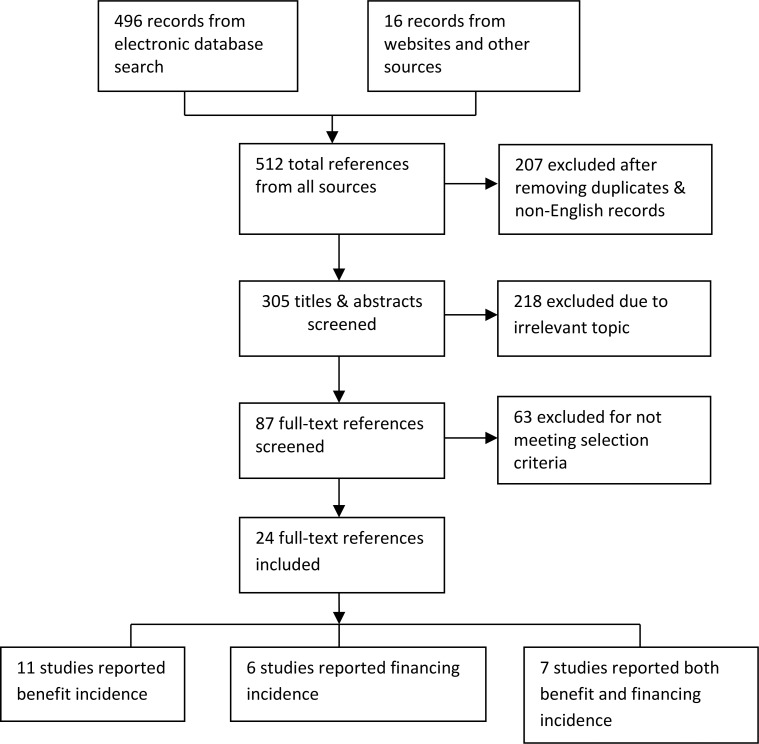
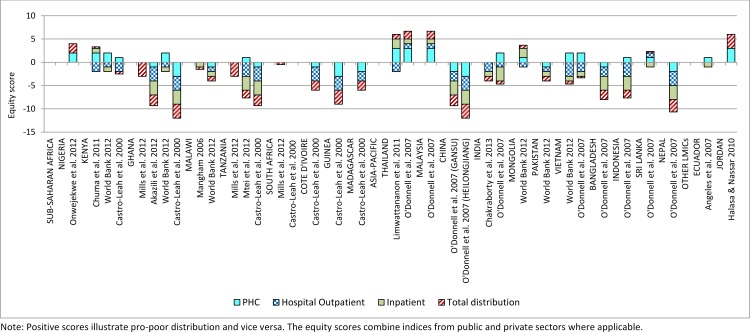
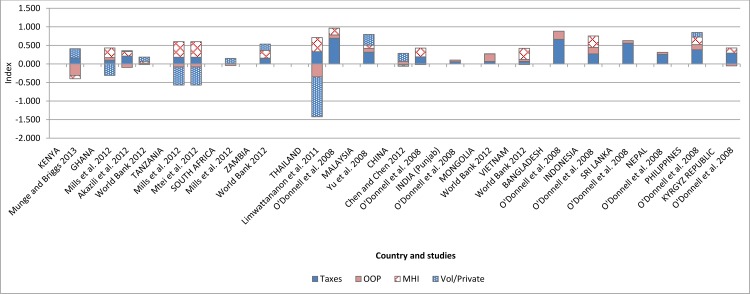
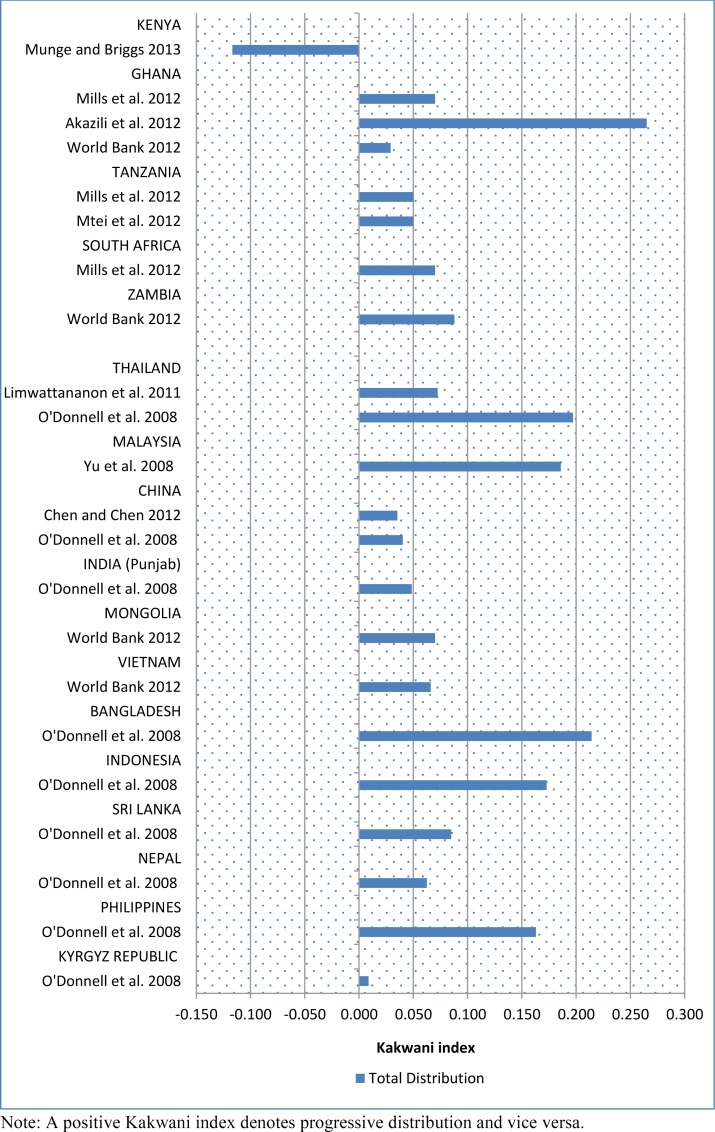
Methods and findings: Key electronic databases including Medline, Embase, Scopus, Global Health, CinAHL, EconLit and Business Source Premier were searched. We also searched the grey literature, specifically websites of leading organizations supporting health care in LMICs. Only studies using benefit incidence analysis (BIA) and/or financing incidence analysis (FIA) as explicit methodology were included. A total of 512 records were obtained from the various sources. The full texts of 87 references were assessed against the selection criteria and 24 were judged appropriate for inclusion. Twelve of the 24 studies originated from sub-Saharan Africa, nine from the Asia-Pacific region, two from Latin America and one from the Middle East. The evidence points to a pro-rich distribution of total health care benefits and progressive financing in both sub-Saharan Africa and Asia-Pacific. In the majority of cases, the distribution of benefits at the primary health care level favoured the poor while hospital level services benefit the better-off. A few Asian countries, namely Thailand, Malaysia and Sri Lanka, maintained a pro-poor distribution of health care benefits and progressive financing.
Conclusion: Studies evaluated in this systematic review indicate that health care financing in LMICs benefits the rich more than the poor but the burden of financing also falls more on the rich. There is some evidence that primary health care is pro-poor suggesting a greater investment in such services and removal of barriers to care can enhance equity. The results overall suggest that there are impediments to making health care more accessible to the poor and this must be addressed if universal health coverage is to be a reality.
Conflict of interest statement
Figures
References
-
- Chopra M, Sharkey A, Dalmiya N, Anthony D, Binkin N (2012) Strategies to improve health coverage and narrow the equity gap in child survival, health, and nutrition. The Lancet 380: 1331–1340. - PubMed
-
- ILO (2008) Social Health Protection: An ILO Strategy towards Universal Access to Health Care. Geneva: International Labour Organization.
-
- WHO (2010) The World Health Report 2010—financing for universal coverage Geneva: World Health Organization.
-
- McIntyre D, Thiede M, Dahlgren G, Whitehead M (2006) What are the economic consequences for households of illness and of paying for health care in low- and middle-income country contexts? Social Science & Medicine 62: 858–865. - PubMed
Publication types
MeSH terms
LinkOut - more resources
Full Text Sources
Other Literature Sources
Medical
Miscellaneous
