


An enhanced algorithm for multiple sequence alignment of protein sequences using genetic algorithm
- PMID: 27065770
- PMCID: PMC4820728
- DOI: 10.17179/excli2015-302
An enhanced algorithm for multiple sequence alignment of protein sequences using genetic algorithm
Abstract
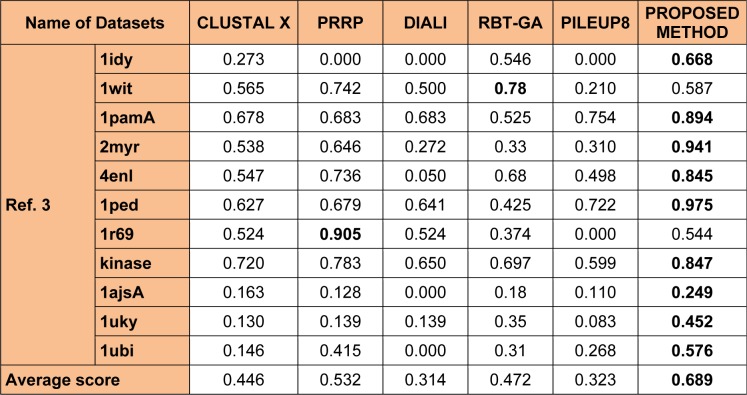
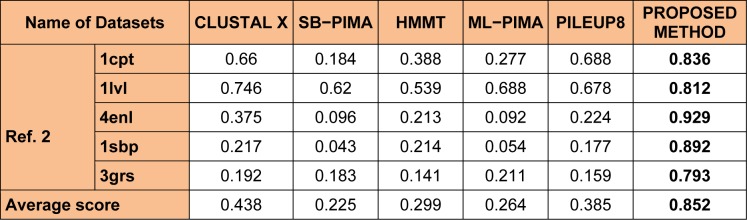
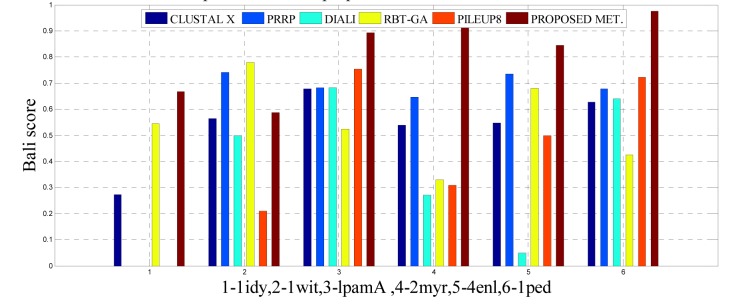
One of the most fundamental operations in biological sequence analysis is multiple sequence alignment (MSA). The basic of multiple sequence alignment problems is to determine the most biologically plausible alignments of protein or DNA sequences. In this paper, an alignment method using genetic algorithm for multiple sequence alignment has been proposed. Two different genetic operators mainly crossover and mutation were defined and implemented with the proposed method in order to know the population evolution and quality of the sequence aligned. The proposed method is assessed with protein benchmark dataset, e.g., BALIBASE, by comparing the obtained results to those obtained with other alignment algorithms, e.g., SAGA, RBT-GA, PRRP, HMMT, SB-PIMA, CLUSTALX, CLUSTAL W, DIALIGN and PILEUP8 etc. Experiments on a wide range of data have shown that the proposed algorithm is much better (it terms of score) than previously proposed algorithms in its ability to achieve high alignment quality.
Keywords: bioinformatics; crossover operator; genetic algorithm; multiple sequence alignment; mutation operator.
Figures








References
-
- Ankit A, Huang X. Pairwise statistical significance of local sequence alignment using substitution matrices with sequence-pair-specific distance. Proc Int Conf Inform Technol. 2008:94–99.
-
- Auyeung A, Melcher U. Evaluations of protein sequence alignments using structural information. Int Conf Inform Technol: Coding and Computing. 2005;2:748–749.
-
- Bhattacharjee A, Sultana KZ, Shams Z. Dynamic and parallel approaches to optimal evolutionary tree construction. Can Conf Electr Comp Engin. 2006:119–112.
-
- Blackshields G, Wallace IM, Larkin M, Higgins DG. Analysis and comparison of benchmarks for multiple sequence alignment. In Silico Biol. 2006;6:321–39. - PubMed
LinkOut - more resources
Full Text Sources