


Equity of access to primary healthcare for vulnerable populations: the IMPACT international online survey of innovations
- PMID: 27068028
- PMCID: PMC4828803
- DOI: 10.1186/s12939-016-0351-7
Equity of access to primary healthcare for vulnerable populations: the IMPACT international online survey of innovations
Abstract
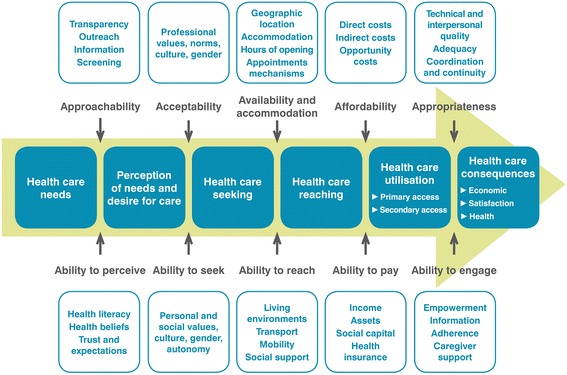
Background: Improving access to primary healthcare (PHC) for vulnerable populations is important for achieving health equity, yet this remains challenging. Evidence of effective interventions is rather limited and fragmented. We need to identify innovative ways to improve access to PHC for vulnerable populations, and to clarify which elements of health systems, organisations or services (supply-side dimensions of access) and abilities of patients or populations (demand-side dimensions of access) need to be strengthened to achieve transformative change. The work reported here was conducted as part of IMPACT (Innovative Models Promoting Access-to-Care Transformation), a 5-year Canadian-Australian research program aiming to identify, implement and trial best practice interventions to improve access to PHC for vulnerable populations. We undertook an environmental scan as a broad screening approach to identify the breadth of current innovations from the field.
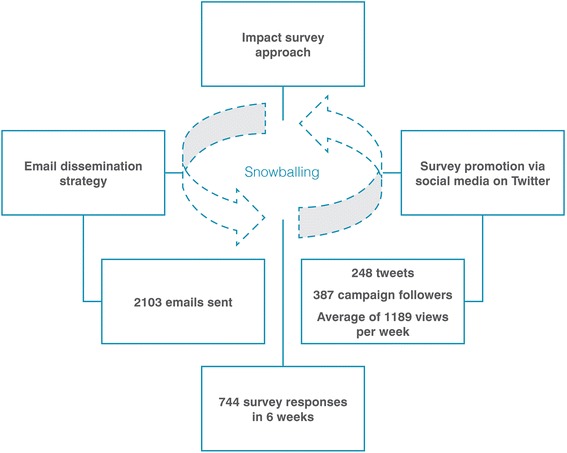
Methods: We distributed a brief online survey to an international audience of PHC researchers, practitioners, policy makers and stakeholders using a combined email and social media approach. Respondents were invited to describe a program, service, approach or model of care that they considered innovative in helping vulnerable populations to get access to PHC. We used descriptive statistics to characterise the innovations and conducted a qualitative framework analysis to further examine the text describing each innovation.
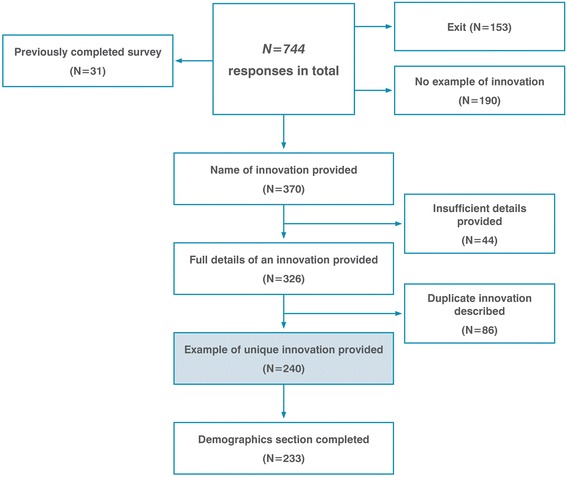
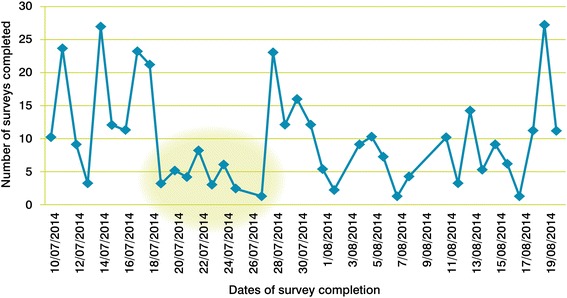
Results: Seven hundred forty-four responses were recorded over a 6-week period. 240 unique examples of innovations originating from 14 countries were described, the majority from Canada and Australia. Most interventions targeted a diversity of population groups, were government funded and delivered in a community health, General Practice or outreach clinic setting. Interventions were mainly focused on the health sector and directed at organisational and/or system level determinants of access (supply-side). Few innovations were developed to enhance patients' or populations' abilities to access services (demand-side), and rarely did initiatives target both supply- and demand-side determinants of access.
Conclusions: A wide range of innovations improving access to PHC were identified. The access framework was useful in uncovering the disparity between supply- and demand-side dimensions and pinpointing areas which could benefit from further attention to close the equity gap for vulnerable populations in accessing PHC services that correspond to their needs.
Keywords: Access; Environmental scan; Innovations; Online survey; Primary healthcare; Vulnerable populations.
Figures
References
-
- WHO . The World Health Report 2008. Primary Health Care - Now More Than Ever. Geneva, Switzerland: WHO; 2008.
-
- Comino EJ, Davies GP, Krastev Y, Haas M, Christl B, Furler J, Raymont A, Harris MF. A systematic review of interventions to enhance access to best practice primary health care for chronic disease management, prevention and episodic care. BMC Health Serv Res. 2012;12:1–9. doi: 10.1186/1472-6963-12-415. - DOI - PMC - PubMed
-
- Harris MF, Harris E, Roland M. Access to primary health care: three challenges to equity. Aust J Prim Health. 2004;10:21–9. doi: 10.1071/PY04043. - DOI
Publication types
MeSH terms
Grants and funding
LinkOut - more resources
Full Text Sources
Other Literature Sources
Miscellaneous
