Review
. 2016 Aug;24(8):649-664.
doi: 10.1016/j.tim.2016.03.008. Epub 2016 Apr 7.

Viral Carcinogenesis Beyond Malignant Transformation: EBV in the Progression of Human Cancers

Affiliations
Review

Viral Carcinogenesis Beyond Malignant Transformation: EBV in the Progression of Human Cancers

Deilson Elgui de Oliveira et al. Trends Microbiol. 2016 Aug.

Abstract

Cancer progression begins when malignant cells colonize adjacent sites, and it is characterized by increasing tumor heterogeneity, invasion and dissemination of cancer cells. Clinically, progression is the most relevant stage in the natural history of cancers. A given virus is usually regarded as oncogenic because of its ability to induce malignant transformation of cells. Nonetheless, oncogenic viruses may also be important for the progression of infection-associated cancers. Recently this hypothesis has been addressed because of studies on the contribution of the Epstein-Barr virus (EBV) to the aggressiveness of nasopharyngeal carcinoma (NPC). Several EBV products modulate cancer progression phenomena, such as the epithelial-mesenchymal transition, cell motility, invasiveness, angiogenesis, and metastasis. In this regard, there are compelling data about the effects of EBV latent membrane proteins (LMPs) and EBV nuclear antigens (EBNAs), as well as nontranslated viral RNAs, such as the EBV-encoded small nonpolyadenylated RNAs (EBERs) and viral microRNAs, notably EBV miR-BARTs. The available data on the mechanisms and players involved in the contribution of EBV infection to the aggressiveness of NPC are discussed in this review. Overall, this conceptual framework may be valuable for the understanding of the contribution of some infectious agents in the progression of cancers.

Keywords: Epstein–Barr virus; cancer progression; malignant invasion; metastasis; nasopharyngeal carcinoma.


Conflict of interest statement

Disclaimer statement The authors declare that they have no conflict of interest to disclose.

Figures

Figure 1
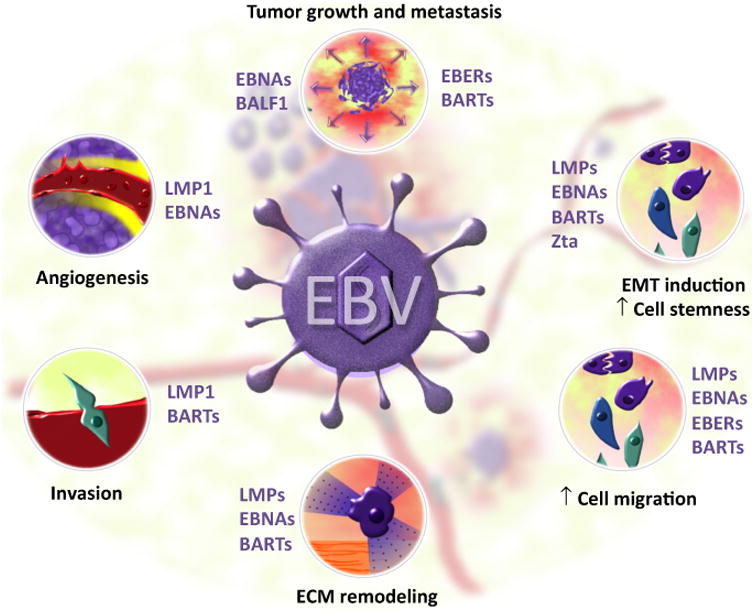
Figure 1. Reported Effects of Epstein–Barr Virus (EBV) Products That May Contribute to the Progression of EBV-Associated Cancers
This matter has been mostly studied by considering the natural history of the EBV-associated nasopharyngeal carcinoma. Both EBV proteins – such as latent viral proteins (LMPs), EBV nuclear antigens (EBNAs), and the apoptosis regulator BALF1 – and nontranslated viral RNAs, notably EBV-encoded small nonpolyadenylated RNAs (EBERs) and BamHI A region rightward transcripts (BARTs), interfere with different phenomena that may account for increased tumor aggressiveness, favoring the dissemination of malignant cells and ultimately causing cancer metastasis. Tumors expressing some EBV viral products have accelerated growth, as accessed in different animal models. Mechanistically, the EBV products indicated in the figure may induce an epithelial–mesenchymal transition, which is associated with a higher rate of metastasis for epithelial cancers due to increased cell motility and degradation of the extracellular matrix (e.g., due to the synthesis of metalloproteinases), and consequently higher invasive behavior of malignant cells. Furthermore, tumor angiogenesis is induced by cells expressing viral products, notably LMP1 and EBNAs. This can be due to either upregulation of some cytokines in EBV-infected neoplastic cells (e.g., VEGF) or stimulation of adjacent cells by proangiogenic factors (e.g., HIF-1-α and FGF2) inside LMP1-positive exosomes released by EBV-infected cells. Abbreviation: Zta, the viral lytic transactivator.
Figure I
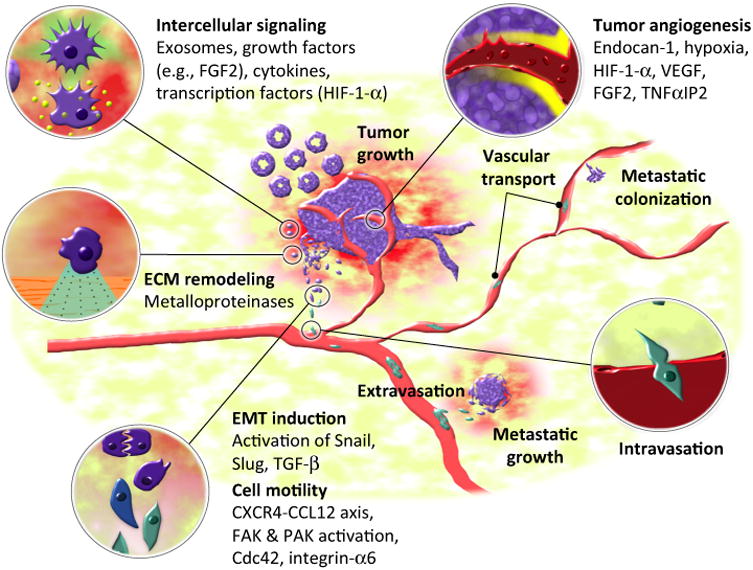
Figure I. Overview of the Metastatic Cascade
Cancer metastasis is a complex and multifactorial process that relies on successful interplay among a large repertoire of molecules that contribute to a propitious phenotype of the cancer cells, along with a permissible tissue microenvironment for tumor development, both locally and at distant sites. The term ‘metastatic cascade’ refers to a theoretical attempt to organize chronologically recognized key phenomena for successful establishment of malignant cells discontinuous to the primary tumor. Molecules indicated in the figure were selected among those that are known players in the metastatic cascade and can be modulated during EBV infection or are induced by one or more viral products (see Figure 1 in main text).

References

    1. Colditz GA, et al. Applying what we know to accelerate cancer prevention. Sci Transl Med. 2012;4:127rv4. - PMC - PubMed
    1. de Martel C, et al. Global burden of cancers attributable to infections in 2008: a review and synthetic analysis. Lancet Oncol. 2012;13:607–615. - PubMed
    1. Hanahan D, Weinberg RA. Hallmarks of cancer: the next generation. Cell. 2011;144:646–674. - PubMed
    1. Elgui de Oliveira D. DNA viruses in human cancer: an integrated overview on fundamental mechanisms of viral carcino-genesis. Cancer Lett. 2007;247:182–196. - PubMed
    1. Mesri EA, et al. Human viral oncogenesis: a cancer hallmarks analysis. Cell Host Microbe. 2014;15:266–282. - PMC - PubMed

MeSH terms

LinkOut - more resources