The Initiation of Smooth Pursuit is Delayed in Anisometropic Amblyopia
- PMID: 27070109
- PMCID: PMC4849536
- DOI: 10.1167/iovs.16-19126
The Initiation of Smooth Pursuit is Delayed in Anisometropic Amblyopia
Abstract
Purpose: Several behavioral studies have shown that the reaction times of visually guided movements are slower in people with amblyopia, particularly during amblyopic eye viewing. Here, we tested the hypothesis that the initiation of smooth pursuit eye movements, which are responsible for accurately keeping moving objects on the fovea, is delayed in people with anisometropic amblyopia.
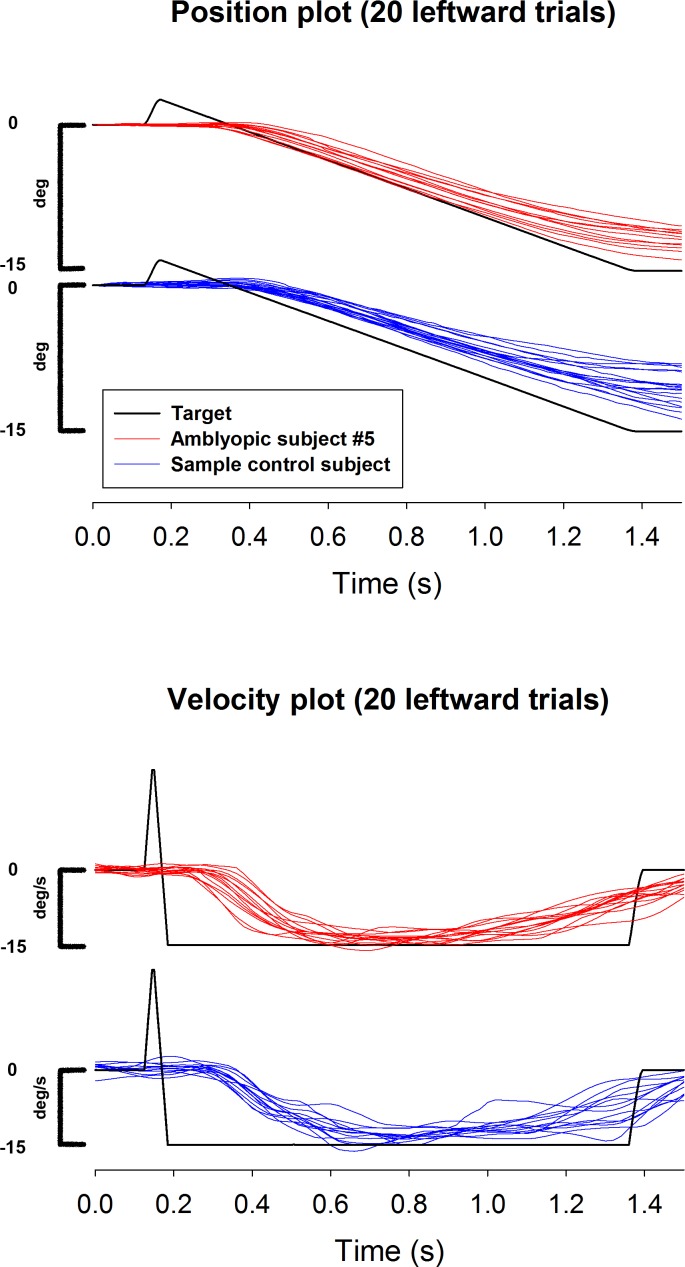
Methods: Eleven participants with anisometropic amblyopia and 14 visually normal observers were asked to track a step-ramp target moving at ±15°/s horizontally as quickly and as accurately as possible. The experiment was conducted under three viewing conditions: amblyopic/nondominant eye, binocular, and fellow/dominant eye viewing. Outcome measures were smooth pursuit latency, open-loop gain, steady state gain, and catch-up saccade frequency.
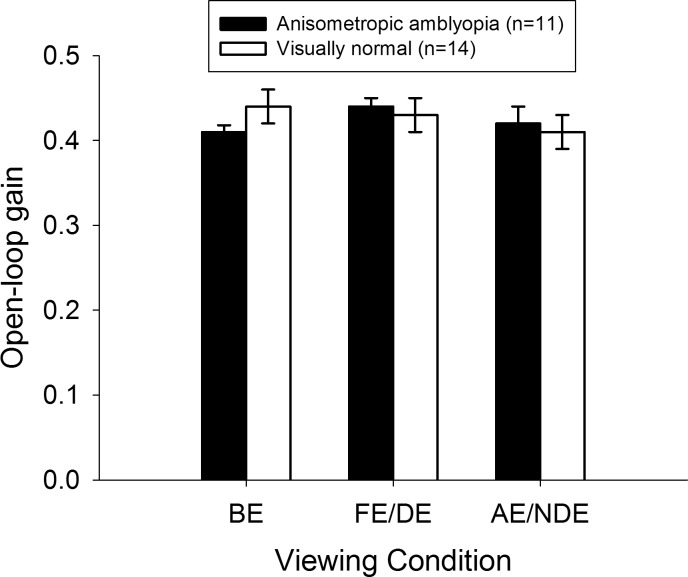
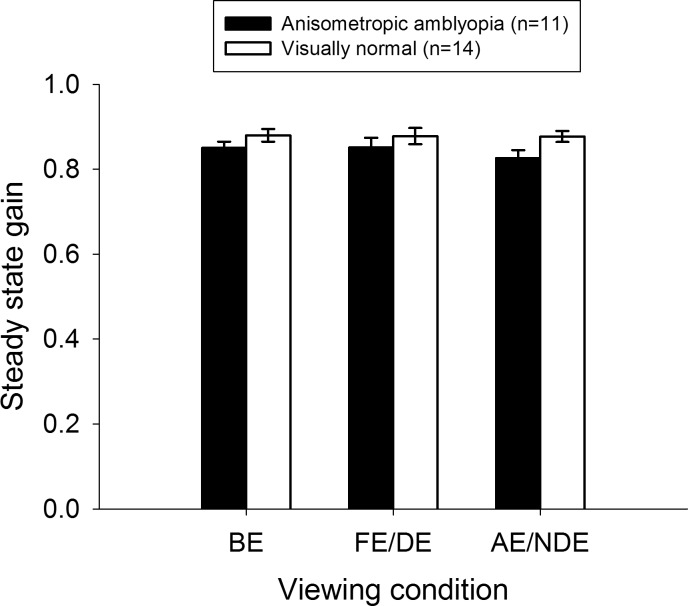
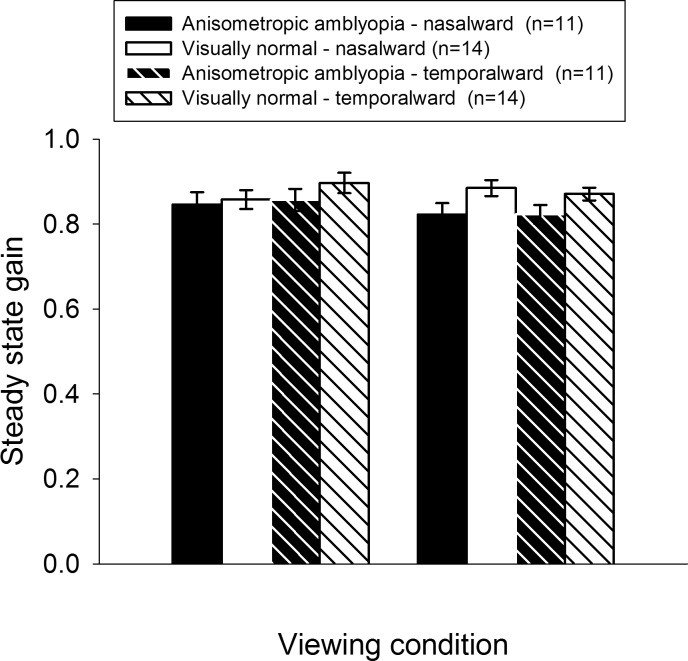
Results: Participants with anisometropic amblyopia initiated smooth pursuit significantly slower during amblyopic eye viewing (206 ± 20 ms) than visually normal observers viewing with their nondominant eye (183 ± 17 ms, P = 0.002). However, mean pursuit latency in the anisometropic amblyopia group during binocular and monocular fellow eye viewing was comparable to the visually normal group. Mean open-loop gain, steady state gain, and catch-up saccade frequency were similar between the two groups, but participants with anisometropic amblyopia exhibited more variable steady state gain (P = 0.045).
Conclusions: This study provides evidence of temporally delayed smooth pursuit initiation in anisometropic amblyopia. After initiation, the smooth pursuit velocity profile in anisometropic amblyopia participants is similar to visually normal controls. This finding differs from what has been observed previously in participants with strabismic amblyopia who exhibit reduced smooth pursuit velocity gains with more catch-up saccades.
Figures

References
-
- Carl JR,, Gellman RS. Human smooth pursuit: stimulus-dependent responses. J Neurophysiol. 1987; 57: 1446–1463. - PubMed
-
- Eibenberger K,, Ring M,, Haslwanter T. Sustained effects for training of smooth pursuit plasticity. Exp Brain Res. 2012; 218: 81–89. - PubMed
-
- Wyatt HJ,, Pola J. Smooth eye movements with step-ramp stimuli: the influence of attention and stimulus extent. Vision Res. 1987; 27: 1565–1580. - PubMed
-
- Meyer CH,, Lasker AG,, Robinson DA. The upper limit of human smooth pursuit velocity. Vision Res. 1985; 25: 561–563. - PubMed
Publication types
MeSH terms
Grants and funding
LinkOut - more resources
Full Text Sources
Other Literature Sources
Medical