


RNA-Seq Profiling of Intact and Enucleated Oocyte SCNT Embryos Reveals the Role of Pig Oocyte Nucleus in Somatic Reprogramming
- PMID: 27070804
- PMCID: PMC4829232
- DOI: 10.1371/journal.pone.0153093
RNA-Seq Profiling of Intact and Enucleated Oocyte SCNT Embryos Reveals the Role of Pig Oocyte Nucleus in Somatic Reprogramming
Abstract
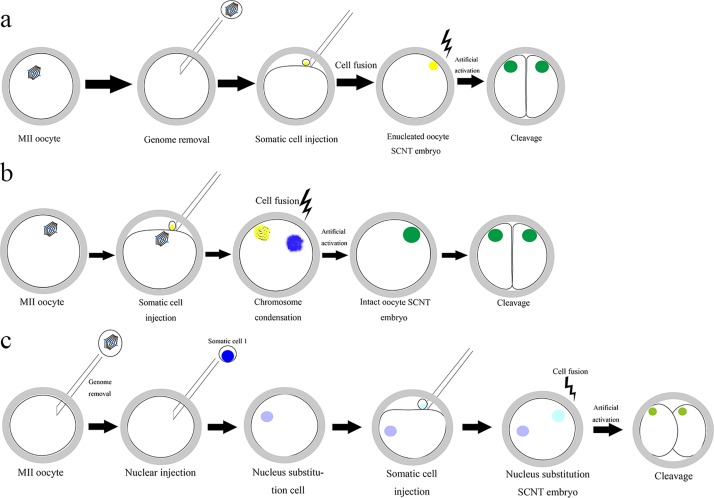
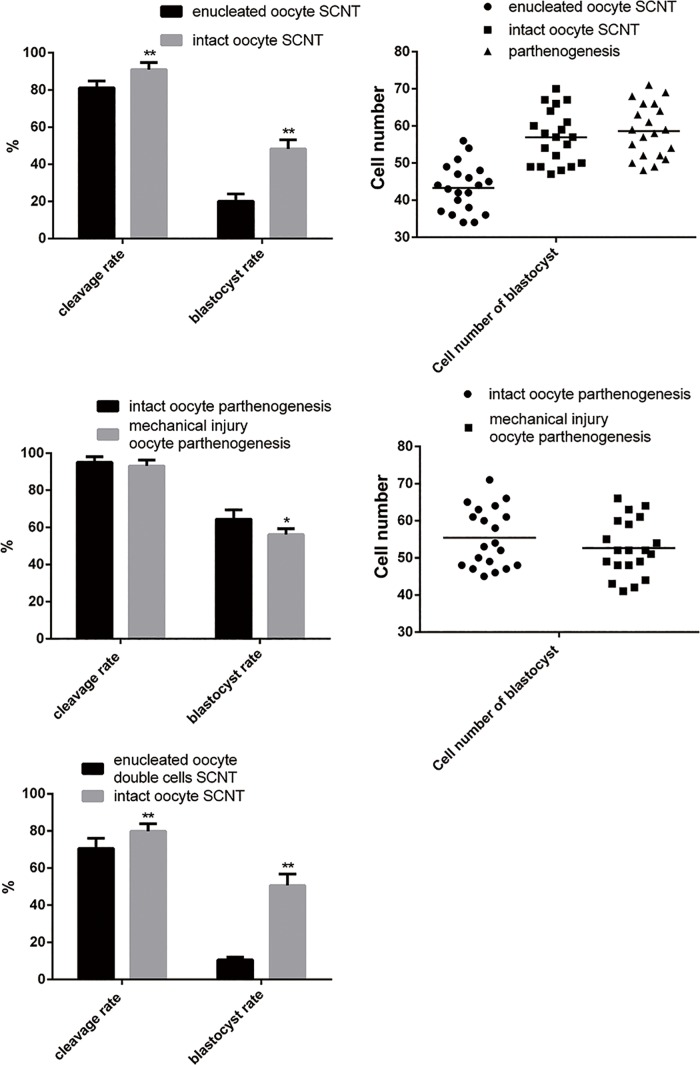
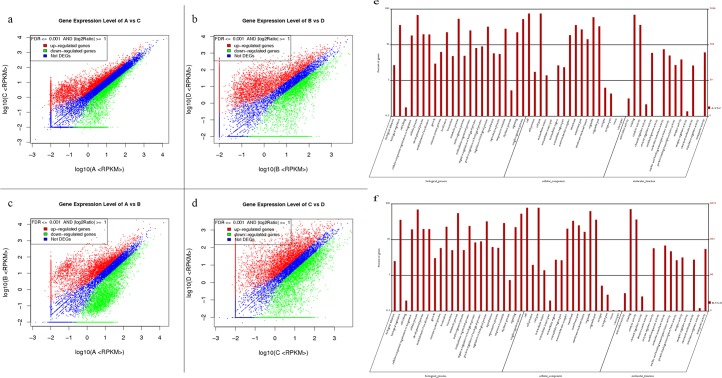
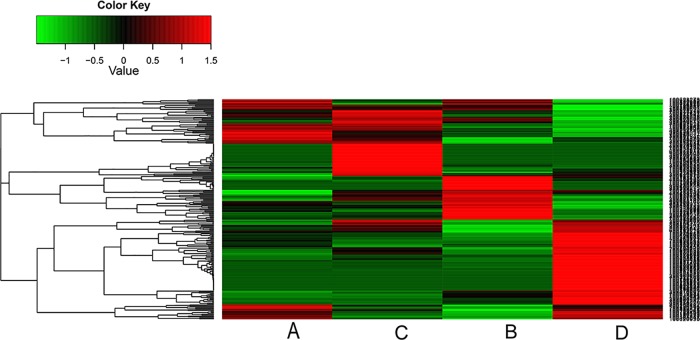
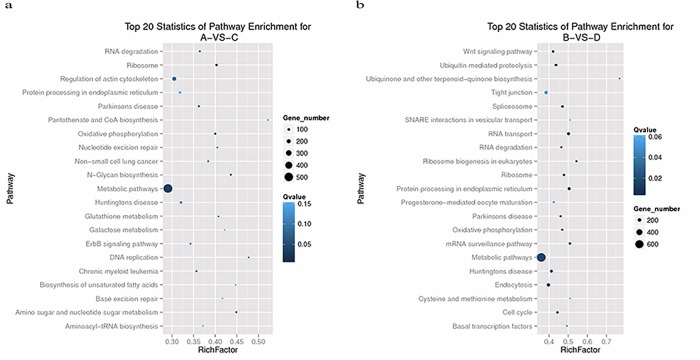
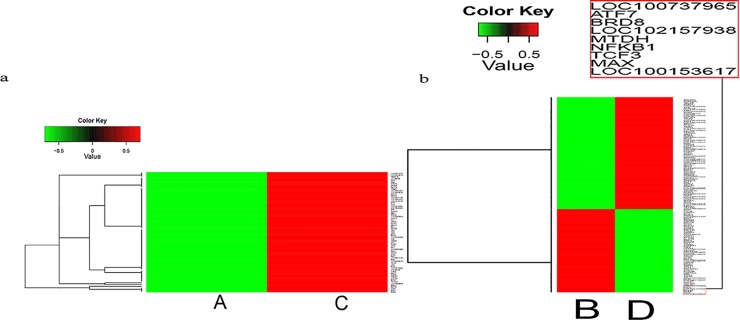
The specific molecular mechanisms involved in somatic reprogramming remain unidentified. Removal of the oocyte genome is one of the primary causes of developmental failure in cloned embryos, whereas intact oocyte shows stronger reprogramming capability than enucleated oocyte. To identify the reason for the low efficiency of cloning and elucidate the mechanisms involved in somatic reprogramming by the oocyte nucleus, we injected pig cumulus cells into 539 intact MII oocytes and 461 enucleated MII oocytes. Following activation, 260 polyploidy embryos developed to the blastocyst stage whereas only 93 traditionally cloned embryos (48.2% vs. 20.2%, P < 0.01) reached blastocyst stage. Blastocysts generated from intact oocytes also had more cells than those generated from enucleated oocytes (60.70 vs. 46.65, P < 0.01). To identify the genes that contribute to this phenomenon, two early embryos in 2-cell and 4-cell stages were collected for single-cell RNA sequencing. The two kinds of embryos were found to have dramatically different transcriptome profiles. Intact oocyte nuclear transfer embryos showed 1,738 transcripts that were up-regulated relative to enucleated cloned embryos at the 2-cell stage and 728 transcripts that were down-regulated (|log2Ratio| ≥ 5). They showed 2,941 transcripts that were up-regulated during the 4-cell stage and 1,682 that were down-regulated (|log2Ratio| ≥ 5). The most significantly enriched gene ontology categories were those involved in the regulation of binding, catalytic activity, and molecular transducer activity. Other genes that were notably up-regulated and expressed in intact oocyte nuclear transfer embryos were metabolic process. This study provides a comprehensive profile of the differences in gene expression between intact oocyte nuclear transfer embryos and traditional nuclear transfer embryos. This work thus paves the way for further research on the mechanisms underlying somatic reprogramming by oocytes.
Conflict of interest statement
Figures
References
-
- Shin T,., Kraemer D,., Pryor J,., Liu L,., Rugila J,., Howe L,., et al. (2002) A cat cloned by nuclear transplantation. Nature 415: 859–859. - PubMed
-
- Chesne P, Adenot PC, Baratte M, Boulanger L, Renard JP (2002) Cloned rabbits produced by nuclear transfer from adult somatic cells. Nature Biotechnology 20: 366–369. - PubMed
-
- Cibelli JB, Stice SL, Golueke PJ, Kane JJ, Jerry J,., Blackwell C,., et al. (1998) Cloned transgenic calves produced from nonquiescent fetal fibroblasts. Science 280: 1256 - PubMed
-
- Wakayama T,., Perry AC, Zuccotti M,., Johnson KR, Yanagimachi R,. (1998) Full-term development of mice from enucleated oocytes injected with cumulus cell nuclei. Nature 394: 369–375. - PubMed
Publication types
MeSH terms
LinkOut - more resources
Full Text Sources
Other Literature Sources
