


Dysregulation of a family of short noncoding RNAs, tsRNAs, in human cancer
- PMID: 27071132
- PMCID: PMC4983805
- DOI: 10.1073/pnas.1604266113
Dysregulation of a family of short noncoding RNAs, tsRNAs, in human cancer
Abstract
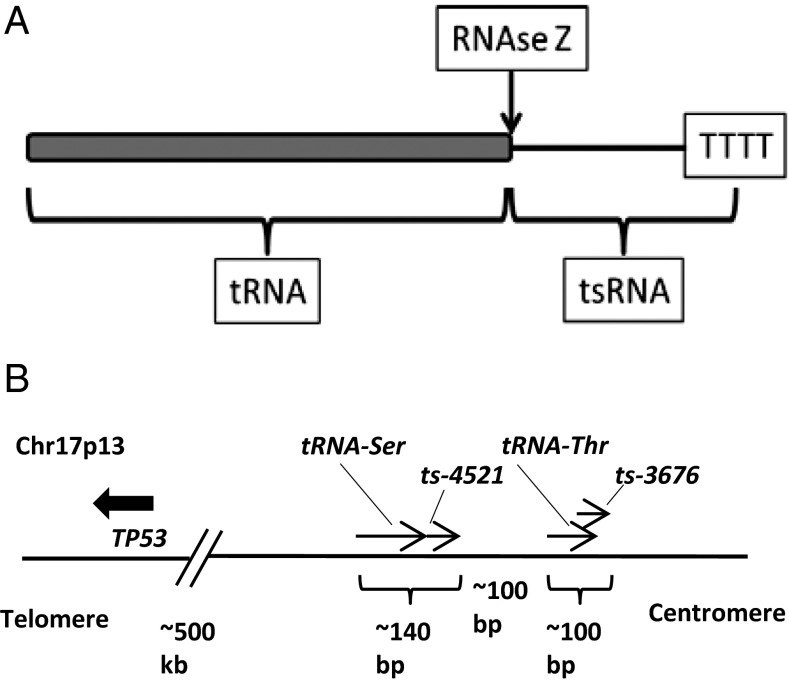
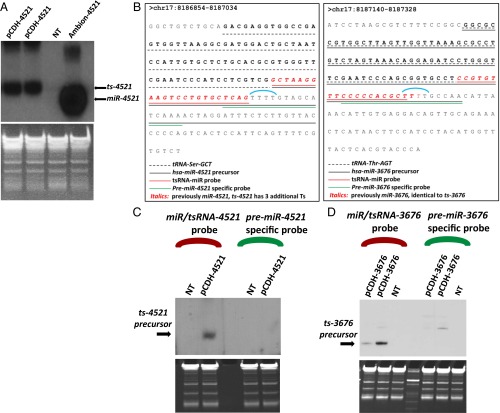
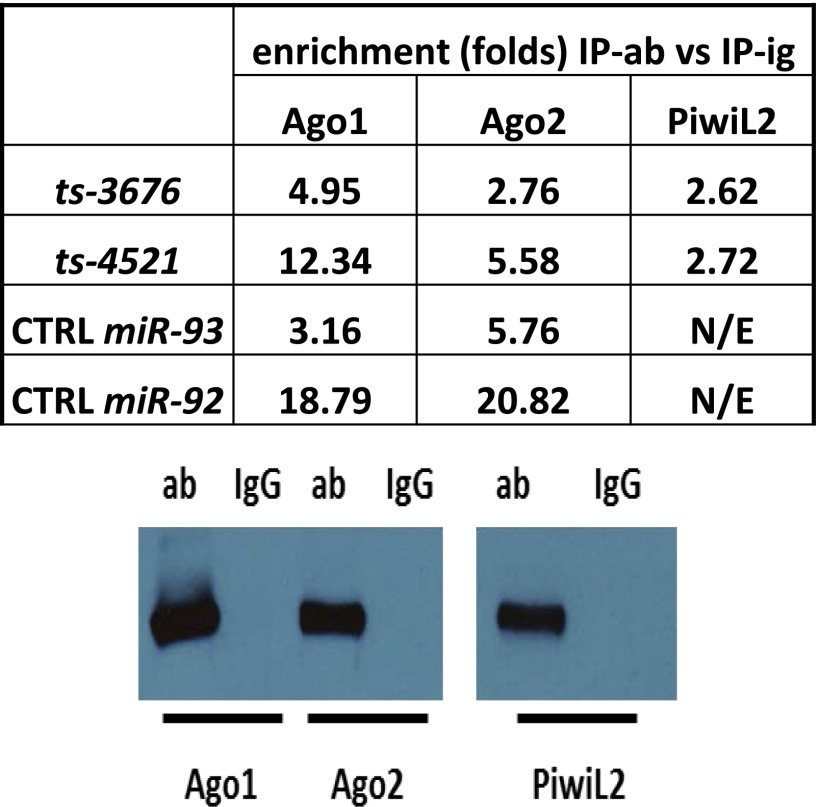
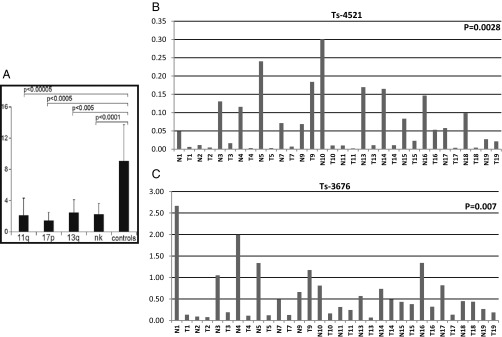
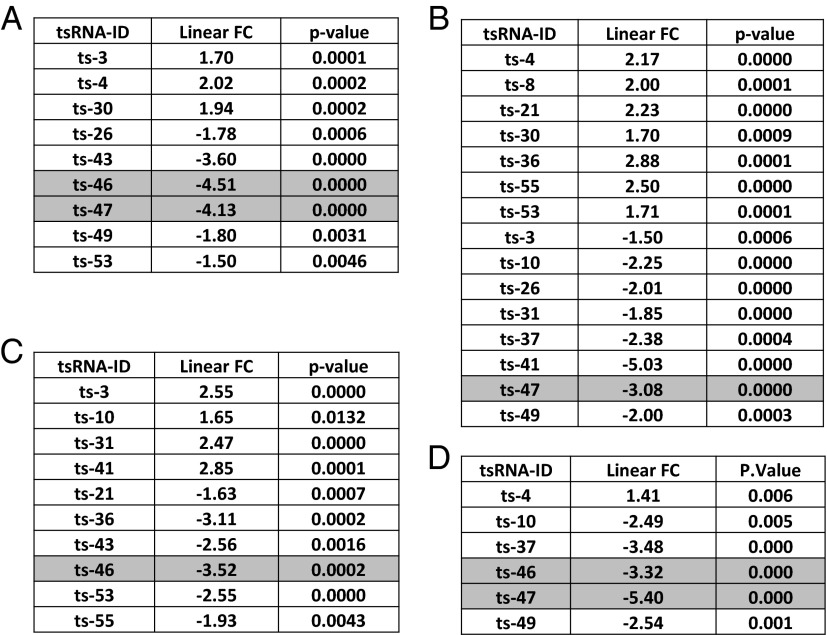
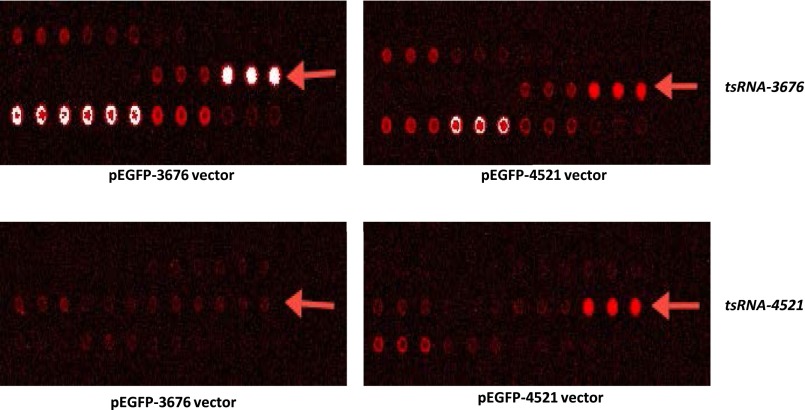
Chronic lymphocytic leukemia (CLL) is the most common human leukemia, and transgenic mouse studies indicate that activation of the T-cell leukemia/lymphoma 1 (TCL1) oncogene is a contributing event in the pathogenesis of the aggressive form of this disease. While studying the regulation of TCL1 expression, we identified the microRNA cluster miR-4521/3676 and discovered that these two microRNAs are associated with tRNA sequences and that this region can produce two small RNAs, members of a recently identified class of small noncoding RNAs, tRNA-derived small RNAs (tsRNAs). We further proved that miR-3676 and miR-4521 are tsRNAs using Northern blot analysis. We found that, like ts-3676, ts-4521 is down-regulated and mutated in CLL. Analysis of lung cancer samples revealed that both ts-3676 and ts-4521 are down-regulated and mutated in patient tumor samples. Because tsRNAs are similar in nature to piRNAs [P-element-induced wimpy testis (Piwi)-interacting small RNAs], we investigated whether ts-3676 and ts-4521 can interact with Piwi proteins and found these two tsRNAs in complexes containing Piwi-like protein 2 (PIWIL2). To determine whether other tsRNAs are involved in cancer, we generated a custom microarray chip containing 120 tsRNAs 16 bp or more in size. Microarray hybridization experiments revealed tsRNA signatures in CLL and lung cancer, indicating that, like microRNAs, tsRNAs may have an oncogenic and/or tumor-suppressor function in hematopoietic malignancies and solid tumors. Thus, our results show that tsRNAs are dysregulated in human cancer.
Keywords: ts-3676; ts-4521; tsRNAs.
Conflict of interest statement
The authors declare no conflict of interest.
Figures
References
-
- Sgambati M, Linet M, Devesa S. 2001. chronic lymphocytic leukemia, epidemiological, familial, and genetic aspects. Chronic Lymphocytic Leukemias, ed Bruce Cheson B (Marcel Dekker, Inc. New York), 2nd Ed, revised and expanded, pp 33–62.
-
- Rassenti LZ, et al. ZAP-70 compared with immunoglobulin heavy-chain gene mutation status as a predictor of disease progression in chronic lymphocytic leukemia. N Engl J Med. 2004;351(9):893–901. - PubMed
-
- Calin GA, et al. A microRNA signature associated with prognosis and progression in chronic lymphocytic leukemia. N Engl J Med. 2005;353(17):1793–1801. - PubMed
Publication types
MeSH terms
Substances
Grants and funding
LinkOut - more resources
Full Text Sources
Other Literature Sources
Medical
