


Completion of a Liver Surgery Complexity Score and Classification Based on an International Survey of Experts
- PMID: 27072308
- PMCID: PMC5561649
- DOI: 10.1016/j.jamcollsurg.2016.03.039
Completion of a Liver Surgery Complexity Score and Classification Based on an International Survey of Experts
Abstract
Background: Liver resections have classically been distinguished as "minor" or "major," based on number of segments removed. This is flawed because the number of segments resected alone does not convey the complexity of a resection. We recently developed a 3-tiered classification for the complexity of liver resections based on utility weighting by experts. This study aims to complete the earlier classification and to illustrate its application.
Study design: Two surveys were administered to expert liver surgeons. Experts were asked to rate the difficulty of various open liver resections on a scale of 1 to 10. Statistical methods were then used to develop a complexity score for each procedure.
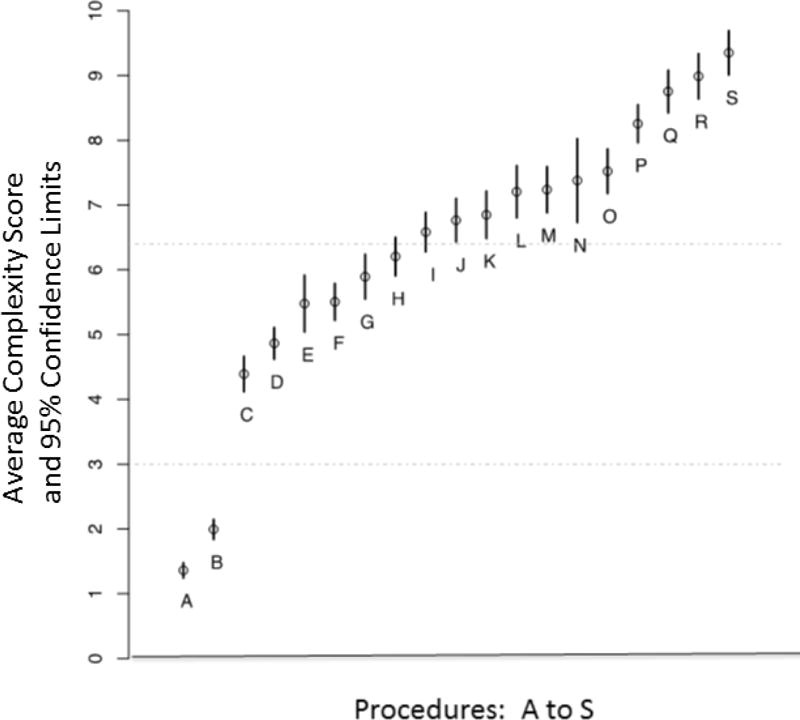
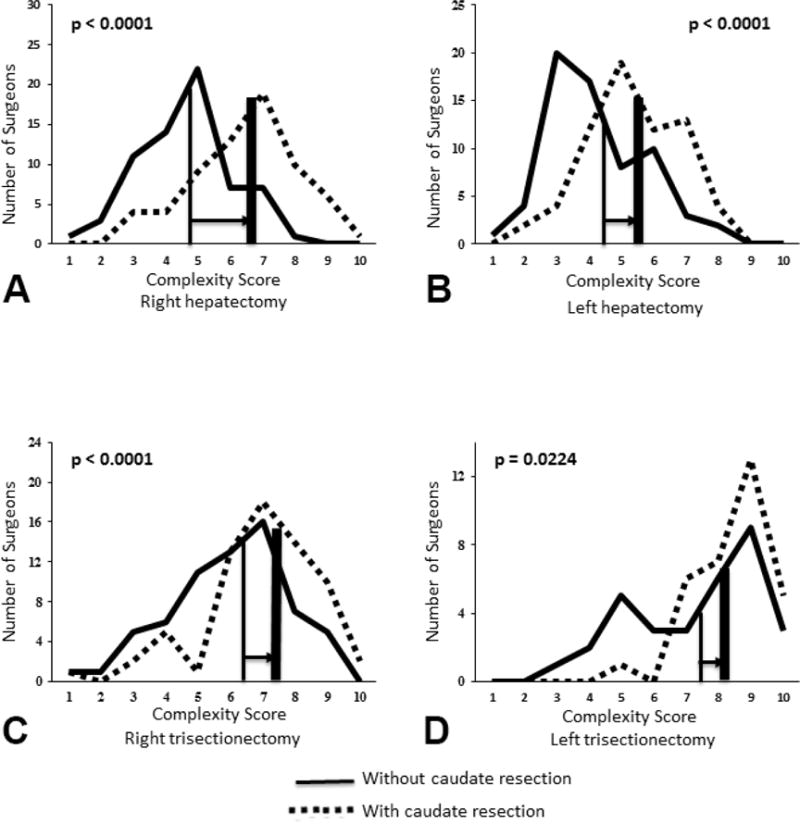
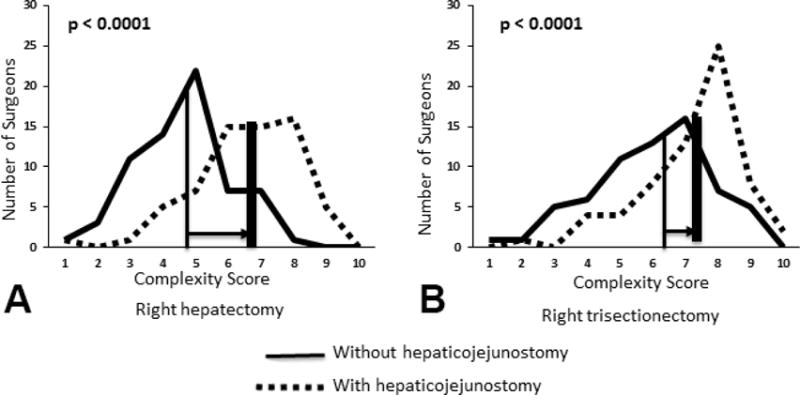
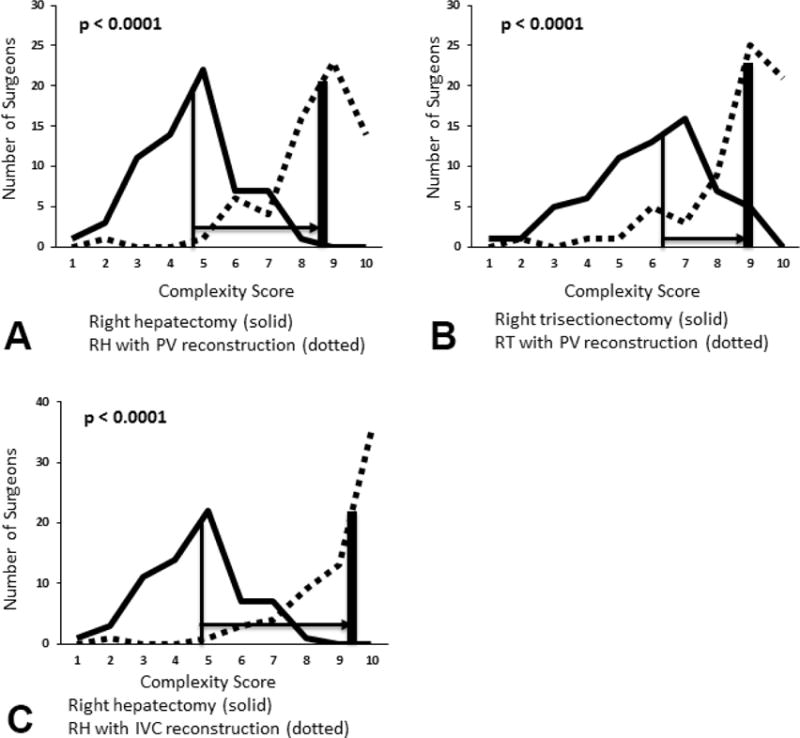
Results: Sixty-six of 135 (48.9%) surgeons responded to the earlier survey, and 66 of 122 (54.1%) responded to the current survey. In all, 19 procedures were rated. The lowest mean score of 1.36 (indicating least difficult) was given to peripheral wedge resection. Right hepatectomy with IVC reconstruction was deemed most difficult, with a score of 9.35. Complexity scores were similar for 9 procedures present in both surveys. Caudate resection, hepaticojejunostomy, and vascular reconstruction all increased the complexity of standard resections significantly.
Conclusions: These data permit quantitative assessment of the difficulty of a variety of liver resections. The complexity scores generated allow for separation of liver resections into 3 categories of complexity (low complexity, medium complexity, and high complexity) on a quantitative basis. This provides a more accurate representation of the complexity of procedures in comparative studies.
Copyright © 2016 American College of Surgeons. Published by Elsevier Inc. All rights reserved.
Figures
References
-
- Couinaud C. [Contribution of anatomical research to liver surgery] Fr Med. 1956;19:5–12. - PubMed
-
- Muangkaew P, Cho JY, Han HS, et al. Defining surgical difficulty according to the perceived complexity of liver resection: validation of a complexity classification in patients with hepatocellular carcinoma. Ann Surg Oncol. 2016 in press. - PubMed
-
- de Jong MC, Marques H, Clary BM, et al. The impact of portal vein resection on outcomes for hilar cholangiocarcinoma: a multi-institutional analysis of 305 cases. Cancer. 2012;118:4737–4747. - PubMed
MeSH terms
Grants and funding
LinkOut - more resources
Full Text Sources
Other Literature Sources
Medical
