


The influence of a scene preview on eye movement behavior in natural scenes
- PMID: 27073087
- PMCID: PMC5133287
- DOI: 10.3758/s13423-016-1035-4
The influence of a scene preview on eye movement behavior in natural scenes
Abstract
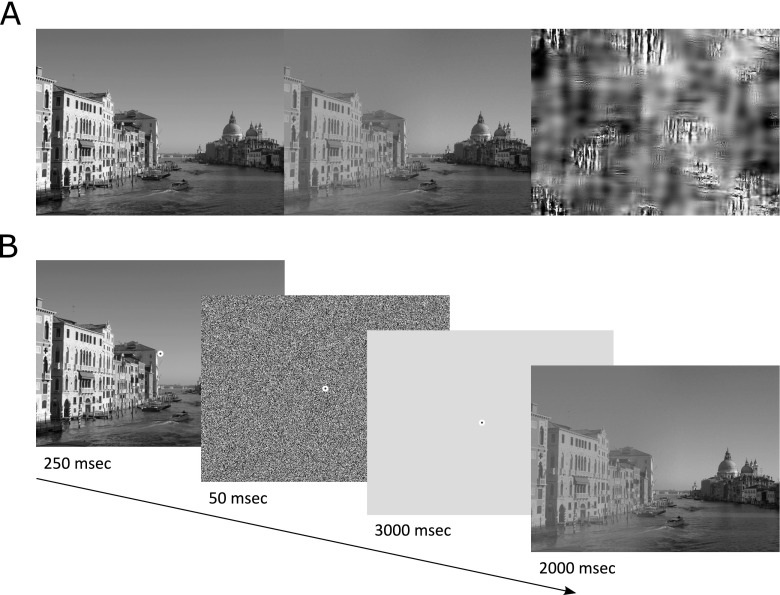
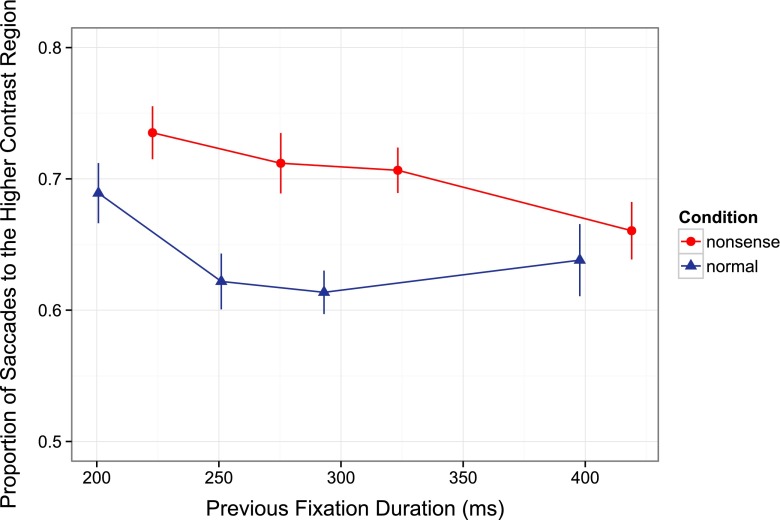
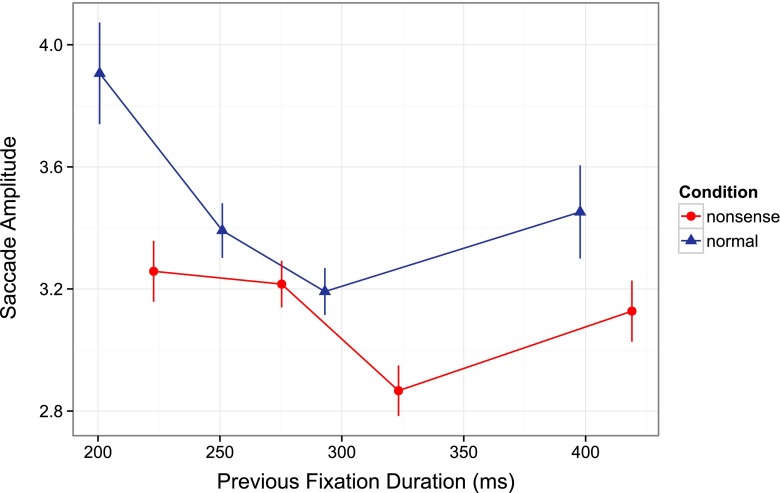
Rich contextual and semantic information can be extracted from only a brief presentation of a natural scene. This is presumed to be activated quickly enough to guide initial eye movements into a scene. However, early, short-latency eye movements in natural scenes have been shown to be dependent on the salience distribution across the image (Anderson, Ort, Kruijne, Meeter, & Donk, 2015). In the present work, we manipulated the salience distribution across a natural scene by changing the global contrast. We showed participants a brief real or nonsense preview of the scene and examined the time-course of eye movement guidance. A real preview decreased the latency and increased the amplitude of initial saccades into the image, suggesting that the preview allowed observers to obtain additional contextual information that would otherwise not be available. However, the preview did not completely override the initial tendency for short-latency saccades to be guided by the underlying salience distribution of the image. We discuss these findings in the context of oculomotor selection based on the integration of contextual information and low-level features in a natural scene.
Keywords: Attention; Contextual information; Eye movements; Natural scene viewing; Salience.
Figures
References
-
- Brockmole JR, Henderson JM. Prioritizing new objects for eye fixation in real-world scenes: Effects of object-scene consistency. Visual Cognition. 2008;16(2-3):375–390. doi: 10.1080/13506280701453623. - DOI
-
- Cousineau D. Confidence intervals in within-subject designs: A simpler solution to Loftus and Masson's method. Tutorial in Quantitative Methods for Psychology. 2005;1(1):42–45. doi: 10.20982/tqmp.01.1.p042. - DOI
MeSH terms
LinkOut - more resources
Full Text Sources
Other Literature Sources
