


Understanding the connection between platelet-activating factor, a UV-induced lipid mediator of inflammation, immune suppression and skin cancer
- PMID: 27073146
- PMCID: PMC4975990
- DOI: 10.1016/j.plipres.2016.03.004
Understanding the connection between platelet-activating factor, a UV-induced lipid mediator of inflammation, immune suppression and skin cancer
Abstract
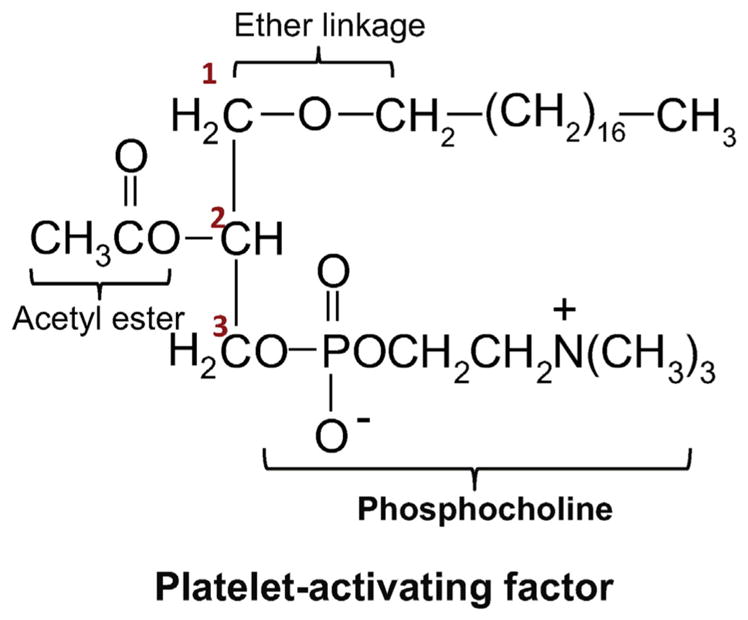
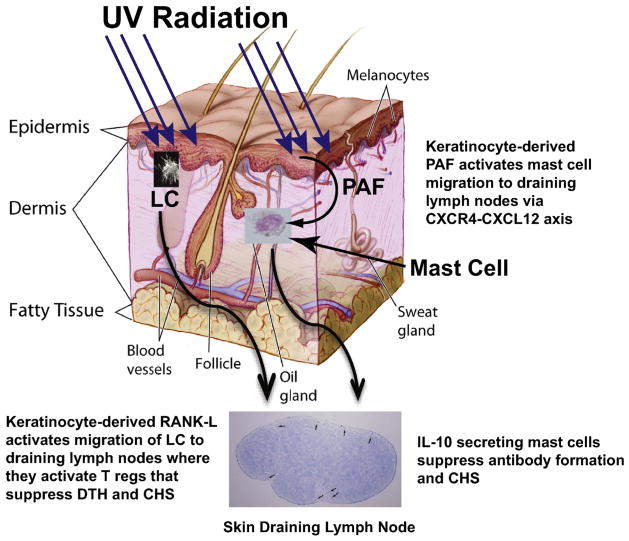
Lipid mediators of inflammation play important roles in several diseases including skin cancer, the most prevalent type of cancer found in the industrialized world. Ultraviolet (UV) radiation is a complete carcinogen and is the primary cause of skin cancer. UV radiation is also a potent immunosuppressive agent, and UV-induced immunosuppression is a well-known risk factor for skin cancer induction. An essential mediator in this process is the glyercophosphocholine 1-alkyl-2-acetyl-sn-glycero-3-phosphocholine commonly referred to as platelet-activating factor (PAF). PAF is produced by keratinocytes in response to diverse stimuli and exerts its biological effects by binding to a single specific G-protein-coupled receptor (PAF-R) expressed on a variety of cells. This review will attempt to describe how this lipid mediator is involved in transmitting the immunosuppressive signal from the skin to the immune system, starting from its production by keratinocytes, to its role in activating mast cell migration in vivo, and to the mechanisms involved that ultimately lead to immune suppression. Recent findings related to its role in regulating DNA repair and activating epigenetic mechanisms, further pinpoint the importance of this bioactive lipid, which may serve as a critical molecular mediator that links the environment (UVB radiation) to the immune system and the epigenome.
Copyright © 2016 Elsevier B.V. All rights reserved.
Figures
References
-
- Muirhead EE. Antihypertensive functions of the kidney: Arthur C. Corcoran memorial lecture. Hypertension. 1980;2:444–464. - PubMed
-
- Ishii S, Nagase T, Shimizu T. Platelet-activating factor receptor. Prostaglandins Other Lipid Mediat. 2002;68–69:599–609. - PubMed
-
- Ishii S, Shimizu T. Platelet-activating factor (PAF) receptor and genetically engineered PAF receptor mutant mice. Prog Lipid Res. 2000;39:41–82. - PubMed
Publication types
MeSH terms
Substances
Grants and funding
LinkOut - more resources
Full Text Sources
Other Literature Sources
Medical
