


Smoking Exposure and Survival of Patients with Esophagus Cancer: A Systematic Review and Meta-Analysis
- PMID: 27073394
- PMCID: PMC4814674
- DOI: 10.1155/2016/7682387
Smoking Exposure and Survival of Patients with Esophagus Cancer: A Systematic Review and Meta-Analysis
Abstract
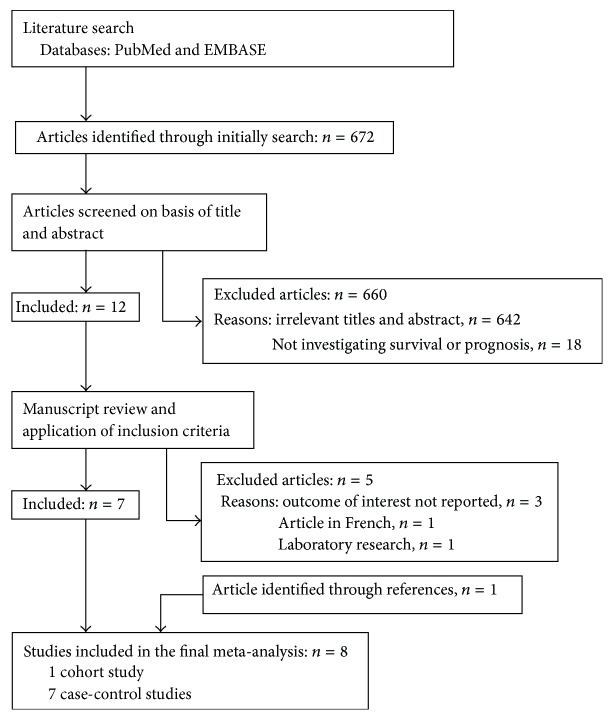
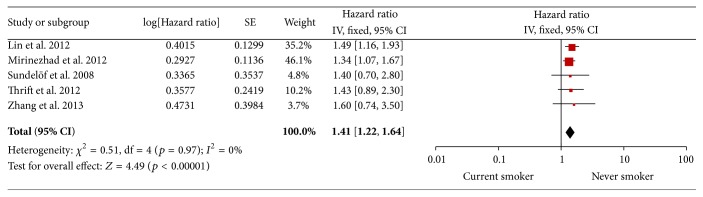
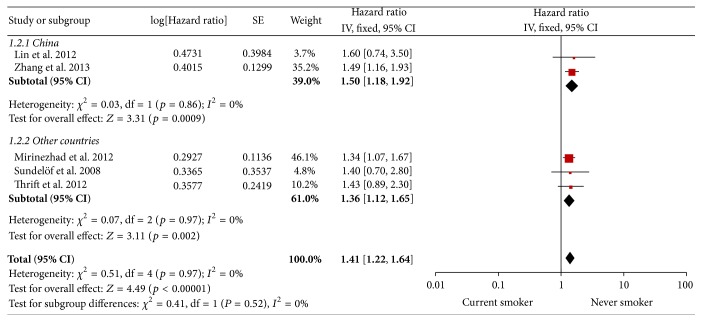
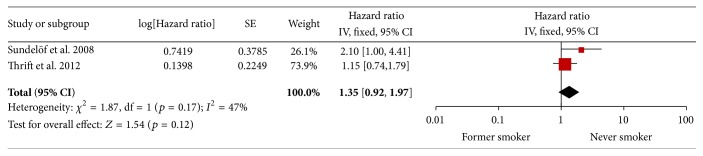
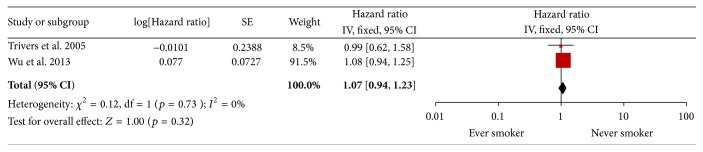
Smoking is a well-known major risk factor in development of esophageal cancer, but few studies have reported the association between smoking status and prognosis of these patients. We conduct the present study to summarize current evidence. A computerized search of the PubMed and EMBASE was performed up to April 30, 2015. Eight studies, containing 4,286 patients, were analyzed. In the grouping analysis, among esophageal squamous-cell carcinoma patients, current and former smokers, compared to those who have never smoked, seemed to have a poorer prognosis (HR = 1.41, 95% CI 1.22-1.64, and HR = 1.35, 95% CI 0.92-1.97, resp.). In the subgroup analysis, adverse effects on current smoker compared with never smoker were also observed in China and the other countries (HR = 1.5, 95% CI 1.18-1.92, and HR = 1.36, 95% CI 1.12-1.65, resp.). In the group that ever smoked, we could not get a similar result. No significantly increased risk was found in esophageal adenocarcinoma patients compared to the squamous-cell histology ones. In the smoking intensity analysis, heavy smoking was associated with poor survival in esophageal squamous-cell carcinoma. Our pooled results supported the existence of harmful effects of smoking on survival after esophagus cancer diagnosis.
Figures
References
Publication types
LinkOut - more resources
Full Text Sources
Other Literature Sources
Miscellaneous
