


The Processing of Human Emotional Faces by Pet and Lab Dogs: Evidence for Lateralization and Experience Effects
- PMID: 27074009
- PMCID: PMC4830442
- DOI: 10.1371/journal.pone.0152393
The Processing of Human Emotional Faces by Pet and Lab Dogs: Evidence for Lateralization and Experience Effects
Abstract
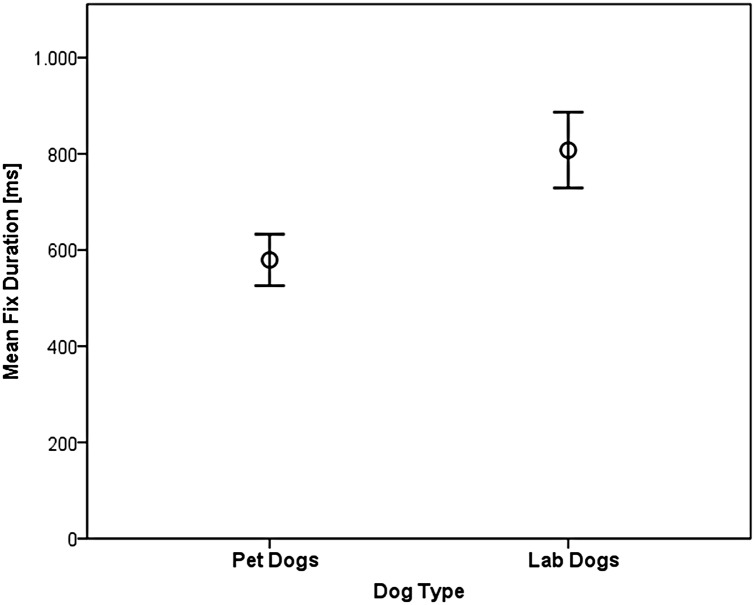
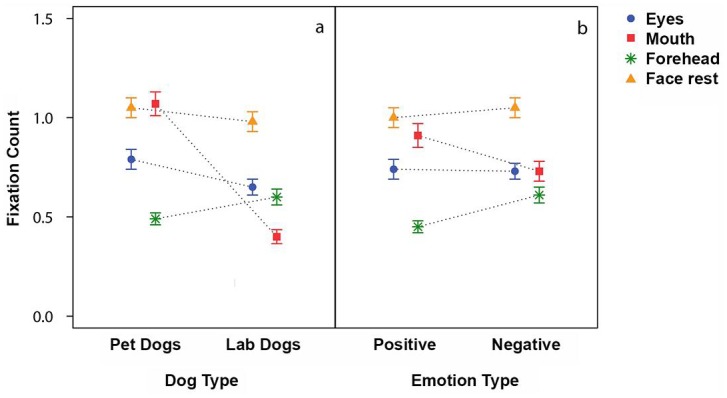
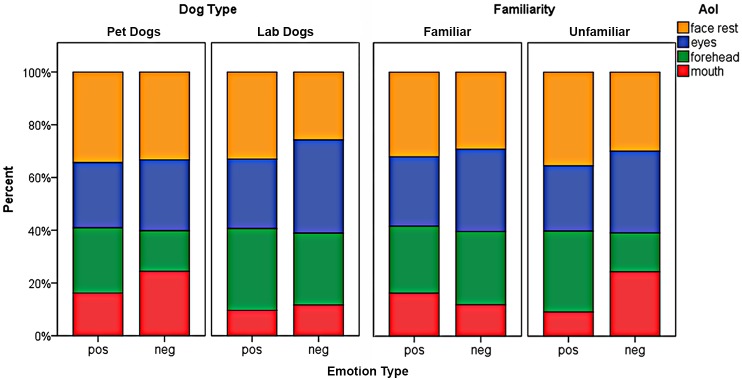
From all non-human animals dogs are very likely the best decoders of human behavior. In addition to a high sensitivity to human attentive status and to ostensive cues, they are able to distinguish between individual human faces and even between human facial expressions. However, so far little is known about how they process human faces and to what extent this is influenced by experience. Here we present an eye-tracking study with dogs emanating from two different living environments and varying experience with humans: pet and lab dogs. The dogs were shown pictures of familiar and unfamiliar human faces expressing four different emotions. The results, extracted from several different eye-tracking measurements, revealed pronounced differences in the face processing of pet and lab dogs, thus indicating an influence of the amount of exposure to humans. In addition, there was some evidence for the influences of both, the familiarity and the emotional expression of the face, and strong evidence for a left gaze bias. These findings, together with recent evidence for the dog's ability to discriminate human facial expressions, indicate that dogs are sensitive to some emotions expressed in human faces.
Conflict of interest statement
Figures
References
-
- Huber L. Categories and Concepts: Language-Related Competences Non-Linguistic Species Encyclopedia of Animal Behaviour. Elsevier; 2010. pp. 261–266. 10.1016/B978-0-08-045337-8.00096-6 - DOI
-
- Bruce V, Young A. In the eye of the beholder: The science of face perception. 1st ed Oxford University Press; 1998.
-
- Peterson MA, Rhodes G. Perception of faces, objects, and scenes: Analytic and holistic processes [Internet]. Advances in visual cognition. 2003. 10.1093/acprof:oso/9780195313659.001.0001 - DOI
Publication types
MeSH terms
LinkOut - more resources
Full Text Sources
Other Literature Sources
Miscellaneous
