


Influence of Environmental Variables on Gambierdiscus spp. (Dinophyceae) Growth and Distribution
- PMID: 27074134
- PMCID: PMC4830584
- DOI: 10.1371/journal.pone.0153197
Influence of Environmental Variables on Gambierdiscus spp. (Dinophyceae) Growth and Distribution
Abstract
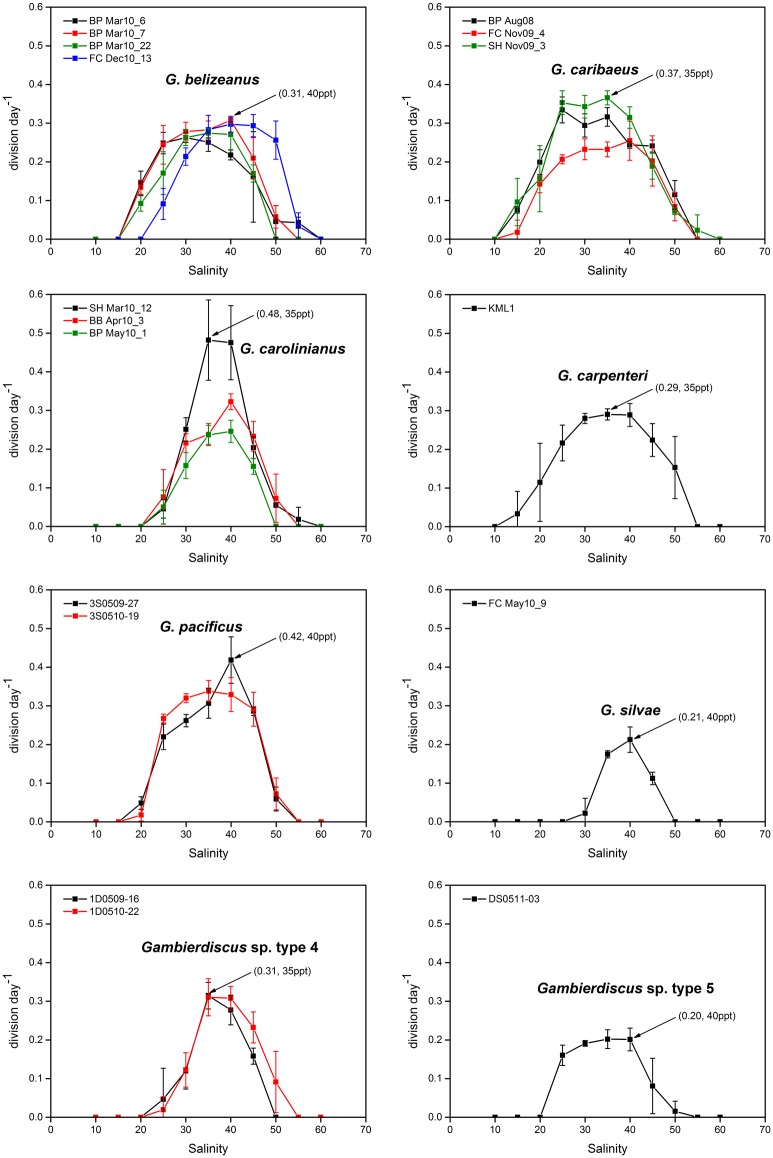
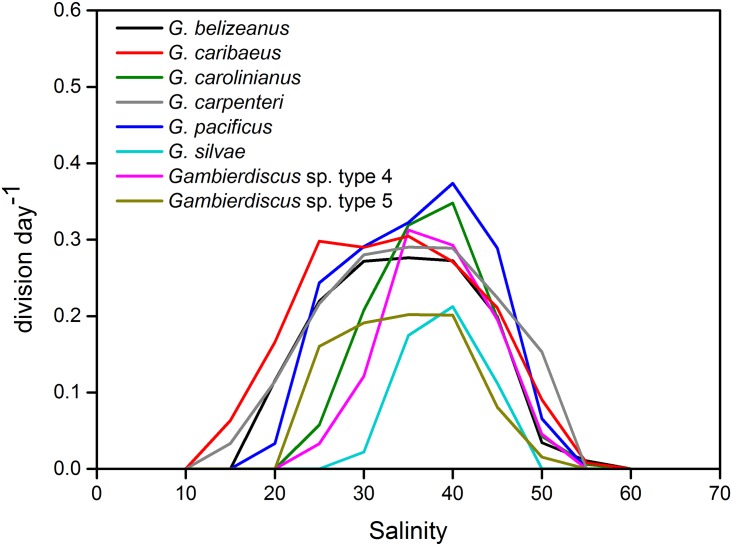
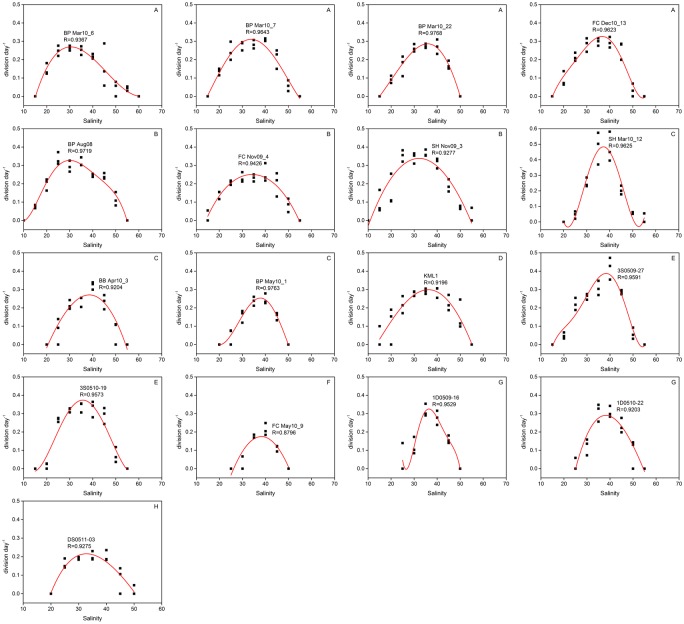
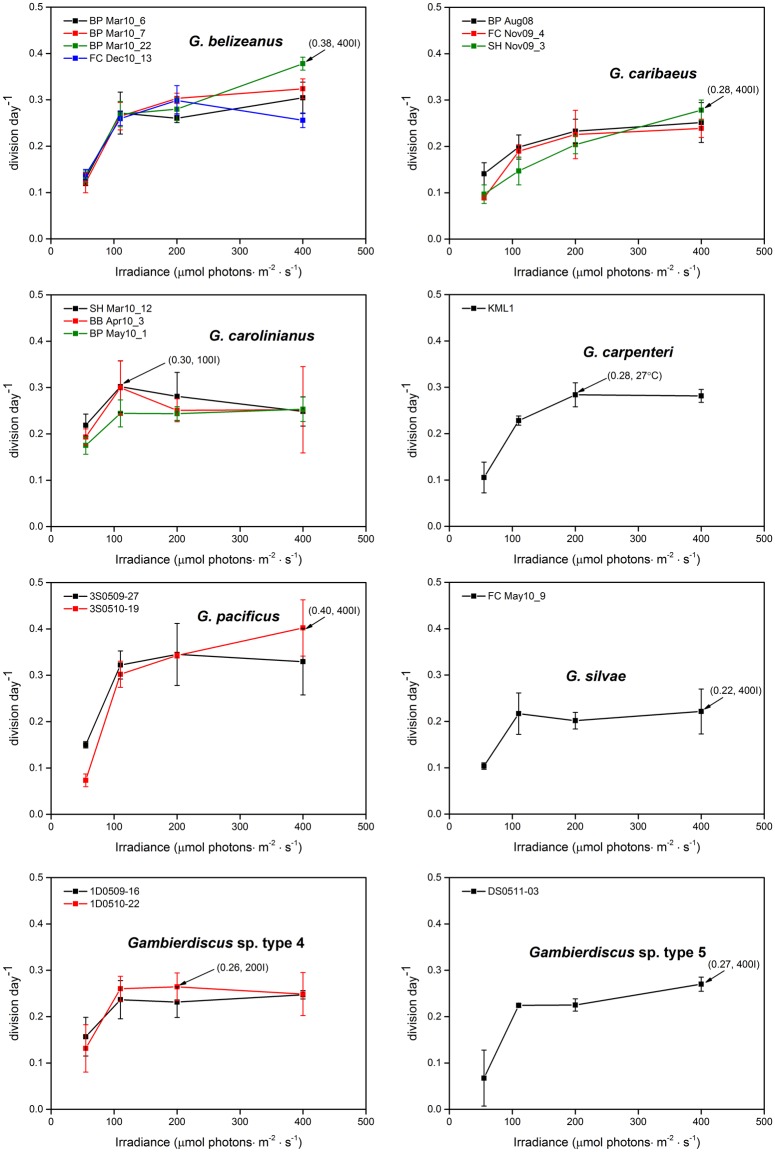
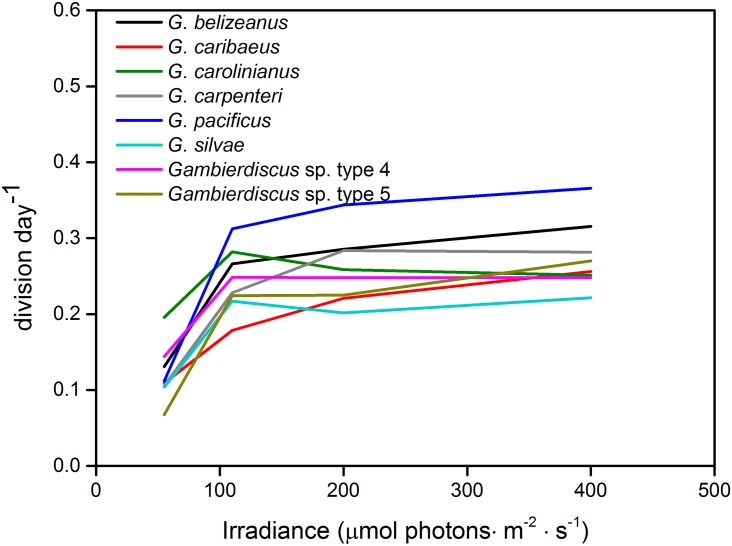
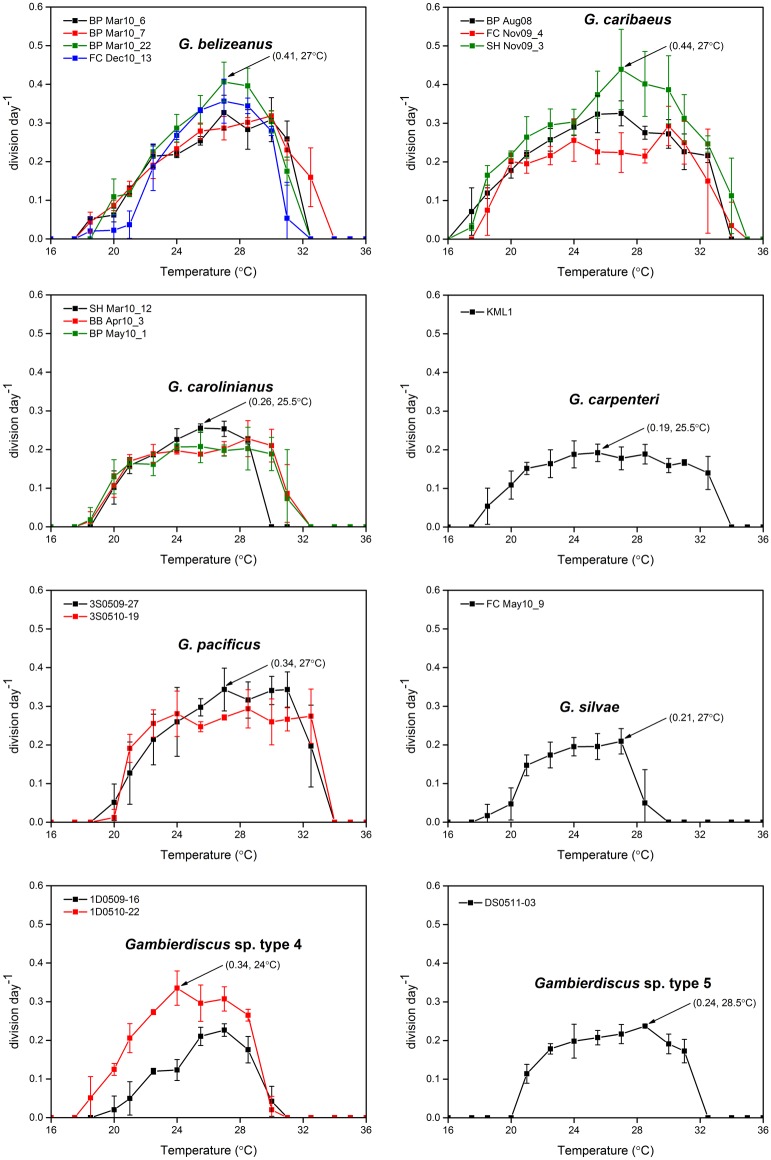
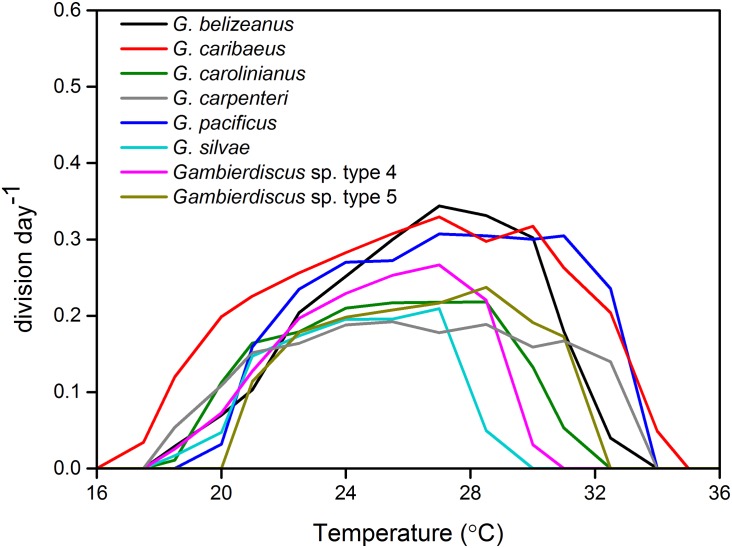
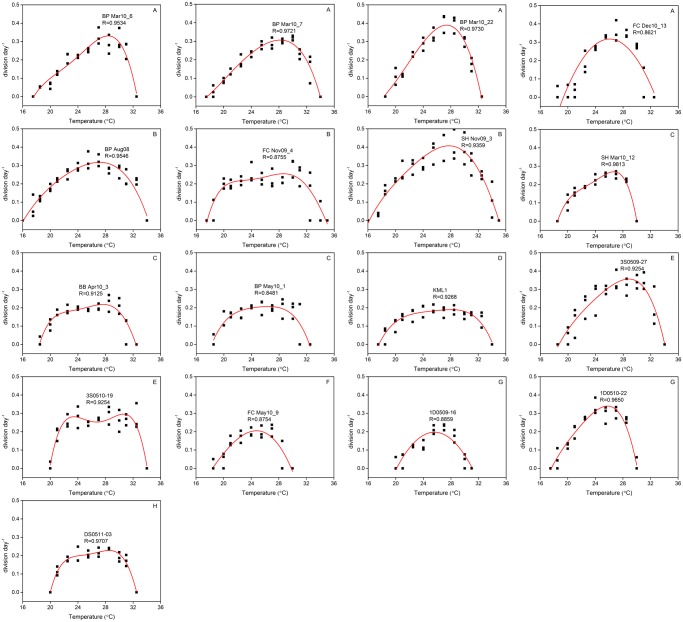
Benthic dinoflagellates in the genus Gambierdiscus produce the ciguatoxin precursors responsible for the occurrence of ciguatera toxicity. The prevalence of ciguatera toxins in fish has been linked to the presence and distribution of toxin-producing species in coral reef ecosystems, which is largely determined by the presence of suitable benthic habitat and environmental conditions favorable for growth. Here using single factor experiments, we examined the effects of salinity, irradiance, and temperature on growth of 17 strains of Gambierdiscus representing eight species/phylotypes (G. belizeanus, G. caribaeus, G. carolinianus, G. carpenteri, G. pacificus, G. silvae, Gambierdiscus sp. type 4-5), most of which were established from either Marakei Island, Republic of Kiribati, or St. Thomas, United States Virgin Island (USVI). Comparable to prior studies, growth rates fell within the range of 0-0.48 divisions day(-1). In the salinity and temperature studies, Gambierdiscus responded in a near Gaussian, non-linear manner typical for such studies, with optimal and suboptimal growth occurring in the range of salinities of 25 and 45 and 21.0 and 32.5°C. In the irradiance experiment, no mortality was observed; however, growth rates at 55 μmol photons · m(-2) · s(-1) were lower than those at 110-400 μmol photons · m(-2) · s(-1). At the extremes of the environmental conditions tested, growth rates were highly variable, evidenced by large coefficients of variability. However, significant differences in intraspecific growth rates were typically found only at optimal or near-optimal growth conditions. Polynomial regression analyses showed that maximum growth occurred at salinity and temperature levels of 30.1-38.5 and 23.8-29.2°C, respectively. Gambierdiscus growth patterns varied among species, and within individual species: G. belizeanus, G. caribaeus, G. carpenteri, and G. pacificus generally exhibited a wider range of tolerance to environmental conditions, which may explain their broad geographic distribution. In contrast, G. silvae and Gambierdiscus sp. types 4-5 all displayed a comparatively narrow range of tolerance to temperature, salinity, and irradiance.
Conflict of interest statement
Figures
References
-
- Chinain M, Germain M, Deparis X, Pauillac S, Legrand AM. Seasonal abundance and toxicity of the dinoflagellate Gambierdiscus spp. (Dinophyceae), the causative agent of ciguatera in Tahiti, French Polynesia. Mar Biol. 1999;135(2):259–267.
-
- Chateau-Degat ML, Chinain M, Cerf N, Gingras S, Hubert B, Dewailly E. Seawater temperature, Gambierdiscus spp. variability and incidence of ciguatera poisoning in French Polynesia. Harmful Algae. 2005;4(6):1053–1062. ISI:000233325900009.
-
- Bomber JW, Guillard RRL, Nelson WG. Roles of temperature, salinity, and light in seasonality, growth, and toxicity of ciguatera-causing Gambierdiscus toxicus Adachi et Fukuyo (Dinophyceae). J Exp Mar Biol Ecol. 1988;115:53–65.
-
- Morton SL, Norris DR, Bomber JW. Effect of temperature, salinity and light intensity on the growth and seasonality of toxic dinoflagellates associated with ciguatera. J Exp Mar Biol Ecol. 1992;157(1):79–90.
-
- Kibler SR, Litaker RW, Holland WC, Vandersea MW, Tester PA. Growth of eight Gambierdiscus (Dinophyceae) species: Effects of temperature, salinity and irradiance. Harmful Algae. 2012;19:1–14. 10.1016/j.hal.2012.04.007 - DOI
Publication types
MeSH terms
Grants and funding
LinkOut - more resources
Full Text Sources
Other Literature Sources
Miscellaneous
