


Mechanical ventilation in patients in the intensive care unit of a general university hospital in southern Brazil: an epidemiological study
- PMID: 27074175
- PMCID: PMC4785851
- DOI: 10.6061/clinics/2016(03)05
Mechanical ventilation in patients in the intensive care unit of a general university hospital in southern Brazil: an epidemiological study
Abstract
Objectives: To determine the characteristics, the frequency and the mortality rates of patients needing mechanical ventilation and to identify the risk factors associated with mortality in the intensive care unit (ICU) of a general university hospital in southern Brazil.
Method: Prospective cohort study in patients admitted to the ICU who needed mechanical ventilation for at least 24 hours between March 2004 and April 2007.
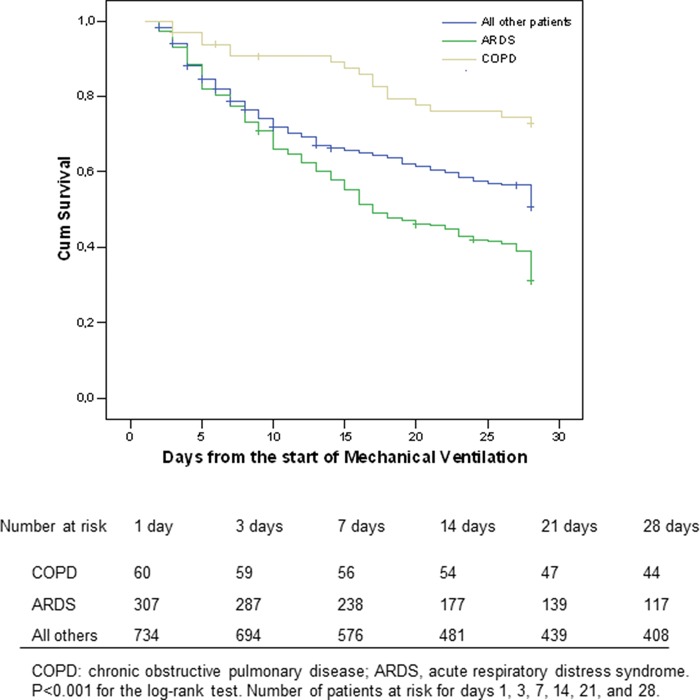
Results: A total of 1,115 patients admitted to the ICU needed mechanical ventilation. The mortality rate was 51%. The mean age (± standard deviation) was 57±18 years, and the mean Acute Physiology and Chronic Health Evaluation II (APACHE II) score was 22.6±8.3. The variables independently associated with mortality were (i) conditions present at the beginning of mechanical ventilation, age (hazard ratio: 1.01; p<0.001); the APACHE II score (hazard ratio: 1.01; p<0.005); acute lung injury/acute respiratory distress syndrome (hazard ratio: 1.38; p=0.009), sepsis (hazard ratio: 1.33; p=0.003), chronic obstructive pulmonary disease (hazard ratio: 0.58; p=0.042), and pneumonia (hazard ratio: 0.78; p=0.013) as causes of mechanical ventilation; and renal (hazard ratio: 1.29; p=0.011) and neurological (hazard ratio: 1.25; p=0.024) failure, and (ii) conditions occurring during the course of mechanical ventilation, acute lung injuri/acute respiratory distress syndrome (hazard ratio: 1.31; p<0.010); sepsis (hazard ratio: 1.53; p<0.001); and renal (hazard ratio: 1.75; p<0.001), cardiovascular (hazard ratio: 1.32; p≤0.009), and hepatic (hazard ratio: 1.67; p≤0.001) failure.
Conclusions: This large cohort study provides a comprehensive profile of mechanical ventilation patients in South America. The mortality rate of patients who required mechanical ventilation was higher, which may have been related to the severity of illness of the patients admitted to our ICU. Risk factors for hospital mortality included conditions present at the start of mechanical ventilation conditions that occurred during mechanical support.
Conflict of interest statement
No potential conflict of interest was reported.
Figures
References
Publication types
MeSH terms
LinkOut - more resources
Full Text Sources
Other Literature Sources
Medical
Miscellaneous
