


Functional classification of rice flanking sequence tagged genes using MapMan terms and global understanding on metabolic and regulatory pathways affected by dxr mutant having defects in light response
- PMID: 27076183
- PMCID: PMC4830809
- DOI: 10.1186/s12284-016-0089-2
Functional classification of rice flanking sequence tagged genes using MapMan terms and global understanding on metabolic and regulatory pathways affected by dxr mutant having defects in light response
Abstract
Background: Rice is one of the most important food crops for humans. To improve the agronomical traits of rice, the functions of more than 1,000 rice genes have been recently characterized and summarized. The completed, map-based sequence of the rice genome has significantly accelerated the functional characterization of rice genes, but progress remains limited in assigning functions to all predicted non-transposable element (non-TE) genes, estimated to number 37,000-41,000.
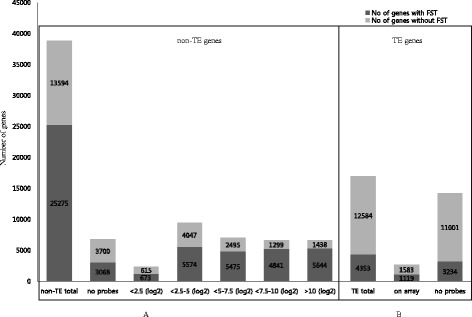
Results: The International Rice Functional Genomics Consortium (IRFGC) has generated a huge number of gene-indexed mutants by using mutagens such as T-DNA, Tos17 and Ds/dSpm. These mutants have been identified by 246,566 flanking sequence tags (FSTs) and cover 65 % (25,275 of 38,869) of the non-TE genes in rice, while the mutation ratio of TE genes is 25.7 %. In addition, almost 80 % of highly expressed non-TE genes have insertion mutations, indicating that highly expressed genes in rice chromosomes are more likely to have mutations by mutagens such as T-DNA, Ds, dSpm and Tos17. The functions of around 2.5 % of rice genes have been characterized, and studies have mainly focused on transcriptional and post-transcriptional regulation. Slow progress in characterizing the function of rice genes is mainly due to a lack of clues to guide functional studies or functional redundancy. These limitations can be partially solved by a well-categorized functional classification of FST genes. To create this classification, we used the diverse overviews installed in the MapMan toolkit. Gene Ontology (GO) assignment to FST genes supplemented the limitation of MapMan overviews.
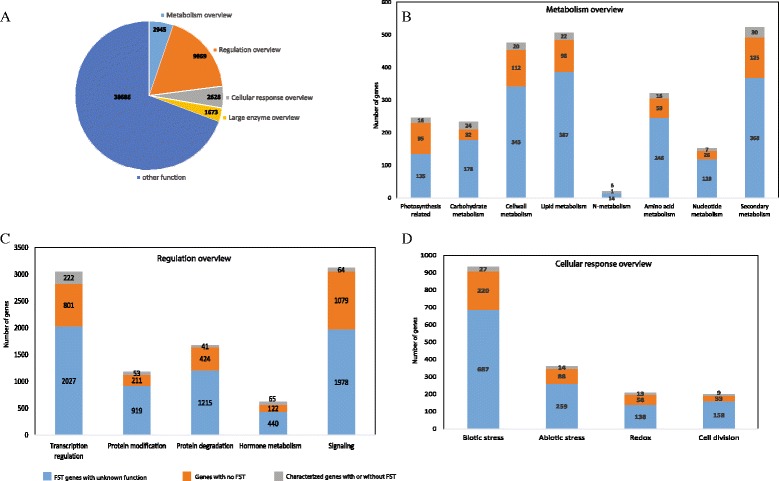
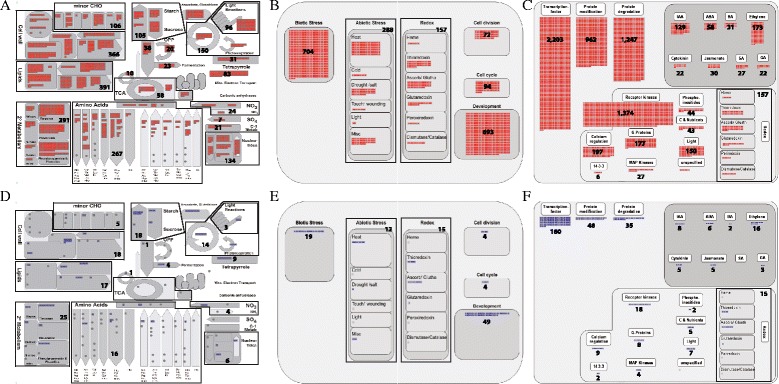
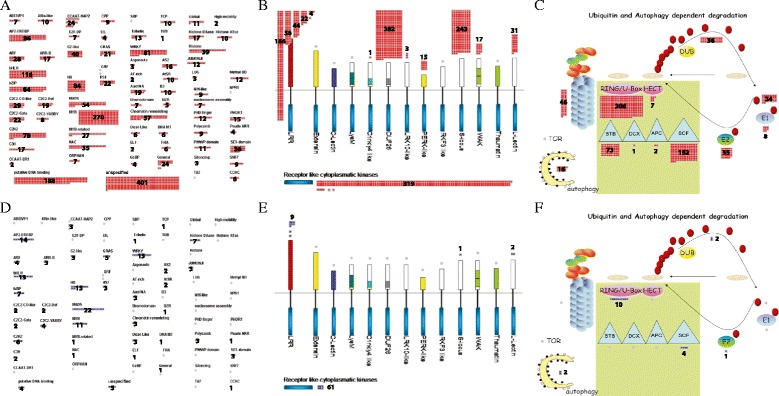
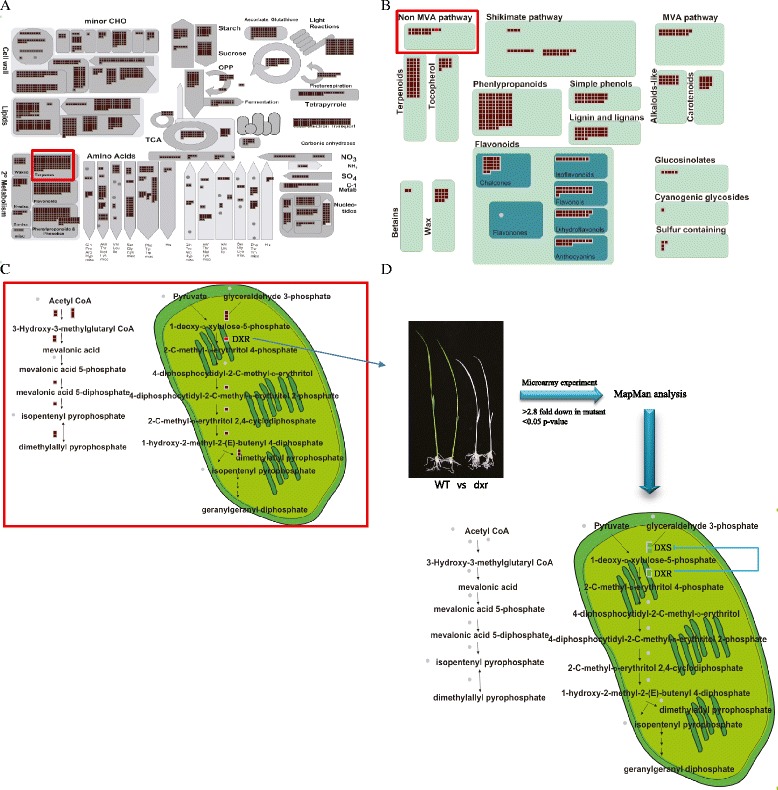
Conclusion: The functions of 863 of 1,022 known genes can be evaluated by current FST lines, indicating that FST genes are useful resources for functional genomic studies. We assigned 16,169 out of 29,624 FST genes to 34 MapMan classes, including major three categories such as DNA, RNA and protein. To demonstrate the MapMan application on FST genes, transcriptome analysis was done from a rice mutant of 1-deoxy-D-xylulose 5-phosphate reductoisomerase (DXR) gene with FST. Mapping of 756 down-regulated genes in dxr mutants and their annotation in terms of various MapMan overviews revealed candidate genes downstream of DXR-mediating light signaling pathway in diverse functional classes such as the methyl-D-erythritol 4-phosphatepathway (MEP) pathway overview, photosynthesis, secondary metabolism and regulatory overview. This report provides a useful guide for systematic phenomics and further applications to enhance the key agronomic traits of rice.
Keywords: DXR; Functional genomics; Gene-indexed mutant; MapMan analysis; Rice.
Figures
References
-
- Chandran AKN, Jung KH. Resources for systems biology in rice. J Plant Biol. 2014;57(2):80–92. doi: 10.1007/s12374-014-0903-6. - DOI
LinkOut - more resources
Full Text Sources
Other Literature Sources
Miscellaneous
