Natural variability of lung function in young healthy school children
- PMID: 27076582
- PMCID: PMC4950968
- DOI: 10.1183/13993003.01795-2015
Natural variability of lung function in young healthy school children
Abstract
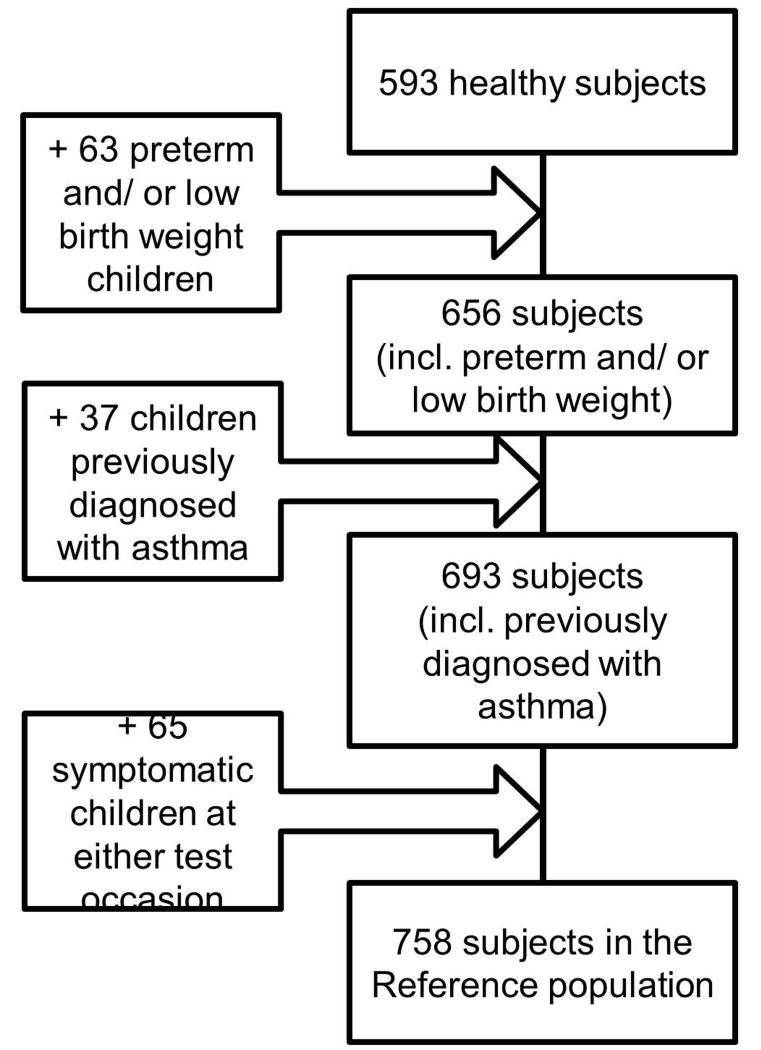
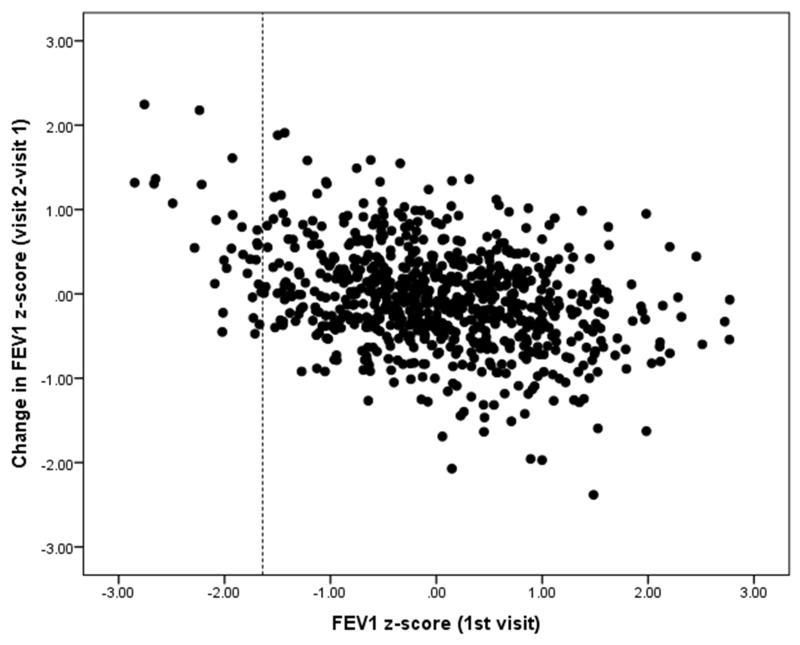
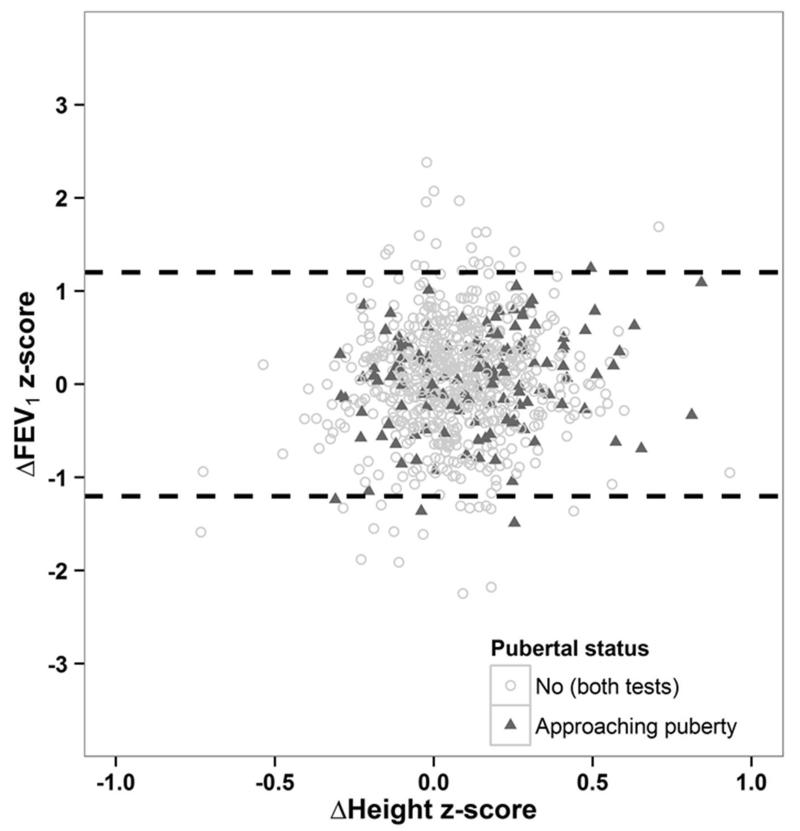
Knowledge about long-term variability of lung function in healthy children is essential when monitoring and treating those with respiratory disease over time. The aim of this study was to define the natural variability in spirometry in young children after an interval of 12 months.The Size and Lung function In Children study was a prospective study designed to assess spirometry and body size, shape and composition in a multi-ethnic population of London school children. 14 schools with a wide range of socioeconomic circumstances were recruited. Spirometric and anthropometric assessments and parental questionnaires pertaining to respiratory symptoms, previous medical history, pubertal status and socioeconomic circumstances were completed at baseline and ∼1 year later.Technically acceptable spirometry data on two occasions ∼1 year apart (range 9-16 months) were available in 758 children (39% boys, mean±sd age 8.1±1.6 years), 593 of whom were classified as "healthy". Mean±sd within-subject between-test variability was 0.05±0.6 z-scores, with 95% of all the children achieving a between-test variability within ±1.2 z-scores (equating to ∼13% predicted).Natural variations of up to 1.2 z-scores occur in healthy children over ∼1 year. These must be considered when interpreting results from annual reviews in those with lung disease who are otherwise stable, if unnecessary further investigations or changes in treatment are to be avoided.
Copyright ©ERS 2016.
Figures
References
-
- Banasiak NC. Spirometry in primary care for children with asthma. Pediatr Nurs. 2014;40(4):195–8. - PubMed
-
- Beydon N, Davis SD, Lombardi E, et al. An official American Thoracic Society/European Respiratory Society statement: pulmonary function testing in preschool children. Am J Respir Crit Care Med. 2007;175(12):1304–45. - PubMed
-
- Miller MR, Hankinson J, Brusasco V, et al. Standardisation of spirometry. Eur Respir J. 2005;26(2):319–38. - PubMed
-
- Pellegrino R, Viegi G, Brusasco V, et al. Interpretative strategies for lung function tests. Eur Respir J. 2005;26(5):948–68. - PubMed
MeSH terms
Grants and funding
LinkOut - more resources
Full Text Sources
Other Literature Sources