. 2016 Apr 14;11(4):e0153218.
doi: 10.1371/journal.pone.0153218. eCollection 2016.

Identification of Genome-Wide Variants and Discovery of Variants Associated with Brassica rapa Clubroot Resistance Gene Rcr1 through Bulked Segregant RNA Sequencing

Affiliations

Identification of Genome-Wide Variants and Discovery of Variants Associated with Brassica rapa Clubroot Resistance Gene Rcr1 through Bulked Segregant RNA Sequencing

Fengqun Yu et al. PLoS One. .

Abstract

Clubroot, caused by Plasmodiophora brassicae, is an important disease on Brassica species worldwide. A clubroot resistance gene, Rcr1, with efficacy against pathotype 3 of P. brassicae, was previously mapped to chromosome A03 of B. rapa in pak choy cultivar "Flower Nabana". In the current study, resistance to pathotypes 2, 5 and 6 was shown to be associated with Rcr1 region on chromosome A03. Bulked segregant RNA sequencing was performed and short read sequences were assembled into 10 chromosomes of the B. rapa reference genome v1.5. For the resistant (R) bulks, a total of 351.8 million (M) sequences, 30,836.5 million bases (Mb) in length, produced 120-fold coverage of the reference genome. For the susceptible (S) bulks, 322.9 M sequences, 28,216.6 Mb in length, produced 109-fold coverage. In total, 776.2 K single nucleotide polymorphisms (SNPs) and 122.2 K insertion / deletion (InDels) in R bulks and 762.8 K SNPs and 118.7 K InDels in S bulks were identified; each chromosome had about 87% SNPs and 13% InDels, with 78% monomorphic and 22% polymorphic variants between the R and S bulks. Polymorphic variants on each chromosome were usually below 23%, but made up 34% of the variants on chromosome A03. There were 35 genes annotated in the Rcr1 target region and variants were identified in 21 genes. The numbers of poly variants differed significantly among the genes. Four out of them encode Toll-Interleukin-1 receptor / nucleotide-binding site / leucine-rich-repeat proteins; Bra019409 and Bra019410 harbored the higher numbers of polymorphic variants, which indicates that they are more likely candidates of Rcr1. Fourteen SNP markers in the target region were genotyped using the Kompetitive Allele Specific PCR method and were confirmed to associate with Rcr1. Selected SNP markers were analyzed with 26 recombinants obtained from a segregating population consisting of 1587 plants, indicating that they were completely linked to Rcr1. Nine SNP markers were used for marker-assisted introgression of Rcr1 into B. napus canola from B. rapa, with 100% accuracy in this study.


Conflict of interest statement

Competing Interests: This study was funded by www.fundingconsortium.ca. There are no patents, products in development, or marketed products to declare. This does not alter the authors' adherence to all the PLOS ONE policies on sharing data and materials.

Figures

Fig 1
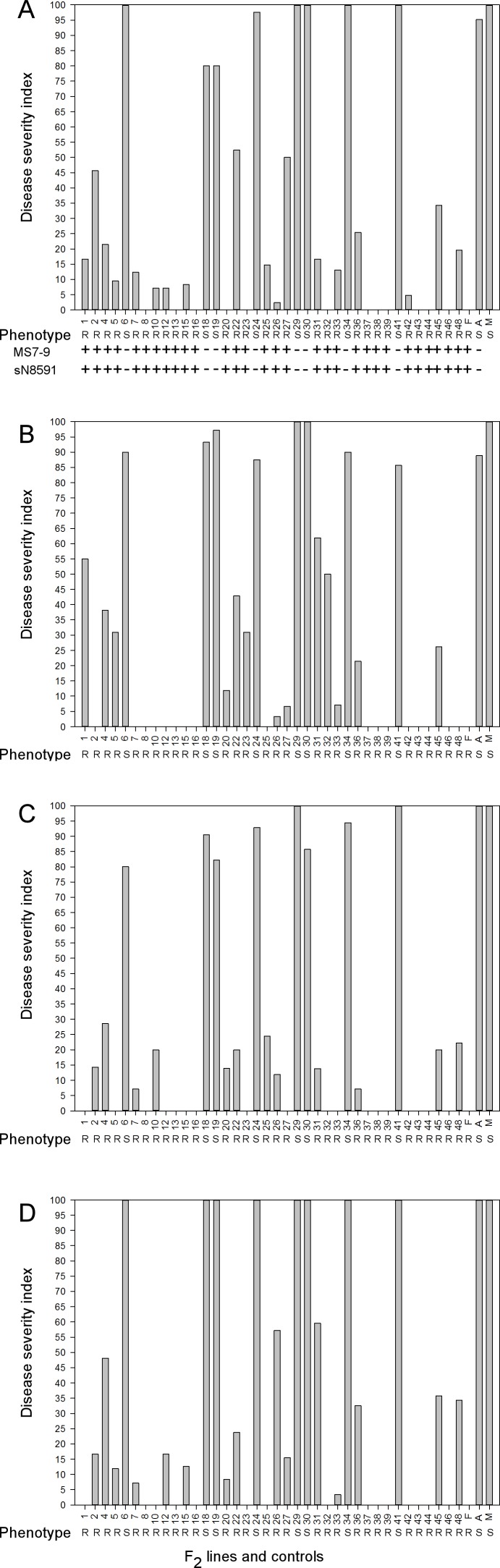
Fig 1. Evaluation of plants from 38 F2 lines for resistance to clubroot.
A, Plants were inoculated with pathotype 3 and confirmed with molecular markers MS7-9 and sN8591 flanking Rcr1 described by Chu et al [11]. “+”:heterozygous alleles, one allele from R parent and the other one from S parent, “-”:homozygous alleles from S parent; B, Inoculated with pathotype 2; C, Inoculated with pathotype 5; D, Inoculated with pathotype 6. Names of the lines indicate below X axis. Letters F, A, and M represent B. rapa cv. or breeding line FN, ACDC and “Mei Qing Choi”, respectively. Disease severity indexes (DSI) were calculated from clubroot severity ratings. R and S are the phenotypes assigned for each line based on DSIs. The experiments were replicated two times with similar results.
Fig 2
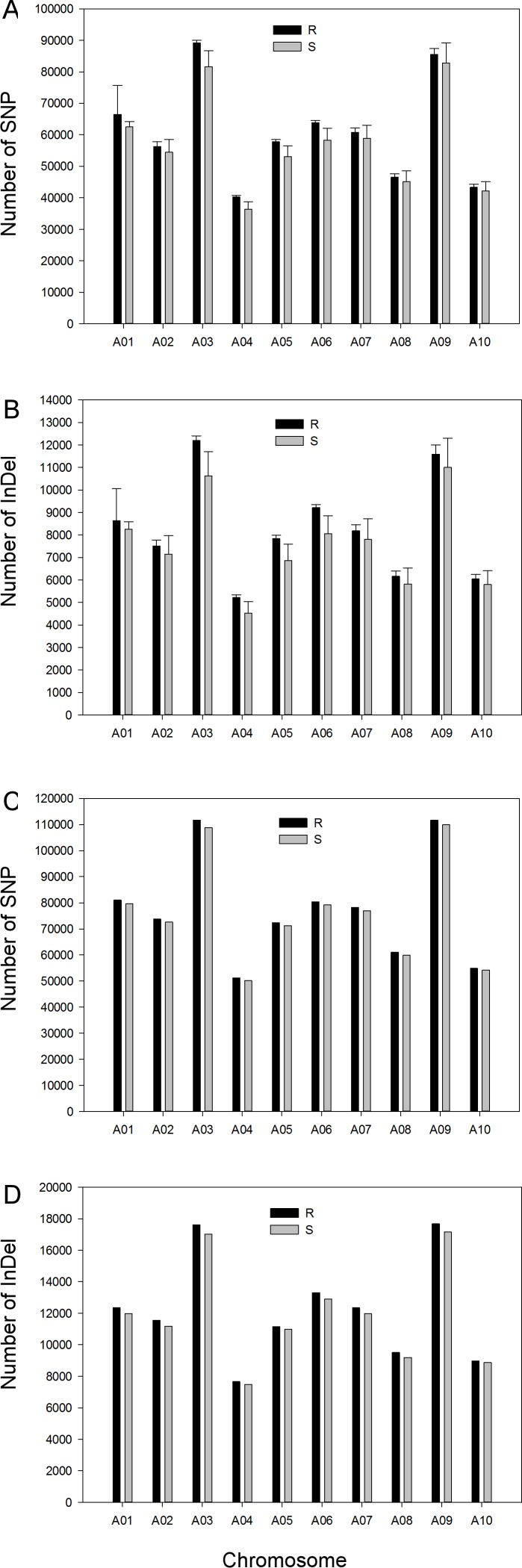
Fig 2. Numbers of variants (SNPs and InDels) identified in R and S bulks in comparing with the DNA sequence of the B. rapa cv. “Chiifu”.
A, Number of SNPs by single sample assembly (SSA); B, Number of InDels by SSA; C, Number of SNPs by pooled sample assembly (PSA); D, Number of InDel by PSA.
Fig 3
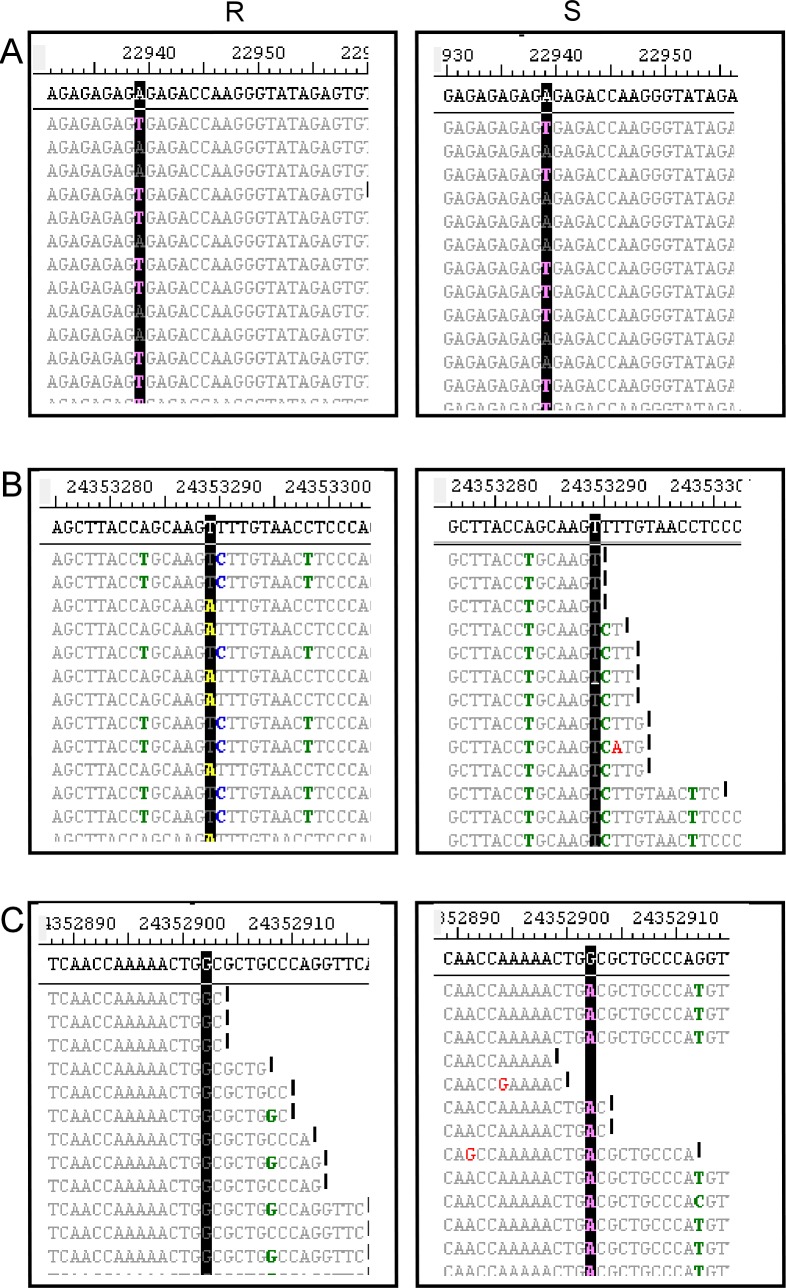
Fig 3. Examples of polymorphic and monomorphic variants on B. rapa chromosome A03 displayed by SeqMan Pro (DNASTAR, Madison, WI, USA).
A, Monomorphic variant at the location 22939; SNP “T” in both R and S bulks; B, Polymorphic variant at the location 24353288; SNP “A” in R, but not in S; C, Polymorphic variant at the location 24352902; SNP “A” in S, but not in R. SNPs are highlighted in black. The numbers in the first row of each snapshot are the physical location on chromosome A03 in the B. rapa reference genome. The DNA sequences shown in the second rows are the reference genome sequences. The sequences below the reference genome are the short reads from either R or S bulks assembled into the reference genome.
Fig 4
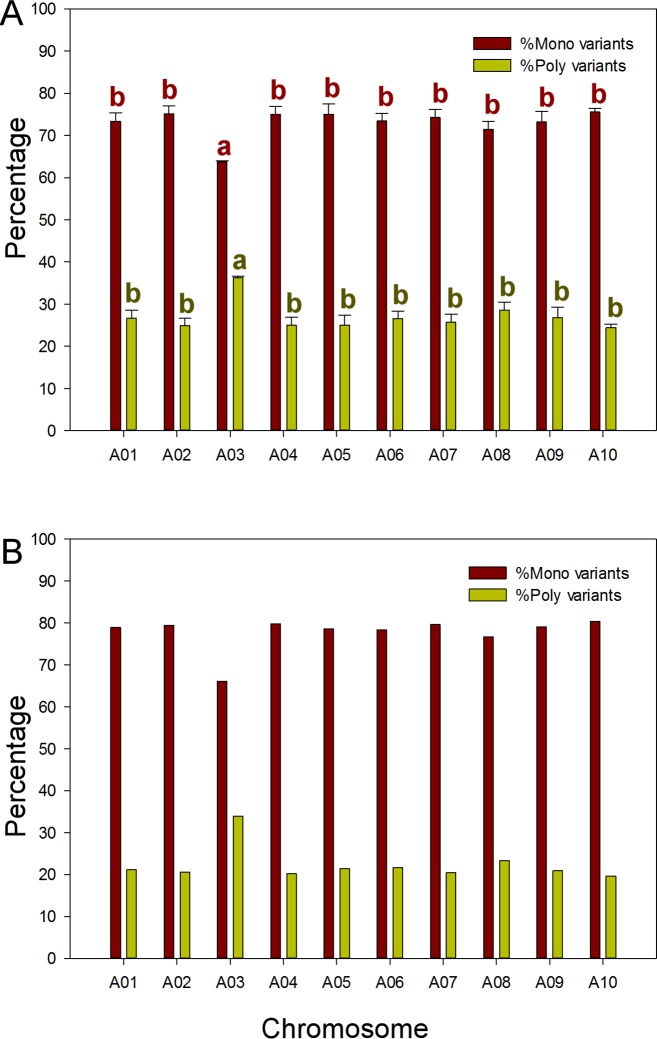
Fig 4. The proportion (%) of monomorphic and polymorphic variants on each chromosome.
A, Using the single sample assembly method; and B, Using the pooled sample assembly method. Bars capped with the same letter do not differ at P ≤ 0.05.
Fig 5
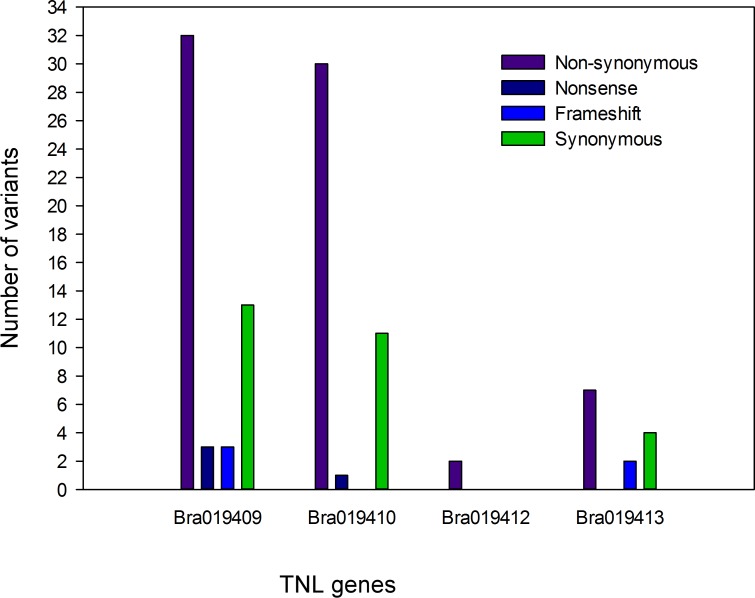
Fig 5. Number of unique poly variants in the four TIR-NBS-LRR genes from the resistant bulked samples.
Fig 6
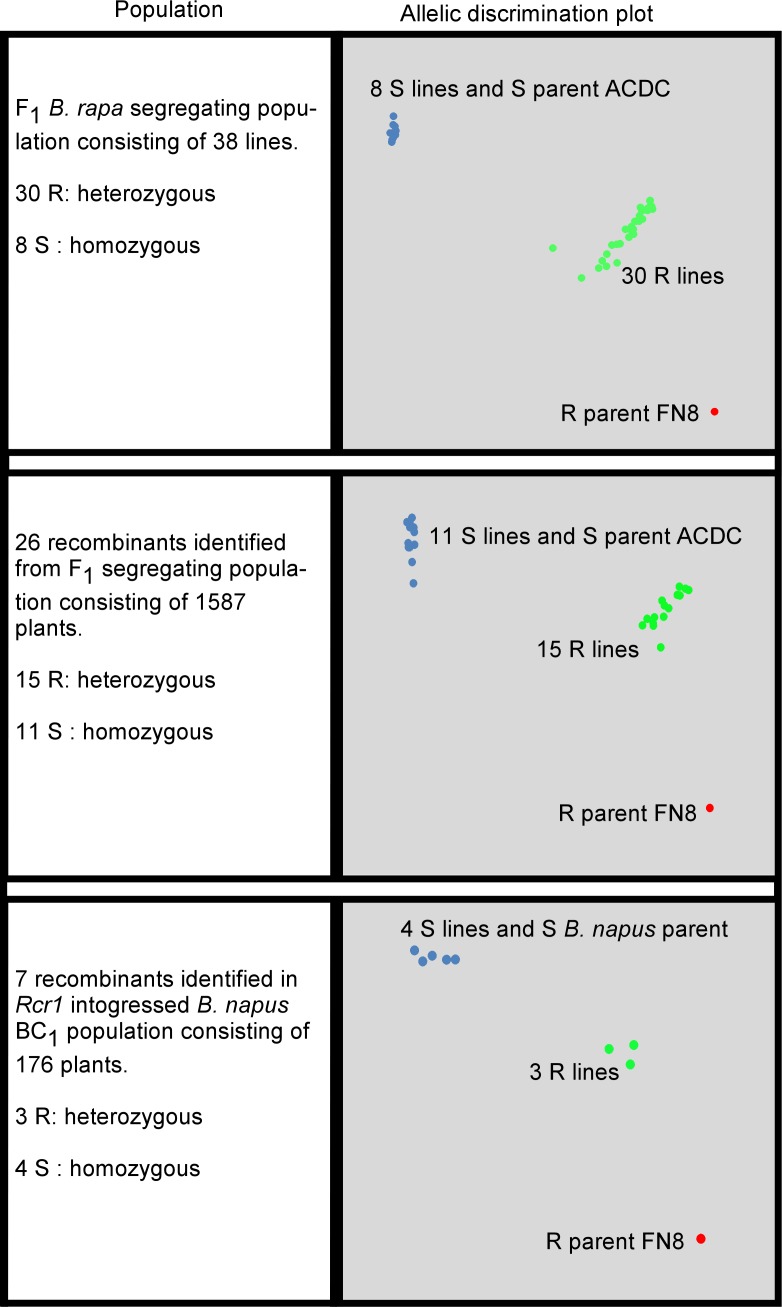
Fig 6. Allelic discrimination plots show the genotypes of three populations based on SNP marker, SNP_A03_12, using the KASP method.
ACDC and FN8 are homozygous susceptible and resistant lines, respectively.
Fig 7
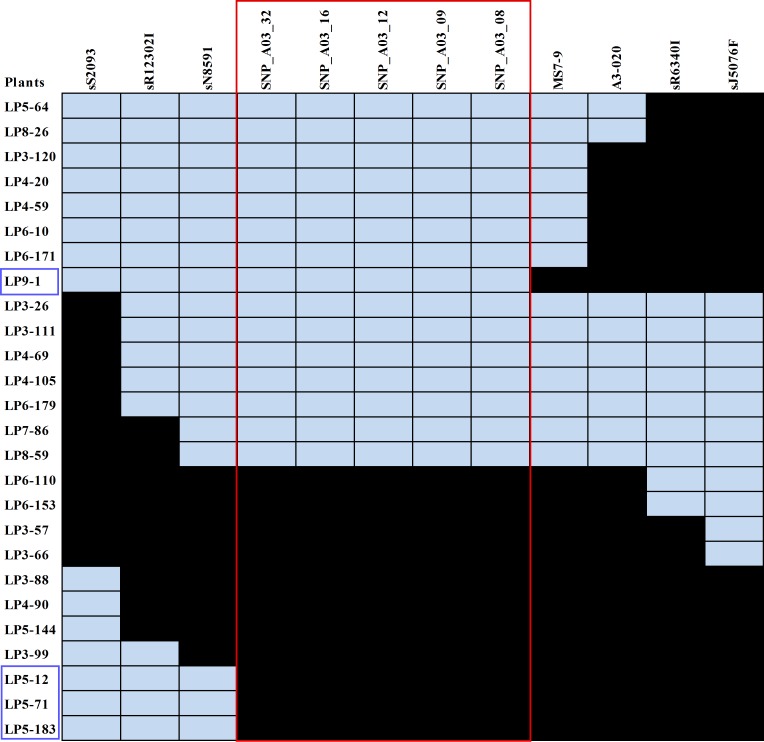
Fig 7. Analysis of the recombinants selected from the F1 population derived from the cross ACDC x FN.
Phenotypes (R for resistant, S for susceptible) on the right, molecular markers (sS2093, sR12302I, sN8591, MS7-9, A3-020, sR6340I and sJ5076F) on the top were described previously [11]. The recombinants were analyzed with five SNP markers (SNP_A03_08, 09, 12, 16 and 32) residing in the genes Bra019413, Bra019412, Bra019410, Bra019409 and Bra019406 respectively using the KASP method. They are highlighted in the red rectangle. PCR products amplified from R alleles are denoted in light grey and those from S alleles in black. The four recombinants in blue rectangles were identified with the closest flanking markers sN8591 and MS7-9 [11].

References

    1. Dixon GR. The occurrence and economic impact of Plasmodiophora brassicae and clubroot disease. J Plant Growth Regul 2009; 28; 194–202. 10.1007/s00344-009-9090-y - DOI
    1. Nikolaev SI, Berney C, Fahrni JF, Bolivar I, Polet S, Mylnikov AP, et al. The twilight of Heliozoa and rise of Rhizaria, an emerging supergroup of amoeboid eukaryotes. Proc Natl Acad Sci USA 2004; 101:8066–8071. 10.1073/pnas.0308602101 - DOI - PMC - PubMed
    1. Howard RJ, Strelkov SE, Hardinget MW.Clubroot of cruciferous crops–new perspectives on an old disease. Can. J. Plant Pathol 2010; 32: 43–57. 10.1080/07060661003621761 - DOI
    1. Kageyama K, Asano T. Life cycle of Plasmodiophora brassicae. J Plant Growth Regul 2009; 28: 203–11. 10.1007/s00344-009-9101-z - DOI
    1. Diederichsen E, Frauen M, Linders EGA, Hatakeyama EK, Hirai EM. Status and perspectives of clubroot resistance breeding in crucifer crops. J Plant Growth Regul 2009; 28:265–281. 10.1007/s00344-009-9100-0 - DOI

Publication types