


Risperidone (depot) for schizophrenia
- PMID: 27078222
- PMCID: PMC10493848
- DOI: 10.1002/14651858.CD004161.pub2
Risperidone (depot) for schizophrenia
Abstract
Background: Risperidone is the first new generation antipsychotic drug made available in a long-acting injection formulation.
Objectives: To examine the effects of depot risperidone for treatment of schizophrenia or related psychoses in comparison with placebo, no treatment or other antipsychotic medication.To critically appraise and summarise current evidence on the resource use, cost and cost-effectiveness of risperidone (depot) for schizophrenia.
Search methods: We searched the Cochrane Schizophrenia Group's Register (December 2002, 2012, and October 28, 2015). We also checked the references of all included studies, and contacted industry and authors of included studies.
Selection criteria: Randomised clinical trials comparing depot risperidone with other treatments for people with schizophrenia and/or schizophrenia-like psychoses.
Data collection and analysis: Two review authors independently selected trials, assessed trial quality and extracted data. For dichotomous data, we calculated the risk ratio (RR), with 95% confidence interval (CI). For continuous data, we calculated mean differences (MD). We assessed risk of bias for included studies and created 'Summary of findings' tables using GRADE.
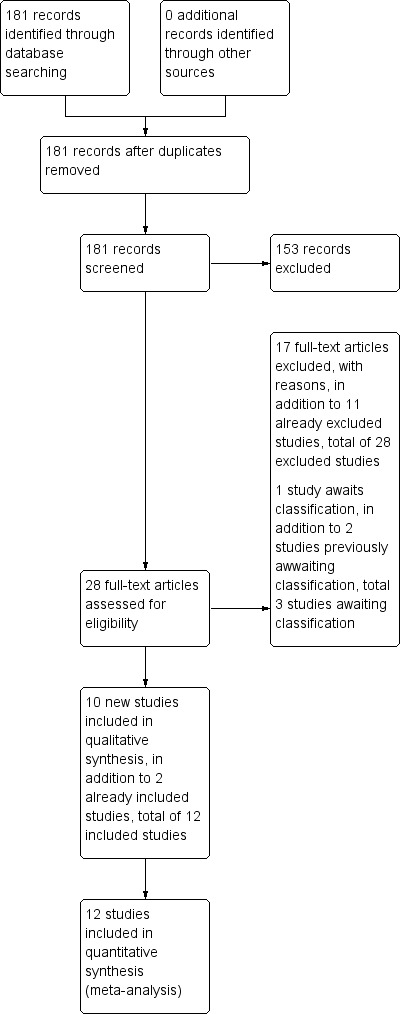
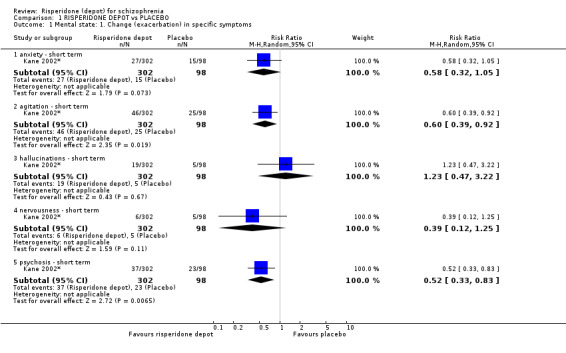
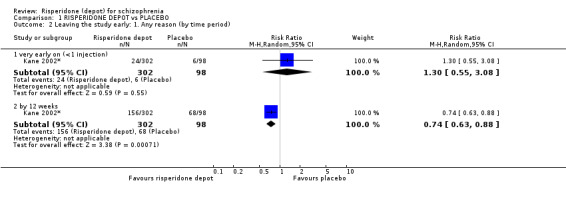
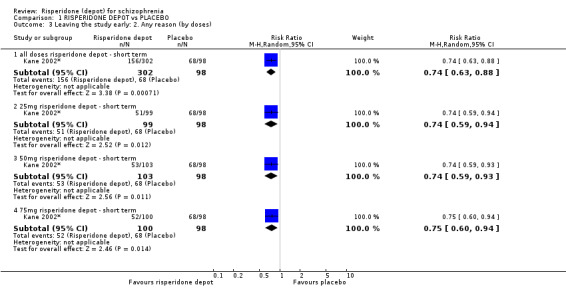
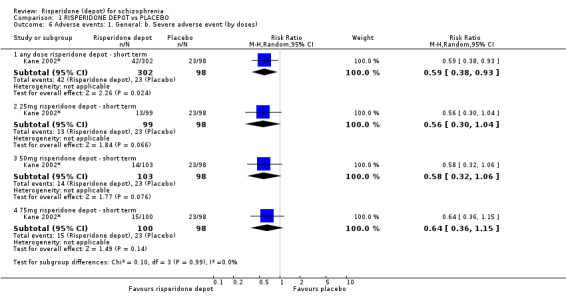
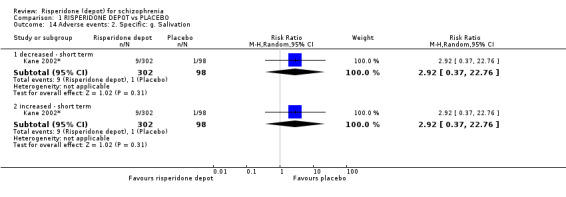
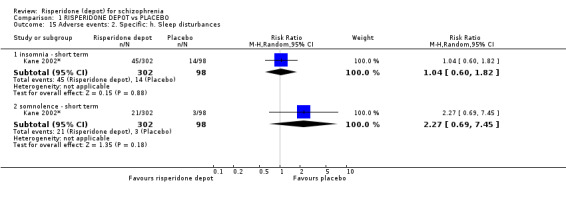
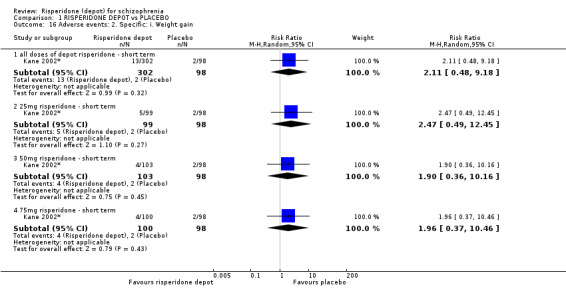
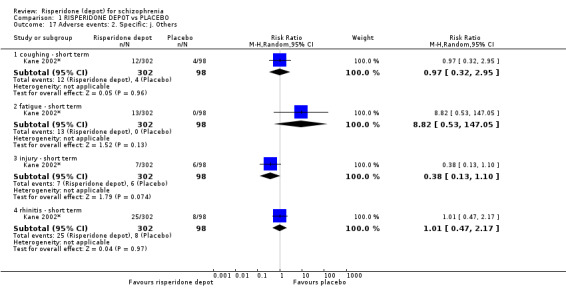
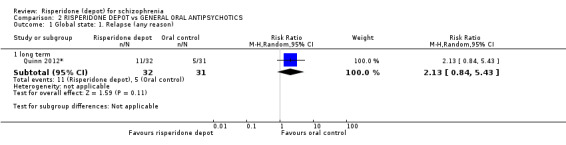
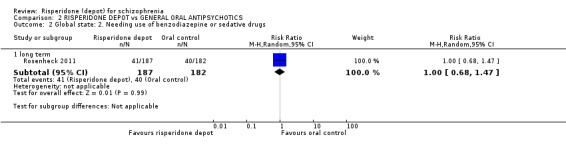
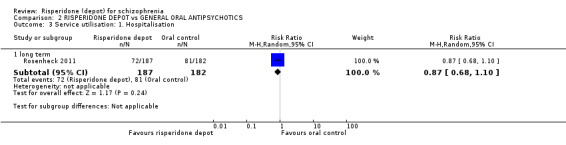
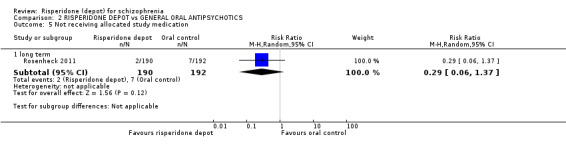
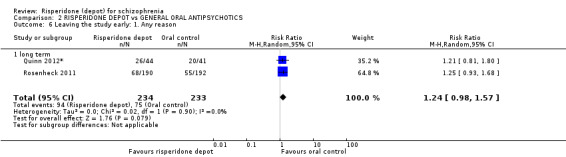
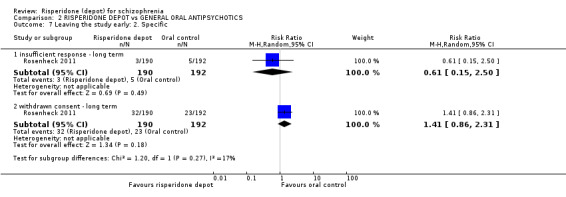
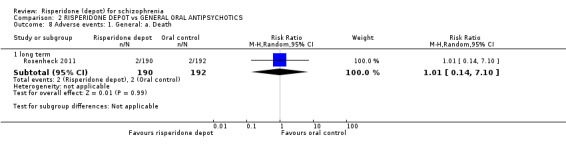
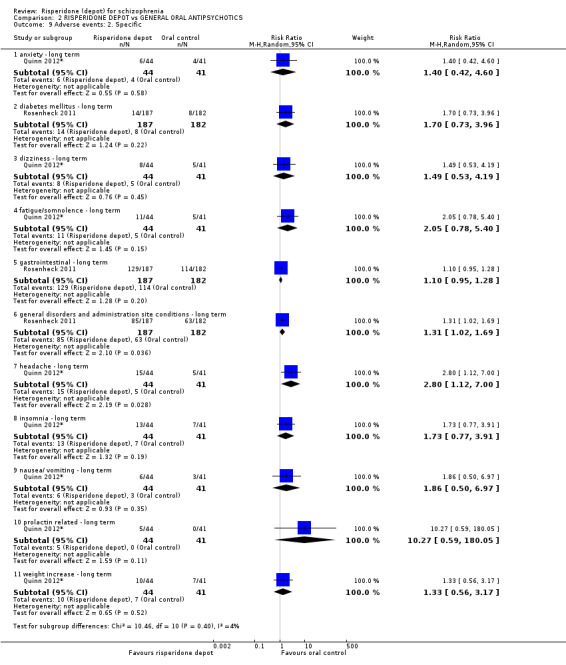
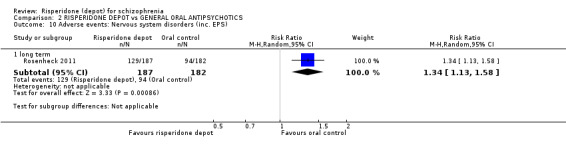
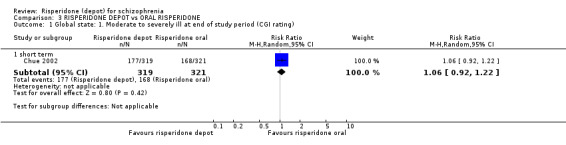
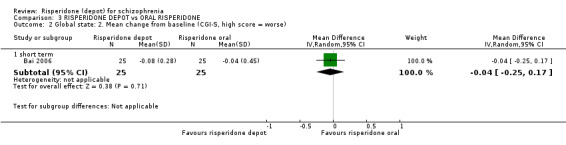
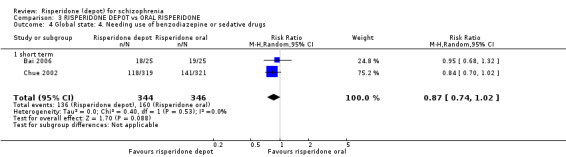
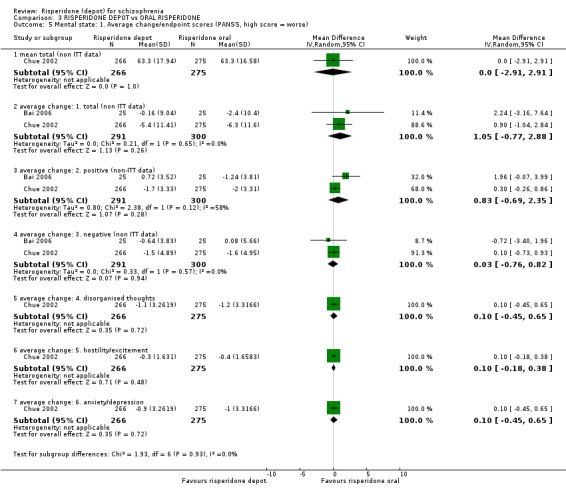
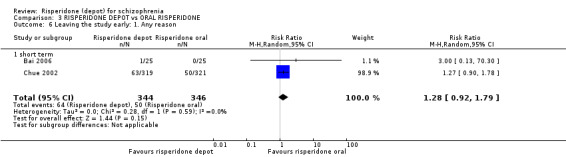
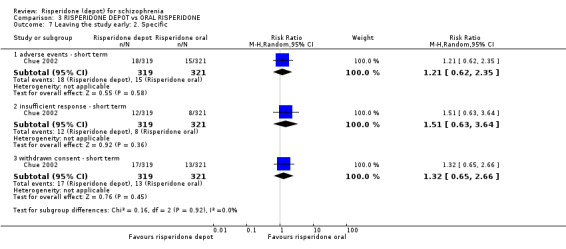
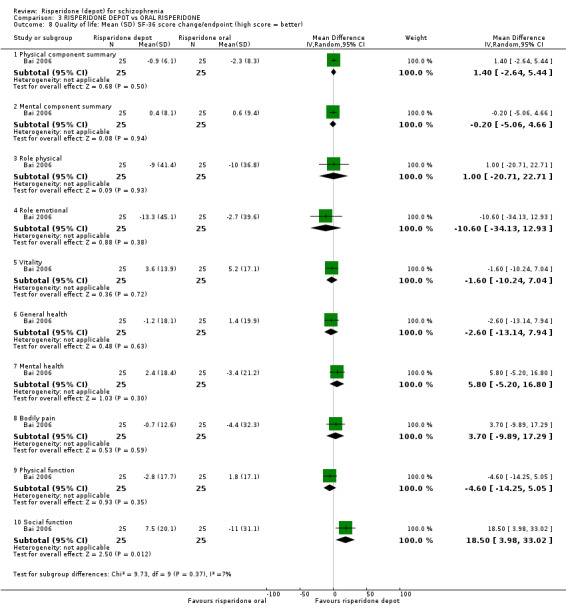
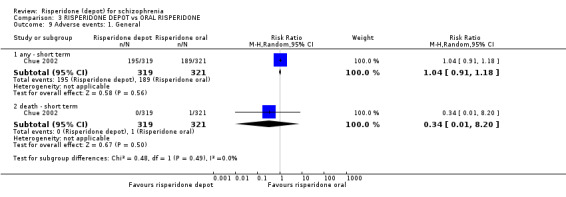
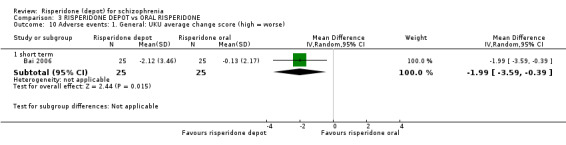
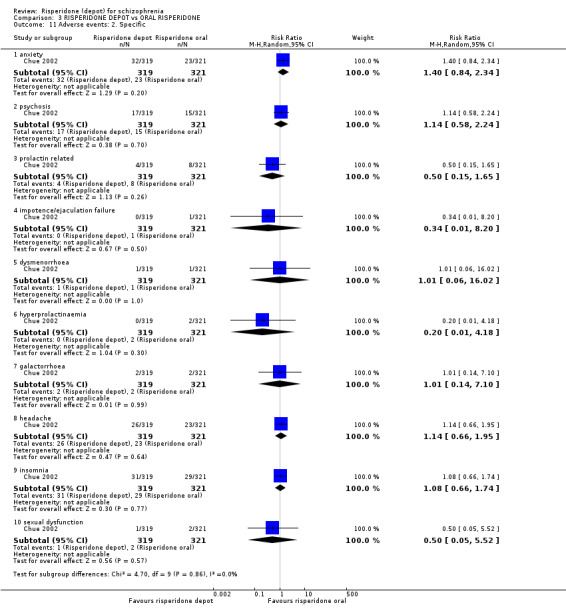
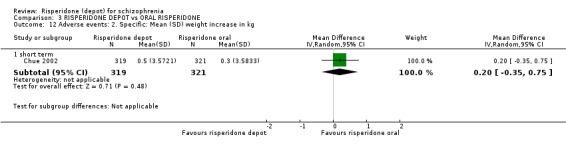
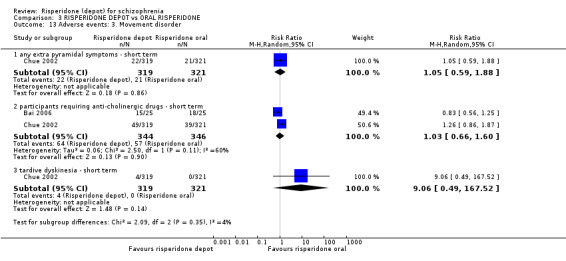
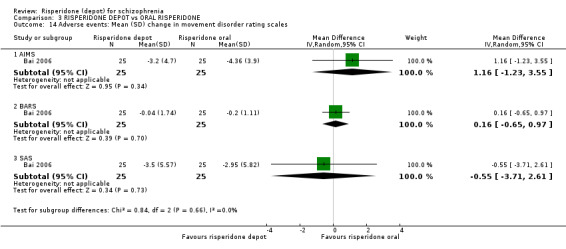
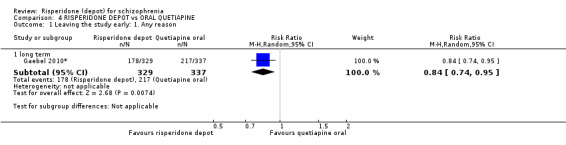
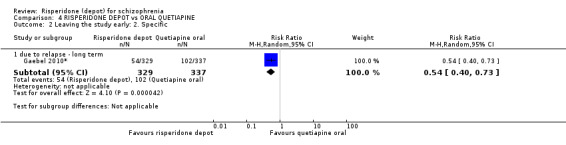
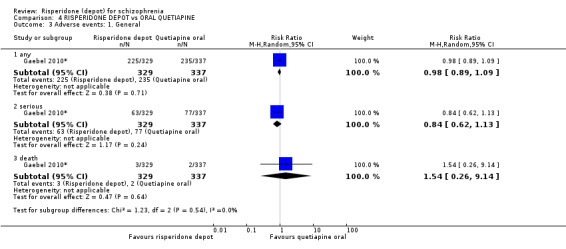
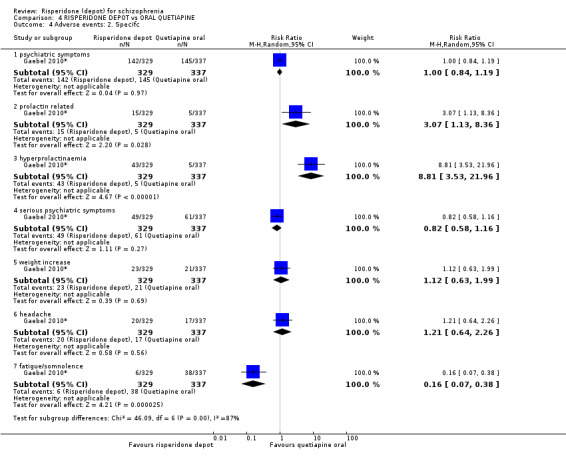
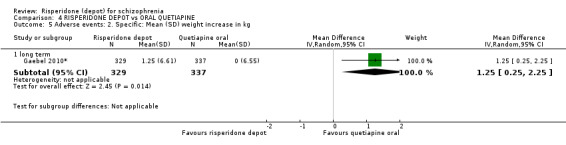
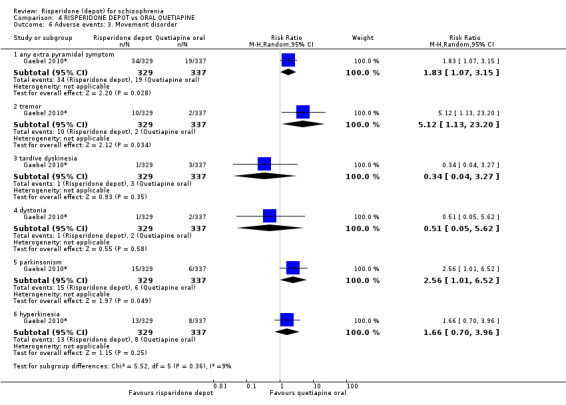
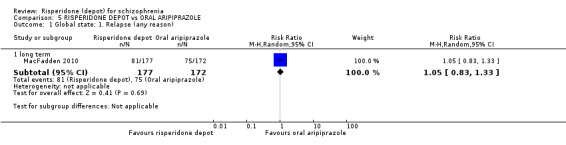
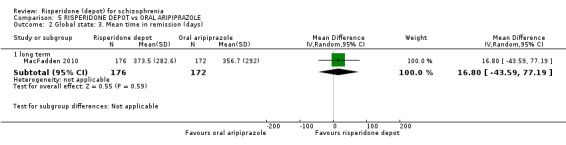
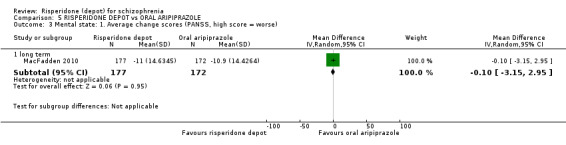
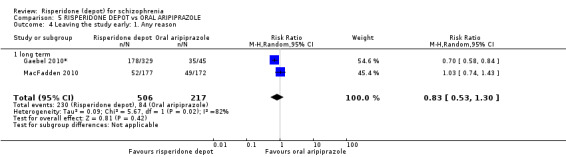
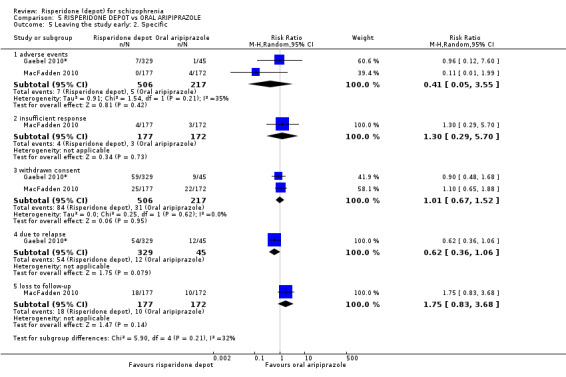
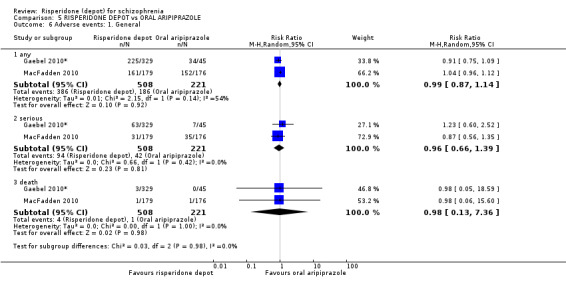
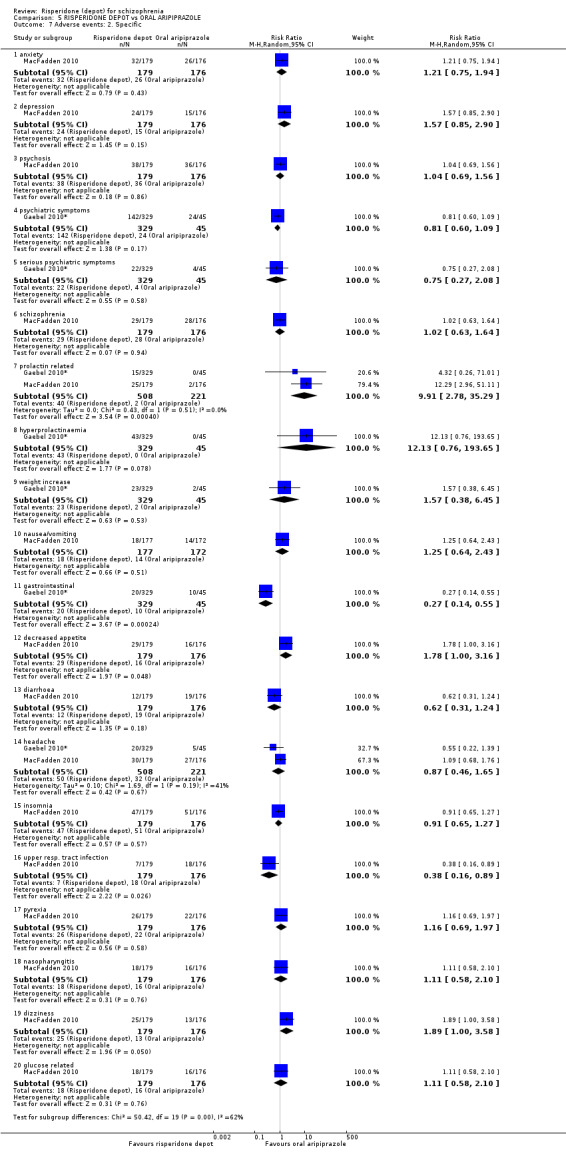
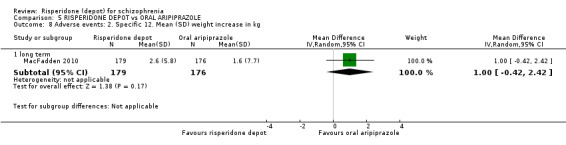
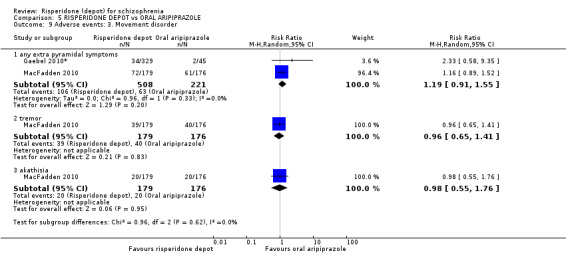
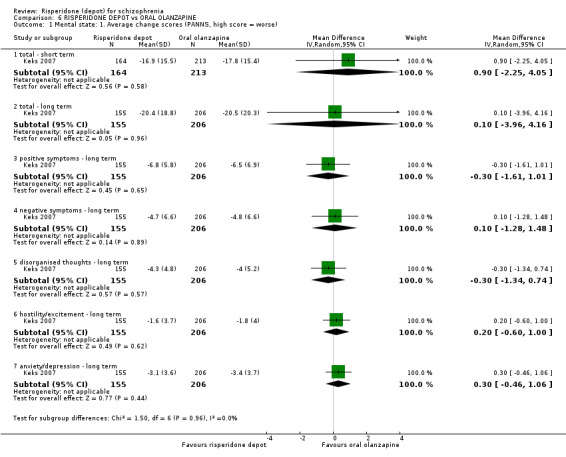
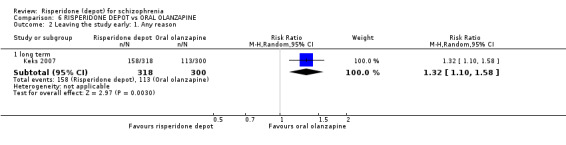
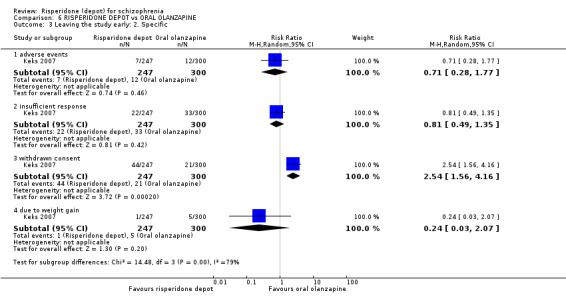
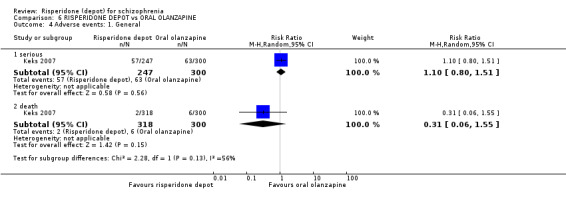
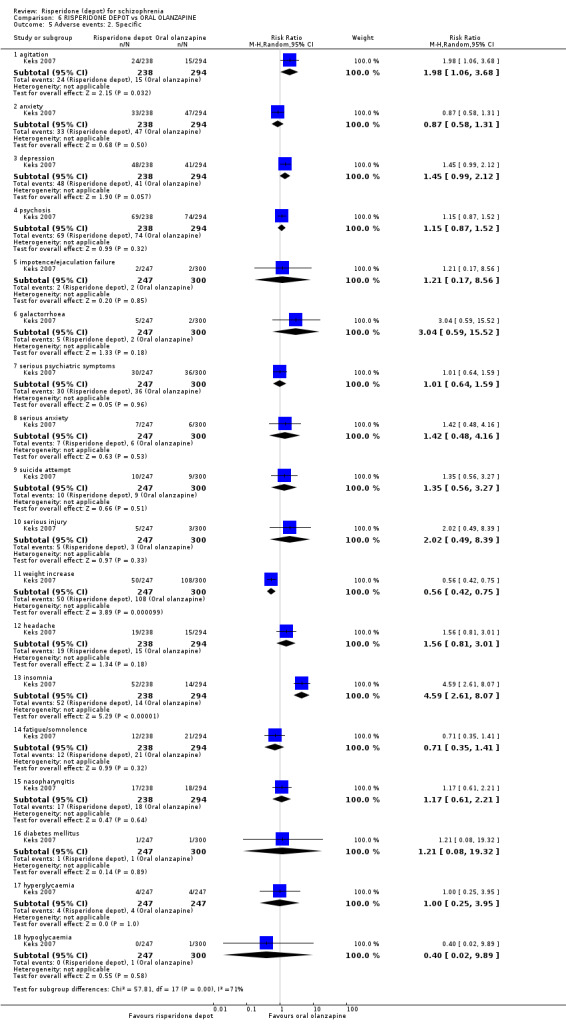
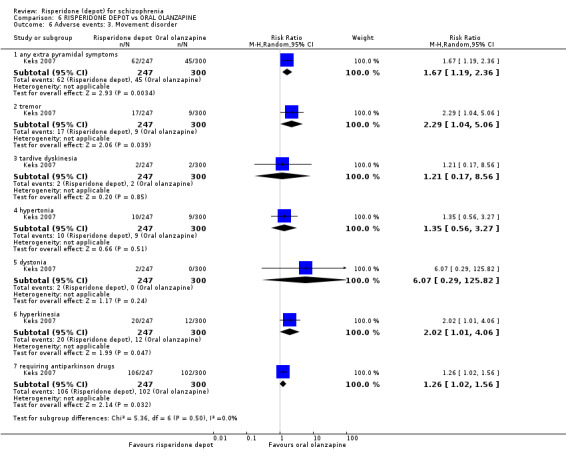
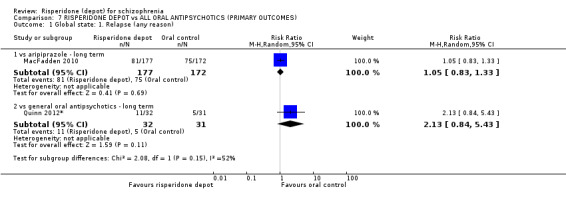
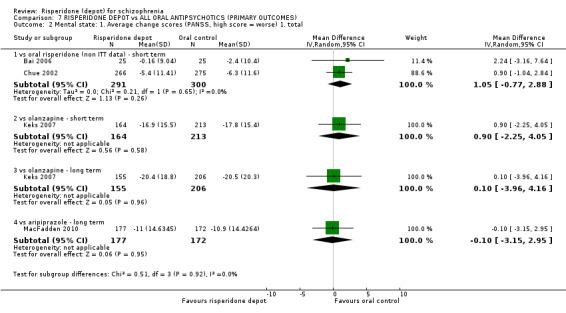
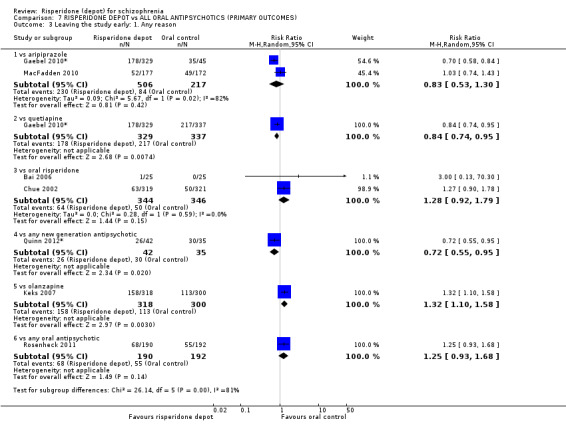
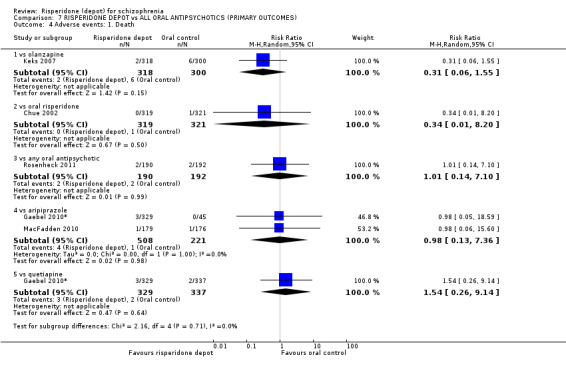
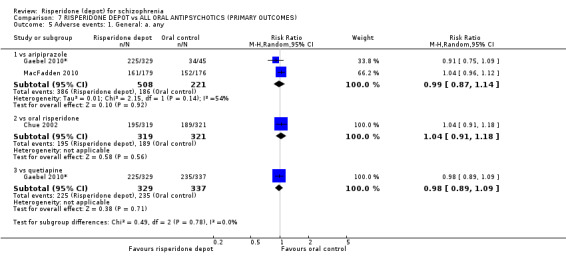
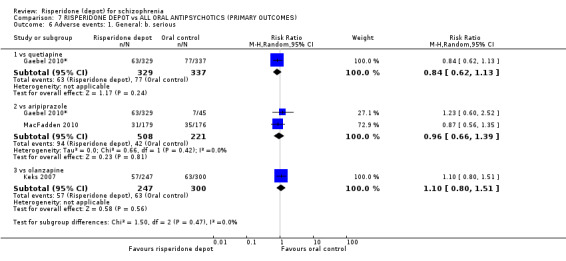
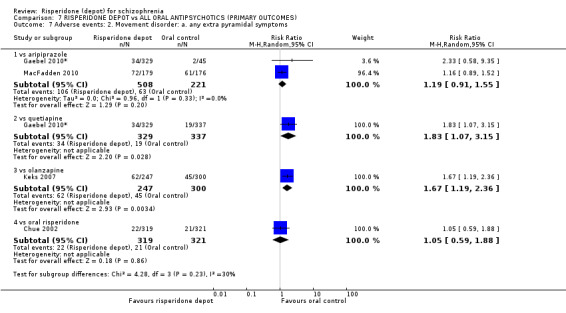
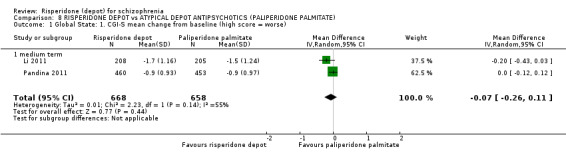
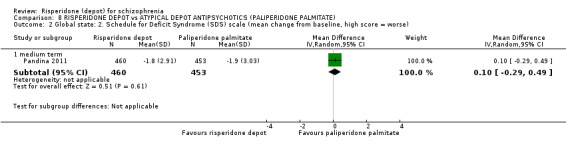
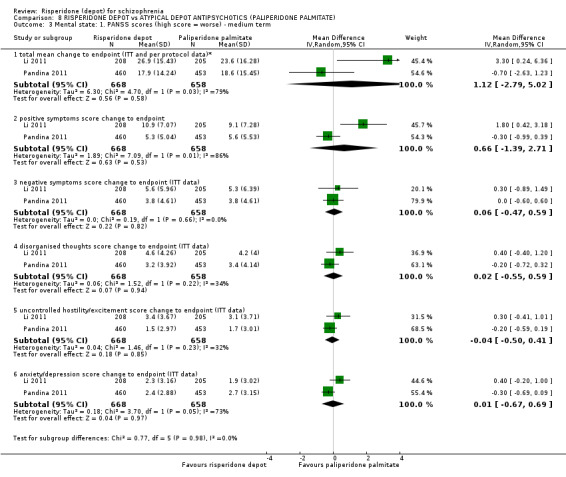
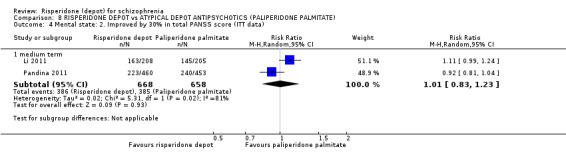
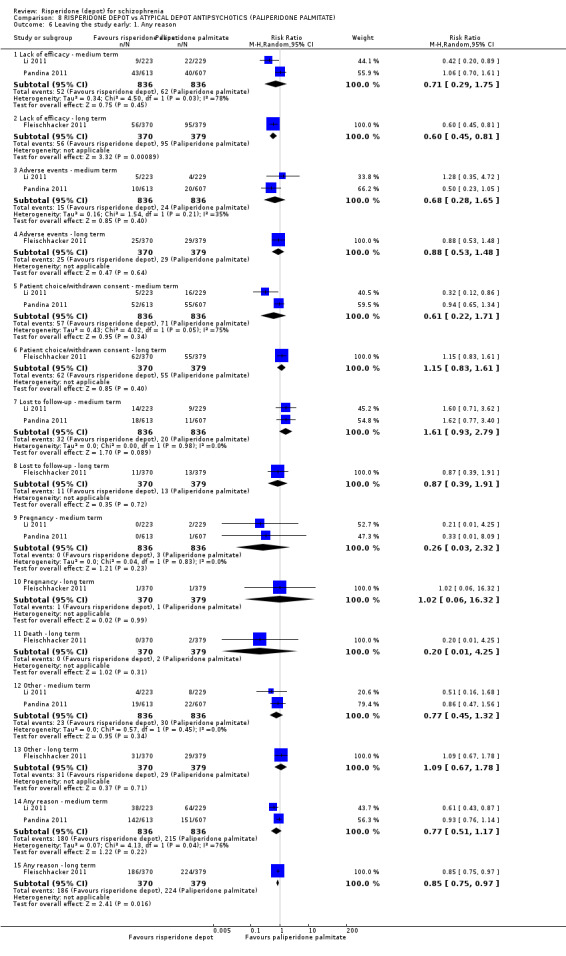
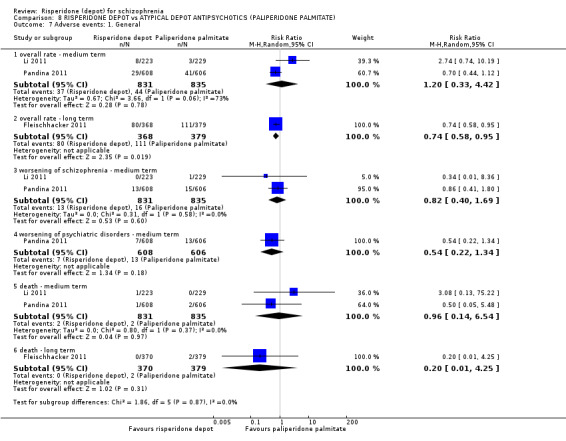
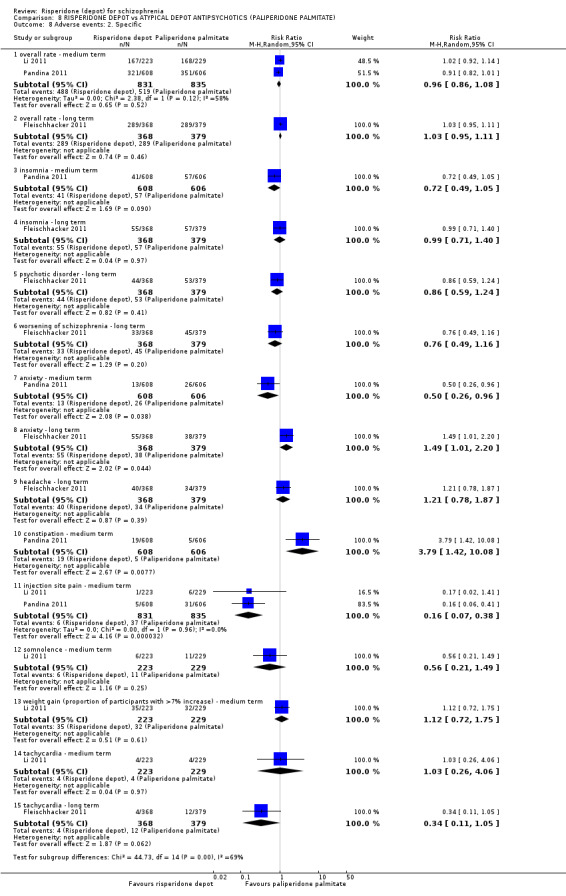
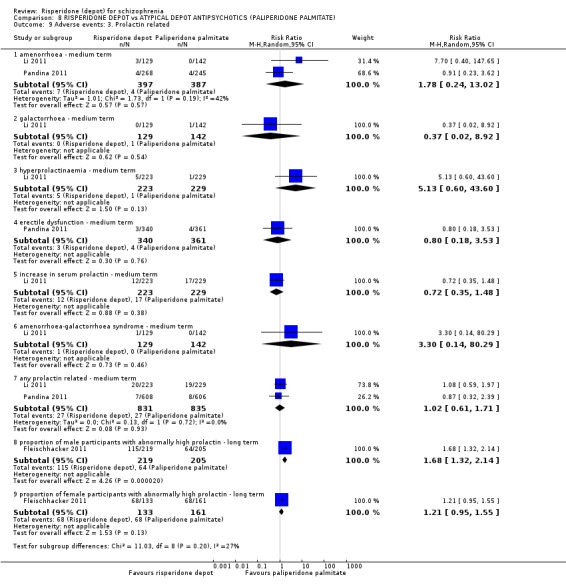
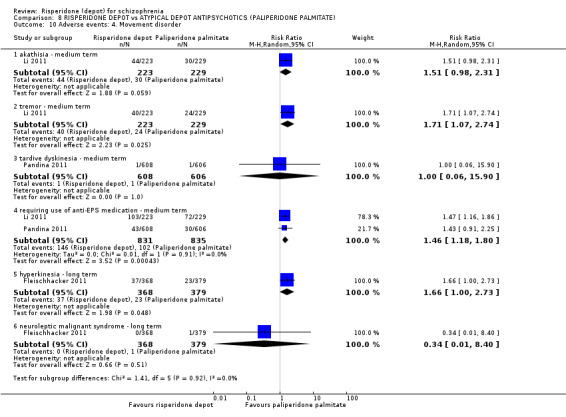
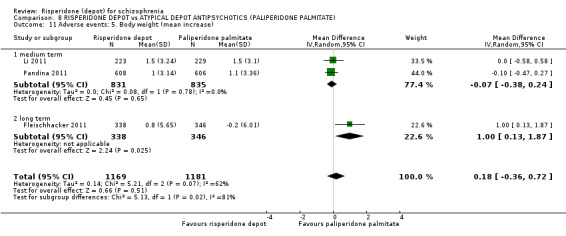
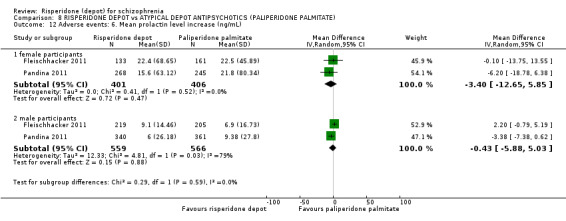
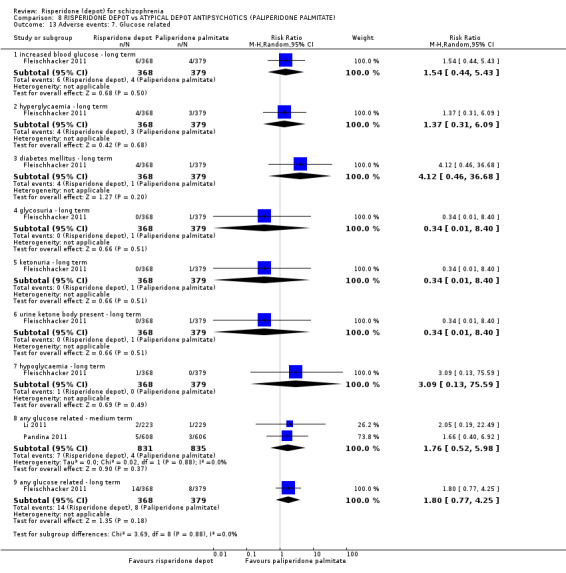
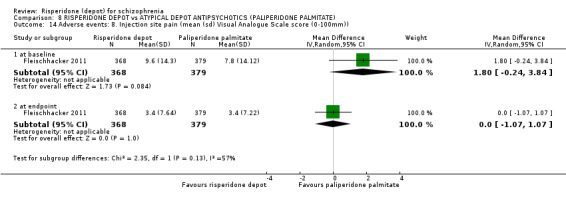
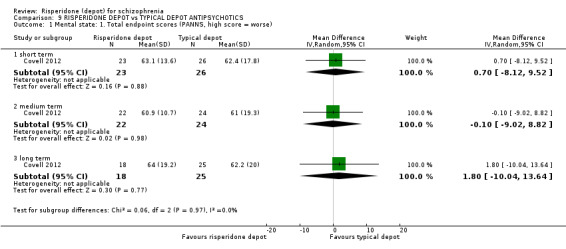
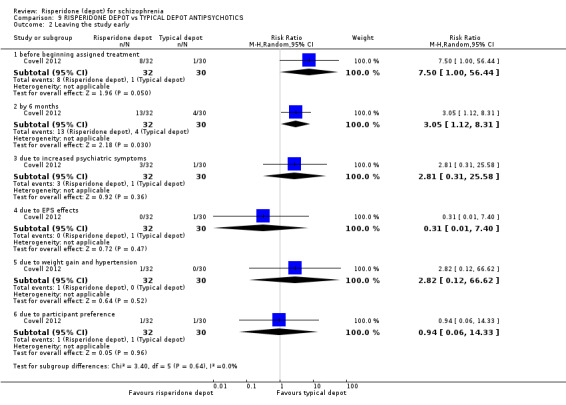
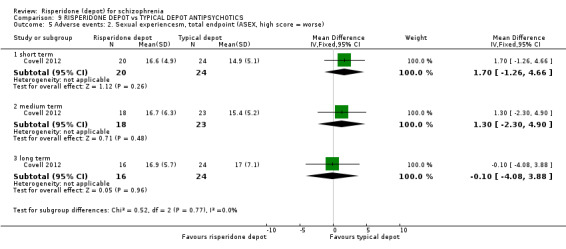
Main results: Twelve studies, with a total of 5723 participants were randomised to the following comparison treatments: Risperidone depot versus placebo Outcomes of relapse and improvement in mental state were neither measured or reported. In terms of other primary outcomes, more people receiving placebo left the study early by 12 weeks (1 RCT, n=400, RR 0.74 95% CI 0.63 to 0.88, very low quality evidence), experienced severe adverse events in short term (1 RCT, n=400, RR 0.59 95% CI 0.38 to 0.93, very low quality evidence). There was however, no difference in levels of weight gain between groups (1 RCT, n=400, RR 2.11 95% CI 0.48 to 9.18, very low quality evidence). Risperidone depot versus general oral antipsychotics The outcome of improvement in mental state was not presented due to high levels of attrition, nor were levels of severe adverse events explicitly reported. Most primary outcomes of interest showed no difference between treatment groups. However, more people receiving depot risperidone experienced nervous system disorders (long-term:1 RCT, n=369, RR 1.34 95% CI 1.13 to 1.58, very-low quality evidence). Risperidone depot versus oral risperidoneData for relapse and severe adverse events were not reported. All outcomes of interest were rated as moderate quality evidence. Main results showed no differences between treatment groups with equivocal data for change in mental state, numbers leaving the study early, any extrapyramidal symptoms, weight increase and prolactin-related adverse events. Risperidone depot versus oral quetiapine Relapse rates and improvement in mental state were not reported. Fewer people receiving risperidone depot left the study early (long-term: 1 RCT, n=666, RR 0.84 95% CI 0.74 to 0.95, moderate quality evidence). Experience of serious adverse events was similar between groups (low quality evidence), but more people receiving depot risperidone experienced EPS (1 RCT, n=666, RR 1.83 95% CI 1.07 to 3.15, low quality evidence), had greater weight gain (1 RCT, n=666, RR 1.25 95% CI 0.25 to 2.25, low quality evidence) and more prolactin-related adverse events (1 RCT, n=666, RR 3.07 95% CI 1.13 to 8.36, very low quality evidence). Risperidone depot versus oral aripiprazoleRelapse rates, mental state using PANSS, leaving the study early, serious adverse events and weight increase were similar between groups. However more people receiving depot risperidone experienced prolactin-related adverse events compared to those receiving oral aripiprazole (2 RCTs, n=729, RR 9.91 95% CI 2.78 to 35.29, very low quality of evidence). Risperidone depot versus oral olanzapineRelapse rates were not reported in any of the included studies for this comparison. Improvement in mental state using PANSS and instances of severe adverse events were similar between groups. More people receiving depot risperidone left the study early than those receiving oral olanzapine (1 RCT, n=618, RR 1.32 95% CI 1.10 to 1.58, low quality evidence) with those receiving risperidone depot also experiencing more extrapyramidal symptoms (1 RCT, n=547, RR 1.67 95% CI 1.19 to 2.36, low quality evidence). However, more people receiving oral olanzapine experienced weight increase (1 RCT, n=547, RR 0.56 95% CI 0.42 to 0.75, low quality evidence). Risperidone depot versus atypical depot antipsychotics (specifically paliperidone palmitate)Relapse rates were not reported and rates of response using PANSS, weight increase, prolactin-related adverse events and glucose-related adverse events were similar between groups. Fewer people left the study early due to lack of efficacy from the risperidone depot group (long term: 1 RCT, n=749, RR 0.60 95% CI 0.45 to 0.81, low quality evidence), but more people receiving depot risperidone required use of EPS-medication (2 RCTs, n=1666, RR 1.46 95% CI 1.18 to 1.8, moderate quality evidence). Risperidone depot versus typical depot antipsychoticsOutcomes of relapse, severe adverse events or movement disorders were not reported. Outcomes relating to improvement in mental state demonstrated no difference between groups (low quality evidence). However, more people receiving depot risperidone compared to other typical depots left the study early (long-term:1 RCT, n=62, RR 3.05 95% CI 1.12 to 8.31, low quality evidence).
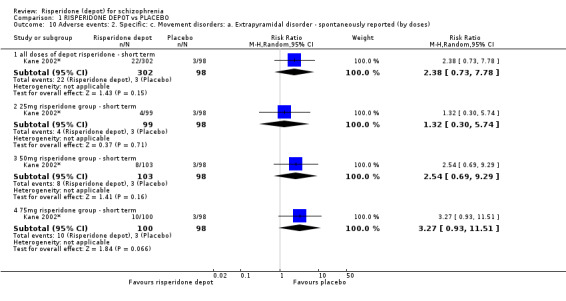
Authors' conclusions: Depot risperidone may be more acceptable than placebo injection but it is hard to know if it is any more effective in controlling the symptoms of schizophrenia. The active drug, especially higher doses, may be associated with more movement disorders than placebo. People already stabilised on oral risperidone may continue to maintain benefit if treated with depot risperidone and avoid the need to take tablets, at least in the short term. In people who are happy to take oral medication the depot risperidone is approximately equal to oral risperidone. It is possible that the depot formulation, however, can bring a second-generation antipsychotic to people who do not reliably adhere to treatment. People with schizophrenia who have difficulty adhering to treatment, however, are unlikely to volunteer for a clinical trial. Such people may gain benefit from the depot risperidone with no increased risk of extrapyramidal side effects.
Conflict of interest statement
Prakash Hosalli ‐ none known.
Steph Sampson ‐ none known.
Vivek Furtado ‐ none known.
John Davis ‐ none known.
Figures
Update of
-
Depot risperidone for schizophrenia.Cochrane Database Syst Rev. 2003;(4):CD004161. doi: 10.1002/14651858.CD004161. Cochrane Database Syst Rev. 2003. Update in: Cochrane Database Syst Rev. 2016 Apr 14;4:CD004161. doi: 10.1002/14651858.CD004161.pub2. PMID: 14584007 Updated.
References
References to studies included in this review
Bai 2006 {published data only}
-
- Bai YM, Chen TT, Wu B, Hung CH, Lin WK, Hu TM, et al. A comparative efficacy and safety study of long‐acting risperidone injection and risperidone oral tablets among hospitalized patients: 12‐week randomized, single‐blind study. Pharmacopsychiatry 2006;39(4):135‐41. - PubMed
Chue 2002 {published and unpublished data}
-
- Chue P, Eerdekens M, Augustyns I, Lachaux B, Molcan P, Eriksson L, et al. Efficacy and safety of long‐acting risperidone microspheres and risperidone oral tablets. Schizophrenia Research (Abstracts of the 11th Biennial Winter Workshop on Schizophrenia) 2002;3(Suppl 1):174.
-
- Chue P, et al. Maintenance of efficacy when switching from oral risperdal to risperdal consta RIS‐INT‐61. Promotional slides on file from Janssen‐Cliag UK Ltd 2002.
Covell 2012 {published data only}
-
- Covell NH, McEvoy JP, Schooler NR, Stroup TS, Jackson CT, Rojas IA, et al. Effectiveness of switching from long‐acting injectable fluphenazine or haloperidol decanoate to long‐acting injectable risperidone microspheres: an open‐label, randomized control trial. Journal of Clinical Psychiatry 2012;73(5):669‐75. - PMC - PubMed
Fleischhacker 2011 {published data only}
-
- Fleischhacker WW, Gopal S, Lane R, Gassmann‐Mayer, Lim P, Hough D, et al. A randomized trial of paliperidone palmitate and risperidone long acting injectable in schizophrenia. International Journal of Neuropsychopharmacology 2012;15:107‐18. - PubMed
Gaebel 2010* {published data only (unpublished sought but not used)}
-
- Gaebel W, Bergmans P, Arce R, Rouillon F, Cordes J, Eriksson L, et al. Relapse prevention in schizophrenia and schizoaffective disorder with risperidone long‐acting injectable versus quetiapine:Randomized, long‐term, open‐label, clinical trial results (constatre). Proceedings of the 17th European Psychiatric Association, EPA Congress; 2009 Jan 24‐28; Lisbon Portugal 2009;24:S1020.
-
- Gaebel W, Schreiner A, Bergmans P, Arce R, Rouillon F, Cordes J, et al. Relapse prevention in schizophrenia and schizoaffective disorder with risperidone long‐acting injectable vs quetiapine: Results of a long‐term, open‐label, randomized clinical trial. Neuropsychopharmacology 2010;35(12):2367‐77. - PMC - PubMed
-
- Medori R, Wapenaar R, Arce R, Rouillon F, Gaebel W, Cordes J, et al. Relapse prevention and effectiveness in schizophrenia of risperidone long‐acting injectable (rlai) versus quetiapine or aripiprazole. Proceedings of the 161st Annual Meeting of the American Psychiatric Association; 2008 May 3‐8; Washington DC, USA. 2008.
-
- Rouillon F, Eriksson L, Burba B, Raboch J, Kaprinis G, Schreiner A. Functional recovery in schizophrenia and schizoaffective disorder: Results from the risperidone long‐acting injectable versus quetiapine relapse prevention trial (constatre). Proceedings of the 17th European Psychiatric Association, EPA Congress; 2009 Jan 24‐28; Lisbon Portugal 2009;24:S1023.
-
- Schreiner A, Rouillon F, Eriksson L, Burba B, Raboch J, Kaprinis G, et al. Functional improvement in schizophrenia and schizoaffective disorder: results from the risperidone long‐acting injectable versus quetiapine relapse prevention trial (ConstaTRE). Biological Psychiatry 2009:382.
Kane 2002* {published data only}
-
- Anonymous. Injectible, long‐acting risperidone effective. Journal of Pharmacy Technology 2001;4:157.
-
- Kane J, Eerdekens M, Keith S, Lesem M, Karcher K, Lindenmayer J‐P. Efficacy and safety of a novel long‐acting risperidone formulation. European Psychiatry (11th Association of European Psychiatrists Congress, 2002 4‐8th May, Stockholm, Sweden) 2002;17(Suppl 1):S193.
-
- Kane J, Eerdekens M, Keith S, Lesem M, Karcher K, Lindenmayer JP. Long‐acting risperidone microspheres for treatment of patients with schizophrenia. European Neuropsychopharmacology (Abstracts of the 14th Congress of the European College of Neuropsychopharmacology; 2001 Oct 13‐17; Istanbul, Turkey) 2001;11(3):291.
-
- Kane J, Eerdekens M, Keith SJ, Lesem M, Karcher K, Lindenmayer JP. Efficacy and safety of risperdal consta, the long‐acting injection risperidone formulation. International Journal of Neuropsychopharmacology (Abstracts of the 23rd Congress of the Collegium Internationale Neuro‐Psychopharmacologicum; 2002 Jun 23‐27; Montreal, Canada) 2002;5(Suppl 1):S188.
-
- Kane JM, Eerdekens M, Keith SJ, Lesem M, Karcher K, Lindenmayer J‐P. Efficacy and safety of a novel long‐acting risperidone microspheres formulation. Schizophrenia Research (Abstracts of the 11th Biennial Winter Workshop on Schizophrenia) 2002;53(3 Suppl.1):174.
Keks 2007 {published data only (unpublished sought but not used)}
-
- Keks N, Ingham M, Khan A, Karcher K. Long‐acting injectable risperidone v. olanzapine tablets for schizophrenia or schizoaffective disorder: Randomised, controlled, open‐label study. British Journal of Psychiatry 2007;191:131‐9. - PubMed
-
- Keks N, Khan A, Augustyns I, Rabinowitz J, Ingham M. Non‐inferiority efficacy trial of risperidone long‐acting injection (RLAI) vs. olanzapine tablets (OLA). Proceedings of the 13th Biennial Winter Workshop on Schizophrenia Research; 2006 Feb 4‐10; Davos, Switzerland. 2006.
Li 2011 {published data only}
-
- Li H, Rui Q, Ning X, Xu H, Gu N. A comparative study of paliperidone palmitate and risperidone long‐acting injectable therapy in schizophrenia. Progress in Neuro‐Psychopharmacology & Biological Psychiatry 2011;35:1002‐8. - PubMed
MacFadden 2010 {published data only}
Pandina 2011 {published data only}
-
- Pandina G, Lane R, Gassmann‐Mayer C, Hough D, Remmerie B, Simpson G. A randomised double blind study of flexible doses of paliperidone palmitate and risperidone long acting therapy in patients with schizophrenia. Proceedings of the 27th International College of Neuropsychopharmacology Congress; 2010 June 6‐10; Hong Kong. 2010.
-
- Pandina G, Lane R, Gopal S, Gassman‐Mayer C, Hough D, Remmerie B, et al. A randomized double blind study of flexible doses of paliperidone palmitate and risperidone long acting therapy in patients with schizophrenia. Biological Psychiatry 2010;67(9):77‐8.
-
- Pandina G, Lane R, Gopal S, Gassmann‐Mayer C, Hough D, Remmerie B, et al. A double‐blind study of paliperidone palmitate and risperidone long‐acting injectable in adults with schizophrenia. Progress in Neuro‐Psychopharmacology & Biological Psychiatry 2011;35:218‐26. - PubMed
Quinn 2012* {published data only}
-
- Quinn A, Camacho F, Mitchell D, Chue P, Malla A. Open‐label randomized exploratory investigation of Risperdal* Consta* and oral antipsychotics treatment of early psychosis. Autumn Conference of the International Society for CNS Clinical Trials and Methodology, October 1‐3. Marina Del Rey, California, 2012.
Rosenheck 2011 {published data only}
-
- Barnett PG, Scott JY, Krystal JH, Rosenheck RA. Cost and cost‐effectiveness in a randomized trial of long‐acting risperidone for schizophrenia. Journal of Clinical Psychiatry 2012;73:696‐702. - PubMed
-
- Rosenheck RA, Krystal JH, Lew R, Barnett PG, Fiore L, Valley D, et al. Long‐ acting risperidone and oral antipsychotics in unstable schizophrenia. New England Journal of Medicine March 3, 2011;364(9):842‐51. - PubMed
References to studies excluded from this review
Agid 2010 {published data only}
-
- Agid O, Foussias G, Remington G. Long acting injectable antipsychotics in the treatment of schizophrenia: Their role in relapse prevention. Expert Opinion on Pharmacotherapy 2010;11(14):2301‐17. - PubMed
Bouchard 2000 {published data only}
-
- Bouchard RH, Merette C, Pourcher E, Demers MF, Villeneuve J, Roy Gagnon MH, et al. The Quebec Schizophrenia Study Group. Longitudinal comparative study of risperidone and conventional neuroleptics for treating patients with schizophrenia. Journal of Clinical Psychopharmacology 2000;20(3):295‐304. [MEDLINE: ] - PubMed
Canas 2010 {published data only}
-
- Canas F, Moller HJ. Long acting atypical injectable antipsychotics in the treatment of schizophrenia: Saftey and tolerability review. Expert Opinion on Drug Saftey 2010;9(5):683‐97. - PubMed
DeMartinis 2012a {published data only}
-
- DeMartinis N, Banerjee A, Kumar V, Boyer S, Schmidt C, Arroyo S. Results of a phase 2a proof‐of‐concept trial with a PDE10A inhibitor in the treatment of acute exacerbation of schizophrenia. Schizophrenia Research 2012;136:S262.
Eerdekens 2002 a {published data only}
-
- Chue P, Devos E, Duchesne I, Leal A, Mehnert A. Hospitalization rates in patients during long‐term treatment with long‐acting risperidone injection. Poster presented at the XXIII CINP Congress, Montreal, Canada. June 23‐ 27, 2002.
-
- Eerdekens M, Fleischhacker WW, Xie Y, Gefvert O. Long‐term safety of long‐acting risperidone microspheres. Schizophrenia Research (Abstracts of the 11th Biennial Winter Workshop on Schizophrenia) 2002;3(Suppl 1):174.
-
- Fleischhacker WW, Eerdekens M, Xie Y, Beauclair L, Sauret H, Chrzanowski W, et al. Long‐term saftey and efficacy of risperdal consta(TM) a long‐acting injection formulation of risperidone. ACNP, Hawaii, USA, December 2001 (Promotional slides on file from Janssen‐Cliag UK Ltd) 2002.
Eerdekens 2002 b {published data only}
-
- Eerdekens M. Treatment delivery: a hope for the future. Nordic Journal of Psychiatry (Abstracts of The Scandinavian College of Neuro‐Psychopharmacology Annual Conference; 2002 10‐13 Apr; Juan‐Les‐Pins, France) 2002;56(2):1.
Gallhofer 1995 {published data only}
-
- Gallhofer B. Cognitive dysfunction in schizophrenia: comparison of treatment with a novel atypical antipsychotic agent versus conventional neuroleptic drugs. 8th Congress of the European College of Neuropsychopharmacology; 1995 Sep 30 ‐ Oct 4; Venice, Italy. 1995. - PubMed
Geffen 2012 {published data only}
-
- Geffen Y, Keefe R, Rabinowitz J, Anand R, Davidson M. Bl‐1020, a new ‐aminobutyric acid‐enhanced antipsychotic: Results of 6‐week, randomized, double‐blind, controlled, efficacy and safety study. Journal of Clinical Psychiatry 2012;73(9):e1168‐e74. - PubMed
Gefvert 2001 {published data only}
-
- Gefvert O, Nyberg S, Persson P, Helklin L, Bjorner A. Pharmacokinetics, D2 receptor occupancy, and clinical effects of a long‐acting injectable formulation of risperidone in patients with schizophrenia. Annual Meeting of the American Psychiatric Association; 2001 May 5‐10; LA, USA. Marathon Multimedia, 2001.
Kogeorgos 1995 {published data only}
-
- Kogeorgos J, Kanellos P, Michalakeas A, Ioannidis J. Sulpiride and risperidone vs. "classical neuroleptics" in schizophrenia: a follow‐up study. 8th Congress of the European College of Neuropsychopharmacology; 1995 Sep 30 ‐ Oct 4; Venice, Italy. 1995.
Koola 2009 {published data only}
-
- Koola MM, Bustillo J, Lauriello J. Insight and its to baseline characteristics of schizophrenia patients randomized to long acting injectable risperidone or oral atypical antipsychotics: results from the proactive study. Proceedings of the 12th International Congress on Schizophrenia Research; 2009 Mar 28‐ Apr 1; San Diego, CA. Oxford Univ Press, 2009.
Lindenmayer 1995 {published data only}
-
- Lindenmayer J, Grochowski S, Hyman RB. Five factor model of schizophrenia ‐ replication across samples. Schizophrenia Research 1995;14(3):229‐34. [MEDLINE: ] - PubMed
Litman 2014 {published data only}
-
- Litman R, Smith M, Doherty J, Cross A, Raines S, Zukin S. AZD8529, a positive allosteric modulator at the MGGLUR2 receptor, does not improve symptoms in schizophrenia: A proof of principle study. European Neuropsychopharmacology 2014;24:S508‐9. - PubMed
-
- Litman RE, Smith MA, Doherty J, Cross A, Raines S, Zukin S. AZD8529, a positive allosteric modulator at the mGLuR2 receptor, does not improve symptoms in schizophrenia: A proof of principle study. Schizophrenia Research 2014;153:S176. - PubMed
Littrell 1999 {published data only}
-
- Littrell KH. Patients switched from depot antipsychotics to oral risperidone or olanzapine: an open‐label randomized trial. 152nd Annual Meeting of the American Psychiatric Association; 1999 May 15‐20; Washington, USA. 1999. [MEDLINE: ]
Liu 2014f {published data only}
-
- 刘芳, 张炳奎, 谢丽琴, 郑英君, 欧建军, 吴仁容, et al. 米诺环素辅助治疗早期精神分裂症阴性症状的双盲、随机、对照研究. 长治医学院学报 2014; Vol. 27, issue 1:30‐2.
Lloyd 2010 {published data only}
-
- Lloyd K, Latif MA, Simpson S, Shrestha KL. Switching stable patients with schizophrenia from depot and oral antipsychotics to long acting injectable risperidone: Efficacy, quality of life and functional outcome. Human Psychopharmacology 2010;25(3):243‐52. - PubMed
Macfadden 2008 {published data only}
-
- MacFadden W, Bossie CA, Turkoz I, Haskins JT. Risperidone long acting therapy in stable patients with recently diagnosed schizophrenia. International Clinical Psychopharmacology 2010;25(2):75‐82. - PubMed
-
- Macfadden W, Bossie C, Turkoz I, Diekamp B, Ibach B, Haskins JT. Effect of long acting injectable risperidone on clinical outcomes in recently diagnosed stable schizophrenia patients. Proceedings of the XXVI Collegium Internationale Neuro Psychopharmacologicum congress; 2008 Jul 13‐17; Munich, Germany. 2008.
-
- Macfadden W, Bossie C, Turkoz I, Dorson P, Haskins T. Effect of long acting injectable risperidone on clinical outcomes in stable schizophrenia patients with early illness. Proceedings of the 161st Annual Meeting of the American Psychiatric Association; 2008 May 3‐8; Washington DC, USA 2008.
McClure 2009a {published data only}
Pikalov 2012a {published data only}
-
- Pikalov A, Cucchiaro J, Ogasa M, Silva R, Hsu J, Xu J, et al. Effect of lurasidone on weight and metabolic parameters: A comprehensive database analysis. Schizophrenia Research 2012;136:S278.
Procyshyn 2010 {published data only}
-
- Procyshyn RM, Barr AM, Flynn S, Schenk C, Ganesan S, Honer WG. Long acting injectable risperidone in treatment refractory patients: A 14 week open label pilot study. Schizophrenia Research 2010;123(2‐3):273‐5. - PubMed
Ritchie 1999 {published data only}
-
- Ritchie C, Ames D, Chiu E, O'Connor D, Hall K, Hassett A. Schizophrenia cohort study of olanzapine v risperidone in the elderly (score): analysis of conversion period. International Psychogeriatrics (Abstracts of the 9th Congress of the International Psychogeriatric Association, "Challenges for the New Millennium: Professional, Cultural and Regional Diversity"; 1999 Aug 15‐20; Vancouver, Canada) 1999;11(Suppl 1):157‐8.
Robinson 2000 {published data only}
-
- Robinson G, Wheeler A, Byrd J, Visser S. Longer‐term effects of switching from typical to atypical antipsychotics in patients with stable schizophrenia. Journal of the European College of Neuropsychopharmacology 2000;10(Suppl 3):S291.
Schmechtig 2010 {published data only}
-
- Schmechtig A, Dourish C, Craig K, Dawson GR, Williams S, Deakin W, et al. Effects of risperidone, amisulpride and nicotine on eye movement control and their modulation by high schizotypy. Pharmacopsychiatry 2011;21:A99. [MEDLINE: ] - PubMed
-
- Schmechtig A, Lees J, Dawson G, Dourish C, Craig K, Deakin B, et al. Effects of high schizotypy on control of eye movements: Modulation by antipsychotic drugs and nicotine. Proceedings of the 49th Annual Meeting of the Americam College of Neuropsychopharmacology; 2010 Dec 5‐9; Miami, Florida. 2010.
Simpson 2006 {published data only}
-
- Simpson GM, Mahmoud RA, Lasser RA, Kujawa M, Bossie CA, Turkoz I, et al. A 1‐year double‐blind study of 2 doses of long‐acting risperidone in stable patients with schizophrenia or schizoaffective disorder. Journal of Clinical Psychiatry 2006;67:1194‐203. - PubMed
Vaughan 2000 {published data only}
-
- Vaughan K, McConaghy N, Wolf C, Myhr C, Black T. Community Treatment Orders: Relationship to clinical care, medication compliance, behavioural disturbance and readmission. Australian and New Zealand Journal of Psychiatry 2000;5:801‐8. - PubMed
Verma 2010 {published data only}
-
- Verma S, Subramaniam M, Abdin E, Sim K, Su A, Lee N, et al. Saftey and efficacy of long acting injectable risperidone in patients with schizophrenia spectrum disorders: A 6 month open label trial in Asian patients. Human Psychopharmacology 2010;25(3):230‐5. - PubMed
Weiden 2007 {published data only}
-
- Weiden PJ, Goldfinger SM, Hindi A, Sunakawa A, Schooler NR. Acceptance of a recommendation of a long acting antipsychotic route in first episode schizophrenia: initial findings of a prospective randomized study. Proccedings of the 160th Annual Meeting of the American Psychiatric Association; 2007 May 19‐24; San Diego, CA. 2007.
-
- Weiden PJ, Schooler NR, Weedon JC, Elmouchtari A, Sunakawa, Goldfinger SM. A randomized controlled trial of long acting injectable risperidone vs continuation on oral atypical antipsychotics for first episode schizophrenia patients: initial adherence outcome. Journal of Clinical Psychiatry 2009;70(10):1397‐406. - PubMed
-
- Weiden PJ, Schooler NR, Weedon JC, Elmouchtari A, Sunakawa‐McMillan A. Maintenance treatment with long‐acting injectable risperidone in first‐episode schizophrenia: A randomized effectiveness study. Journal of Clinical Psychiatry 2012;73(9):1224‐33. - PubMed
Wiffen 2010 {published data only}
-
- Wiffen BDR, Rabinowitz J, Fleischhacker WW, David AS. Insight : Demographic differences and associations with one‐year outcome in schizophrenia and schizoaffective disorder. Clinical Schizophrenia and Related Psychoses 2010;4(3):169‐75. - PubMed
References to studies awaiting assessment
Nasrallah 2002 {published data only}
-
- Nasrallah H, Duchesne I, Mehnert A, Janagap C. Long‐acting risperidone improves quality of life. Proceedings of the 12th World Congress of Psychiatry; 2002 Aug 24‐29; Yokohama, Japan. 2002.
-
- Nasrallah H, Duchesne I, Mehnert A, Janagap C. Long‐acting risperidone injection improves quality of life. International Journal of Neuropsychopharmacology 2002;5(Suppl 1):S189.
-
- Nasrallah H, Duchesne I, Mehnert A, Janagap C. Long‐acting, injectable risperidone ‐ the first long‐acting, atypical antipsychotic ‐ improves quality of life. European Neuropsychopharmacology 2002;12(Suppl 3):S282.
-
- Nasrallah HA, Duchesne I, Mehnert A, Janagap C, Eerdekens M. Correction. Journal of Clinical Psychological Medicine [临床精神医学杂志] 2004;65(8):1150.
-
- Nasrallah HA, Duchesne I, Mehnert A, Janagap C, Eerdekens M. Health‐related quality of life in patients with schizophrenia during treatment with long‐acting, injectable risperidone. Journal of Clinical Psychiatry 2004;65(4):531‐6. [MEDLINE: ] - PubMed
Segarra 2010 {published data only}
-
- Segarra R, Ojeda N, Garcia J, Pena J, Bravo E, Eguiluz JI. Risperidone injectable long acting treatment vs other oral antipsychotics in first episode psychosis: One year longitudinal study. Schizophrenia Research. 2010; Vol. 117, issue 2‐3:495.
Turner 2000 {published data only}
-
- Turner T. Risperidone depot v risperidone tablets: a non‐inferiority efficacy trial in subjects with schizophrenia. National Research Register (http://www.update‐software.com/National/) 2000.
Additional references
Adams 2001
-
- Adams CE, Fenton MK, Quraishi S, David AS. Systematic meta‐review of depot antipsychotic drugs for people with schizophrenia. British Journal of Psychiatry 2001;179:290‐9. - PubMed
Altman 1996
APA 2000
-
- American Psychiatric Association. Diagnostic and sStatistical Manual of Mental Disorders : DSM‐IV‐TR. Washington, DC: American Psychiatric Association, 2000.
Barnes 1989
-
- Barnes TR. A rating scale for drug‐induced akathisia. British Journal of Psychiatry 1989;154:672‐6. - PubMed
Bland 1997
BNF 2012
-
- BMJ Group and Pharmaceautical Press. British National Formulary No. 63. Antipsychotic drugs. BNF 2012.
Boissel 1999
-
- Boissel JP, Cucherat M, Li W, Chatellier G, Gueyffier F, Buyse M, et al. The problem of therapeutic efficacy indices. 3. Comparison of the indices and their use [Apercu sur la problematique des indices d'efficacite therapeutique, 3: comparaison des indices et utilisation. Groupe d'Etude des Indices D'efficacite]. Therapie 1999;54(4):405‐11. [PUBMED: 10667106] - PubMed
CEA
-
- Cost‐Effectiveness Analysis Registry (CEA). https://research.tufts‐nemc.org/cear4/ accessed 11/09/13.
Chouinard 1980
-
- Chouinard G, Ross‐Chouinard A, Annable L. Extrapyramidal symptom rating scale. Canadian Journal of Neurological Science 1980;7:233.
Clarke 2002
-
- Clarke M, Oxman AD. Cochrane Collaboration Handbook. Cochrane Database of Systematic Reviews. Oxford: Update Software, 2002, issue 1.
Csernansky 2002
-
- Csernansky JG, Mahmood R, Brenner R, Risperidone‐USA‐79 Study Group. A comparison of risperidone and haloperidol for the prevention of relapse in patients with schizophrenia. New England Journal of Medicine 2002;346:16‐22. - PubMed
Davies 2007
-
- Davies LM, Lewis S, Jones PB, Barnes TR, Gaughran F, Hayhurst K, et al. Cost‐effectiveness of first‐ v. second‐generation antipsychotic drugs: results from a randomised controlled trial in schizophrenia responding poorly to previous therapy. British Journal of Psychiatry 2007;191:14‐22. - PubMed
Davis 1977
-
- Davis JM, Casper R. Antipsychotic drugs: clinical pharmacology and therapeutic use. Drugs 1977;14(4):260‐82. - PubMed
Davis 1986
-
- Davis JM, Andriukaitis S. The natural course of schizophrenia and effective maintenance drug treatment. Journal of Clinical Psychopharmacology 1986;6(1 Suppl):2S‐10S. - PubMed
Deeks 2000
-
- Deeks J. Issues in the selection for meta‐analyses of binary data. Proceedings of the 8th International Cochrane Colloquium; 2000 Oct 25‐28; Cape Town. Cape Town: The Cochrane Collaboration, 2000.
Divine 1992
-
- Divine GW, Brown JT, Frazier LM. The unit of analysis error in studies about physicians' patient care behavior. Journal of General Internal Medicine 1992;7(6):623‐9. - PubMed
Donner 2002
-
- Donner A, Klar N. Issues in the meta‐analysis of cluster randomized trials. Statistics in Medicine 2002;21:2971‐80. - PubMed
Egger 1997
Elbourne 2002
-
- Elbourne D, Altman DG, Higgins JPT, Curtina F, Worthingtond HV, Vaile A. Meta‐analyses involving cross‐over trials: methodological issues. International Journal of Epidemiology 2002;31(1):140‐9. - PubMed
Fenton 1997
-
- Fenton WS, Blyler CR, Heinssen RK. Determinants of medication compliance in schizophrenia: empirical and clinical findings. Schizophrenia Bulletin 1997;23(4):637‐51. [MEDLINE: ] - PubMed
Furukawa 2006
-
- Furukawa TA, Barbui C, Cipriani A, Brambilla P, Watanabe N. Imputing missing standard deviations in meta‐analyses can provide accurate results. Journal of Clinical Epidemiology 2006;59(7):7‐10. - PubMed
Geddes 2000
Gulliford 1999
-
- Gulliford MC, Ukoumunne OC, Chinn S. Components of variance and intraclass correlations for the design of community‐based surveys and intervention studies: data from the Health Survey for England 1994. American Journal of Epidemiology 1999;149(9):876‐83. - PubMed
Guy 1976
-
- Guy W. Early clinical drug evaluation (ECDEU) assessment manual for psychopharmacology. ECDEU Assessment Manual for Psychopharmacology. Washington, DC: National Institute of Mental Health, 1976:217‐22.
HEED
-
- Health Economic Evaluation Database (HEED). Online ISBN: 9780470510933. [DOI: 10.1002/9780470510933] - DOI
Higgins 2003
Higgins 2011
-
- Higgins JPT, Green S (editors). Cochrane Handbook for Systematic Reviews of Interventions Version 5.0.2 [updated September 2011]. The Cochrane Collaboration, 2011. Available from www.cochrane‐handbook.org..
Hunter 2003
Janssen 1988
-
- Janssen PA, Niemegeers CJ, Awouters F, Schellekens KH, Megens AA, Meert TF. Pharmacology of risperidone (R 64 766), a new antipsychotic with serotonin‐S2 and dopamine‐D2 antagonistic properties. Journal of Pharmacology and Experimental Therapeutics 1988;244(2):685‐93. - PubMed
Jayaram 2006
Kay 1986
-
- Kay SR, Opler LA, Fiszbein A. Positive and Negative Syndrome Scale (PANSS) Manual. North Tonawanda, NY: Multi‐Health Systems, 1986.
Kay 1987
-
- Kay SR, Fiszbein A, Opler LA. The positive and negative syndrome scale (PANSS) for schizophrenia. Schizophrenia Bulletin 1987;13:261‐76. - PubMed
Kirkpatrick 1989
-
- Kirkpatrick B, Buchanan RW, McKenny PD, Alphs LD, Carpenter WT. The schedule for the deficit syndrome: An instrument for research in schizophrenia. Psychiatry Research 1989;30(2):119‐23. - PubMed
Leucht 1999
-
- Leucht S, Pitschel‐Walz G, Abraham D, Kissling W. Efficacy and extrapyramidal side‐effects of the new antipsychotics olanzapine, quetiapine, risperidone, and sertindole compared to conventional antipsychotics and placebo. A meta‐analysis of randomized controlled trials. Schizophrenia Research 1999;35(1):51‐68. - PubMed
Leucht 2005
-
- Leucht S, Kane JM, Kissling W, Hamann J, Etschel E, Engel RR. What does the PANSS mean?. Schizophrenia Research 2005;79(2‐3):231‐8. [PUBMED: 15982856] - PubMed
Leucht 2005a
-
- Leucht S, Kane JM, Kissling W, Hamann J, Etschel E, Engel R. Clinical implications of brief psychiatric rating scale scores. British Journal of Psychiatry 2005;187:366‐71. [PUBMED: 16199797] - PubMed
Leucht 2007
Li 2009
Lingjaerd 1987
-
- Lingjaerd O, Ahlfors UG, Bech P, Dencker SJ, Elgen K. The UKU side effect rating scale: A new comprehensive rating scale for psychotropic drugs and a cross‐sectional study of side effects in neuroleptic‐treated patients. Acta Psychiatrica Scandinavica 1987;76(s334):1‐100. - PubMed
Mangalore 2007
-
- Mangalore R, Knapp M. Cost of schizophrenia in England. Journal of Mental Health Policy and Economics 2007;10(1):23‐41. - PubMed
Marder 1994
-
- Marder SR, Meibach RC. Risperidone in the treatment of schizophrenia. American Journal of Psychiatry 1994;151(6):825‐35. - PubMed
Marshall 2000
-
- Marshall M, Lockwood A, Bradley C, Adams C, Joy C, Fenton M. Unpublished rating scales: a major source of bias in randomised controlled trials of treatments for schizophrenia. British Journal of Psychiatry 2000;176:249‐52. - PubMed
McGahuey 2000
-
- McGahuey CA, Gelenberg AJ, Laukes CA, Moreno FA, Delgado PL, McKnight KM, et al. The Arizona Sexual Experience Scale (ASEX): reliability and validity. Journal of Sex and Marital Therapy 2000;26(1):25‐40. - PubMed
McGrath 2008
-
- McGrath J, Saha S, Chant D, Welham J. Schizophrenia: a concise overview of incidence, prevalence, and mortality. Epidemiologic Reviews 2008;30(1):67‐76. - PubMed
Moher 2001
-
- Moher D, Schulz KF, Altman D, CONSORT Group. The CONSORT statement: revised recommendations for improving the quality of reports of parallel‐group randomized trials. 2001 JAMA;285(15):1987‐91. - PubMed
Munetz 1988
-
- Munetz MR, Benjamin S. How to examine patients using the Abnormal Involuntary Movement Scale. Hospital Community Psychiatry 1988;39(11):1172‐7. - PubMed
Nafees 2012
-
- Nafees B, Hanswijck de Jonge P, Stull D, Pascoe K, Price M, Clarke A, et al. Reliability and validity of the Personal and Social Performance scale in patients with schizophrenia. Schizophrenia Research 2012;140(1‐3):71‐6. - PubMed
Overall 1962
-
- Overall JE, Gorham DR. The brief psychiatric rating scale. Psychological Reports 1962;10:799‐812.
Ramstack 2003
-
- Ramstack JM, Grandolfi GP, Mannaert E, D'Hoore P, Lasser RA. Risperdal CONSTA™: Prolonged‐release injectable delivery of risperidone using Medisorb® Microsphere Technology. Schizophrenia 2003;60:314.
Sarfati 1999
-
- Sarfati Y, Olivier V, Bouhassira M. New antipsychotics in the treatment of schizophrenia. A European survey. Encephale 1999;25(6):658‐66. - PubMed
Schünemann 2008
-
- Schünemann HJ, Oxman AD, Vist GE, Higgins JPT, Deeks JJ, Glasziou P, et al. Chapter 12: Interpreting results and drawing conclusions. In: Higgins JPT, Green S editor(s). Cochrane Handbook for Systematic Reviews of Interventions. The Cochrane Collaboration, 2008:359‐83.
Small 1997
-
- Small JG, Hirsch SR, Arvanitis LA, Miller BG, Link CG, Seroquel Study Group. Quetiapine in patients with schizophrenia. A high‐ and low‐dose double‐ blind comparison with placebo. Archives of General Psychiatry 1997;54(6):549‐57. - PubMed
Tollefson 1997
-
- Tollefson GD, Beasley CM Jr, Tamura RN, Tran PV, Potvin JH. Blind, controlled, long‐term study of the comparative incidence of treatment‐emergent tardive dyskinesia with olanzapine or haloperidol. American Journal of Psychiatry 1997;154(9):1248‐54. - PubMed
Ukoumunne 1999
-
- Ukoumunne OC, Gulliford MC, Chinn S, Sterne JAC, Burney PGJ. Methods for evaluating area‐wide and organisation‐based intervention in health and health care: a systematic review. Health Technology Assessment 1999;3(5):1‐75. - PubMed
Ware 1992
-
- Ware JE Jr, Sherbourne CD. The MOS 36‐item short‐form health survey (SF‐36). I. Conceptual framework and item selection.. Medical Care 1992;30(6):473‐83. - PubMed
Xia 2009
-
- Xia J, Adams CE, Bhagat N, Bhagat V, Bhoopathi P, El‐Sayeh H, et al. Loss to outcomes stakeholder survey: the LOSS study. Psychiatric Bulletin 2009;33(7):254‐7.
Young 1986
-
- Young JL, Zonana HV, Shepler L. Medication noncompliance in schizophrenia: codification and update. Bulletin of the American Academy of Psychiatry and the Law 1986;14(2):105‐22. - PubMed
Publication types
MeSH terms
Substances
LinkOut - more resources
Full Text Sources
Other Literature Sources
Medical
