


Missing clinical and behavioral health data in a large electronic health record (EHR) system
- PMID: 27079506
- PMCID: PMC5070522
- DOI: 10.1093/jamia/ocw021
Missing clinical and behavioral health data in a large electronic health record (EHR) system
Abstract
Objective: Recent massive investment in electronic health records (EHRs) was predicated on the assumption of improved patient safety, research capacity, and cost savings. However, most US health systems and health records are fragmented and do not share patient information. Our study compared information available in a typical EHR with more complete data from insurance claims, focusing on diagnoses, visits, and hospital care for depression and bipolar disorder.
Methods: We included insurance plan members aged 12 and over, assigned throughout 2009 to a large multispecialty medical practice in Massachusetts, with diagnoses of depression (N = 5140) or bipolar disorder (N = 462). We extracted insurance claims and EHR data from the primary care site and compared diagnoses of interest, outpatient visits, and acute hospital events (overall and behavioral) between the 2 sources.
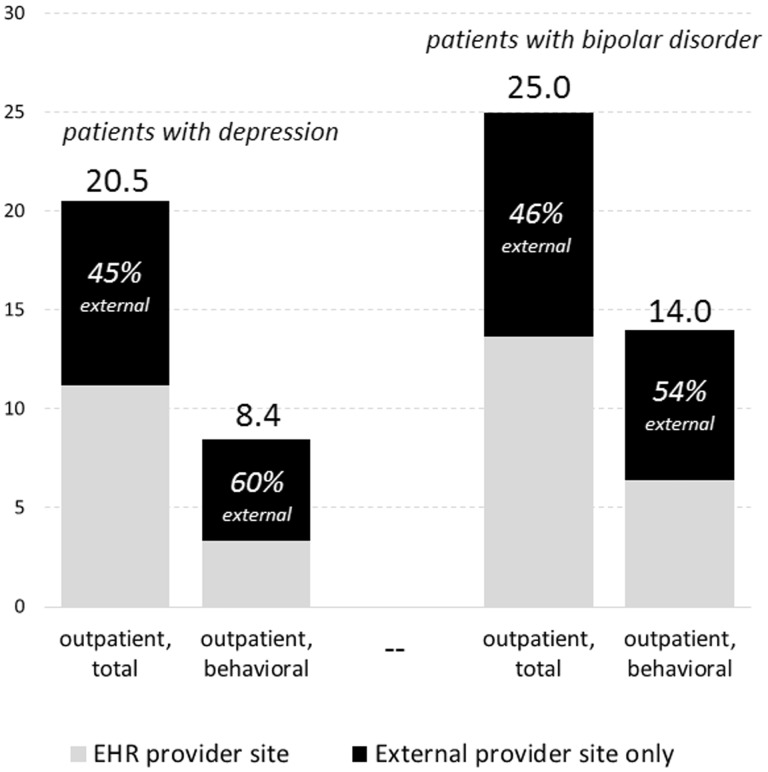
Results: Patients with depression and bipolar disorder, respectively, averaged 8.4 and 14.0 days of outpatient behavioral care per year; 60% and 54% of these, respectively, were missing from the EHR because they occurred offsite. Total outpatient care days were 20.5 for those with depression and 25.0 for those with bipolar disorder, with 45% and 46% missing, respectively, from the EHR. The EHR missed 89% of acute psychiatric services. Study diagnoses were missing from the EHR's structured event data for 27.3% and 27.7% of patients.
Conclusion: EHRs inadequately capture mental health diagnoses, visits, specialty care, hospitalizations, and medications. Missing clinical information raises concerns about medical errors and research integrity. Given the fragmentation of health care and poor EHR interoperability, information exchange, and usability, priorities for further investment in health IT will need thoughtful reconsideration.
Keywords: electronic health records; health care systems; health information exchange; mental disorders; validation studies.
© The Author 2016. Published by Oxford University Press on behalf of the American Medical Informatics Association. All rights reserved. For Permissions, please email: journals.permissions@oup.com.
Figures
References
-
- Health Forum LLC. Fast Facts on US Hospitals. 2015; http://www.aha.org/research/rc/stat-studies/fast-facts.shtml. Accessed May 13, 2015.
-
- Wright A, Henkin S, Feblowitz J, McCoy AB, Bates DW, Sittig DF. Early results of the meaningful use program for electronic health records. N Engl J Med. 2013;368(8):779–780. - PubMed
-
- DesRoches CM, Worzala C, Bates S. Some hospitals are falling behind in meeting ‘meaningful use' criteria and could be vulnerable to penalties in 2015. Health Aff (Millwood). 2013;32(8):1355–1360. - PubMed
-
- Fontaine P, Ross SE, Zink T, Schilling LM. Systematic review of health information exchange in primary care practices. J Am Board Fam Med. 2010;23(5):655–670. - PubMed
MeSH terms
Grants and funding
LinkOut - more resources
Full Text Sources
Other Literature Sources
Medical
