Classifications of Patterned Hair Loss: A Review
- PMID: 27081243
- PMCID: PMC4812885
- DOI: 10.4103/0974-2077.178536
Classifications of Patterned Hair Loss: A Review
Abstract
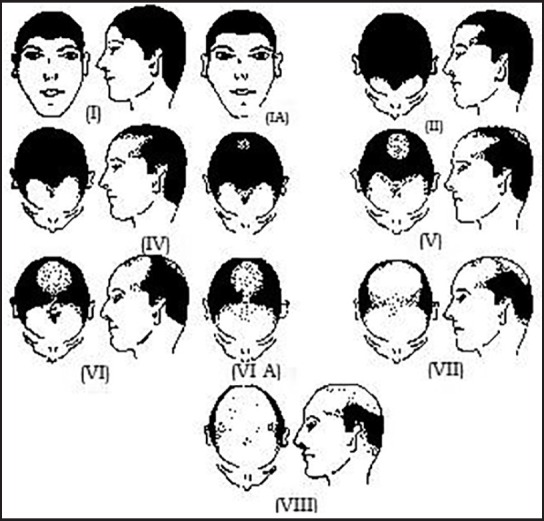
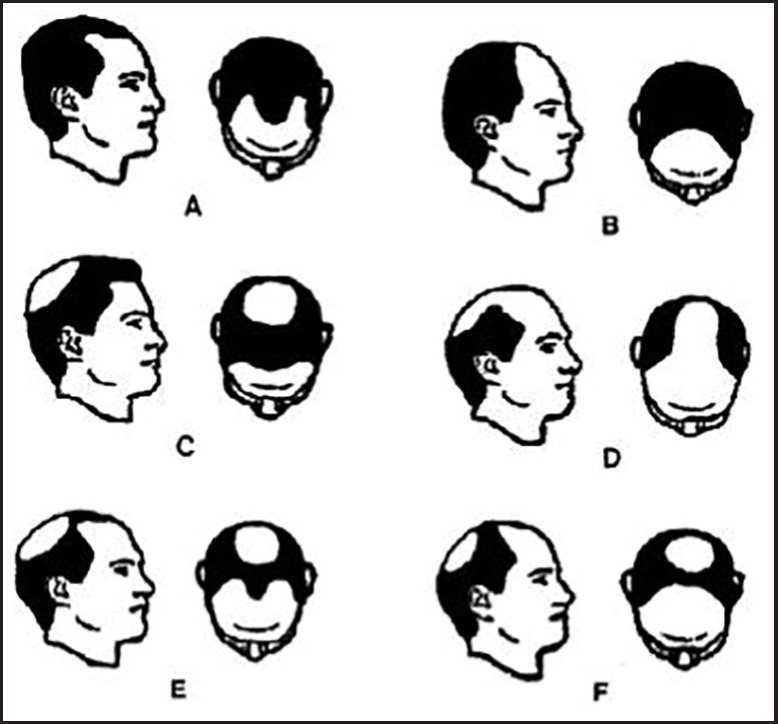
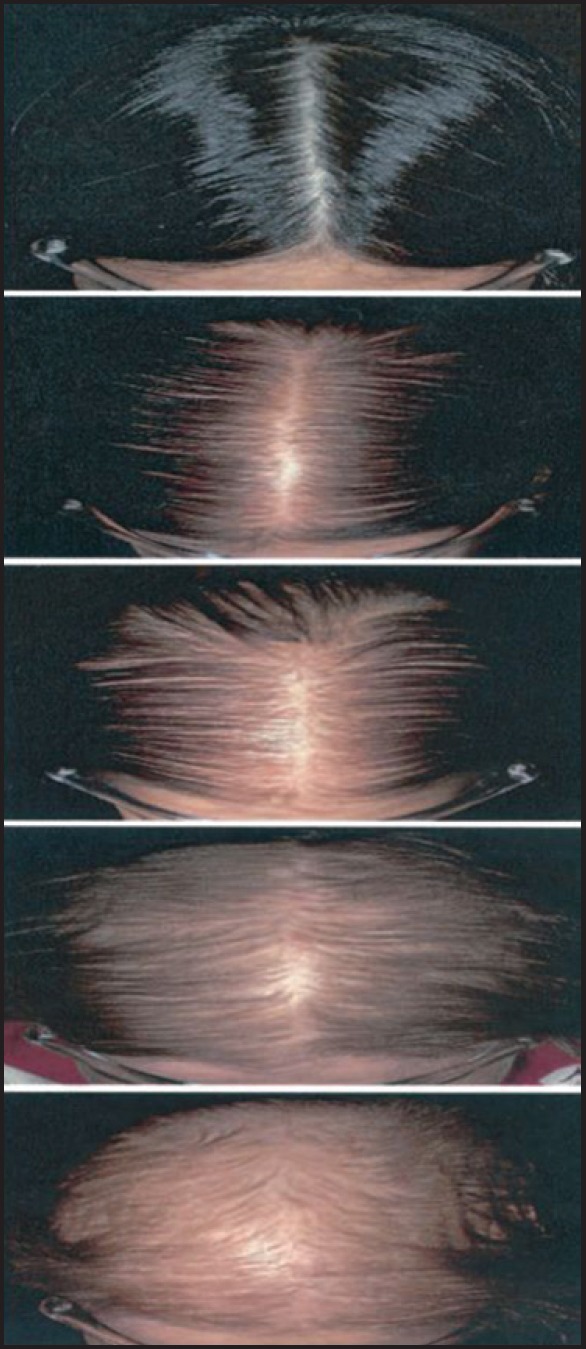
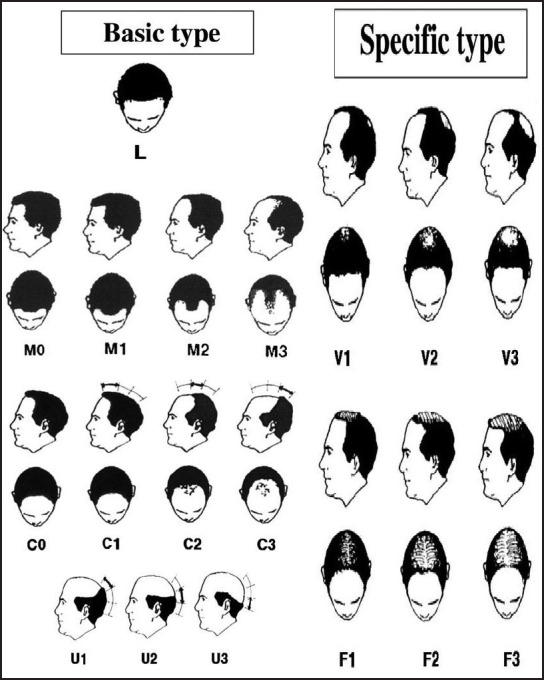
Patterned hair loss is the most common cause of hair loss seen in both the sexes after puberty. Numerous classification systems have been proposed by various researchers for grading purposes. These systems vary from the simpler systems based on recession of the hairline to the more advanced multifactorial systems based on the morphological and dynamic parameters that affect the scalp and the hair itself. Most of these preexisting systems have certain limitations. Currently, the Hamilton-Norwood classification system for males and the Ludwig system for females are most commonly used to describe patterns of hair loss. In this article, we review the various classification systems for patterned hair loss in both the sexes. Relevant articles were identified through searches of MEDLINE and EMBASE. Search terms included but were not limited to androgenic alopecia classification, patterned hair loss classification, male pattern baldness classification, and female pattern hair loss classification. Further publications were identified from the reference lists of the reviewed articles.
Keywords: Androgenic alopecia; classification; patterned hair loss.
Figures




References
-
- Beek CH. A study on extension and distribution of the human body-hair. Dermatologica. 1950;101:317–31. - PubMed
-
- Hamilton JB. Patterned loss of hair in man: Types and incidence. Ann N Y Acad Sci. 1951;53:708–28. - PubMed
-
- Ogata T. Development of patterned alopecia. Sogo Rinsho. 1953;2:101–6.
-
- Setty LR. Hair patterns of the scalp of white and Negro males. Am J Phys Anthropol. 1970;33:49–56. - PubMed
-
- Norwood OT. Male pattern baldness: Classification and incidence. South Med J. 1975;68:1359–65. - PubMed
Publication types
LinkOut - more resources
Full Text Sources
Other Literature Sources
Medical