


Gastric Hamartomatous Polyps-Review and Update
- PMID: 27081323
- PMCID: PMC4825775
- DOI: 10.4137/CGast.S38452
Gastric Hamartomatous Polyps-Review and Update
Abstract
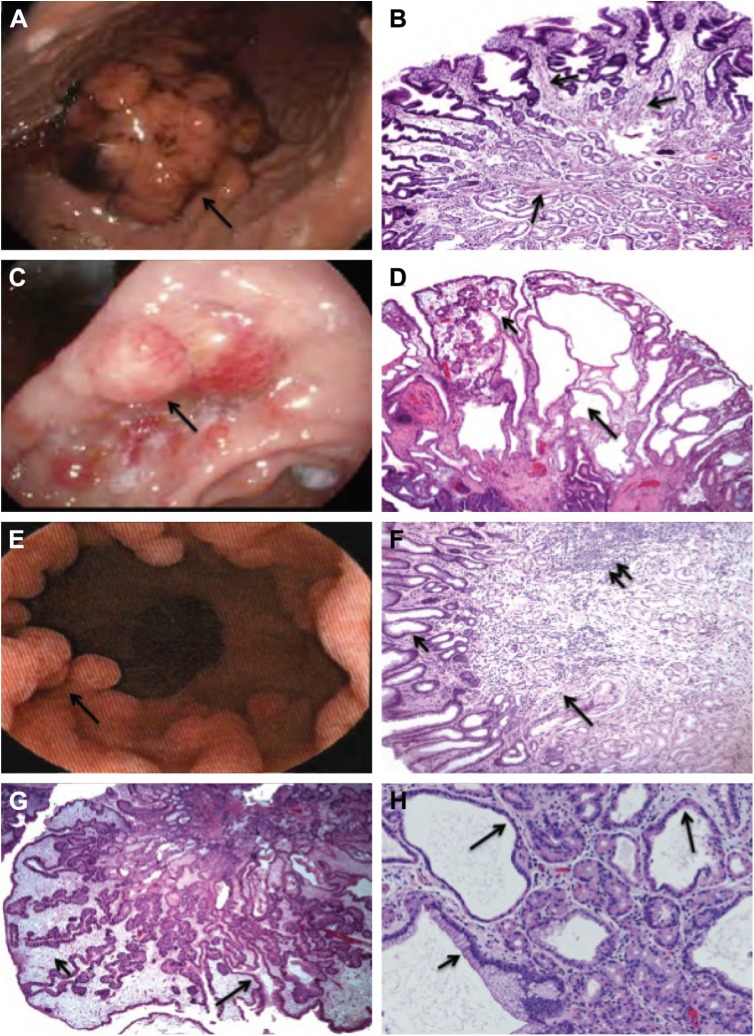
Gastric polyps are frequently encountered on endoscopic examinations. While many of these represent true epithelial lesions, some of the polyps may result from underlying stromal or lymphoid proliferations or even heterotopic tissue. Histologic examination is essential for accurate typing of the polyps to predict malignant potential and underlying possible genetic abnormalities. The focus of this review is on gastric hamartomatous polyps, which are relatively rare and diagnostically challenging. Though most of the gastric hamartomatous polyps are benign, certain types are associated with increased malignant potential. These include certain polyps associated with specific genetic familial polyposis syndromes and gastric inverted hamartomatous polyps. Identification of these polyps can result in the prevention or early diagnosis of gastric carcinoma and also help in the identification of family members with polyposis syndromes. The aim of this review is to categorize gastric hamartomatous polyps and aid in the identification of high-risk categories.
Keywords: hamartomatous polyp; polyposis; stomach.
Figures
References
-
- Oberhuber G, Stolte M. Gastric polyps: an update of their pathology and biological significance. Virchows Arch. 2000;437(6):581–590. - PubMed
-
- Carmack SW, Genta RM, Graham DY, Lauwers GY. Management of gastric polyps: a pathology-based guide for gastroenterologists. Nat Rev Gastroenterol Hepatol. 2009;6(6):331–341. - PubMed
-
- Carmack SW, Genta RM, Schuler CM, Saboorian MH. The current spectrum of gastric polyps: a 1-year national study of over 120,000 patients. Am J Gastroenterol. 2009;104(6):1524–1532. - PubMed
-
- Borch K, Skarsgard J, Franzen L, Mardh S, Rehfeld JF. Benign gastric polyps: morphological and functional origin. Dig Dis Sci. 2003;48(7):1292–1297. - PubMed
Publication types
LinkOut - more resources
Full Text Sources
Other Literature Sources
