Quality of life with anal fistula
- PMID: 27087327
- PMCID: PMC5227050
- DOI: 10.1308/rcsann.2016.0136
Quality of life with anal fistula
Abstract
Introduction: Anal fistula affects people of working age. Symptoms include abscess, pain, discharge of pus and blood. Treatment of this benign disease can affect faecal continence, which may, in turn, impair quality of life (QOL). We assessed the QOL of patients with cryptoglandular anal fistula.
Methods: Newly referred patients with anal fistula completed the St Mark's Incontinence Score, which ranges from 0 (perfect continence) to 24 (totally incontinent), and Short form 36 (SF-36) questionnaire at two institutions with an interest in anal fistula. The data were examined to identify factors affecting QOL.
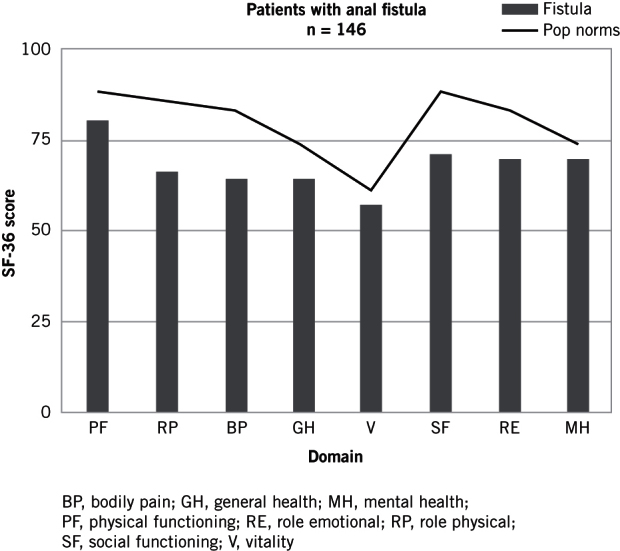
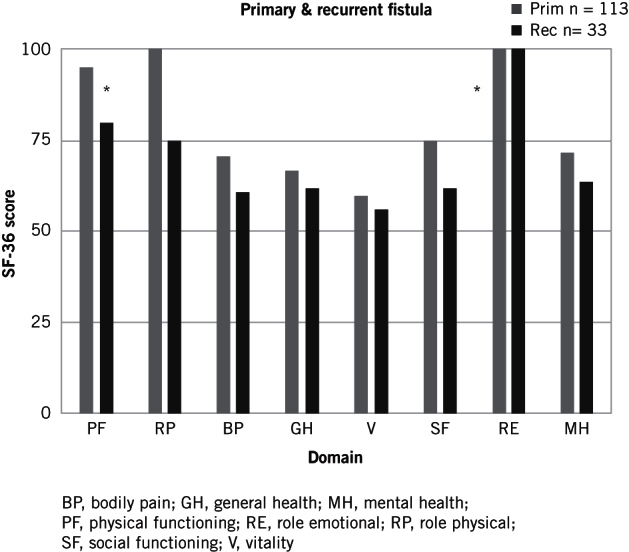
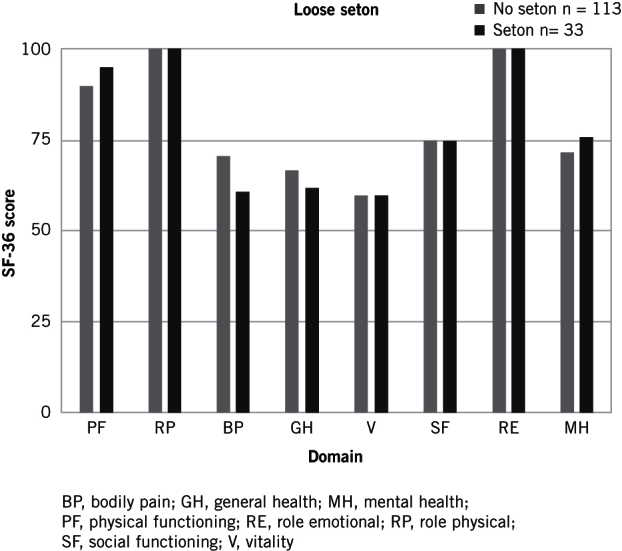
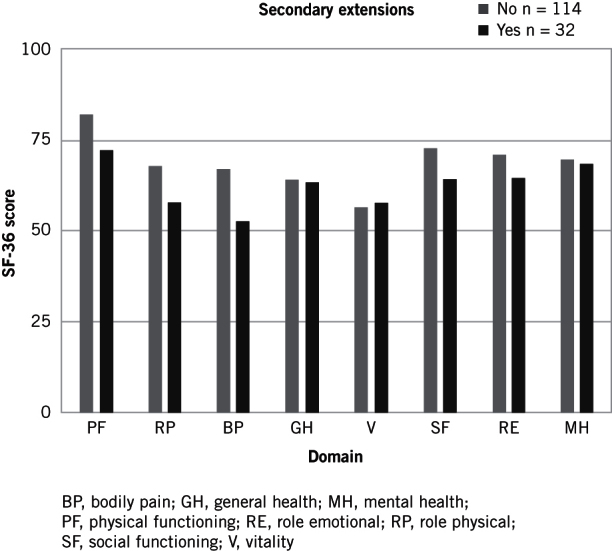
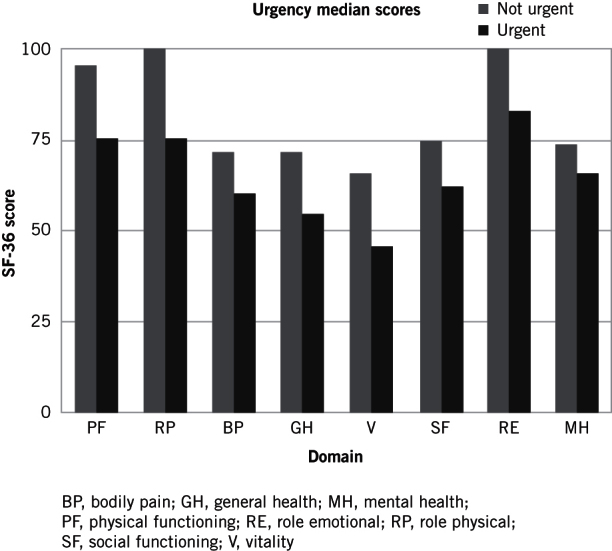
Results: Data were available for 146 patients (47 women), with a median age of 44 years (range 18-82 years) and a median continence score of 0 (range 0-23). Versus population norms, patients had an overall reduction in QOL. While those with recurrent disease had no difference on continence scores, QOL was worse on two of eight SF-36 domains (p<0.05). Patients with secondary extensions had reduced QOL in two domains (p<0.05), while urgency was associated with reduced QOL on five domains (p<0.05). Patients with loose seton had the same QOL as those without seton. No difference in urgency was found between patients with and without loose seton. In primary fistula patients, 19.4% of patients experienced urgency versus 36.3% of those with recurrent fistulas.
Conclusions: Patients with anal fistula had a reduced QOL, which was worse in those with recurrent disease, secondary extensions and urgency. Loose seton had no impact on QOL.
Keywords: Abscess; Quality of life; Rectal fistula.
Figures
References
-
- Marks CG, Ritchie JK. Anal fistulas at St Mark’s Hospital. Br J Surg 1977; : 84–91. - PubMed
-
- Ewerth S, Ahlberg J, Collste G et al. Fistula-in-ano. A six year follow up study of 143 operated patients. Acta Chir Scand Suppl 1978; : 53–55. - PubMed
-
- Shouler PJ, Grimley RP, Keighley MR et al. Fistula-in-ano is usually simple to manage surgically. Int J Colorectal Dis 1986; : 113–115. - PubMed
-
- Lunniss PJ, Kamm MA, Phillips RK. Factors affecting continence after surgery for anal fistula. Br J Surg 1994; : 1,382–1,385. - PubMed
-
- Garcia-Aguilar J, Belmonte C, Wong WD et al. Anal fistula surgery. Factors associated with recurrence and incontinence. Dis Colon Rectum 1996; : 723–729. - PubMed
MeSH terms
LinkOut - more resources
Full Text Sources
Other Literature Sources