


Development of T-cell tolerance utilizes both cell-autonomous and cooperative presentation of self-antigen
- PMID: 27088912
- PMCID: PMC4837647
- DOI: 10.1111/imr.12403
Development of T-cell tolerance utilizes both cell-autonomous and cooperative presentation of self-antigen
Abstract
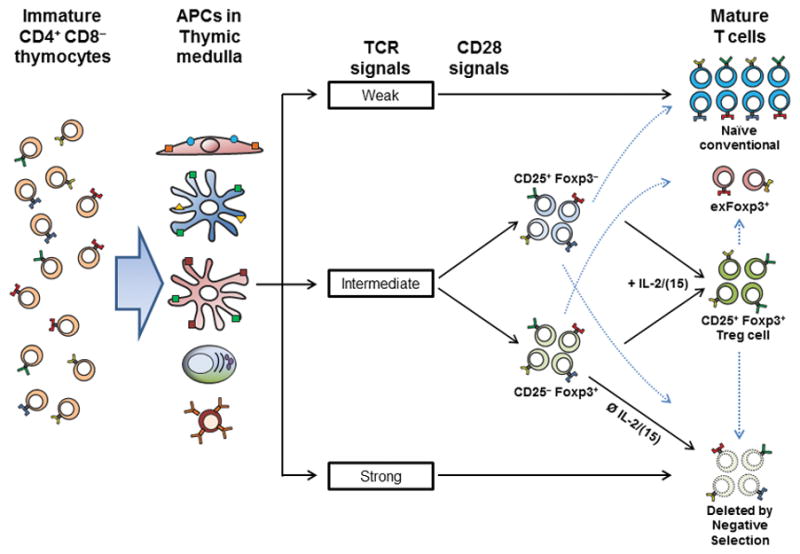
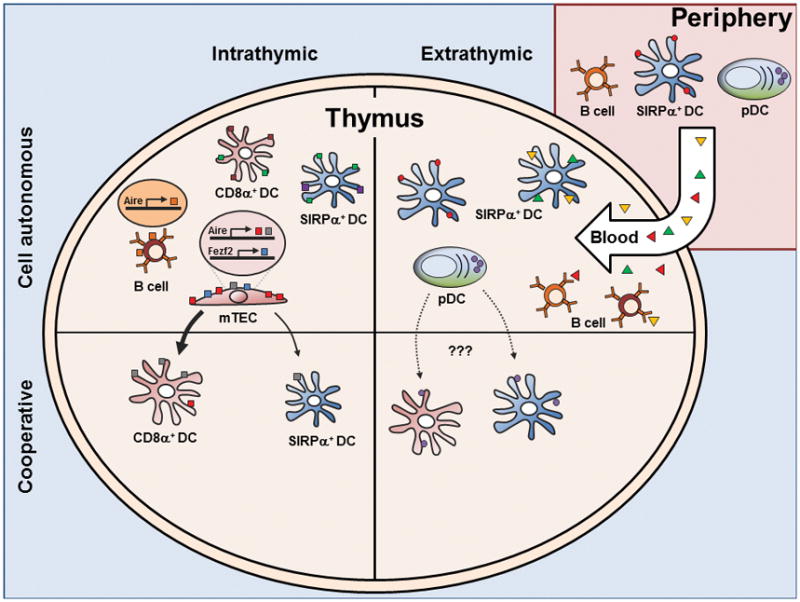
The development of T-cell self-tolerance in the thymus is important for establishing immune homeostasis and preventing autoimmunity. Here, we review the components of T-cell tolerance, which includes T-cell receptor (TCR) self-reactivity, costimulation, cytokines, and antigen presentation by a variety of antigen-presenting cells (APCs) subsets. We discuss the current evidence on the process of regulatory T (Treg) cell and negative selection and the importance of TCR signaling. We then examine recent evidence showing unique roles for bone marrow (BM)-derived APCs and medullary thymic epithelial cells (mTECs) on the conventional and Treg TCR repertoire, as well as emerging data on the role of B cells in tolerance. Finally, we review the accumulating data that suggest that cooperative antigen presentation is a prominent component of T -ell tolerance. With the development of tools to interrogate the function of individual APC subsets in the medulla, we have gained greater understanding of the complex cellular and molecular events that determine T-cell tolerance.
Keywords: T cells; antigen presentation/processing; dendritic cells; medullary thymic epithelial cells; thymus; tolerance/suppression/anergy.
© 2016 John Wiley & Sons A/S. Published by John Wiley & Sons Ltd.
Conflict of interest statement
The authors declare no potential conflict of interest.
References
Publication types
MeSH terms
Substances
Grants and funding
LinkOut - more resources
Full Text Sources
Other Literature Sources
Miscellaneous
