. 2016 Apr 18;11(4):e0153643.
doi: 10.1371/journal.pone.0153643. eCollection 2016.

Anti-Inflammatory Properties and Chemical Characterization of the Essential Oils of Four Citrus Species

Affiliations

Anti-Inflammatory Properties and Chemical Characterization of the Essential Oils of Four Citrus Species

Jorge Luis Amorim et al. PLoS One. .

Abstract

Citrus fruits have potential health-promoting properties and their essential oils have long been used in several applications. Due to biological effects described to some citrus species in this study our objectives were to analyze and compare the phytochemical composition and evaluate the anti-inflammatory effect of essential oils (EO) obtained from four different Citrus species. Mice were treated with EO obtained from C. limon, C. latifolia, C. aurantifolia or C. limonia (10 to 100 mg/kg, p.o.) and their anti-inflammatory effects were evaluated in chemical induced inflammation (formalin-induced licking response) and carrageenan-induced inflammation in the subcutaneous air pouch model. A possible antinociceptive effect was evaluated in the hot plate model. Phytochemical analyses indicated the presence of geranial, limonene, γ-terpinene and others. EOs from C. limon, C. aurantifolia and C. limonia exhibited anti-inflammatory effects by reducing cell migration, cytokine production and protein extravasation induced by carrageenan. These effects were also obtained with similar amounts of pure limonene. It was also observed that C. aurantifolia induced myelotoxicity in mice. Anti-inflammatory effect of C. limon and C. limonia is probably due to their large quantities of limonene, while the myelotoxicity observed with C. aurantifolia is most likely due to the high concentration of citral. Our results indicate that these EOs from C. limon, C. aurantifolia and C. limonia have a significant anti-inflammatory effect; however, care should be taken with C. aurantifolia.


Conflict of interest statement

Competing Interests: The authors have declared that no competing interests exist.

Figures

Fig 1
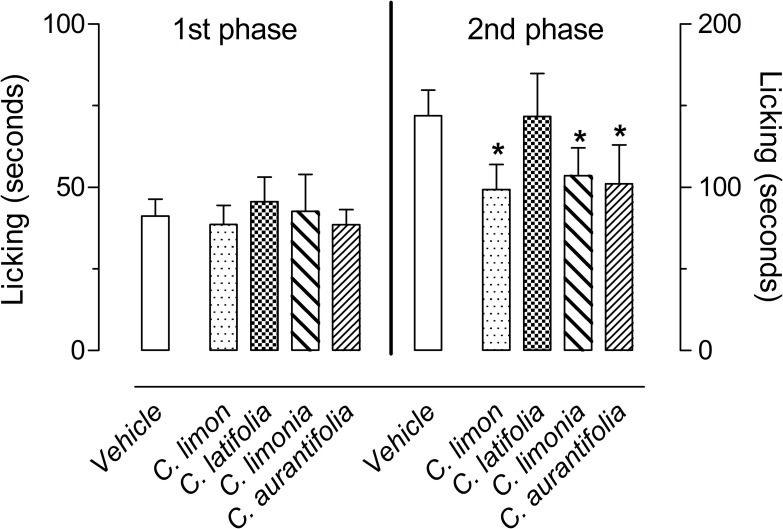
Fig 1. Effects of C. limon, C. latifolia, C. limonia and C. aurantifolia essential oils on the formalin-induced licking response in mice.
Animals were pre-treated with oral doses of 100 mg/kg dose of each essential oil or vehicle. The results are presented as the mean ± S.D. (n = 6 per group) of the time that the animal spent licking the formalin-injected paw. Statistical significance was calculated by ANOVA followed by Bonferroni's test. *P < 0.05 when compared to vehicle-treated mice.
Fig 2
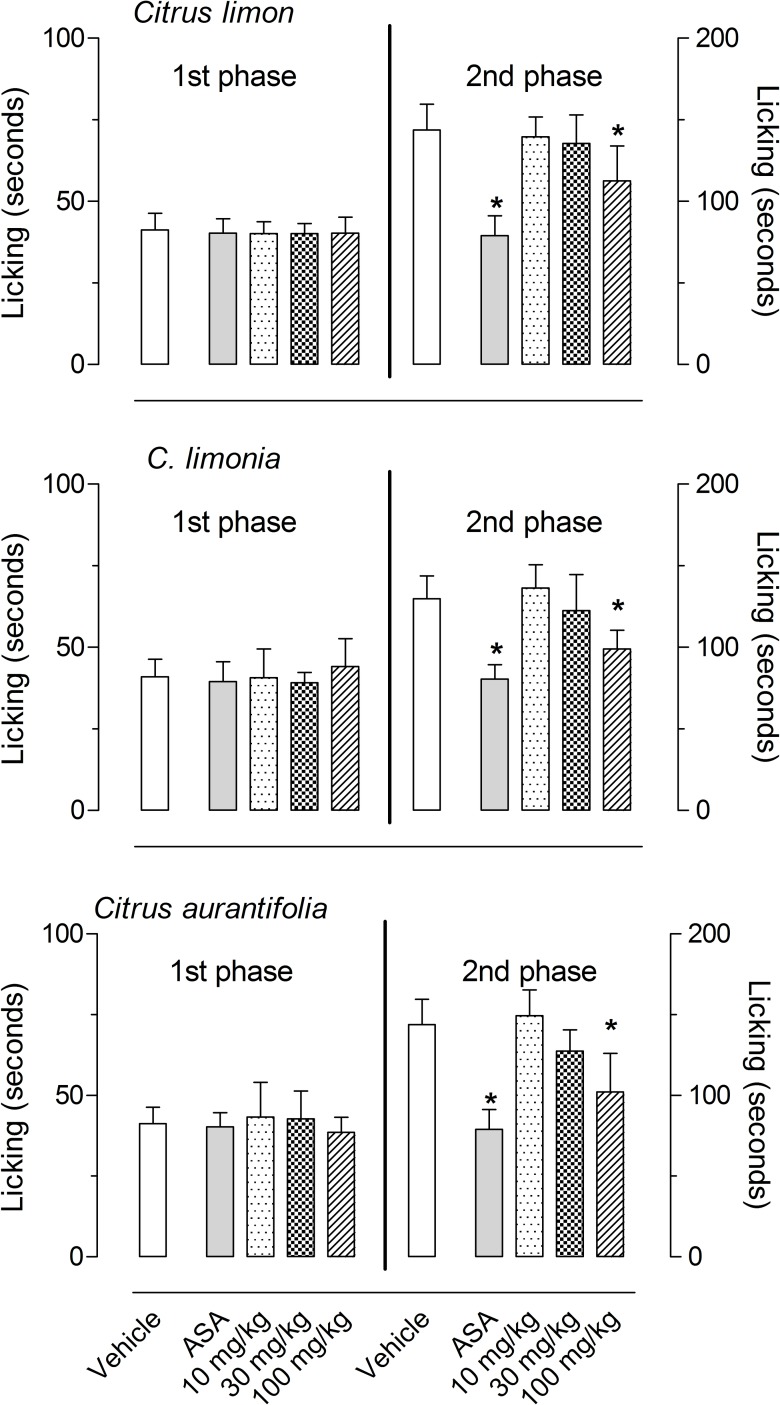
Fig 2. Effects of C. limon, C. limonia and C. aurantifolia essential oils on the formalin-induced licking response in mice.
Animals were pre-treated with oral doses (10, 30 or 100 mg/kg) of each essential oil, acetylsalicylic acid (ASA, 100 mg/kg) or vehicle. The results are presented as the mean ± S.D. (n = 7 per group) of the time that the animal spent licking the formalin-injected paw. Statistical significance was calculated by ANOVA followed by Bonferroni's test. *P < 0.05 when compared to vehicle-treated mice.
Fig 3
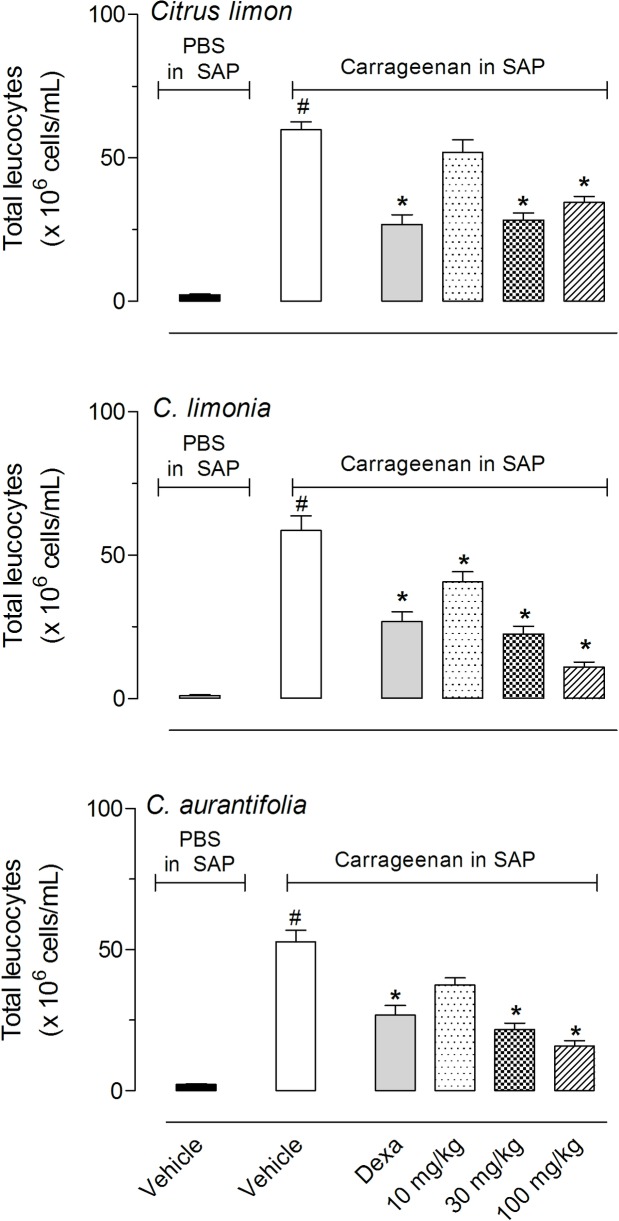
Fig 3. Effects of C. limon, C. limonia and C. aurantifolia essential oils on leukocyte migration into the subcutaneous air pouch (SAP).
Animals were pretreated with different doses of the essential oils, dexamethasone (Dexa, 5 mg/kg, i.p.) or vehicle 1 h prior to carrageenan (1%) injection into the SAP. The results are presented as the mean ± S.D. (n = 10 per group) of cells (x 106/mL) in the SAP. Statistical significance was calculated by ANOVA followed by Bonferroni's test. #P < 0.05 when comparing vehicle treated group that received carrageenan in the SAP with vehicle-treated animals that received PBS in SAP; *P < 0.05 when comparing essential oils-treated animals with that received carrageenan in the SAP with the group that only received carrageenan in the SAP.
Fig 4
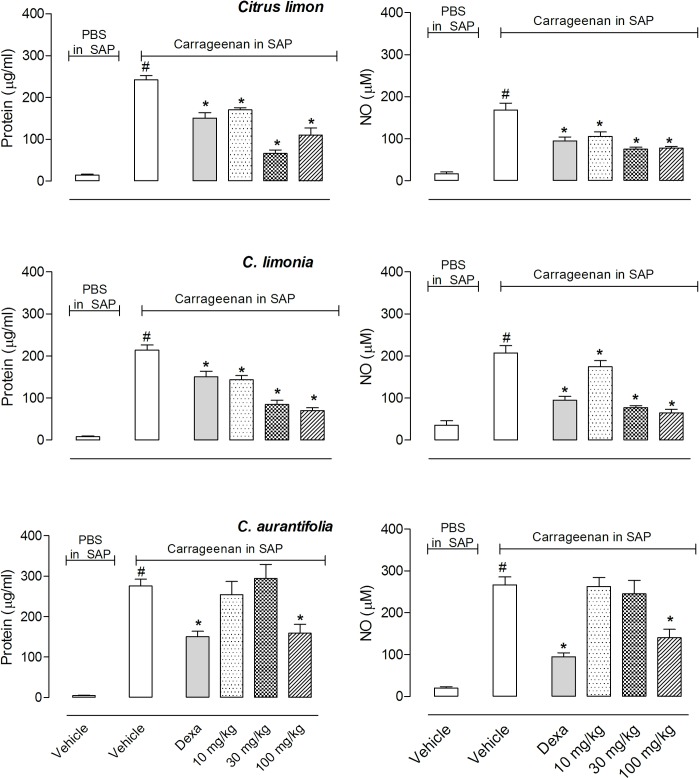
Fig 4. Effects of C. limon, C. limonia and C. aurantifolia essential oils on carrageenan-induced protein extravasation and nitric oxide (NO) production in a subcutaneous air pouch (SAP).
Animals were pre-treated with various doses (10, 30 or 100 mg/kg, p.o.) of EO, dexamethasone (5 mg/kg, i.p.) or vehicle. The results are presented as the mean ± S.D. (n = 10 per group). Statistical significance was calculated by ANOVA followed by Bonferroni’s test. #P < 0.05 when comparing the carrageenan-injected group with the PBS-injected group and *P < 0.05 when comparing EO or dexamethasone-treated groups with the vehicle-treated group.
Fig 5
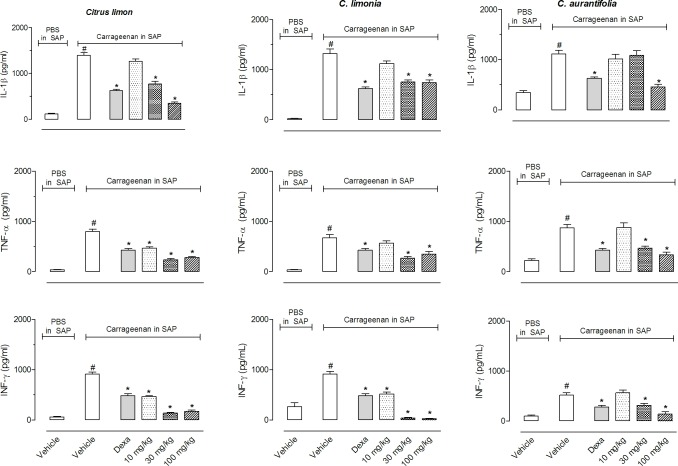
Fig 5. Effects of C. limon, C. aurantifolia and C. limonia essential oils on carrageenan-induced IL-1β, TNF-α and IFN-γ production in a subcutaneous air pouch (SAP).
Animals were pre-treated with various doses (10, 30 or 100 mg/kg, p.o.) of EO, dexamethasone (5 mg/kg, i.p.) or vehicle. The results are presented as the mean ± S.D. (n = 10 per group). Statistical significance was calculated by ANOVA followed by Bonferroni’s test. #P < 0.05 when comparing the carrageenan-injected group with the PBS-injected group and *P < 0.05 when comparing EO or dexamethasone-treated groups with the vehicle-treated group.
Fig 6
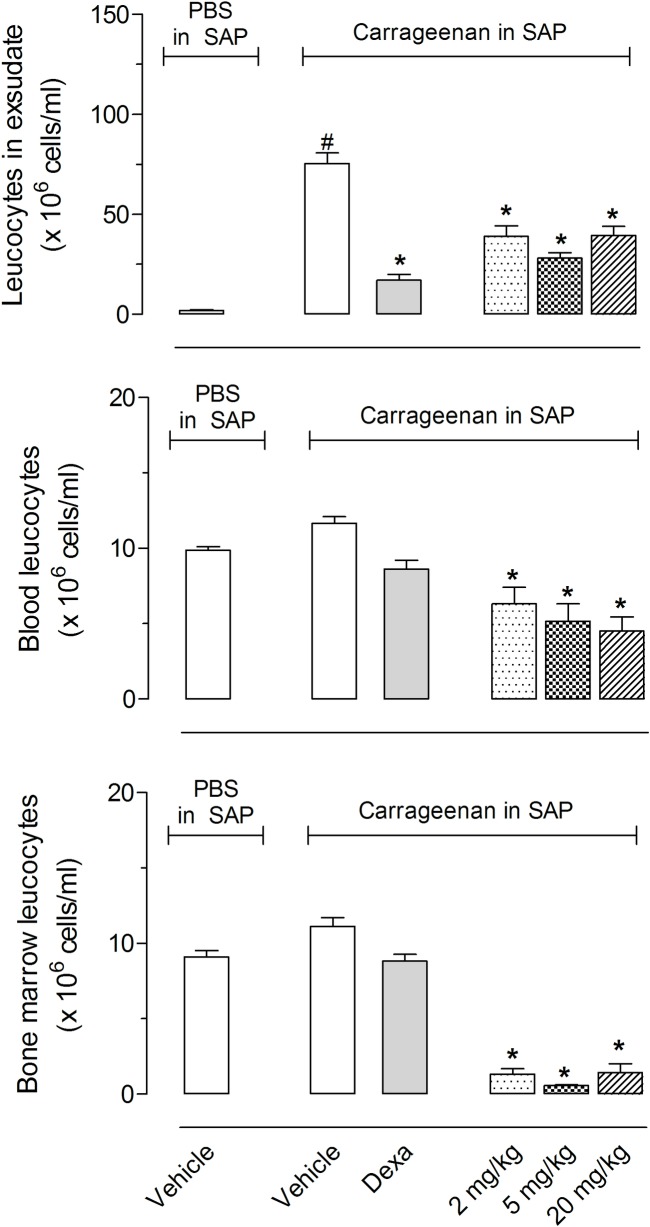
Fig 6. Effects of pure citral on total leukocyte counts in blood and bone marrow.
Animals were pretreated with citral (2, 5 or 20 mg/kg) or vehicle 1 h prior to carrageenan (1%) injection into the SAP. The results are presented as the mean ± S.D. (n = 10 per group) of leukocytes (x 106/mL) in ex udate, blood or bone marrow. Statistical significance was calculated by ANOVA followed by Bonferroni's test. *P < 0.05 when comparing citral-treated animals with carrageenan injected in the SAP with the group that received carrageenan in the SAP.
Fig 7
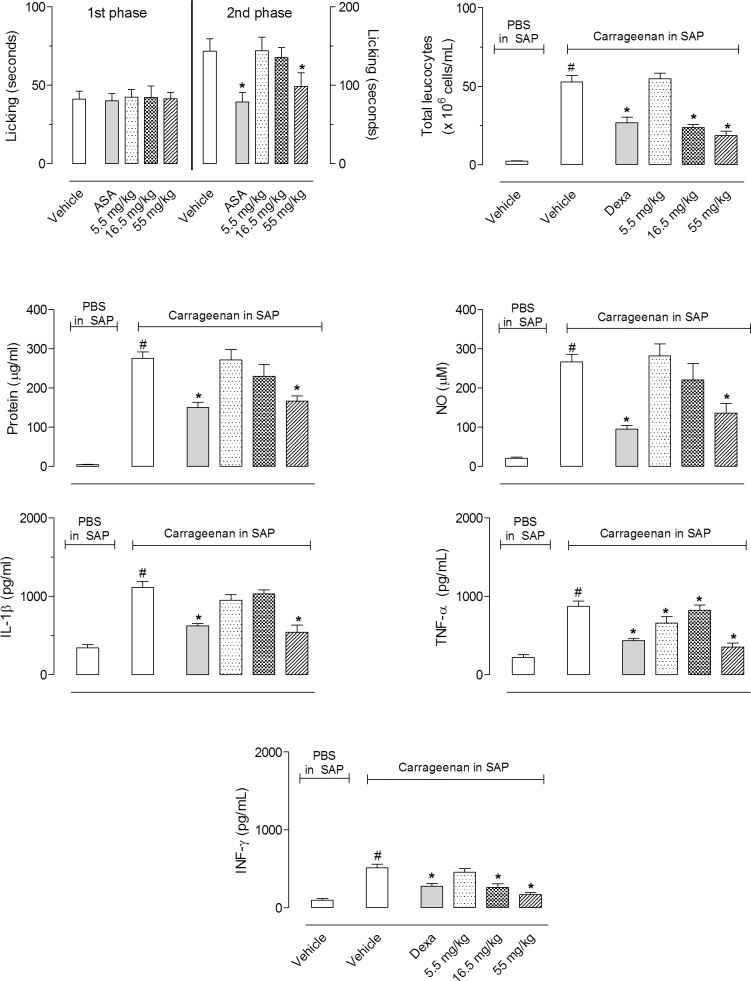
Fig 7. Effect of limonene on formalin-induced licking and SAP models.
Animals were pretreated with various doses of limonene (5.5, 16.5 or 55 mg/kg) or vehicle 1 h prior to formalin (1%) or carrageenan (1%) injection. The results are presented as the mean ± S.D. (n = 6 per group). Statistical significance was calculated by ANOVA followed by Bonferroni's test. *P < 0.05 when comparing essential oils-treated animals with carrageenan injected in the SAP with the group that received carrageenan in the SAP.

References

    1. Gorinstein S, Martin-Belloso O, Park YS, Haruenkit R, Lojek A, Ĉíž M, et al. Comparison of some biochemical characteristics of different citrus fruits. Food Chem. 2001; 74: 309–315.
    1. Ariasa BA, Ramon-Lacab L. Pharmacological properties of citrus and their ancient and medieval uses in the Mediterranean region. J Ethnopharmacol. 2005; 97: 89–95. - PubMed
    1. Bisignano G, Cimino F, Saija A. Biological activities of citrus essential oils In: Citrus Oils: Composition, Advanced Analytical Techniques, Contaminants, and Biological Activity, Giovanni D., Luigi M., Eds.; CRC Press (Taylor and Francis): Florida, USA, 2011.
    1. Belletti N, Ndagijimana M, Sisto C, Guerzoni ME, Lanciotti R, Gardini F. Evaluation of the antimicrobial activity of citrus essences on Saccharomyces cerevisiae. J Agric Food Chem. 2004; 52: 6932–6938. - PubMed
    1. Romano L, Battaglia F, Masucci L, Posteraro SB, Plotti G, Zanetti S, et al. In vitro activity of bergamot natural essence and furocoumarin-free and distilled extracts, and their associations with boric acid, against clinical yeast isolates. J Antimic Chemother. 2005; 55: 110–114. - PubMed

Publication types

LinkOut - more resources