


A systematic review of interventions to improve adherence to melanoma preventive behaviors for individuals at elevated risk
- PMID: 27090434
- PMCID: PMC4902721
- DOI: 10.1016/j.ypmed.2016.04.010
A systematic review of interventions to improve adherence to melanoma preventive behaviors for individuals at elevated risk
Abstract
Background and objectives: To examine the effectiveness of behavioral interventions for melanoma prevention targeted to individuals at elevated risk due to personal and/or family history.
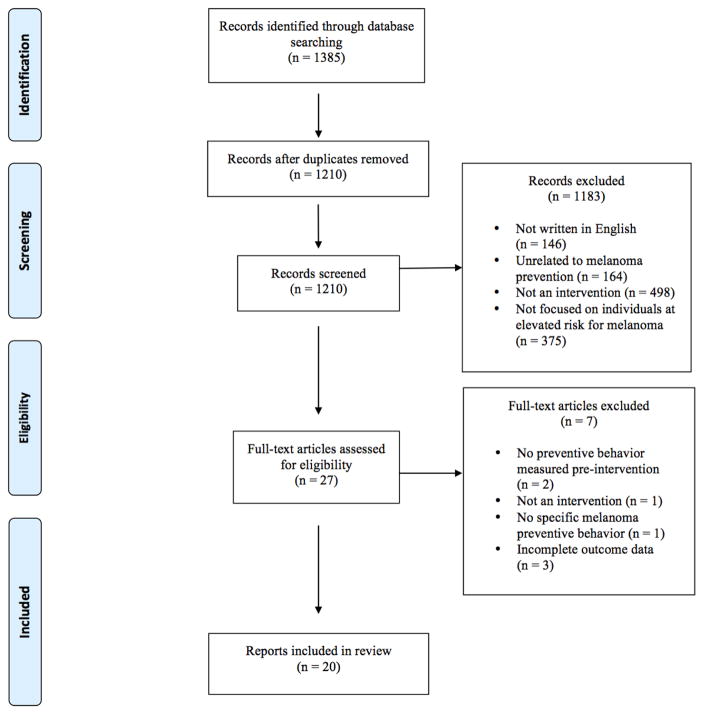
Methods: Through literature searches in 5 search databases (through July 2014), 20 articles describing 14 unique interventions focused on melanoma prevention among individuals at elevated risk for the disease were identified. Interventions targeting only patients undergoing active treatment for melanoma were excluded.
Results: The average study quality was moderate. The majority of interventions (6 out of 9, 66% of studies) led to improvements in one or more photoprotective behaviors, particularly for improvements in use of protective clothing (3 out of 5, 60% of studies), and frequency and/or thoroughness of skin self-examinations (9 out of 12, 75%). Fewer interventions (5 out of 14, 36%) targeted uptake of total body skin examinations (60% led to improvements). Also, fewer interventions targeted all three preventive behaviors (5 out of 14, 36%).
Conclusions: Findings suggest that future interventions should aim to improve adherence across multiple preventive behaviors, over a longer time period (past 8months post-intervention), and target high-risk children. Studies should include adequate sample sizes to investigate moderators and mediators of intervention effectiveness. Interventions may be strengthened by new techniques, such as incorporating family members (e.g., to improve thoroughness of skin self-examinations) and eHealth technology.
Keywords: High-risk; Intervention; Melanoma; Prevention; Review.
Copyright © 2016 Elsevier Inc. All rights reserved.
Conflict of interest statement
Figures
References
-
- Aspinwall LG, Taber JM, Leaf SL, Kohlmann W, Leachman SA. Melanoma genetic counseling and test reporting improve screening adherence among unaffected carriers 2 years later. Cancer Epidemiology Biomarkers and Prevention. 2013;22(10):1687–1697. doi: 10.1158/1055-9965.epi-13-0422. - DOI - PMC - PubMed
Publication types
MeSH terms
Grants and funding
LinkOut - more resources
Full Text Sources
Other Literature Sources
Medical
Miscellaneous
