


Subtypes of HPV-Positive Head and Neck Cancers Are Associated with HPV Characteristics, Copy Number Alterations, PIK3CA Mutation, and Pathway Signatures
- PMID: 27091409
- PMCID: PMC5026546
- DOI: 10.1158/1078-0432.CCR-16-0323
Subtypes of HPV-Positive Head and Neck Cancers Are Associated with HPV Characteristics, Copy Number Alterations, PIK3CA Mutation, and Pathway Signatures
Abstract
Purpose: There is substantial heterogeneity within human papillomavirus (HPV)-associated head and neck cancer (HNC) tumors that predispose them to different outcomes; however, the molecular heterogeneity in this subgroup is poorly characterized due to various historical reasons.
Experimental design: We performed unsupervised gene expression clustering on deeply annotated (transcriptome and genome) HPV(+) HNC samples from two cohorts (84 total primary tumors), including 18 HPV(-) HNC samples, to discover subtypes and characterize the differences between subgroups in terms of their HPV characteristics, pathway activity, whole-genome somatic copy number alterations, and mutation frequencies.
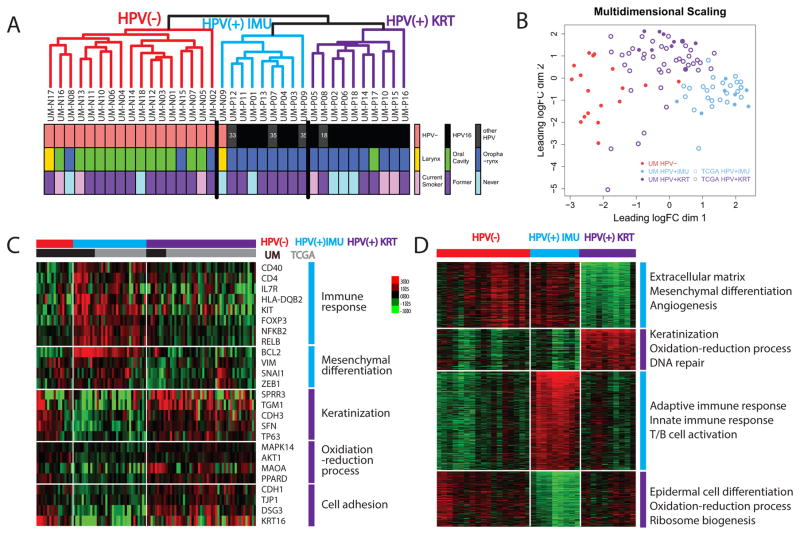
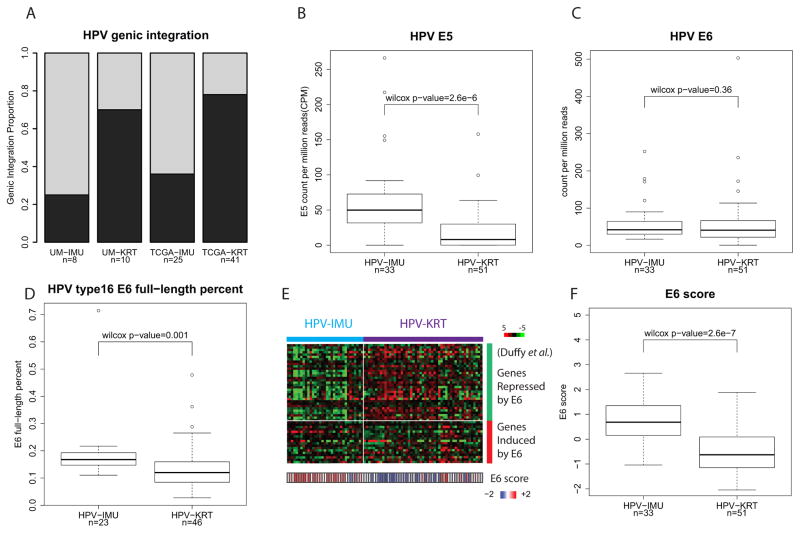
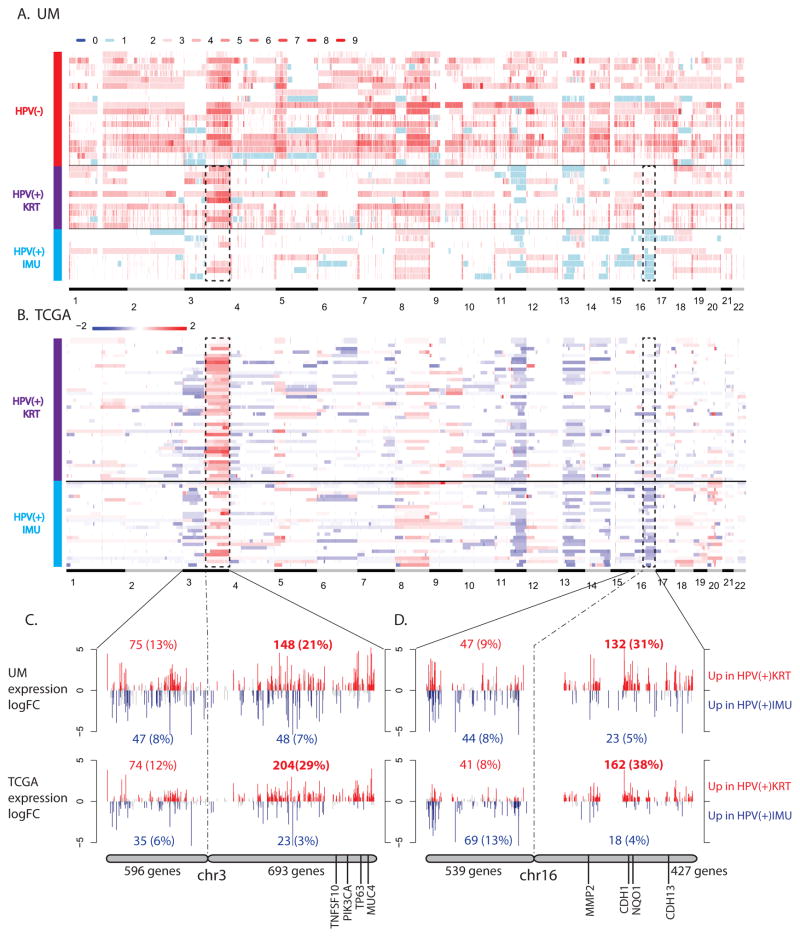
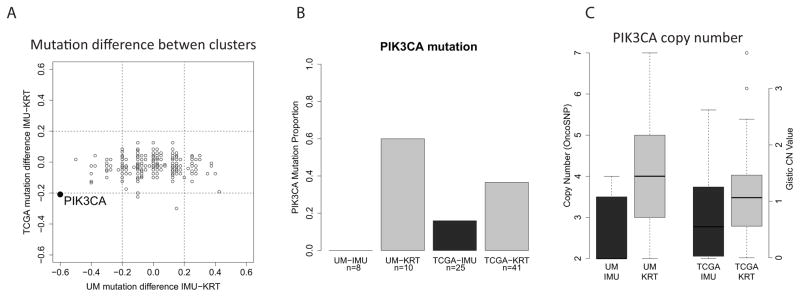
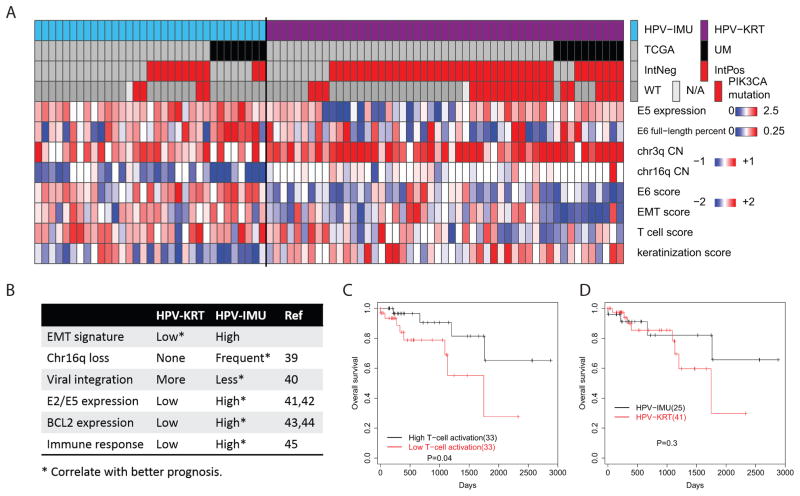
Results: We identified two distinct HPV(+) subtypes (namely HPV-KRT and HPV-IMU). HPV-KRT is characterized by elevated expression of genes in keratinocyte differentiation and oxidation-reduction process, whereas HPV-IMU has strong immune response and mesenchymal differentiation. The differences in expression are likely connected to the differences in HPV characteristics and genomic changes. HPV-KRT has more genic viral integration, lower E2/E4/E5 expression levels, and higher ratio of spliced to full-length HPV oncogene E6 than HPV-IMU; the subgroups also show differences in copy number alterations and mutations, in particular the loss of chr16q in HPV-IMU and gain of chr3q and PIK3CA mutation in HPV-KRT.
Conclusions: Our characterization of two subtypes of HPV(+) HNC tumors provides valuable molecular level information that point to two main carcinogenic paths. Together, these results shed light on stratifications of the HPV(+) HNCs and will help to guide personalized care for HPV(+) HNC patients. Clin Cancer Res; 22(18); 4735-45. ©2016 AACR.
©2016 American Association for Cancer Research.
Conflict of interest statement
The authors declare there are no potential conflicts of interest.
Figures
References
-
- Ferlay J, Shin H-R, Bray F, Forman D, Mathers C, Parkin DM. Estimates of worldwide burden of cancer in 2008: GLOBOCAN 2008. Int J Cancer. 2010;127:2893–917. - PubMed
-
- Kreimer AR, Clifford GM, Boyle P, Franceschi S. Human papillomavirus types in head and neck squamous cell carcinomas worldwide: a systematic review. Cancer Epidemiol Biomarkers Prev. 2005;14:467–75. - PubMed
MeSH terms
Substances
Grants and funding
LinkOut - more resources
Full Text Sources
Other Literature Sources
Medical
Molecular Biology Databases
Research Materials
Miscellaneous
