


Emergence of Sex Differences in Insomnia Symptoms in Adolescents: A Large-Scale School-Based Study
- PMID: 27091537
- PMCID: PMC4945316
- DOI: 10.5665/sleep.6022
Emergence of Sex Differences in Insomnia Symptoms in Adolescents: A Large-Scale School-Based Study
Abstract
Study objectives: This study aimed to explore the moderation of pubertal status on the onset of sex differences in the prevalence of insomnia symptoms and their health correlates.
Methods: A total of 7,507 children and adolescents (weighted percentage of female: 48.5%) aged between 6-17 y were recruited from thirty-one primary and secondary schools. Participants with difficulty initiating sleep (DIS), difficulty maintaining sleep (DMS), and/or early morning awakening (EMA) ≥ 3 times/week in the past month were considered as having insomnia symptoms. The severity of insomnia was measured by the Insomnia Severity Index (ISI).
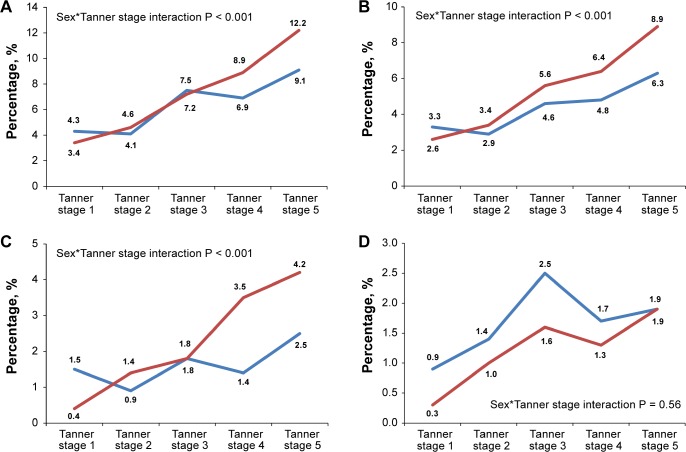
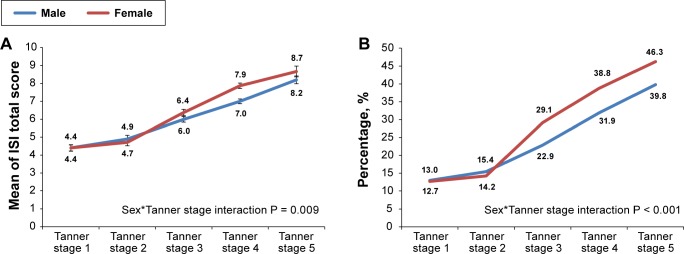
Results: The prevalence of insomnia symptoms increased from 3.4% to 12.2% in girls (3.6-fold) and from 4.3% to 9.1% in boys (2.1-fold) from Tanner stage 1 to 5. There was a significant interaction between sex and Tanner stage in the prevalence of insomnia (P < 0.001) with an emergence of female preponderance at Tanner stage 4 even after controlling for age, family income, and school start time. Similar sex-Tanner stage interactions were found in DIS, DMS, and ISI total score but not EMA. Insomnia symptoms were strongly associated with behavioral problems, poor mental health, and poor general health in both sexes. Boys with insomnia would report more maladaptive lifestyles (smoking, alcohol, and energy drinks) whereas girls with insomnia were more susceptible to emotional and relationship difficulties.
Conclusions: Pubertal maturation was associated with a progressive increase in the prevalence of insomnia symptoms with the emergence of female preponderance in both the prevalence and severity of insomnia symptoms at late puberty.
Clinical trials registration: Chinese Clinical Trial Register, http://www.chictr.org.cn, ID: ChiCTR-TRC-12002798.
Keywords: adolescents; insomnia symptoms; pubertal status; sex differences.
© 2016 Associated Professional Sleep Societies, LLC.
Figures
References
-
- Zhang J, Li AM, Kong AP, Lai KY, Tang NL, Wing YK. A community-based study of insomnia in Hong Kong Chinese children: prevalence, risk factors and familial aggregation. Sleep Med. 2009;10:1040–6. - PubMed
-
- Patten CA, Choi WS, Gillin JC, Pierce JP. Depressive symptoms and cigarette smoking predict development and persistence of sleep problems in US adolescents. Pediatrics. 2000;106:E23. - PubMed
-
- Ohayon MM, Roberts RE, Zulley J, Smirne S, Priest RG. Prevalence and patterns of problematic sleep among older adolescents. J Am Acad Child Adolesc Psychiatry. 2000;39:1549–56. - PubMed
-
- Riemann D, Nissen C, Palagini L, Otte A, Perlis ML, Spiegelhalder K. The neurobiology, investigation, and treatment of chronic insomnia. Lancet Neurol. 2015;14:547–58. - PubMed
MeSH terms
LinkOut - more resources
Full Text Sources
Other Literature Sources
Medical
Research Materials
Miscellaneous
