


Exposure estimate for FD&C colour additives for the US population
- PMID: 27092991
- PMCID: PMC4975380
- DOI: 10.1080/19440049.2016.1179536
Exposure estimate for FD&C colour additives for the US population
Abstract
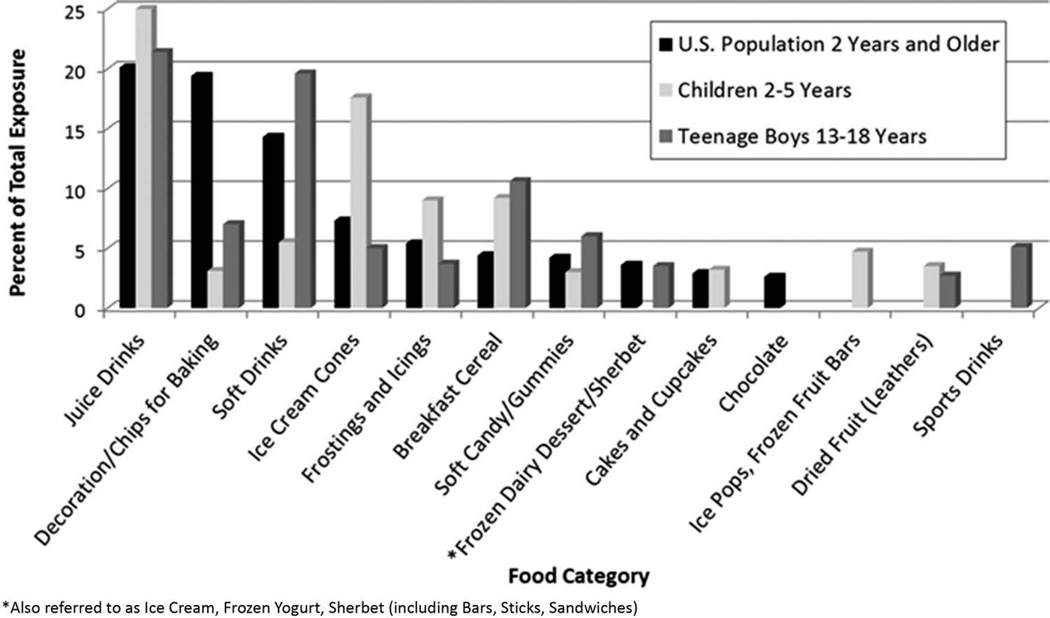
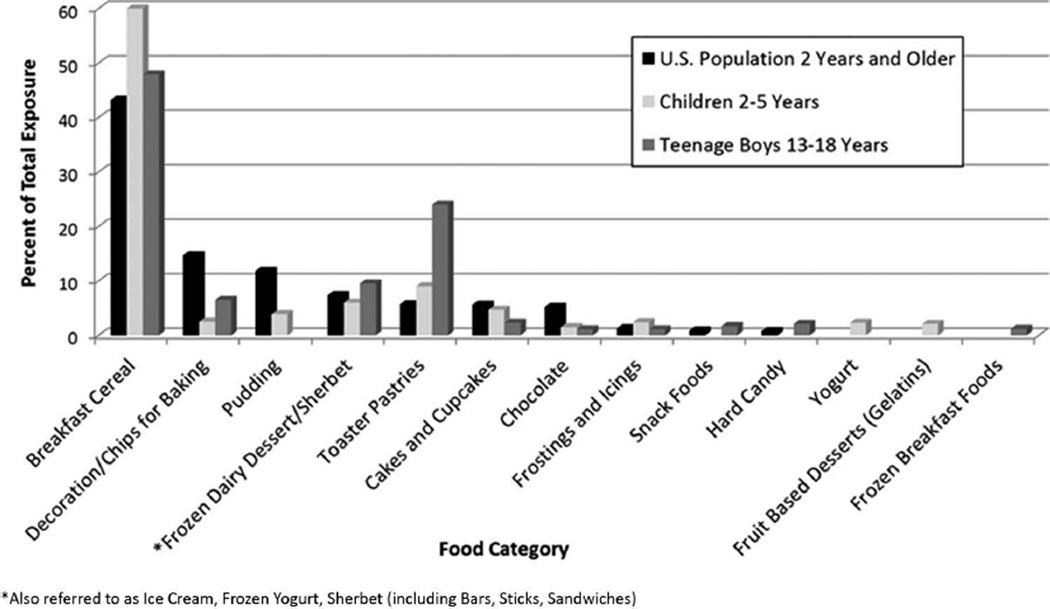
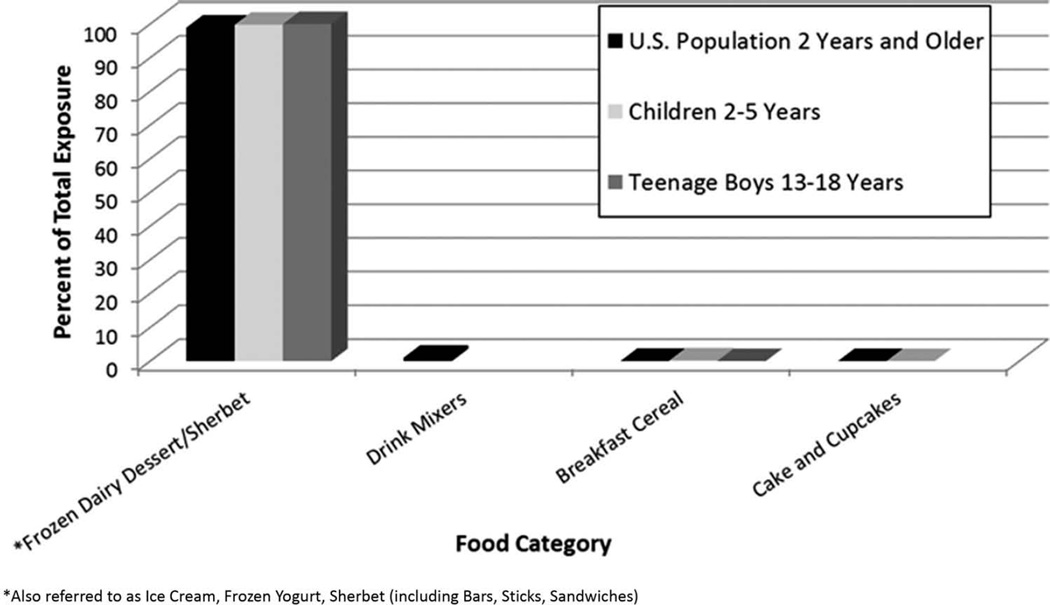
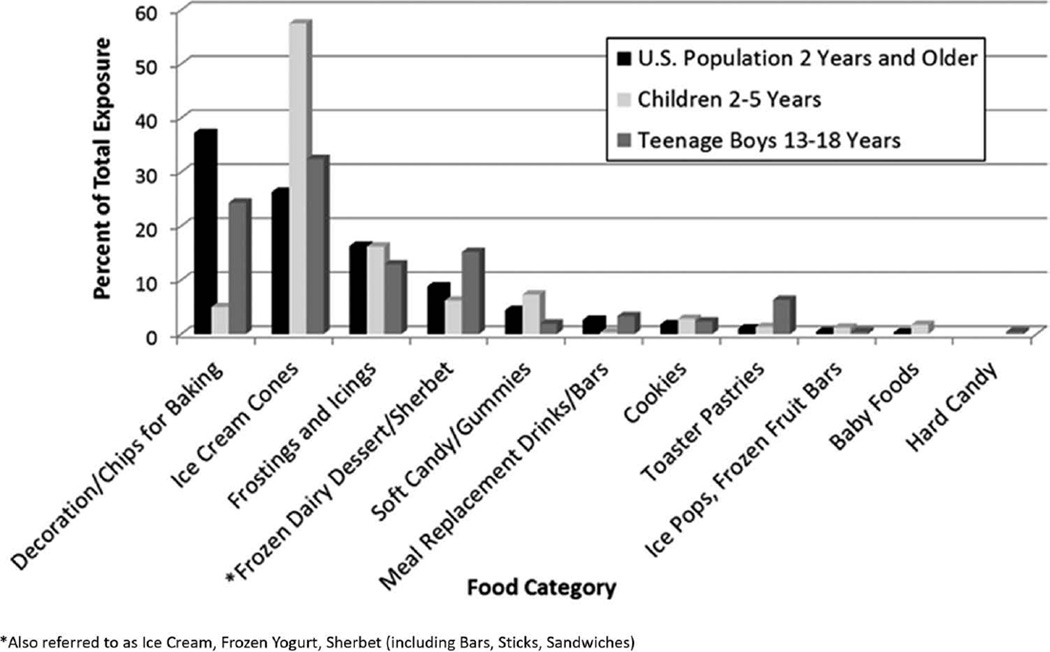
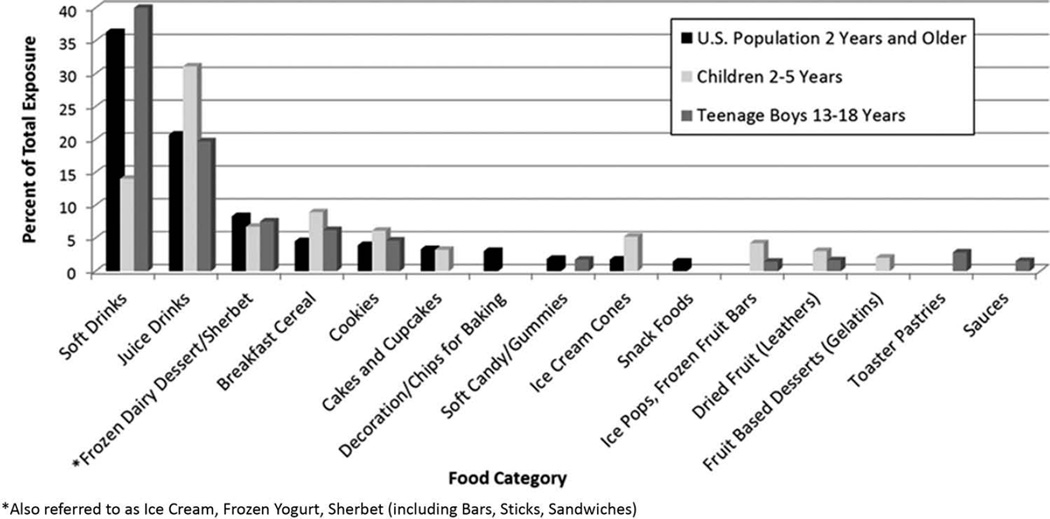
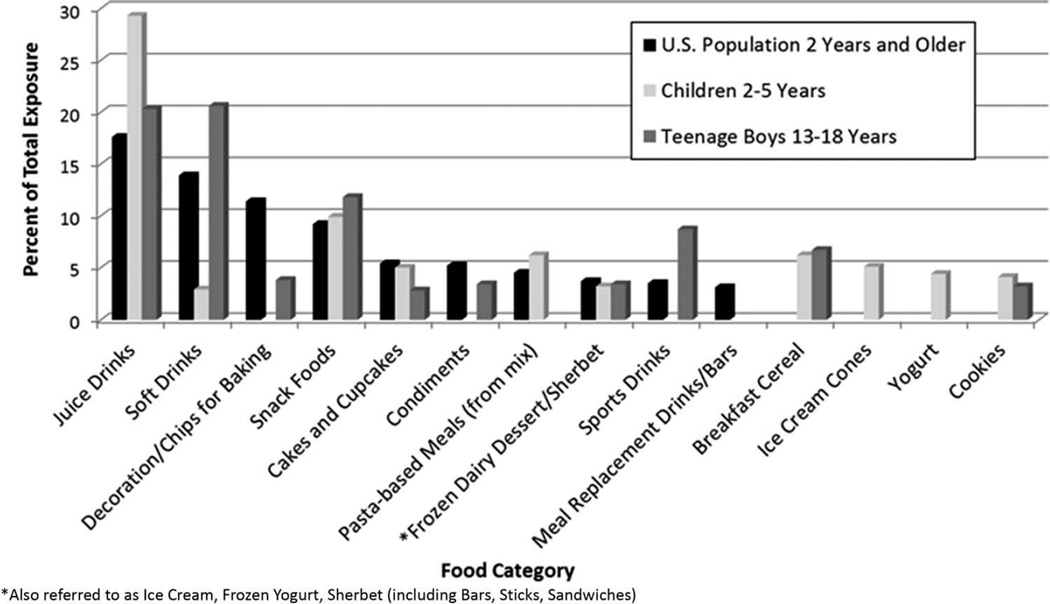
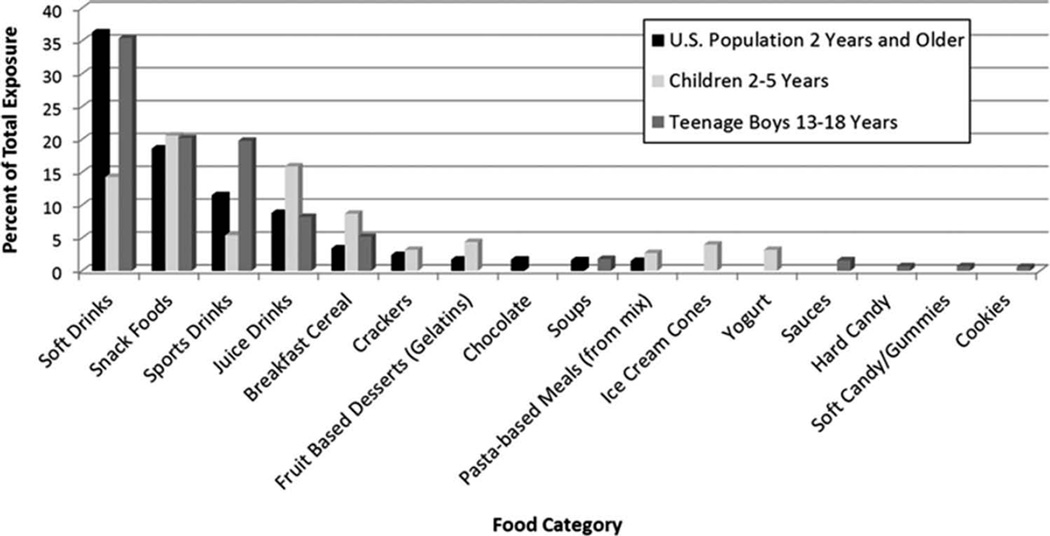
Dietary exposures to the seven food, drug, and cosmetic (FD&C) colour additives that are approved for general use in food in the United States were estimated for the US population (aged 2 years and older), children (aged 2-5 years) and teenage boys (aged 13-18 years) based on analytical levels of the FD&C colour additives in foods. Approximately 600 foods were chosen for analysis, based on a survey of product labels, for the levels of FD&C colour additives. Dietary exposure was estimated using both 2-day food consumption data from the combined 2007-10 National Health and Nutrition Examination Survey (NHANES) and 10-14-day food consumption data from the 2007-10 NPD Group, Inc. National Eating Trends - Nutrient Intake Database (NPD NET-NID). Dietary exposure was estimated at the mean and 90th percentile using three different exposure scenarios: low exposure, average exposure and high exposure, to account for the range in the amount of each FD&C colour additive for a given food. For all populations and all exposure scenarios, the highest cumulative eaters-only exposures in food were determined for FD&C Red No. 40, FD&C Yellow No. 5 and FD&C Yellow No. 6. In addition, the eaters-only exposure was estimated for individual food categories in order to determine which food categories contributed the most to the exposure for each FD&C colour additive. Breakfast Cereal, Juice Drinks, Soft Drinks, and Frozen Dairy Desserts/Sherbet (also referred to as Ice Cream, Frozen Yogurt, Sherbet (including Bars, Sticks, Sandwiches)) were the major contributing food categories to exposure for multiple FD&C colour additives for all three populations.
Keywords: Dietary exposure; FD&C Blue No. 1; FD&C Blue No. 2; FD&C Green No. 3; FD&C Red No. 3; FD&C Red No. 40; FD&C Yellow No. 5; FD&C Yellow No. 6; food consumption.
Conflict of interest statement
No potential conflict of interest was reported by the authors.
Figures
References
-
- Connolly A, Hearty Ά, Nugent A, McKevitt A, Boylan E, Flynn A, Gibney MJ. Pattern of intake of food additives associated with hyperactivity in Irish children and teenagers. Food Add Contam. 2010;27:447–456. - PubMed
-
- Diouf F, Berg K, Ptok S, Lindtner O, Heinemeyer G, Heseker H. German database on the occurrence of food additives: application for intake estimation of five food colours for toddlers and children. Food Add Contam B. 2014;31:197–206. - PubMed
-
- Dixit S, Purshottam SK, Gupta SK, Khanna SK, Das M. Usage pattern and exposure assessment of food colours in different age groups of consumers in the State of Uttar Pradesh, India. Food Add Contam. 2010;27:181–189. - PubMed
-
- Dixit S, Purshottam SK, Khanna SK, Das M. Usage pattern of synthetic food colours in different states of India and exposure assessment through commodities preferentially consumed by children. Food Add Contam. 2011;28:996–1005. - PubMed
-
- EFSA. Scientific Opinion on the re-evaluation of Tartrazine (E102) EFSA J. 7:1331. 2009 Available from: http://www.efsa.europa.eu/en/efsajournal/pub/1331.
MeSH terms
Substances
Grants and funding
LinkOut - more resources
Full Text Sources
Other Literature Sources
Medical
