Risk factors and molecular epidemiology of community-onset, multidrug resistance extended-spectrum β-lactamase-producing Escherichia coli infections
- PMID: 27093979
- PMCID: PMC5214718
- DOI: 10.3904/kjim.2015.113
Risk factors and molecular epidemiology of community-onset, multidrug resistance extended-spectrum β-lactamase-producing Escherichia coli infections
Abstract
Background/aims: Although multidrug resistance (MDR) among extended-spectrum β-lactamase-producing Escherichia coli (ESBL-EC) poses significant therapeutic challenges, little is known regarding the risk factors and epidemiology of community-onset MDR-ESBL-EC infections. We performed this study to investigate risk factors and the molecular epidemiology of community-onset MDR-ESBL-EC infections.
Methods: We conducted a case-control-control study of community-onset infections. MDR-ESBL-EC was defined as ESBL-EC that demonstrated in vitro resistance to trimethoprim-sulfamethoxazole, fluoroquinolones (FQs), and gentamicin. Patients with MDR-ESBL-EC infections were designated as case patients. A control group I (CG I) patient was defined as a person whose clinical sample yielded ESBL-EC that did not meet the criteria for MDR. A control group II (CG II) patient was defined as a patient with a non-ESBL-EC infection.
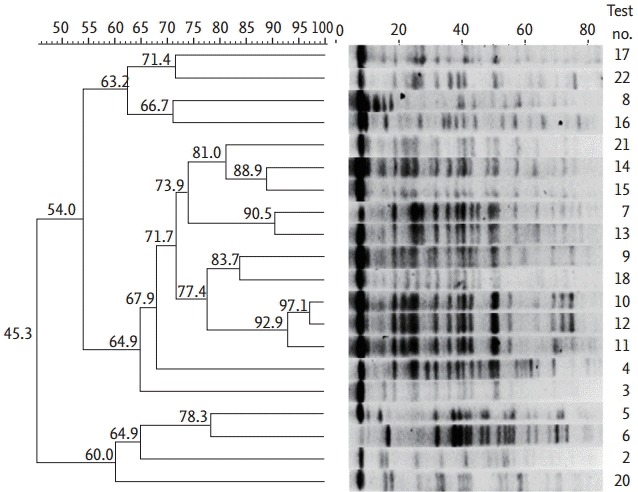
Results: Of 108 patients with ESBL-EC infections, 30 cases (27.8%) were due to MDR-ESBL-EC. Compared with CG I, prior use of FQs (odds ratio [OR], 3.16; 95% confidence interval [CI], 1.11 to 8.98) and immunosuppressant use (OR, 10.47; 95% CI, 1.07 to 102.57) were significantly associated with MDR-ESBL-EC. Compared with CG II, prior use of FQs (OR, 15.53; 95% CI, 2.86 to 84.27) and healthcare-associated infection (OR, 5.98; 95% CI, 2.26 to 15.86) were significantly associated with MDR-ESBL-EC. CTX-M-15 was the most common in MDR-ESBL-EC infections (59.1% [13/22]), while CTX-M-14 was the most common in non-MDR-ESBL-EC infections (41.6% [32/77]). CTX-M-15 was significantly associated with MDR-ESBL-EC (59.1% vs. 32.5%, p = 0.028). Pulsed-field gel electrophoresis showed clonal diversity of MDR-ESBL-EC isolates.
Conclusions: The emergence of strains of MDR-ESBL-EC in the community poses an important new public health threat. More information on the emergence and transmission of these strains will be necessary in order to prevent their spread.
Keywords: Community-onset infection; Drug resistance, multiple; Escherichia coli; Extended-spectrum β-lactamase.
Conflict of interest statement
No potential conflict of interest relevant to this article was reported.
Figures
References
-
- Paterson DL, Ko WC, Von Gottberg A, et al. International prospective study of Klebsiella pneumoniae bacteremia: implications of extended-spectrum beta-lactamase production in nosocomial Infections. Ann Intern Med. 2004;140:26–32. - PubMed
-
- Pitout JD, Laupland KB. Extended-spectrum beta-lactamase-producing Enterobacteriaceae: an emerging public-health concern. Lancet Infect Dis. 2008;8:159–166. - PubMed
-
- Rodriguez-Bano J, Picon E, Gijon P, et al. Community-onset bacteremia due to extended-spectrum beta-lactamase-producing Escherichia coli: risk factors and prognosis. Clin Infect Dis. 2010;50:40–48. - PubMed
Publication types
MeSH terms
Substances
LinkOut - more resources
Full Text Sources
Other Literature Sources
Medical