


Clinical benefits of combined chemotherapy with S-1, oxaliplatin, and docetaxel in advanced gastric cancer patients with palliative surgery
- PMID: 27095004
- PMCID: PMC4789894
- DOI: 10.2147/OTT.S99684
Clinical benefits of combined chemotherapy with S-1, oxaliplatin, and docetaxel in advanced gastric cancer patients with palliative surgery
Abstract
Background and aim: Advanced gastric cancer accounts for a substantial portion of cancer-related mortality worldwide. Surgical intervention is the curative therapeutic approach, but patients with advanced gastric cancer are not eligible for the radical resection. The present work aimed to investigate the efficacy and safety of palliative surgery combined with S-1, oxaliplatin, and docetaxel chemotherapy in the treatment of patients with advanced gastric cancer.
Method: A total of 20 patients who underwent palliative resection of gastric cancer in China-Japan Union Hospital of Jilin University from 2010 to 2011 were evaluated. Days 20-30 postoperative, these patients started to receive chemotherapy of S-1 (40 mg/m(2), oral intake twice a day) and intravenous infusion of oxaliplatin (135 mg/m(2)) and docetaxel (75 mg/m(2)). After three cycles of chemotherapy (21 days/cycle), patients were evaluated, and only those who responded toward the treatment continued to receive six to eight cycles of the treatment and were included in end point evaluation. Patients' survival time and adverse reactions observed along the treatment were compared with those treated with FOLFOX.
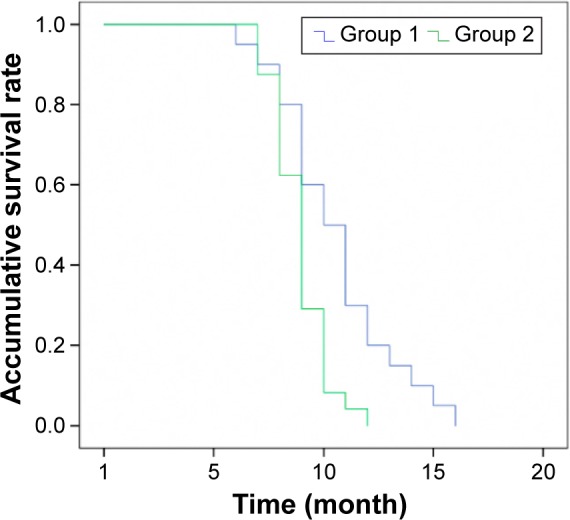
Results: Out of 20 patients evaluated, there was one case of complete response, nine cases of partial response, six cases of stable disease, and four cases of progressive disease. The total efficacy (complete response + partial response) and clinical benefit rates were 50% and 80%, respectively. Of importance, the treatment achieved a significantly longer survival time compared to FOLFOX, despite the fact that both regimens shared common adverse reactions. The adverse reactions were gastrointestinal reaction, reduction in white blood cells, and peripheral neurotoxicity. All of them were mild, having no impact on the treatment.
Conclusion: Combination therapy of S-1, oxaliplatin, and docetaxel improves the survival of gastric cancer patients treated with palliative resection, with adverse reactions being tolerated. The clinical application of the chemotherapy warrants further investigation.
Keywords: S-1; combination chemotherapy; docetaxel; gastric cancer; oxaliplatin; palliative resection.
Figures
References
-
- Torre LA, Bray F, Siegel RL, Ferlay J, Lortet-Tieulent J, Jemal A. Global cancer statistics, 2012. CA Cancer J Clin. 2015;65(2):87–108. - PubMed
-
- Bray F, Ferlay J, Laversanne M, et al. Cancer incidence in five continents: inclusion criteria, highlights from volume X and the global status of cancer registration. Int J Cancer. 2015;137(9):2060–2071. - PubMed
-
- McLean MH, El-Omar EM. Genetics of gastric cancer. Nat Rev Gastroenterol Hepatol. 2014;11(11):664–674. - PubMed
-
- Yoo CH, Noh SH, Shin DW, Choi SH, Min JS. Recurrence following curative resection for gastric carcinoma. Br J Surg. 2000;87(2):236–242. - PubMed
LinkOut - more resources
Full Text Sources
Other Literature Sources
