Review
. 2016 Apr 1:595:40-5.
doi: 10.1016/j.abb.2015.11.009.

Leveraging oxidative stress questions in vivo: Implications and limitations

Affiliations
Review

Leveraging oxidative stress questions in vivo: Implications and limitations

Gavin E Arteel. Arch Biochem Biophys. .

Abstract

The elegance of Helmut Sies' original definition of oxidative stress belies the complexity of the reactions that are potentially involved. This is by no means a criticism of the author, but rather how the words have been used to oversimplify the concept by some. Reactive oxygen and nitrogen species (ROS and RNS, respectively) can be products of a myriad of events within the living body. Indeed, it is now understood that ROS/RNS are critical for normal cellular metabolism and have beneficial effects (e.g., cytotoxicity against invading bacteria). A general problem of studying prooxidants in vivo is that, due to their inherent reactivity, they generally cannot be measured directly. This indirect detection of 'footprints' leaves a very large black box that we are to this day only beginning to understand. This manuscript will summarize some considerations that are of utmost importance when translating oxidative stress into in vivo research. Helmut has been a key thought leader, researcher and mentor whose contributions to this field are immeasurable.


Figures

Fig. 1
Fig. 1
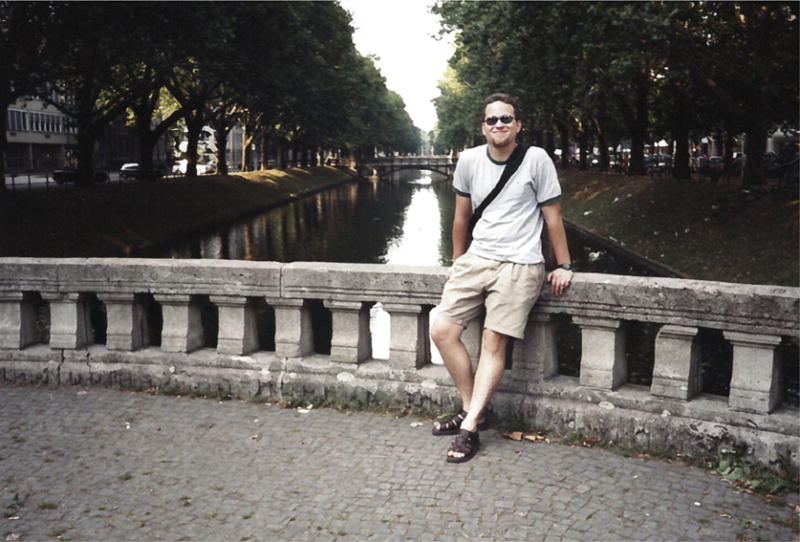
My first visit to Düsseldorf. In late summer of 1997, I visited Helmut’s Institut to become more familiar with his work and his team. In my spare time, I did a lot of exploring of the city. This picture is taken on the famous Königsalle, or “Kö”.
Fig. 2
Fig. 2
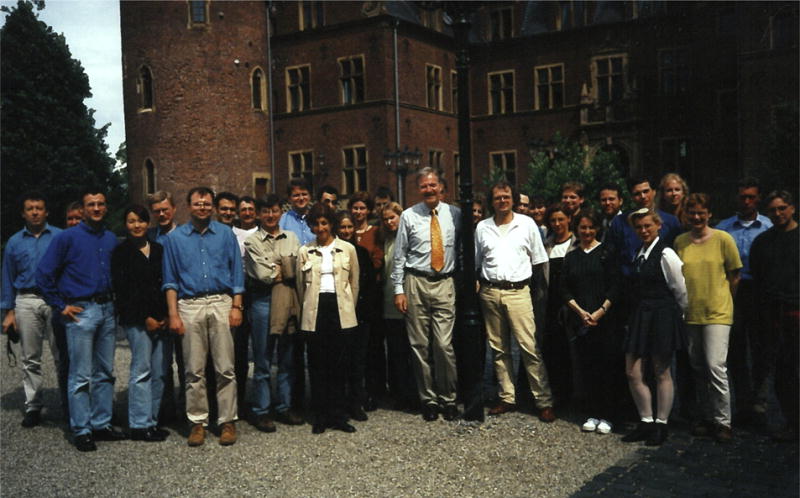
The Institut in 1998. The Institut had a research retreat in 1998 at Schloβ Krickenbeck, just near the border with the Netherlands.
Fig. 3
Fig. 3
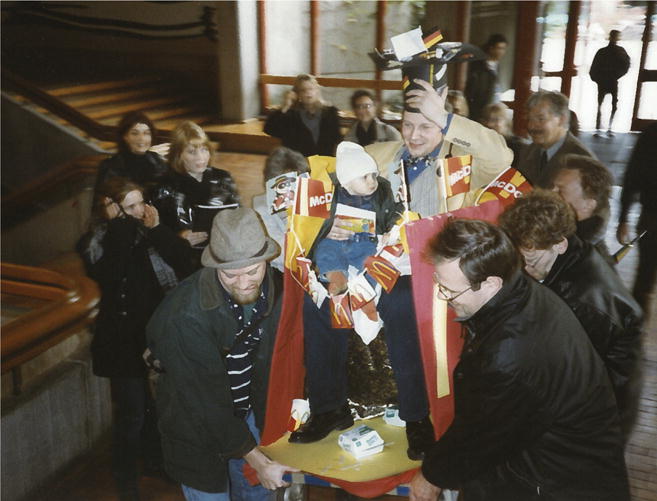
Institut Doctoral defense, 1998. The successful defense of a PhD in Germany is cause for a celebration. Here, Lars Oliver Klotz is riding his “Doktorwagen” as a newly minted PhD.
Fig. 4
Fig. 4
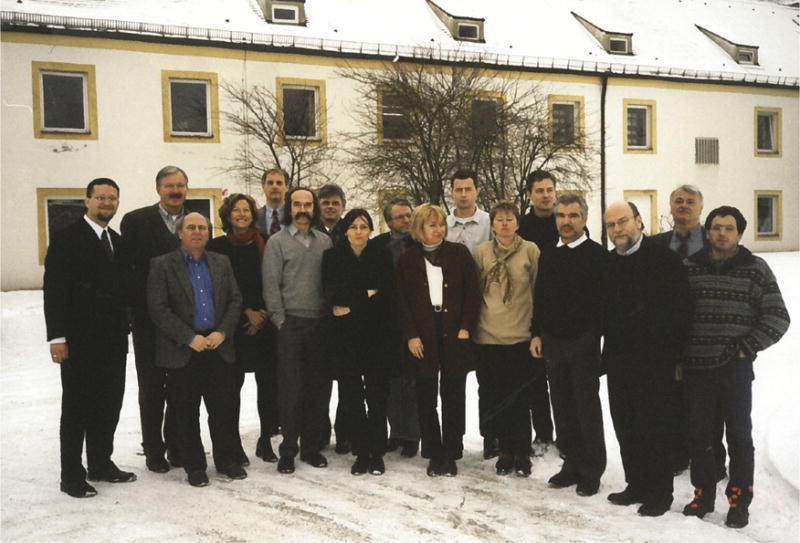
Grant meeting, Munich, 1999. In the early part of 1999, there was a meeting to organized a collaborative research group (Sonderforschungsbereiche or SFB) in Munich. This was a series of great talks and comradery.
Fig. 5
Fig. 5
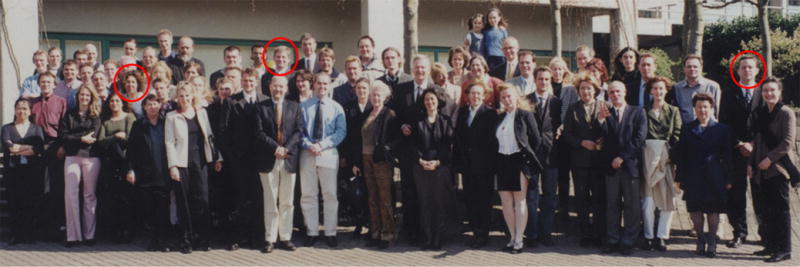
The Institut and guests in 2002. The Institut hosted a celebration for Helmut’s 60th birthday in the summer of 2002. The day included seminars by several former members of the Institut (e.g., Regina Brigelius-Flohé and Enrique Cadenas are in the photo). Helmut and his wife, Nancy are in the middle and their children can be seen in the background. I (right circle) visited for the celebration and to see my friend, Lars-Oliver Klotz (middle circle). My future wife, Juliane Beier (left circle), was also present … although we didn’t know each other at that time.

References

    1. McCord JM, Fridovich I. J Biol Chem. 1969;244:6049–6055. - PubMed
    1. Sies H. In: Oxidative Stress. Sies H, editor. Academic Press; London: 1985. pp. 1–8.
    1. Richardson PDI, Withrington PG. Annu Rev Physiol. 1982;44:57–69. - PubMed
    1. Videla L, Bernstein J, Israel Y. Biochem J. 1973;134:507–514. - PMC - PubMed
    1. Tsukamoto H, Xi XP. Hepatology. 1989;9:302–306. - PubMed

Substances

LinkOut - more resources