. 2016 Jun;32(3):169-84.
doi: 10.1007/s10565-016-9322-4. Epub 2016 Apr 19.

Disease-specific dynamic biomarkers selected by integrating inflammatory mediators with clinical informatics in ARDS patients with severe pneumonia

Affiliations

Disease-specific dynamic biomarkers selected by integrating inflammatory mediators with clinical informatics in ARDS patients with severe pneumonia

Chengshui Chen et al. Cell Biol Toxicol. 2016 Jun.

Abstract

Acute respiratory distress syndrome (ARDS) is a heterogeneous syndrome that occurs as a result of various risk factors, including either direct or indirect lung injury, and systemic inflammation triggered also by severe pneumonia (SP). SP-ARDS-associated morbidity and mortality remains high also due to the lack of disease-specific biomarkers. The present study aimed at identifying disease-specific biomarkers in SP or SP-ARDS by integrating proteomic profiles of inflammatory mediators with clinical informatics. Plasma was sampled from the healthy as controls or patients with SP infected with bacteria or infection-associated SP-ARDS on the day of admission, day 3, and day 7. About 15 or 52 cytokines showed significant difference between SP and SP-ARDS patients with controls or 13 between SP-ARDS with SP alone and controls, including bone morphogenetic protein-15 (BMP-15), chemokine (C-X-C motif) ligand 16 (CXCL16), chemokine (C-X-C motif) receptor 3 (CXCR3), interleukin-6 (IL-6), protein NOV homolog (NOV/CCN3), glypican 3, insulin-like growth factor binding protein 4 (IGFBP-4), IL-5, IL-5 R alpha, IL-22 BP, leptin, MIP-1d, and orexin B with a significant correlation with Digital Evaluation Score System (DESS) scores. ARDS patients with overexpressed IL-6, CXCL16, or IGFBP-4 had significantly longer hospital stay and higher incidence of secondary infection. We also found higher levels of those mediators were associated with poor survival rates in patients with lung cancer and involved in the process of the epithelial mesenchymal transition of alveolar epithelial cells. Our preliminary study suggested that integration of proteomic profiles with clinical informatics as part of clinical bioinformatics is important to validate and optimize disease-specific and disease-staged biomarkers.

Keywords: ARDS; Biomarkers; Clinical informatics; Pneumonia; Proteomics.


Figures
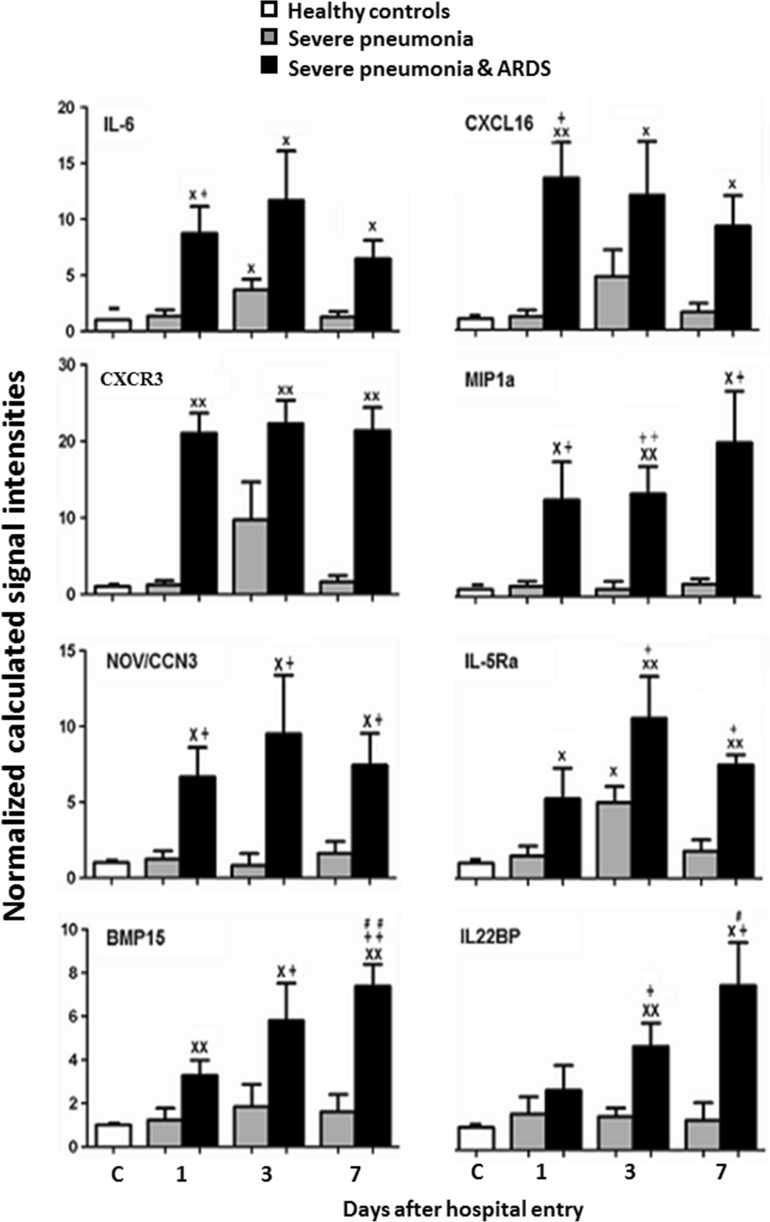
Fig. 1
Fig. 1
Plasma levels of IL-6, CXCL16, CXCR3, MIP-1d, NOV/CCN3, IL-5 R alpha, BMP-15, and IL-22BP in healthy and patients with SP or ARDS on days 1, 3, and 7. Single letter x and double letter x stand for P values less than 0.05 and 0.01, respectively, as compared with healthy controls. Single plus sign and double plus sign stand for P values less than 0.05 and 0.01, respectively, as compared with SP patients. Single number sign and double number sign stand for P values less than 0.05 and 0.01, as compared with ARDS patients on day 1
Fig. 2
Fig. 2
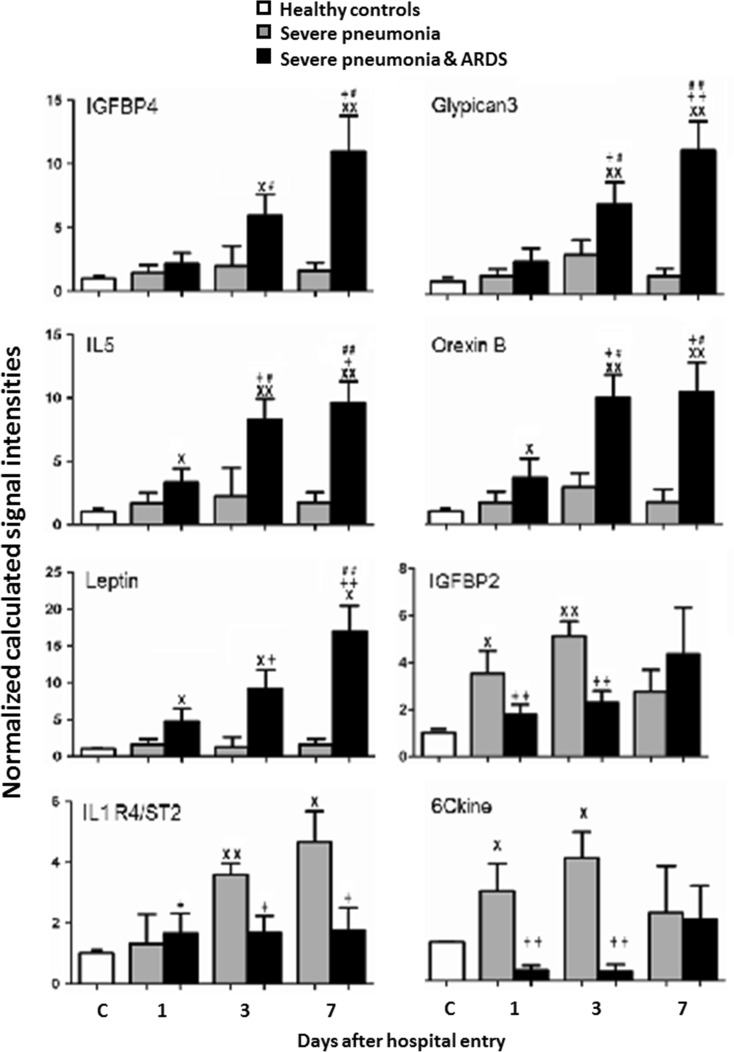
Plasma levels of IGFBP-4, glypican 3, IL-5, leptin (OB), orexin B, IGFBP-2, IL-1 R4/ST2, and 6Ckine in healthy and patients with SP or ARDS on days 1, 3, and 7. Single letter x and double letter x stand for P values less than 0.05 and 0.01, respectively, as compared with healthy controls. Single plus sign and double plus sign stand for P values less than 0.05 and 0.01, respectively, as compared with SP patients. Single number sign and double number sign stand for P values less than 0.05 and 0.01, as compared with ARDS patients on day 1
Fig. 3
Fig. 3
Plasma levels of IGF-I sR, IGF-II, LBP, BD-1, LECT2, CD14, and IGF-I in healthy and patients with SP or ARDS on days 1, 3, and 7. Single letter x and double letter x stand for P values less than 0.05 and 0.01, respectively, as compared with healthy controls. Single plus sign and double plus sign stand for P values less than 0.05 and 0.01, respectively, as compared with SP patients
Fig. 4
Fig. 4
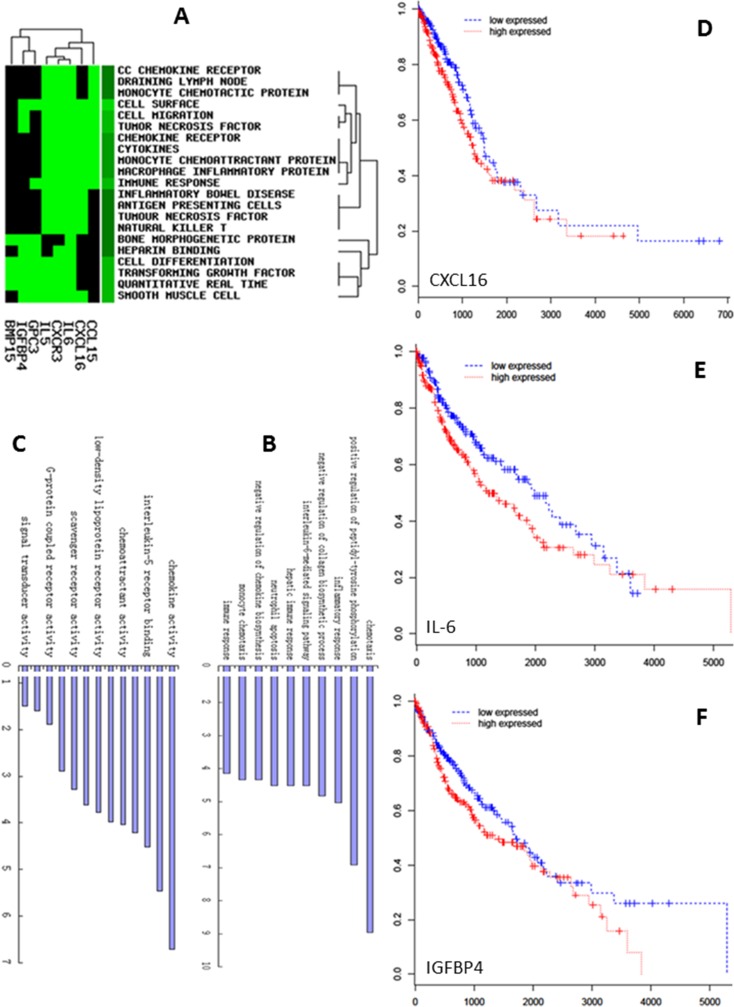
The alterations of gene clusters (a), biological processes (b), and molecular function (c) in ARDS patients. The poor overall survival rate in patients with lung cancer predicted by selected genes CXCL16 (d), IL-6 (e), and IGFBP-4 (f)
Fig. 5
Fig. 5
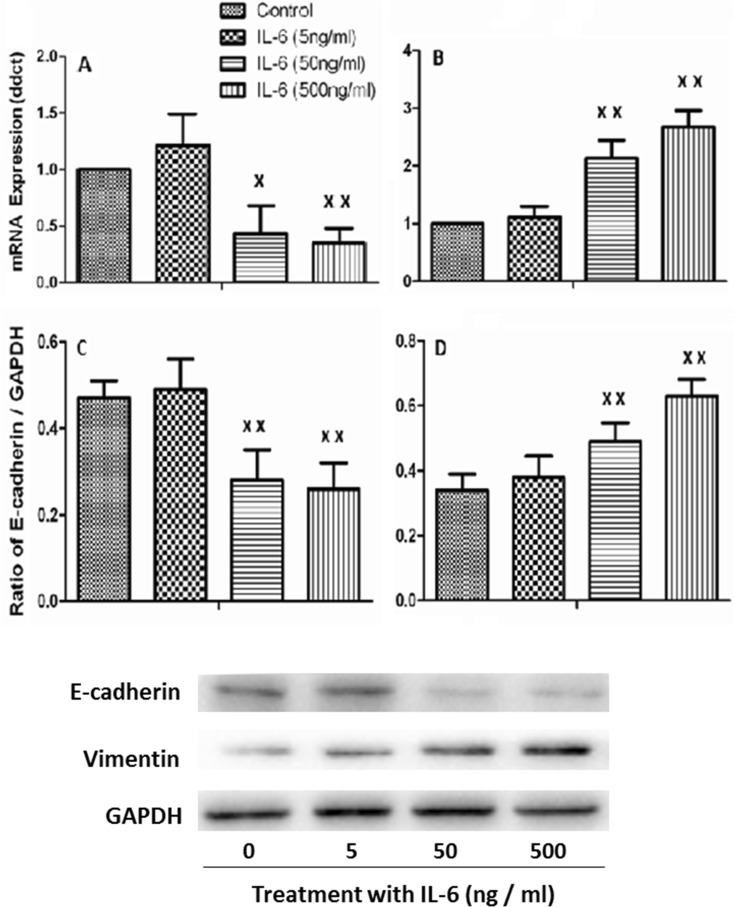
IL-6 promotes a gene expression pattern and phenotype consistent with EMT. A549 cells were treated with 5, 50, or 500 ng/ml IL-6 for 24 h. Real-time quantitative PCR analysis of A549 cells showed a robust decrease in E-cadherin gene expression (a) and concomitant increase in vimentin (b). Western blot analysis of A549 showed the expressions of E-cadherin were significantly decreased (c) and vimentin was up-regulated (d) after 48 h stimulated by IL-6. Each data point represents mean ± SEM of three experiments. Single letter x and double letter x stand for P values less than 0.05 and 0.01, in comparison with untreated control cells
Fig. 6
Fig. 6
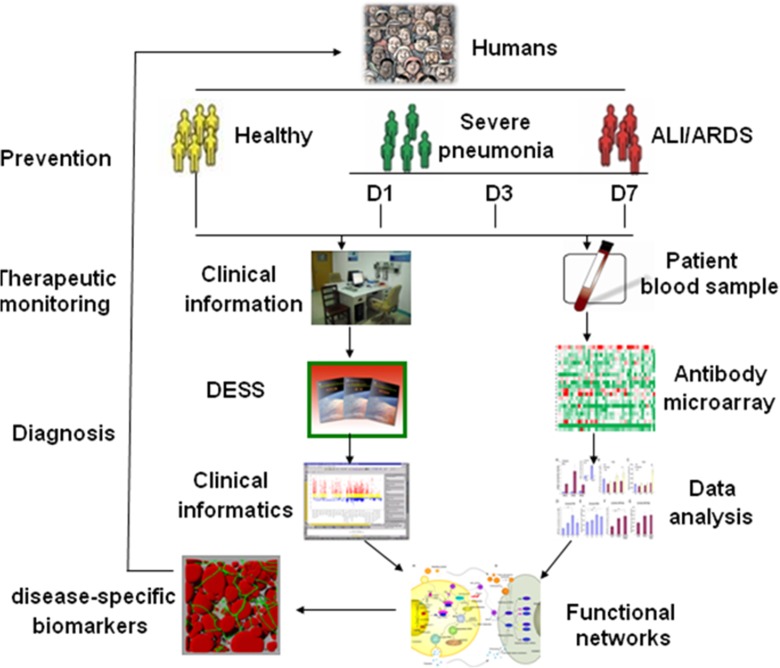
Workflow of the present study. As a new protocol of biomarker evaluation and development, it is achieved by comparing systemic profiles of inflammatory mediators among different study groups, integrating clinical informatics and bioinformatics, and understanding the biological function and signal networks. Clinical informatics is generated through a new DESS, while circulating inflammatory mediators are measured by the antibody array and followed by proteomic-based bioinformatics. Disease-specific biomarkers are identified by integrating clinical informatics and functional networks through the global proteomic data set, in order to develop preventive, diagnostic, and predictive methods for personalized medicine

References

    1. Auffray C, Adcock IM, Chung KF, Djukanovic R, Pison C, Sterk PJ. An integrative systems biology approach to understanding pulmonary diseases. Chest. 2010;137(6):1410–6. doi: 10.1378/chest.09-1850. - DOI - PubMed
    1. Balkwill FR, Mantovani A. Cancer-related inflammation: common themes and therapeutic opportunities. Semin Cancer Biol. 2012;22(1):33–40. doi: 10.1016/j.semcancer.2011.12.005. - DOI - PubMed
    1. Bellani G, Laffey JG, Pham T, Fan E, Brochard L, Esteban A, et al. Epidemiology, patterns of care, and mortality for patients with acute respiratory distress syndrome in intensive care units in 50 countries. JAMA: J Am Med Assoc. 2016;315(8):788–800. doi: 10.1001/jama.2016.0291. - DOI - PubMed
    1. Brown SM, Dean NC. Defining severe pneumonia. Clin Chest Med. 2011;32(3):469–79. doi: 10.1016/j.ccm.2011.05.001. - DOI - PMC - PubMed
    1. Brown SM, Jones BE, Jephson AR, Dean NC. Validation of the Infectious Disease Society of America/American Thoracic Society 2007 guidelines for severe community-acquired pneumonia. Crit Care Med. 2009;37(12):3010–6. doi: 10.1097/CCM.0b013e3181b030d9. - DOI - PMC - PubMed

Publication types

MeSH terms