


Toward an Understanding of the Environmental and Public Health Impacts of Unconventional Natural Gas Development: A Categorical Assessment of the Peer-Reviewed Scientific Literature, 2009-2015
- PMID: 27096432
- PMCID: PMC4838293
- DOI: 10.1371/journal.pone.0154164
Toward an Understanding of the Environmental and Public Health Impacts of Unconventional Natural Gas Development: A Categorical Assessment of the Peer-Reviewed Scientific Literature, 2009-2015
Abstract
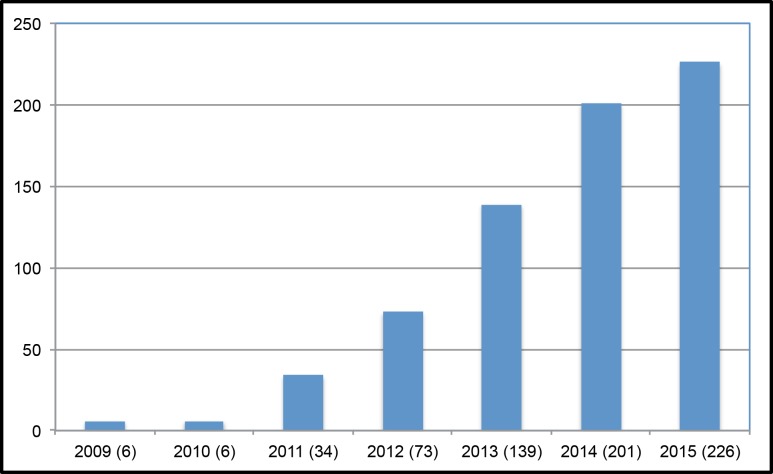
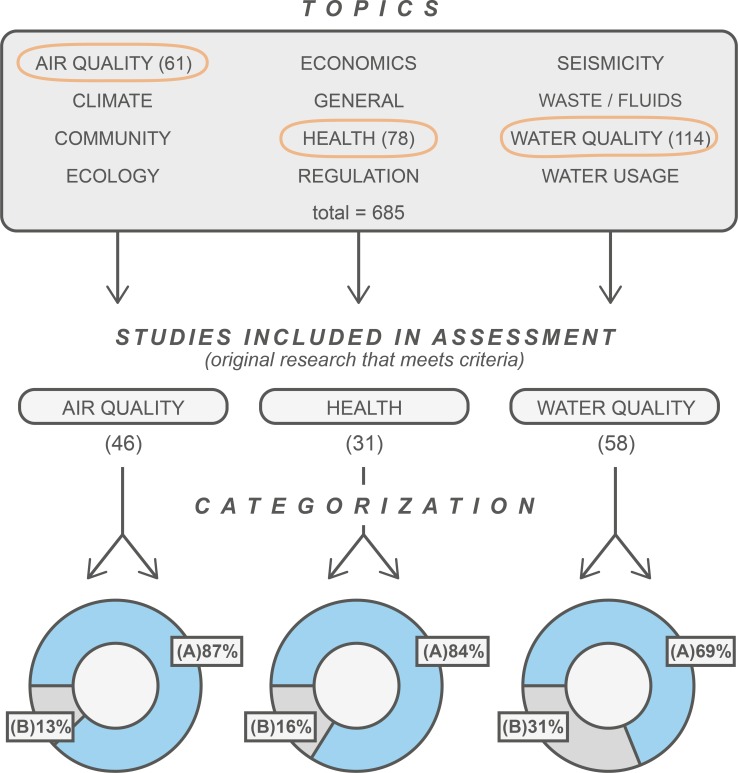
The body of science evaluating the potential impacts of unconventional natural gas development (UNGD) has grown significantly in recent years, although many data gaps remain. Still, a broad empirical understanding of the impacts is beginning to emerge amidst a swell of research. The present categorical assessment provides an overview of the peer-reviewed scientific literature from 2009-2015 as it relates to the potential impacts of UNGD on public health, water quality, and air quality. We have categorized all available original research during this time period in an attempt to understand the weight and direction of the scientific literature. Our results indicate that at least 685 papers have been published in peer-reviewed scientific journals that are relevant to assessing the impacts of UNGD. 84% of public health studies contain findings that indicate public health hazards, elevated risks, or adverse health outcomes; 69% of water quality studies contain findings that indicate potential, positive association, or actual incidence of water contamination; and 87% of air quality studies contain findings that indicate elevated air pollutant emissions and/or atmospheric concentrations. This paper demonstrates that the weight of the findings in the scientific literature indicates hazards and elevated risks to human health as well as possible adverse health outcomes associated with UNGD. There are limitations to this type of assessment and it is only intended to provide a snapshot of the scientific knowledge based on the available literature. However, this work can be used to identify themes that lie in or across studies, to prioritize future research, and to provide an empirical foundation for policy decisions.
Conflict of interest statement
Figures
References
-
- Finkel ML, Hays J, Law A. Unconventional natural gas development and human health: thoughts from the United States. Med J Aust. 2015;203 Available: https://www.mja.com.au/journal/2015/203/7/unconventional-natural-gas-dev... - PubMed
MeSH terms
Substances
LinkOut - more resources
Full Text Sources
Other Literature Sources
Medical
