


A Novel Picture Guide to Improve Spiritual Care and Reduce Anxiety in Mechanically Ventilated Adults in the Intensive Care Unit
- PMID: 27097049
- PMCID: PMC5021077
- DOI: 10.1513/AnnalsATS.201512-831OC
A Novel Picture Guide to Improve Spiritual Care and Reduce Anxiety in Mechanically Ventilated Adults in the Intensive Care Unit
Abstract
Rationale: Hospital chaplains provide spiritual care that helps patients facing serious illness cope with their symptoms and prognosis, yet because mechanically ventilated patients cannot speak, spiritual care of these patients has been limited.
Objectives: To determine the feasibility and measure the effects of chaplain-led picture-guided spiritual care for mechanically ventilated adults in the intensive care unit (ICU).
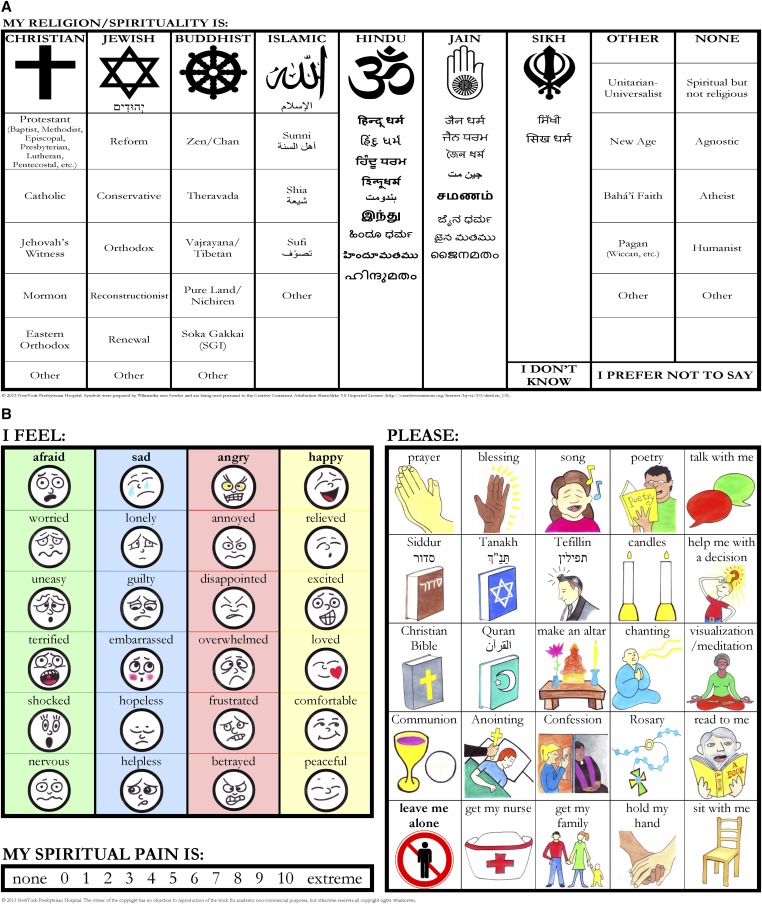
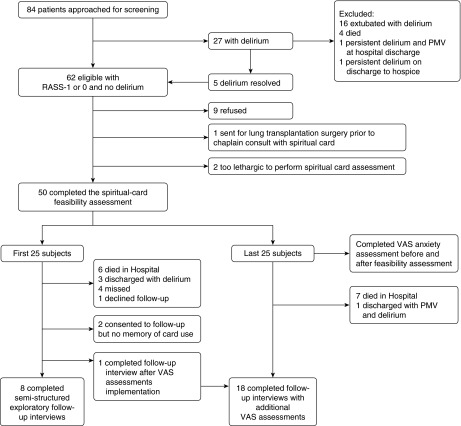
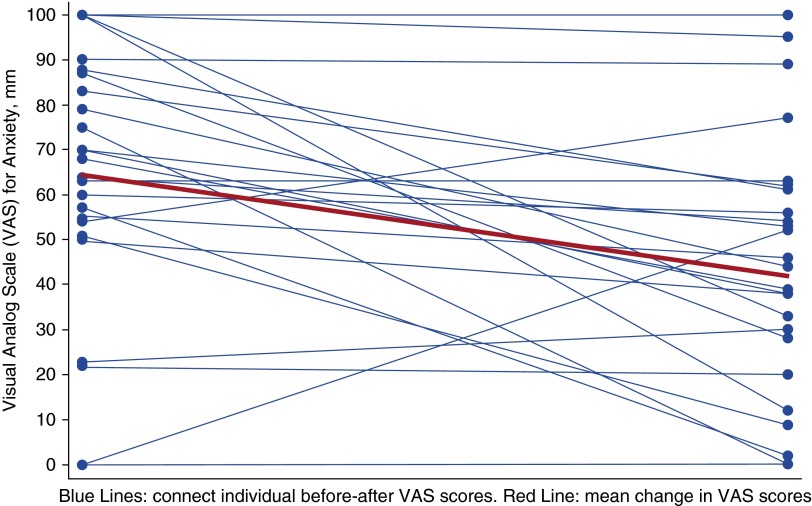
Methods: We conducted a quasi-experimental study at a tertiary care hospital between March 2014 and July 2015. Fifty mechanically ventilated adults in medical or surgical ICUs without delirium or dementia received spiritual care by a hospital chaplain using an illustrated communication card to assess their spiritual affiliations, emotions, and needs and were followed until hospital discharge. Feasibility was assessed as the proportion of participants able to identify spiritual affiliations, emotions, and needs using the card. Among the first 25 participants, we performed semistructured interviews with 8 ICU survivors to identify how spiritual care helped them. For the subsequent 25 participants, we measured anxiety (on 100-mm visual analog scales [VAS]) immediately before and after the first chaplain visit, and we performed semistructured interviews with 18 ICU survivors with added measurements of pain and stress (on ±100-mm VAS).
Measurements and main results: The mean (SD) age was 59 (±16) years, median mechanical ventilation days was 19.5 (interquartile range, 7-29 d), and 15 (30%) died in-hospital. Using the card, 50 (100%) identified a spiritual affiliation, 47 (94%) identified one or more emotions, 45 (90%) rated their spiritual pain, and 36 (72%) selected a chaplain intervention. Anxiety after the first visit decreased 31% (mean score change, -20; 95% confidence interval, -33 to -7). Among 28 ICU survivors, 26 (93%) remembered the intervention and underwent semistructured interviews, of whom 81% felt more capable of dealing with their hospitalization and 0% felt worse. The 18 ICU survivors who underwent additional VAS testing during semistructured follow-up interviews reported a 49-point reduction in stress (95% confidence interval, -72 to -24) and no significant change in physical pain that they attributed to picture-guided spiritual care.
Conclusions: Chaplain-led picture-guided spiritual care is feasible among mechanically ventilated adults and shows potential for reducing anxiety during and stress after an ICU admission.
Keywords: anxiety; critical care; mechanical ventilators; palliative care; spiritual therapies.
Figures
Comment in
-
The Power and Importance of Accommodation for Communication Impairment in the Intensive Care Unit.Ann Am Thorac Soc. 2016 Aug;13(8):1215-6. doi: 10.1513/AnnalsATS.201604-304ED. Ann Am Thorac Soc. 2016. PMID: 27509150 No abstract available.
References
-
- Khalaila R, Zbidat W, Anwar K, Bayya A, Linton DM, Sviri S. Communication difficulties and psychoemotional distress in patients receiving mechanical ventilation. Am J Crit Care. 2011;20:470–479. - PubMed
-
- Patak L, Gawlinski A, Fung NI, Doering L, Berg J. Patients’ reports of health care practitioner interventions that are related to communication during mechanical ventilation. Heart Lung. 2004;33:308–320. - PubMed
-
- Meltzer EC, Gallagher JJ, Suppes A, Fins JJ. Lip-reading and the ventilated patient. Crit Care Med. 2012;40:1529–1531. - PubMed
Publication types
MeSH terms
Grants and funding
LinkOut - more resources
Full Text Sources
Other Literature Sources
Medical
