


Evidence of adaptation, niche separation and microevolution within the genus Polaromonas on Arctic and Antarctic glacial surfaces
- PMID: 27097637
- PMCID: PMC4921121
- DOI: 10.1007/s00792-016-0831-0
Evidence of adaptation, niche separation and microevolution within the genus Polaromonas on Arctic and Antarctic glacial surfaces
Abstract
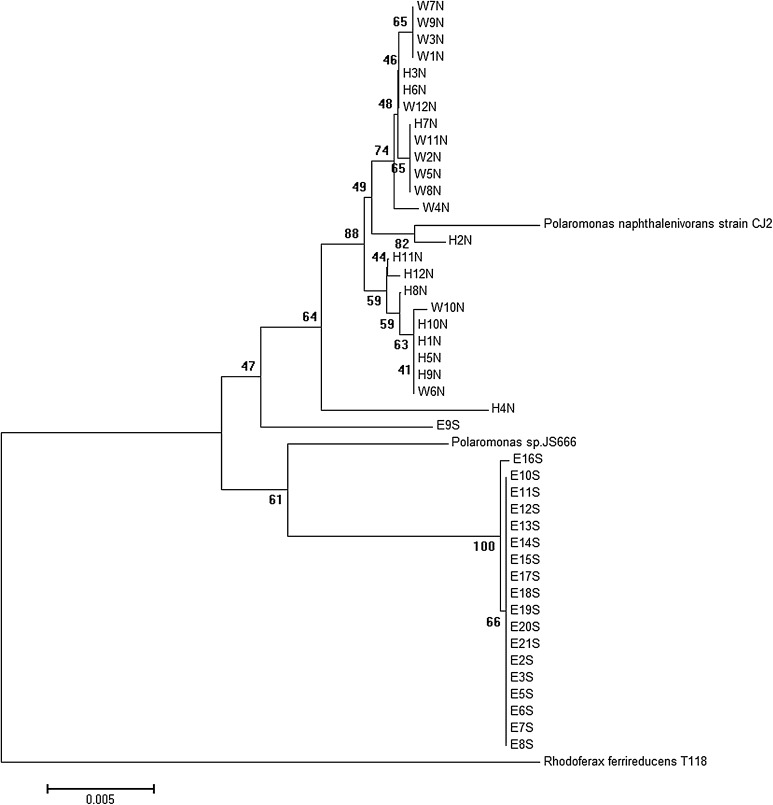
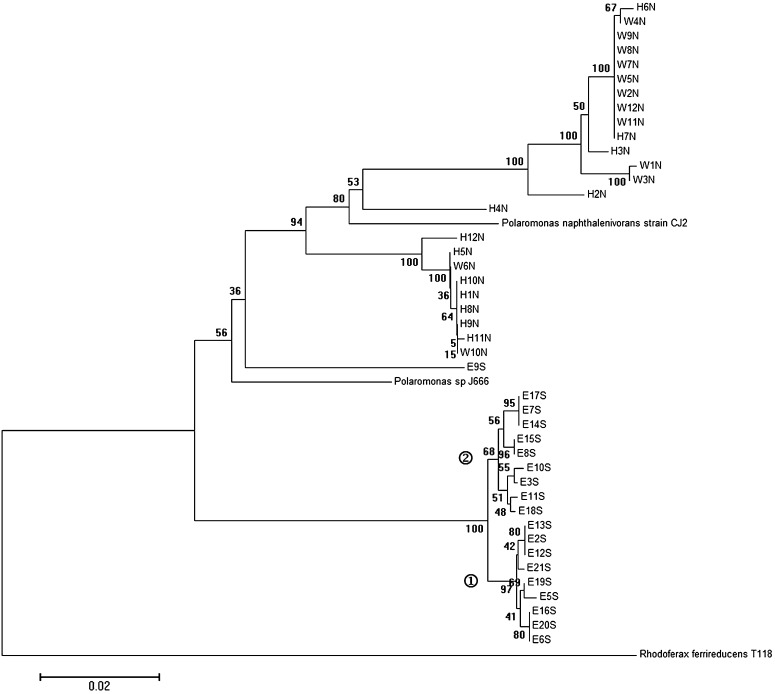
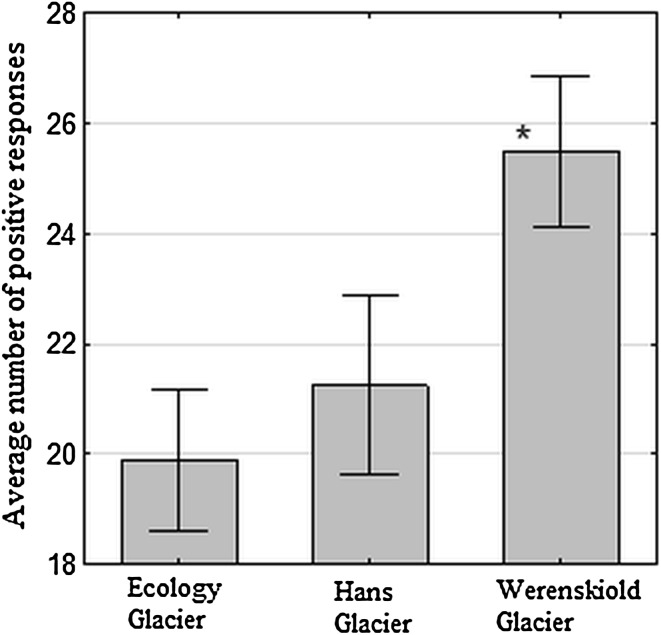
Polaromonas is one of the most abundant genera found on glacier surfaces, yet its ecology remains poorly described. Investigations made to date point towards a uniform distribution of Polaromonas phylotypes across the globe. We compared 43 Polaromonas isolates obtained from surfaces of Arctic and Antarctic glaciers to address this issue. 16S rRNA gene sequences, intergenic transcribed spacers (ITS) and metabolic fingerprinting showed great differences between hemispheres but also between neighboring glaciers. Phylogenetic distance between Arctic and Antarctic isolates indicated separate species. The Arctic group clustered similarly, when constructing dendrograms based on 16S rRNA gene and ITS sequences, as well as metabolic traits. The Antarctic strains, although almost identical considering 16S rRNA genes, diverged into 2 groups based on the ITS sequences and metabolic traits, suggesting recent niche separation. Certain phenotypic traits pointed towards cell adaptation to specific conditions on a particular glacier, like varying pH levels. Collected data suggest, that seeding of glacial surfaces with Polaromonas cells transported by various means, is of greater efficiency on local than global scales. Selection mechanisms present of glacial surfaces reduce the deposited Polaromonas diversity, causing subsequent adaptation to prevailing environmental conditions. Furthermore, interactions with other supraglacial microbiota, like algae cells may drive postselectional niche separation and microevolution within the Polaromonas genus.
Keywords: 16S rRNA gene; Bacteria; Biogeography; Glacier; ITS; Polaromonas.
Figures


References
-
- Anesio AM, Hodson AJ, Fritz A, Psenner R, Sattler B. High microbial activity on glaciers: importance to the global carbon cycle. Glob Change Biol. 2009;15:955–960. doi: 10.1111/j.1365-2486.2008.01758.x. - DOI
-
- Brown MV, Fuhrman JA. Marine bacterial microdiversity as revealed by internal transcribed spacer analysis. Aquat Microb Ecol. 2005;41:15–23. doi: 10.3354/ame041015. - DOI
-
- Brown MV, Schwalbach MS, Hewson I, Fuhrman JA. Coupling 16S-ITS rRNA gene clone libraries and automated ribosomal intergenic spacer analysis to show marine microbial diversity: development and application to a time series. Environ Microbiol. 2005;7(9):1466–1479. doi: 10.1111/j.1462-2920.2005.00835.x. - DOI - PubMed
MeSH terms
Substances
LinkOut - more resources
Full Text Sources
Other Literature Sources
Molecular Biology Databases
