


Translational neurocardiology: preclinical models and cardioneural integrative aspects
- PMID: 27098459
- PMCID: PMC4945715
- DOI: 10.1113/JP271869
Translational neurocardiology: preclinical models and cardioneural integrative aspects
Abstract
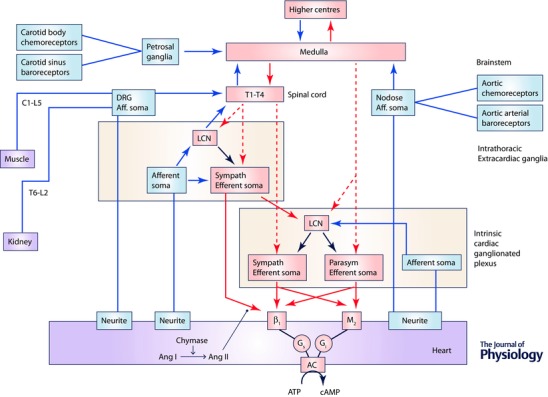
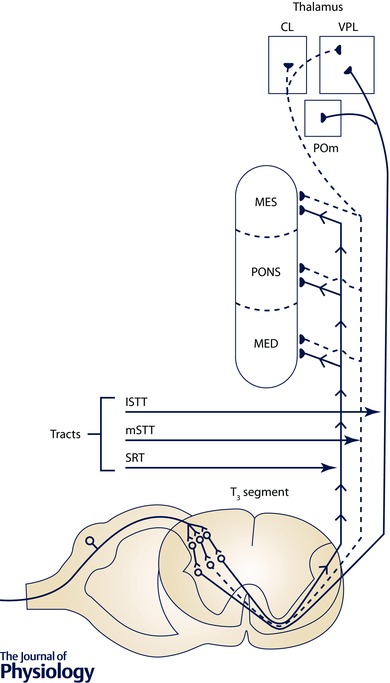
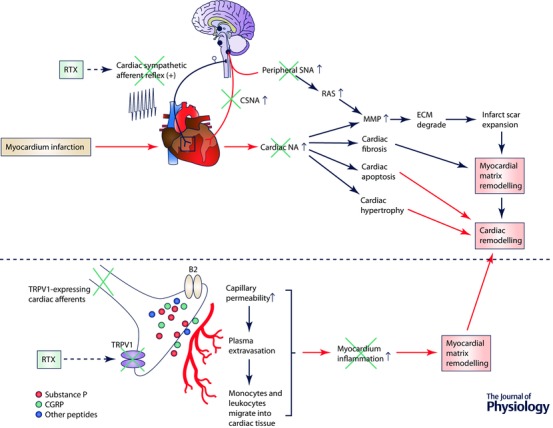
Neuronal elements distributed throughout the cardiac nervous system, from the level of the insular cortex to the intrinsic cardiac nervous system, are in constant communication with one another to ensure that cardiac output matches the dynamic process of regional blood flow demand. Neural elements in their various 'levels' become differentially recruited in the transduction of sensory inputs arising from the heart, major vessels, other visceral organs and somatic structures to optimize neuronal coordination of regional cardiac function. This White Paper will review the relevant aspects of the structural and functional organization for autonomic control of the heart in normal conditions, how these systems remodel/adapt during cardiac disease, and finally how such knowledge can be leveraged in the evolving realm of autonomic regulation therapy for cardiac therapeutics.
© 2016 The Authors. The Journal of Physiology © 2016 The Physiological Society.
Figures
References
-
- Abraham WT, Zile MR, Weaver FA, Butter C, Ducharme A, Halbach M, Klug D, Lovett EG, Müller‐Ehmsen J, Schafer JE, Senni M, Swarup V, Wachter R & Little WC (2015). Baroreflex activation therapy for the treatment of heart failure with a reduced ejection fraction. JACC Heart Fail 3, 487–496. - PubMed
-
- Ahonen A, Harkonen M, Juntunen J, Kormano M & Penttila A (1975). Effects of myocardial infarction on adrenergic nerves of the rat heart muscle, a histochemical study. Acta Physiol Scand 93, 336–344. - PubMed
Publication types
MeSH terms
Grants and funding
- R41 HL124741/HL/NHLBI NIH HHS/United States
- R01 HL055473/HL/NHLBI NIH HHS/United States
- U18 EB021799/EB/NIBIB NIH HHS/United States
- R01 HL071830/HL/NHLBI NIH HHS/United States
- P01 HL078931/HL/NHLBI NIH HHS/United States
- R01 HL071140/HL/NHLBI NIH HHS/United States
- FS/15/8/31155/BHF_/British Heart Foundation/United Kingdom
- R01 NS035471/NS/NINDS NIH HHS/United States
- P01 HL074237/HL/NHLBI NIH HHS/United States
- R01 HL105703/HL/NHLBI NIH HHS/United States
- R01 HL075524/HL/NHLBI NIH HHS/United States
- R01 HL126706/HL/NHLBI NIH HHS/United States
- P01 HL062222/HL/NHLBI NIH HHS/United States
- R01 HL086700/HL/NHLBI NIH HHS/United States
LinkOut - more resources
Full Text Sources
Other Literature Sources
