


Inhaled protein/peptide-based therapies for respiratory disease
- PMID: 27098663
- PMCID: PMC4839019
- DOI: 10.1186/s40348-016-0044-8
Inhaled protein/peptide-based therapies for respiratory disease
Abstract
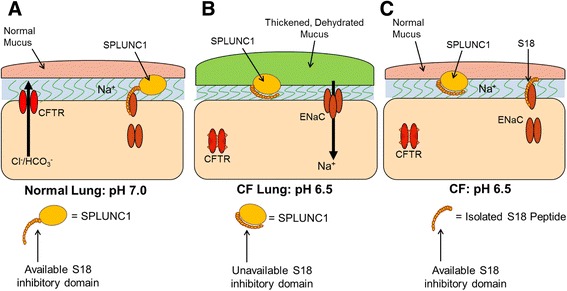
Asthma, chronic obstructive pulmonary disease (COPD), and cystic fibrosis (CF) are all chronic pulmonary diseases, albeit with different etiologies, that are characterized by airflow limitation, chronic inflammation, and abnormal mucus production/rheology. Small synthetic molecule-based therapies are commonly prescribed for all three diseases. However, there has been increased interest in "biologicals" to treat these diseases. Biologicals typically constitute protein- or peptide-based therapies and are often more potent than small molecule-based drugs. In this review, we shall describe the pros and cons of several different biological-based therapies for respiratory disease, including dornase alfa, a recombinant DNAase that reduces mucus viscosity and short palate lung and nasal epithelial clone 1 (SPLUNC1)-derived peptides that treat Na(+) hyperabsorption and rebalance CF airway surface liquid homeostasis.
Keywords: Aerosolization; Alpha-1-antitrypsin (AAT); BPIFA1; Biotherapies; CFTR; ENaC; Goblet cell metaplasia; Inflammation; Mucociliary clearance; Nebulization; Neutrophil elastase (NE); Omalizumab; PLUNC; Pulmozyme.
Figures
References
-
- (2002) Omalizumab: anti-IgE monoclonal antibody E25, E25, humanised anti-IgE MAb, IGE 025, monoclonal antibody E25, Olizumab, Xolair, rhuMAb-E25. BioDrugs 16:380–386 - PubMed
-
- Alberts B, Johnson A, Lewis J, Raff M, Roberts K, Walter P. Molecular biology of the cell. 2002.
Publication types
Grants and funding
LinkOut - more resources
Full Text Sources
Other Literature Sources
Research Materials
Miscellaneous
