


Characterization of Movement Disorder Phenomenology in Genetically Proven, Familial Frontotemporal Lobar Degeneration: A Systematic Review and Meta-Analysis
- PMID: 27100392
- PMCID: PMC4839564
- DOI: 10.1371/journal.pone.0153852
Characterization of Movement Disorder Phenomenology in Genetically Proven, Familial Frontotemporal Lobar Degeneration: A Systematic Review and Meta-Analysis
Abstract
Background: Mutations in granulin (PGRN) and tau (MAPT), and hexanucleotide repeat expansions near the C9orf72 genes are the most prevalent genetic causes of frontotemporal lobar degeneration. Although behavior, language and movement presentations are common, the relationship between genetic subgroup and movement disorder phenomenology is unclear.
Objective: We conducted a systematic review and meta-analysis of the literature characterizing the spectrum and prevalence of movement disorders in genetic frontotemporal lobar degeneration.
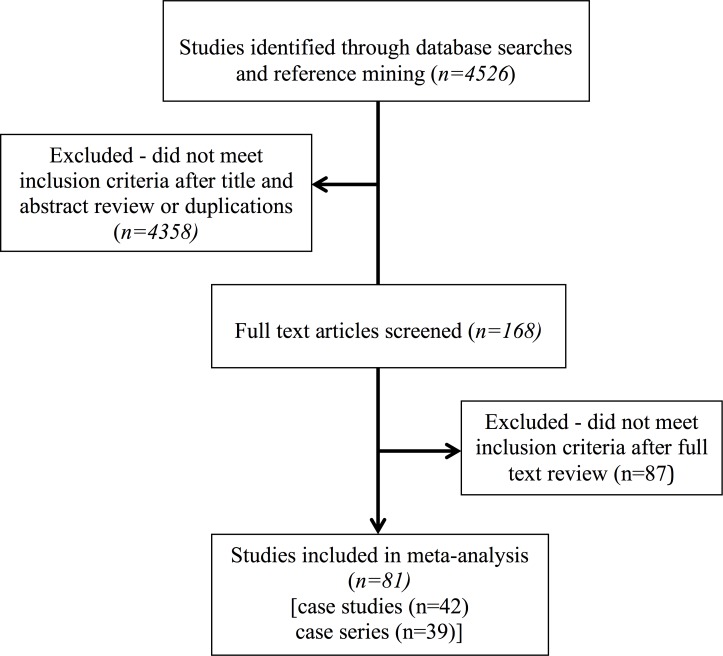
Methods: Electronic databases were searched using terms related to frontotemporal lobar degeneration and movement disorders. Articles were included when cases had a proven genetic cause. Study-specific prevalence estimates for clinical features were transformed using Freeman-Tukey arcsine transformation, allowing for pooled estimates of prevalence to be generated using random-effects models.
Results: The mean age at onset was earlier in those with MAPT mutations compared to PGRN (p<0.001) and C9orf72 (p = 0.024). 66.5% of subjects had an initial non-movement presentation that was most likely a behavioral syndrome (35.7%). At any point during the disease, parkinsonism was the most common movement syndrome reported in 79.8% followed by progressive supranuclear palsy (PSPS) and corticobasal (CBS) syndromes in 12.2% and 10.7%, respectively. The prevalence of movement disorder as initial presentation was higher in MAPT subjects (35.8%) compared to PGRN subjects (10.1). In those with a non-movement presentation, language disorder was more common in PGRN subjects (18.7%) compared to MAPT subjects (5.4%).
Summary: This represents the first systematic review and meta-analysis of the occurrence of movement disorder phenomenology in genetic frontotemporal lobar degeneration. Standardized prospective collection of clinical information in conjunction with genetic characterization will be crucial for accurate clinico-genetic correlation.
Conflict of interest statement
Figures
References
Publication types
MeSH terms
Substances
LinkOut - more resources
Full Text Sources
Other Literature Sources
Medical
