


Systematic Review and Meta-Analysis on Incidence of Altered Sensation of Mandibular Implant Surgery
- PMID: 27100832
- PMCID: PMC4839635
- DOI: 10.1371/journal.pone.0154082
Systematic Review and Meta-Analysis on Incidence of Altered Sensation of Mandibular Implant Surgery
Abstract
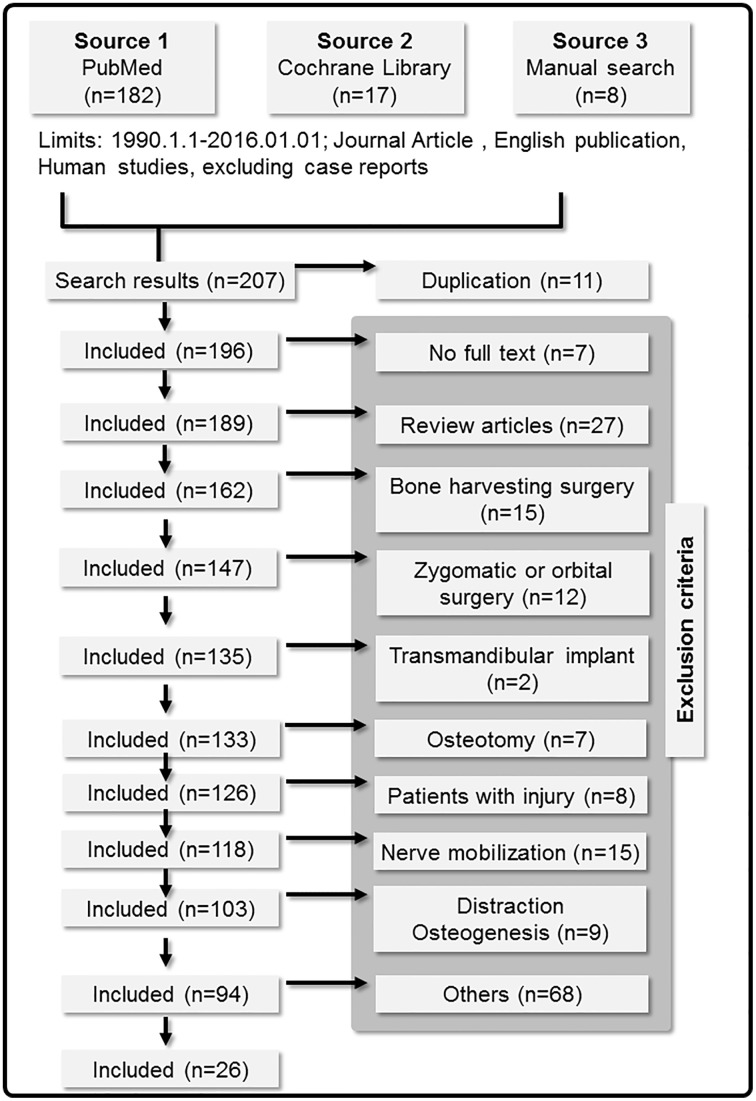
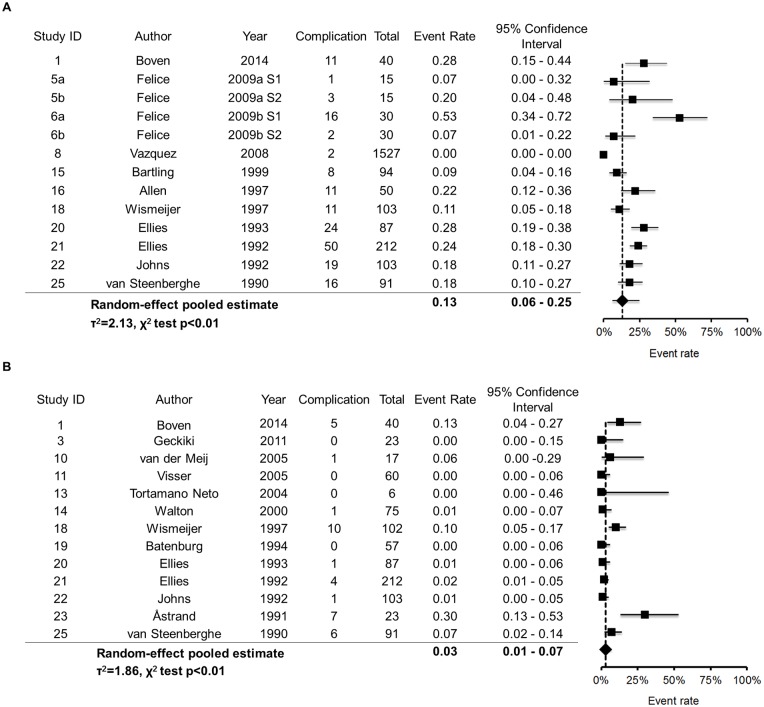
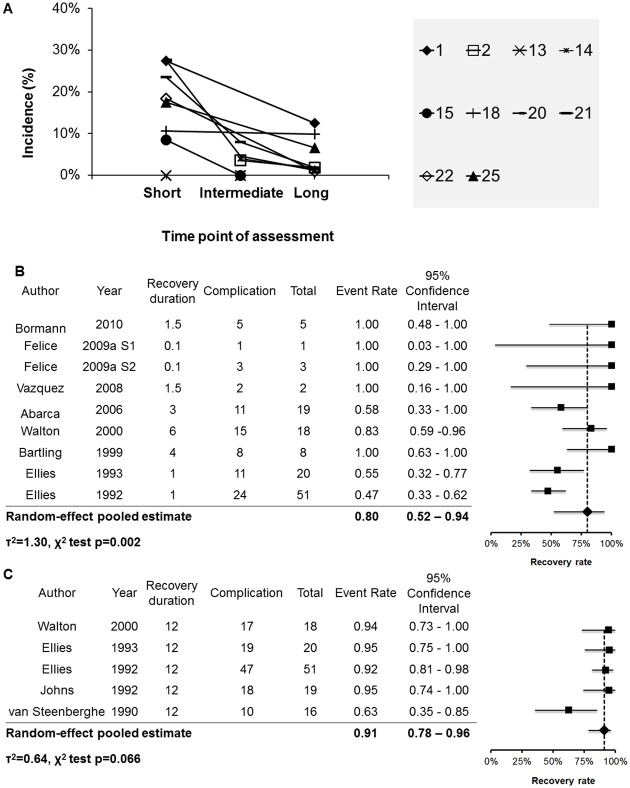
Altered sensation (including paresthesia, dysesthesia and hypoesthesia) after mandibular implant surgery may indicate transient or permanent injury of the inferior alveolar nerve and the mental branch, and considerably lower patients' satisfaction about the therapy. Previous studies have shown a great degree of variability on the incidence of altered sensation. We here reported the incidence of altered sensation after mandibular implant surgery based on a meta-analysis of 26 articles published between 1990.1.1 and 2016.1.1. Study quality and risk of bias was assessed and the studies with a lower score were excluded in the meta-analysis. Data synthesis was performed using the logistic-normal random-effect model. The meta-analyses revealed that the short-term (10 days after implant placement) and long-term (1 year after implant placement) incidence was 13% (95% CI, 6%-25%) and 3% (95% CI, 1%-7%), respectively. (2) For the patients who initially reported altered sensation, 80% (95% CI, 52%-94%) of them would return to normal sensation within 6 months after surgery, and 91% (95% CI, 78%-96%) of them would return to normal sensation one year after surgery. We concluded that dentist-patient communication about the risk of altered sensation is critical to treatment planning, since the short-term incidence of altered sensation is substantial (13%). When a patient reports altered sensation, regular assessment for 6 months would help tracing the changes of symptoms. In terms of long-term follow-up (1 year after surgery), the incidence is much lower (3%) and most patients (91%) would return to normal sensation.
Conflict of interest statement
Figures
References
-
- Chaushu G, Taicher S, Halamish-Shani T, Givol N (2002) Medicolegal aspects of altered sensation following implant placement in the mandible. Int J Oral Maxillofac Implants 17: 413–415. - PubMed
-
- Delcanho R, Moncada E (2014) Persistent pain after dental implant placement: a case of implant-related nerve injury. J Am Dent Assoc 145: 1268–1271. - PubMed
-
- Figgener L, Kleinheinz J (2004) Implant dentistry at the focus of liability lawsuits. Int J Oral Maxillofac Implants 19: 382–386. - PubMed
Publication types
MeSH terms
LinkOut - more resources
Full Text Sources
Other Literature Sources
Medical
