


Oral 5-aminosalicylic acid for induction of remission in ulcerative colitis
- PMID: 27101467
- PMCID: PMC7045743
- DOI: 10.1002/14651858.CD000543.pub4
Oral 5-aminosalicylic acid for induction of remission in ulcerative colitis
Update in
-
Oral 5-aminosalicylic acid for induction of remission in ulcerative colitis.Cochrane Database Syst Rev. 2020 Aug 12;8(8):CD000543. doi: 10.1002/14651858.CD000543.pub5. Cochrane Database Syst Rev. 2020. PMID: 32786164 Free PMC article.
Abstract
Background: Oral 5-aminosalicylic acid (5-ASA) preparations were intended to avoid the adverse effects of sulfasalazine (SASP) while maintaining its therapeutic benefits. Previously, it was found that 5-ASA drugs in doses of at least 2 g/day, were more effective than placebo but no more effective than SASP for inducing remission in ulcerative colitis. This updated review includes more recent studies and evaluates the efficacy and safety of 5-ASA preparations used for the treatment of mild to moderately active ulcerative colitis.
Objectives: The primary objectives were to assess the efficacy, dose-responsiveness and safety of oral 5-ASA compared to placebo, SASP, or 5-ASA comparators for induction of remission in active ulcerative colitis. A secondary objective of this systematic review was to compare the efficacy and safety of once daily dosing of oral 5-ASA with conventional (two or three times daily) dosing regimens.
Search methods: A computer-assisted literature search for relevant studies (inception to July 9, 2015) was performed using MEDLINE, EMBASE and the Cochrane Library. Review articles and conference proceedings were also searched to identify additional studies.
Selection criteria: Studies were accepted for analysis if they were randomized controlled clinical trials of parallel design, with a minimum treatment duration of four weeks. Studies of oral 5-ASA therapy for treatment of patients with active ulcerative colitis compared with placebo, SASP or other formulations of 5-ASA were considered for inclusion. Studies that compared once daily 5-ASA treatment with conventional dosing of 5-ASA (two or three times daily) and 5-ASA dose ranging studies were also considered for inclusion.
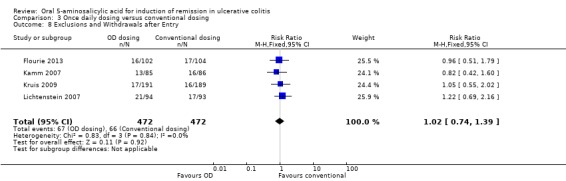
Data collection and analysis: The outcomes of interest were the failure to induce global/clinical remission, global/clinical improvement, endoscopic remission, endoscopic improvement, adherence, adverse events, withdrawals due to adverse events, and withdrawals or exclusions after entry. Trials were separated into five comparison groups: 5-ASA versus placebo, 5-ASA versus sulfasalazine, once daily dosing versus conventional dosing, 5-ASA versus comparator 5-ASA, and 5-ASA dose-ranging. Placebo-controlled trials were subgrouped by dosage. SASP-controlled trials were subgrouped by 5-ASA/SASP mass ratios. Once daily versus conventional dosing studies were subgrouped by formulation. 5-ASA-controlled trials were subgrouped by common 5-ASA comparators (e.g. Asacol, Claversal, Salofalk and Pentasa). Dose-ranging studies were subgrouped by 5-ASA formulation. We calculated the relative risk (RR) and 95% confidence intervals (95% CI) for each outcome. Data were analyzed on an intention-to-treat basis.
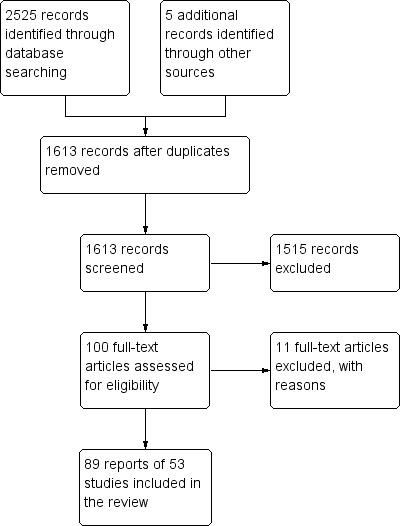
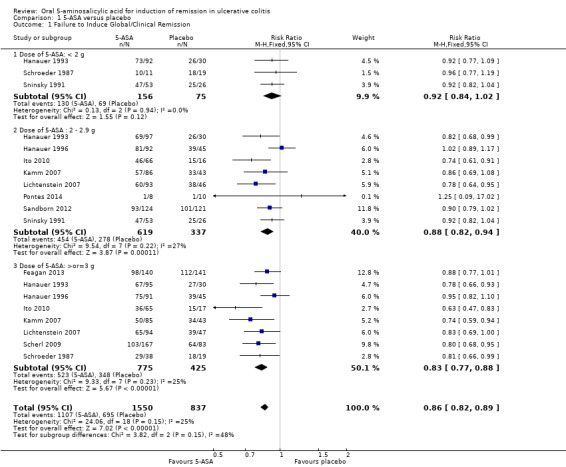
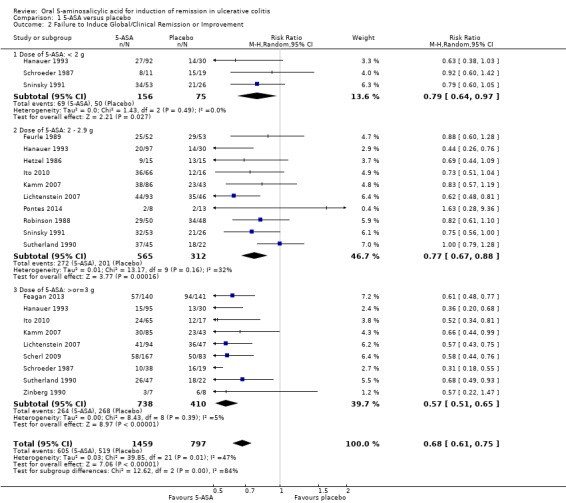
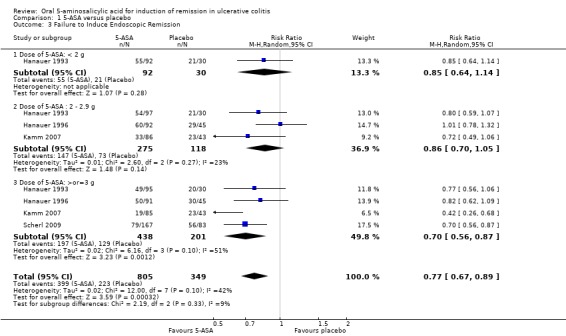
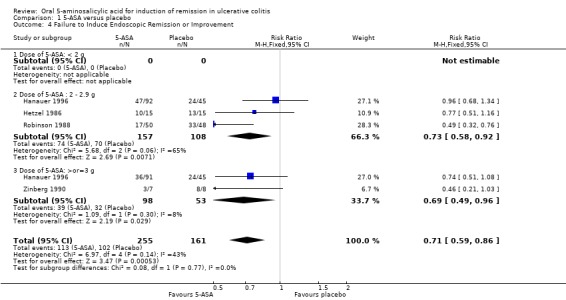
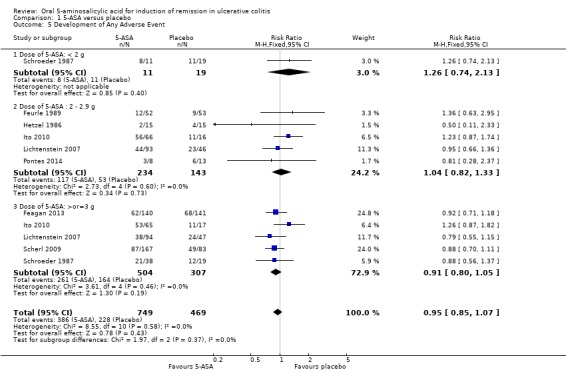
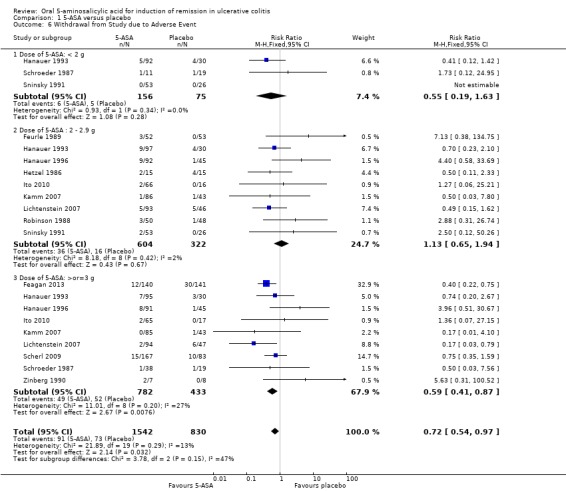
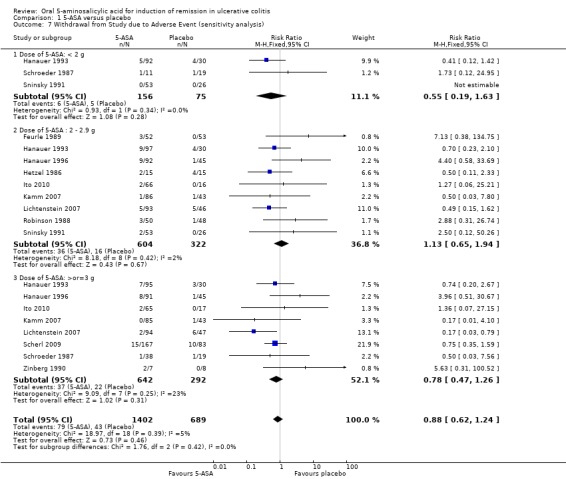
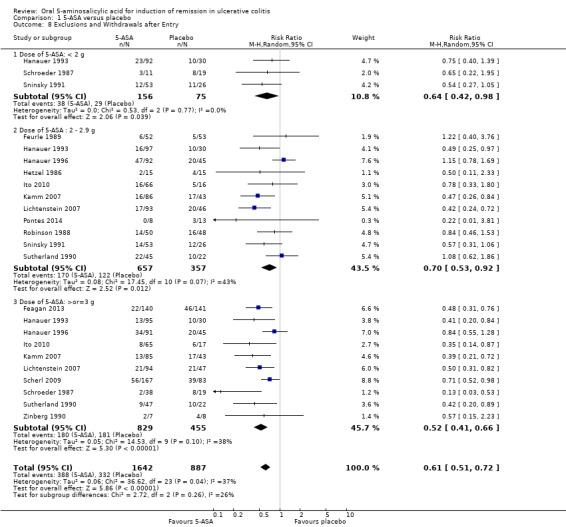
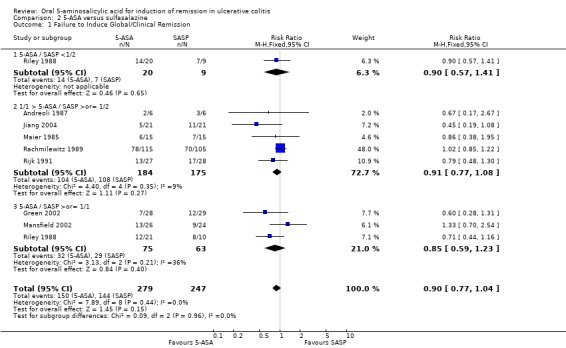
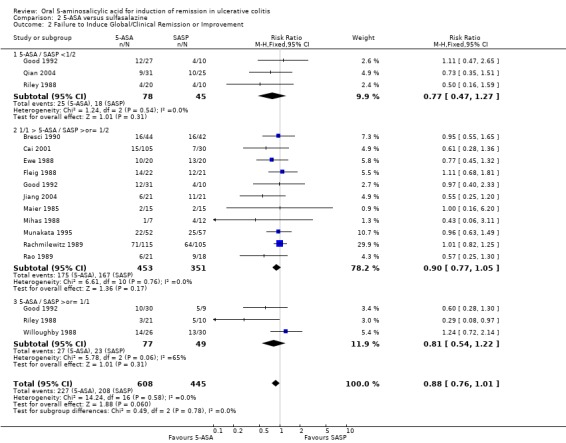
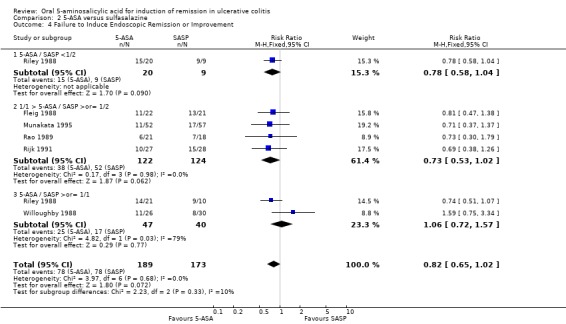
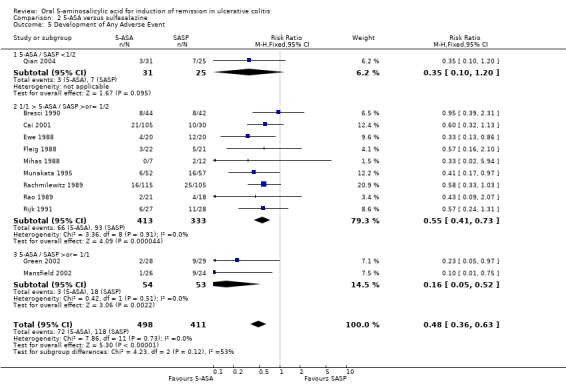
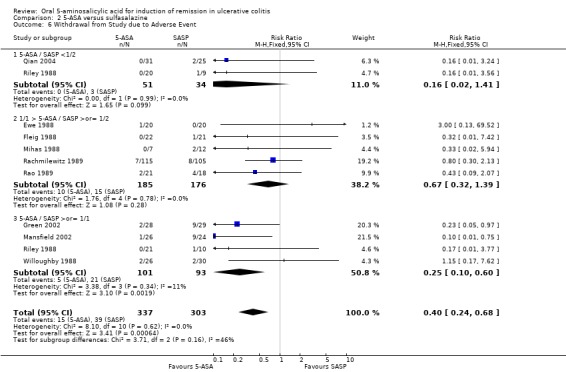
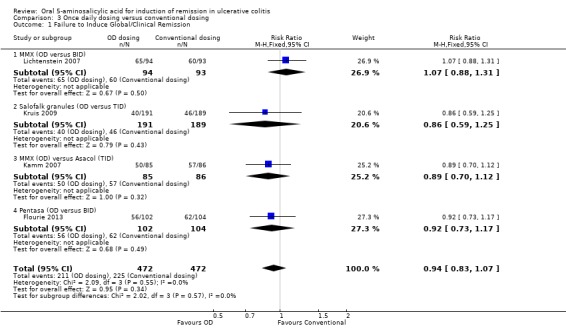
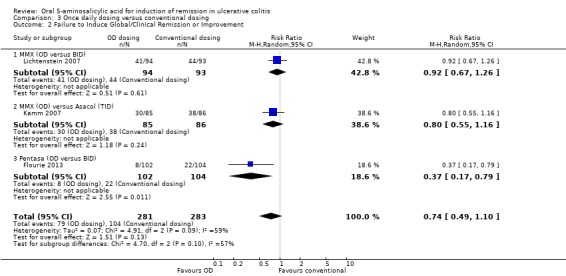
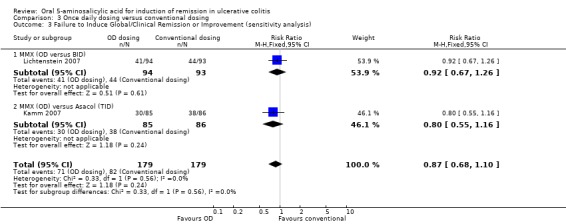
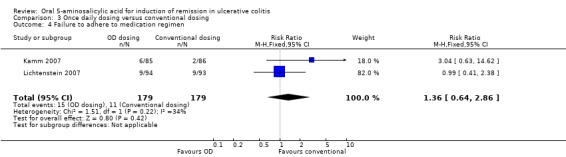
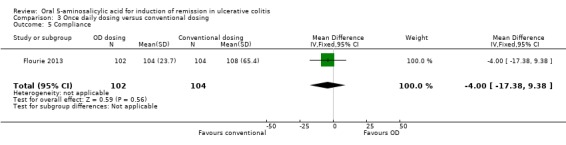
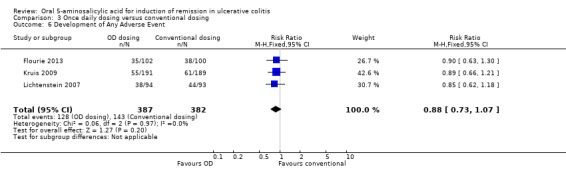
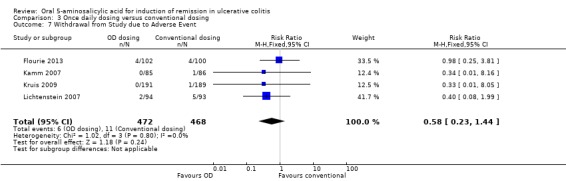
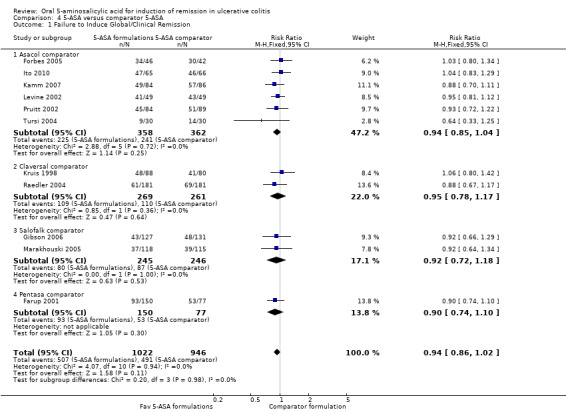
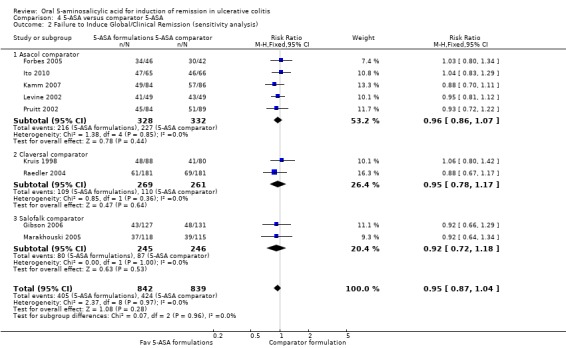
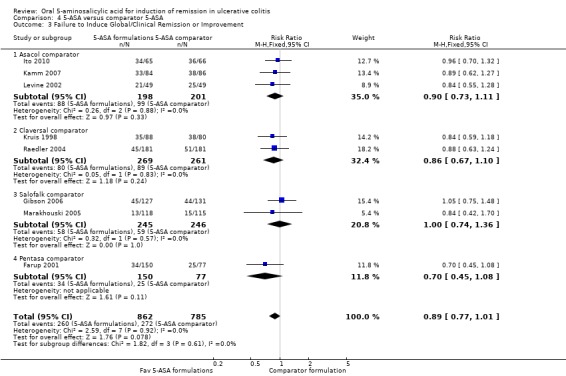
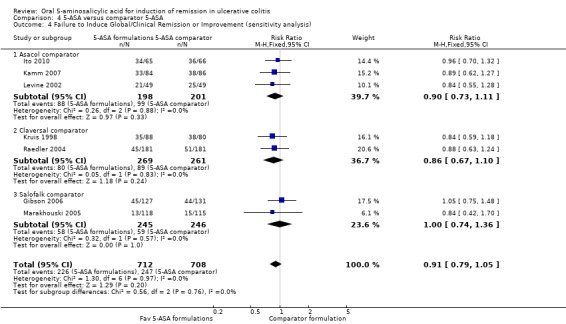
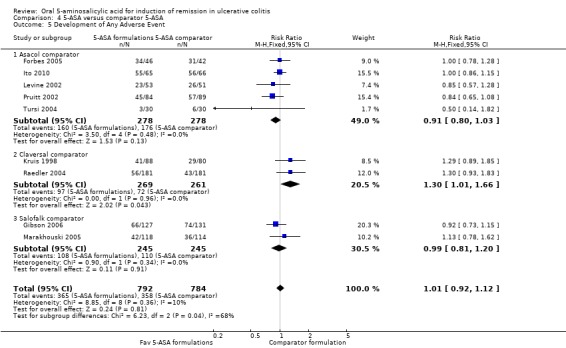
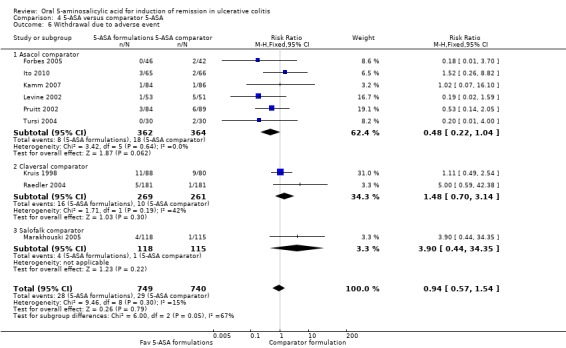
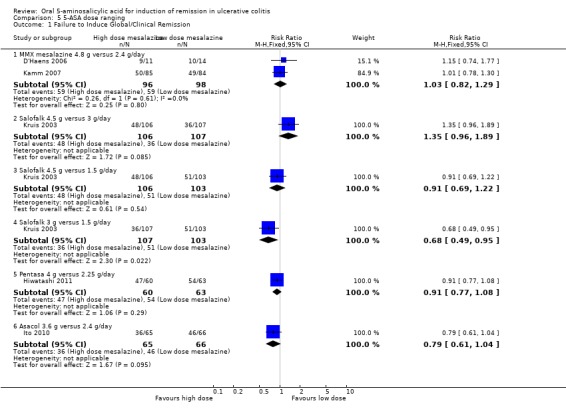
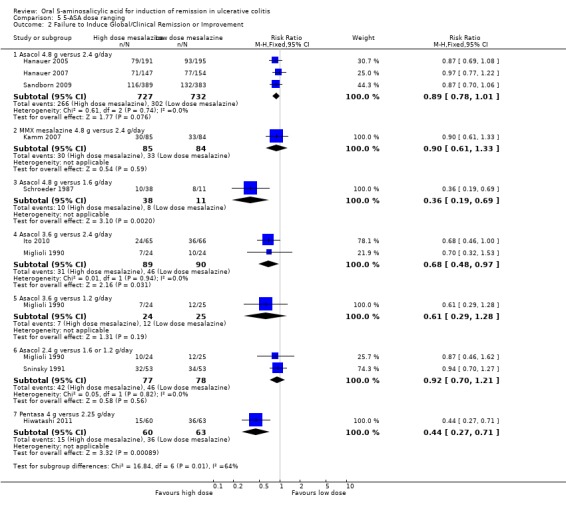
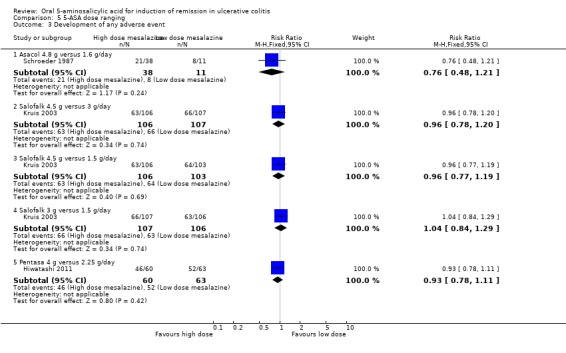
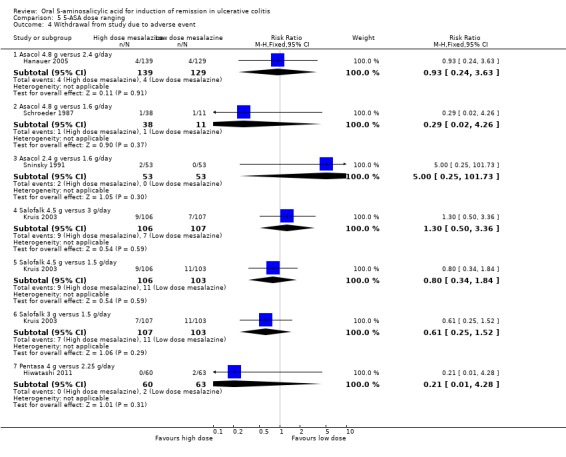
Main results: Fifty-three studies (8548 patients) were included. The majority of included studies were rated as low risk of bias. 5-ASA was significantly superior to placebo with regard to all measured outcome variables. Seventy-one per cent of 5-ASA patients failed to enter clinical remission compared to 83% of placebo patients (RR 0.86, 95% CI 0.82 to 0.89). A dose-response trend for 5-ASA was also observed. No statistically significant differences in efficacy were found between 5-ASA and SASP. Fifty-four per cent of 5-ASA patients failed to enter remission compared to 58% of SASP patients (RR 0.90, 95% CI 0.77 to 1.04). No statistically significant differences in efficacy or adherence were found between once daily and conventionally dosed 5-ASA. Forty-five per cent of once daily patients failed to enter clinical remission compared to 48% of conventionally dosed patients (RR 0.94, 95% CI 0.83 to 1.07). Eight per cent of patients dosed once daily failed to adhere to their medication regimen compared to 6% of conventionally dosed patients (RR 1.36, 95% CI 0.64 to 2.86). There does not appear to be any difference in efficacy among the various 5-ASA formulations. Fifty per cent of patients in the 5-ASA group failed to enter remission compared to 52% of patients in the 5-ASA comparator group (RR 0.94, 95% CI 0.86 to 1.02). A pooled analysis of 3 studies (n = 1459 patients) studies found no statistically significant difference in clinical improvement between Asacol 4.8 g/day and 2.4 g/day used for the treatment of moderately active ulcerative colitis. Thirty-seven per cent of patients in the 4.8 g/day group failed to improve clinically compared to 41% of patients in the 2.4 g/day group (RR 0.89; 95% CI 0.78 to 1.01). Subgroup analysis indicated that patients with moderate disease may benefit from the higher dose of 4.8 g/day. One study compared (n = 123 patients) Pentasa 4 g/day to 2.25 g/day in patients with moderate disease. Twenty-five per cent of patients in the 4 g/day group failed to improve clinically compared to 57% of patients in the 2.25 g/day group (RR 0.44; 95% CI 0.27 to 0.71). A pooled analysis of two studies comparing MMX mesalamine 4.8 g/day to 2.4 g/day found no statistically significant difference in efficacy (RR 1.03, 95% CI 0.82 to 1.29). There were no statistically significant differences in the incidence of adverse events between 5-ASA and placebo, once daily and conventionally dosed 5-ASA, 5-ASA and comparator 5-ASA formulation and 5-ASA dose ranging (high dose versus low dose) studies. Common adverse events included flatulence, abdominal pain, nausea, diarrhea, headache and worsening ulcerative colitis. SASP was not as well tolerated as 5-ASA. Twenty-nine percent of SASP patients experienced an adverse event compared to 15% of 5-ASA patients (RR 0.48, 95% CI 0.37 to 0.63).
Authors' conclusions: 5-ASA was superior to placebo and no more effective than SASP. Considering their relative costs, a clinical advantage to using oral 5-ASA in place of SASP appears unlikely. 5-ASA dosed once daily appears to be as efficacious and safe as conventionally dosed 5-ASA. Adherence does not appear to be enhanced by once daily dosing in the clinical trial setting. It is unknown if once daily dosing of 5-ASA improves adherence in a community-based setting. There do not appear to be any differences in efficacy or safety among the various 5-ASA formulations. A daily dosage of 2.4 g appears to be a safe and effective induction therapy for patients with mild to moderately active ulcerative colitis. Patients with moderate disease may benefit from an initial dose of 4.8 g/day.
Conflict of interest statement
Yongjun Wang: None known.
Claire E Parker: None known.
Tania Bhanji: None known.
Brian G Feagan has received fees from Abbott/AbbVie, Amgen, Astra Zeneca, Avaxia Biologics Inc., Bristol‐Myers Squibb, Celgene, Centocor Inc., Elan/Biogen, Ferring, JnJ/Janssen, Merck, Nestles, Novartis, Novonordisk, Pfizer, Prometheus Laboratories, Protagonist, Salix Pharma, Takeda, Teva, TiGenix, Tillotts Pharma AG and UCB Pharma for Scientific Advisory Board membership; fees from Abbott/AbbVie, Actogenix, Akros, Albireo Pharma, Amgen, Astra Zeneca, Avaxia Biologics Inc., Avir Pharma, Axcan, Baxter Healthcare Corp., Biogen Idec, Boehringer‐Ingelheim, Bristol‐Myers Squibb, Calypso Biotech, Celgene, Elan/Biogen, EnGene, Ferring Pharma, Roche/Genentech, GiCare Pharma, Gilead, Given Imaging Inc., GSK, Ironwood Pharma, Janssen Biotech (Centocor), JnJ/Janssen, Kyowa Kakko Kirin Co Ltd., Lexicon, Lilly, Lycera BioTech, Merck, Mesoblast Pharma, Millennium, Nektar, Nestles, Novonordisk, Pfizer, Prometheus Therapeutics and Diagnostics, Protagonist, Receptos, Salix Pharma, Serono, Shire, Sigmoid Pharma, Synergy Pharma Inc., Takeda, Teva Pharma, TiGenix, Tillotts, UCB Pharma, Vertex Pharma, VHsquared Ltd., Warner‐Chilcott, Wyeth, Zealand, and Zyngenia for consultancy; payment for lectures from Abbott/AbbVie, JnJ/Janssen, Takeda, Warner‐Chilcott, UCB Pharma; his institution has received grants/grants pending from Abbott/AbbVie, Amgen, Astra Zeneca, Bristol‐Myers Squibb (BMS), Janssen Biotech (Centocor), JnJ/Janssen, Roche/Genentech, Millennium, Pfizer, Receptos, Santarus, Sanofi, Tillotts, and UCB Pharma. Dr Feagan was the author of one manuscript that was included in this review.
John K MacDonald: None known.
Figures

Update of
-
Oral 5-aminosalicylic acid for induction of remission in ulcerative colitis.Cochrane Database Syst Rev. 2012 Oct 17;10:CD000543. doi: 10.1002/14651858.CD000543.pub3. Cochrane Database Syst Rev. 2012. Update in: Cochrane Database Syst Rev. 2016 Apr 21;4:CD000543. doi: 10.1002/14651858.CD000543.pub4. PMID: 23076889 Updated.
References
References to studies included in this review
Andreoli 1987 {published data only}
-
- Andreoli A, Cosintino R, Trotti R, Berri F, Prantera C. 5‐aminosalicylic acid versus salazopirin (SASP) in the oral treatment of active ulcerative colitis (UC) and in remission. Clinical Controversies in Inflammatory Bowel Disease 1987:170.
Bresci 1990 {published data only}
-
- Bresci G, Carrai M, Venturini G, Gambardella L. Therapeutic effectiveness and tolerance of 5‐aminosalicylic acid in short term treatment of patients with ulcerative colitis at a low or medium phase of activity. International Journal of Tissue Reactions 1990;12:243‐6. - PubMed
Cai 2001 {published data only}
-
- Cai JT, Wu LF, Du Q, Qian KD. Olsalazine versus sulfasalazine in the treatment of ulcerative colitis: randomized controlled clinical trial. Chinese Journal of Digestion 2001;21(10):593‐5.
D'Haens 2006 {published data only}
-
- D'Haens G, Hommes D, Engels L, Baert F, Waaij L, Connor P, et al. Once daily MMX mesalazine for the treatment of mild‐to‐moderate ulcerative colitis: a phase II, dose‐ranging study. Alimentary Pharmacology and Therapeutics 2006;24(7):1087‐97. - PubMed
Ewe 1988 {published data only}
-
- Ewe K, Eckhardt V, Kanzler G. Treatment of ulcerative colitis with olsalazine and sulfasalazine: efficacy and side effects. Scandinavian Journal of Gastroenterology 1988;23(Suppl 148):70‐5. - PubMed
Farup 2001 {published data only}
-
- Farup PG, Hinterleitner TA, Lukás M, Hébuterne X, Rachmilewitz D, Campieri M, et al. Mesalazine 4 g daily given as prolonged‐release granules twice daily and four times daily is at least as effective as prolonged‐release tablets four times daily in patients with ulcerative colitis. Inflammatory Bowel Diseases 2001;7(3):237‐42. - PubMed
-
- Farup PG, Oddsson E, Hinterleitner T. Mesalamine 4 g prolonged release granules BID and QID versus tablets QID for mild/moderate UC. Gastroenterology 1999;116(4 Part 2):A713.
Feagan 2013 {published data only}
-
- Feagan B, Sandborn W, D'Haens G, McDonald J, Rutgeerts P, Munkholm P, et al. The value of a central image management system (CIMS) in the conduct of randomized controlled trials of therapy for ulcerative colitis (UC). American Journal of Gastroenterology 2012;107:S579‐80.
-
- Feagan BG, Sandborn WJ, D’Haens G, Pola S, McDonald JWD, Rutgeerts P, et al. The role of centralized reading of endoscopy in a randomized controlled trial of mesalamine for ulcerative colitis. Gastroenterology 2013;145(1):149‐57. - PubMed
Feurle 1989 {published data only}
Fleig 1988 {published data only}
-
- Fleig WE, Laudage G, Sommer H, Wellman W, Stange EF, Riemann J. Prospective, randomized, double‐blind comparison of benzalazine and sulfasalazine in the treatment of active ulcerative colitis. Digestion 1988;40:173‐80. - PubMed
Flourie 2013 {published data only}
-
- Flourie B, Hagege H, Tucat G, Masclee A, Dewit O, Probert C, et al. Once‐daily versus twice‐daily mesalazine for active ulcerative colitis: Efficacy results from MOTUS, a multicentre, controlled, randomised, investigator‐blinded study. Journal of Crohn's and Colitis 2012;6:S82.
-
- Flourie B, Hagege H, Tucat G, Masclee A, Dewit O, Probert C, et al. Once‐daily versus twice‐daily mesalazine for active ulcerative colitis: efficacy results from motus, a multicentre, controlled, randomised, investigator‐blinded study. Gastroenterology 2012;142(5 suppl 1):S197.
-
- Flourie B, Hagège H, Tucat G, Maetz D, Hébuterne X, Kuyvenhoven JP, et al. Randomised clinical trial: once‐ vs. twice‐daily prolonged‐release mesalazine for active ulcerative colitis. Alimentary Pharmacology and Therapeutics 2013;37(8):767‐75. - PubMed
-
- Flourie B, Kuyvenhoven J, Probert C, Dewit O. Comparing the efficacy of once‐daily or twice‐daily mesalazine dosing in the treatment of left‐sided ulcerative colitis versus the overall MOTUS study population. Journal of Crohn's and Colitis 2013;7:S236.
-
- Pierik M, Hagege H, Tucat G, Masclee A, Dewit O, Probert C, et al. Once‐daily versus twice‐daily mesalazine for mild to moderately active ulcerative colitis: Mucosal healing and early response data from MOTUS, a multicentre, controlled, randomised, investigator‐blinded study. Journal of Crohn's and Colitis 2012;6:S82‐3.
Forbes 2005 {published data only}
-
- Forbes A, Al‐Damluji A, Ashworth S, Bramble M, Herbert K, Ho J, et al. Multicentre randomized‐controlled clinical trial of Ipocol, a new enteric‐coated form of mesalazine, in comparison with Asacol in the treatment of ulcerative colitis. Alimentary Pharmacology and Therapeutics 2005;21(9):1099‐104. - PubMed
Gibson 2006 {published data only}
-
- Gibson PR, Fixa B, Pekárková B, Bátovský M, Radford‐Smith G, Tibitanzl J, et al. Comparison of the efficacy and safety of Eudragit‐L‐coated mesalazine tablets with ethylcellulose‐coated mesalazine tablets in patients with mild to moderately active ulcerative colitis. Alimentary Pharmacology and Therapeutics 2006;23(7):1017‐26. - PubMed
Good 1992 {published data only}
-
- Good L, Nester T, Borgen L. A double‐blind comparison of controlled release mesalamine tablets and sulfasalazine in the treatment of ulcerative colitis. Gastroenterology 1992;102:A630.
Green 1998 {published data only}
-
- Green JRB, Holdsworth CD, Lobo AJ, Leicester R, Gibson JA, Kerr GD, et al. Balsalazide is more effective and better tolerated than mesalazine in acute ulcerative colitis. Digestive Disease Week Abstract Book. AbstractsOnDisk. 1997.
-
- Green JRB, Lobo AJ, Holdsworth CD, Leicester RJ, Gibson JA, Kerr GD, et al. Balsalazide is more effective and better tolerated than mesalazine in the treatment of acute ulcerative colitis. Gastroenterology 1998;114(1):15‐22. - PubMed
Green 2002 {published data only}
-
- Green JRB, Mansfield JC, Gibson JA, Kerr GD, Thornton PC. A double‐blind comparison of balsalazide, 6.75 g daily, and sulfasalazine, 3g daily, in patients with newly diagnosed or relapsed active ulcerative colitis. Alimentary Pharmacology and Therapeutics 2002;16(1):61‐8. - PubMed
-
- Green JRB, Swan CHJ, Rowlinson AE, Gibson JA, Brown P, Kerr GD, et al. Sulphasalazine or high dose balsalazide to treat acute relapse in ulcerative colitis? Results of a randomized trial. Gastroenterology 1993;104(4 Part 2):709.
Hanauer 1993 {published data only}
-
- Hanauer S, Beshears L, Wilkinson C. Induction of remission in a dose‐ranging study of oral mesalamine capsules (Pentasa). Gastroenterology 1990;98(5 Part 2):A174.
-
- Hanauer S, Schwartz J, Robinson M, Roufail W, Arora S, Cello J, et al. Mesalamine capsules for treatment of active ulcerative colitis: results of a controlled trial. American Journal of Gastroenterology 1993;88:1188‐97. - PubMed
-
- Hanauer S, Schwartz J, Roufail W, Robinson M, Cello J, Safdi M, et al. Dose‐ranging study of oral mesalamine capsule (Pentasa) for active ulcerative colitis. Gastroenterology 1989;96:A195. - PubMed
-
- Miner P, Nostrant T, Wruble L, Hines C, Johnson S, Wilkinson C, et al. Multicenter trial of Pentasa for active ulcerative colitis. Gastroenterology 1991;100(5 Part 2):A231.
-
- Robinson M, Cello J, Safdi M, Schwartz J, Roufail W, Hoop R, et al. Mesalamine (Pentasa) enhances quality of life (QofL) for ulcerative colitis (UC) patients. Gastroenterology 1991;100(5 Part 2):A243.
Hanauer 1996 {published data only}
-
- Hanauer SB, Barish C, Pambianco D, Sigmon R, Gannan R, Koval G, et al. A multi‐center, double‐blind, placebo‐controlled, dose‐ranging trial of olsalazine for mild‐moderately active ulcerative colitis. Gastroenterology 1996;110:A921.
Hanauer 2005 {published data only}
-
- Hanauer SB, Sandborn WJ, Kornbluth A, Katz S, Safdi M, Woogen S, et al. Delayed‐release oral mesalamine at 4.8 g/day (800 mg tablet) for the treatment of moderately active ulcerative colitis: the ASCEND II trial. American Journal of Gastroenterology 2005;100(11):2478‐85. - PubMed
Hanauer 2007 {published data only}
-
- Hanauer SB, Sandborn WJ, Dallaire C, Archambault A, Yacyshyn B, Yeh C, et al. Delayed‐release oral mesalamine 4.8 g/day (800 mg tablets) compared to 2.4 g/day (400 mg tablets) for the treatment of mildly to moderately active ulcerative colitis: The ASCEND I trial. Canadian Journal of Gastroenterology 2007;21(12):827‐34. - PMC - PubMed
Hetzel 1986 {published data only}
-
- Hetzel DJ, Bochner F, Imhoff DM, Gibson GE, Fitch RJ, Hecker R, et al. Azodisacylate (ADS) in the treatment of ulcerative colitis (UC): a controlled trial and assessment of drug disposition. Gastroenterology 1985;88:A1418. - PubMed
-
- Hetzel DJ, Shearman DJC, Bochner F, Imhoff DM, Gibson GE, Fitch RJ, et al. Azodisalicylate (Olsalazine) in the treatment of active ulcerative colitis. A placebo controlled clinical trial and assessment of drug disposition. Journal of Gastroenterology and Hepatology 1986;1:257‐66. - PubMed
-
- Hetzel DJ, Shearman DJC, Labrooy J, Bochner F, Imhoff DM, Gibson GE, et al. Olsalazine in the treatment of active ulcerative colitis: a placebo controlled clinical trial and assessment of drug disposition. Scandinavian Journal of Gastroenterology Supplement 1988;23(148):61‐9. - PubMed
Hiwatashi 2011 {published data only}
-
- Hiwatashi N, Suzuki Y, Mitsuyama K, Munakata A, Hibi T. Clinical trial: Effects of an oral preparation of mesalazine at 4 g/day on moderately active ulcerative colitis. A phase III parallel‐dosing study. Journal of Gastroenterology 2011;46(1):46‐56. - PubMed
Ito 2010 {published data only}
-
- Ito H, Iida M, Matsumoto T, Suzuki Y, Koyama H, Yoshida T, et al. A direct comparative study of two different mesalamine formulations revealed appropriate use of mesalamine for patients with active ulcerative colitis depending on the characteristics of disease. Gastroenterology 2010;1:S166.
Jiang 2004 {published data only}
Kamm 2007 {published data only}
-
- Hanauer S, Sandborn W, Lichtenstein G, Kamm M, Barrett K, Joseph R. MMX mesalamine for providing remission of active mild‐to‐moderate ulcerative colitis: an evidence‐based medicine analysis. Inflammatory Bowel Diseases 2007;13(S5):663.
-
- Kamm MA, Sandborn WJ, Gassull M, Schreiber S, Jackowski L, Butler T, et al. Once‐daily, high‐concentration MMX mesalamine in active ulcerative colitis. Gastroenterology 2007;132(1):66‐75. - PubMed
Kruis 1998 {published data only}
-
- Kruis W, Brandes JW, Schreiber S, Theuer D, Krakamp B, Schutz E, et al. Olsalazine versus mesalazine in the treatment of mild to moderate ulcerative colitis. Alimentary Pharmacology and Therapeutics 1998;12(8):707‐15. - PubMed
-
- Kruis W, Schreiber S, Theuer D, Schutz E, Krakamp B, Otto P, et al. Comparison of an azoboundamino salicylate (olsalazine) vs. a coated aminosalicylate (mesalamine) for active ulcerative colitis. Gastroenterology 1996;110(4):942.
Kruis 2003 {published data only}
-
- Kruis W, Bar‐Meir S, Feher J, Mickisch O, Mlitz H, Faszczyk M, et al. The optimal dose of 5‐aminosalicylic acid in active ulcerative colitis: a dose‐finding study with newly developed mesalamine. Clinical Gastroenterology and Hepatology 2003;1(1):36‐43. - PubMed
-
- Kruis W, Meir SB, Feher J, Stolte M. Dose finding study of the efficacy and safety of newly developed 5‐ASA containing pellets in patients with active ulcerative colitis. Gastroenterology 2000;118(4 Suppl 2):A780.
Kruis 2009 {published data only}
-
- Kruis W, Gorelov A, Kiudelis G, Rácz I, Pokrotnieks J, Horynski M, et al. Once daily dosing of 3g mesalamine (Salofalk® Granules) is therapeutic equivalent to a three‐times daily dosing of 1g mesalamine for the treatment of active ulcerative colitis. Gastroenterology 2007;132(4 Suppl 1):A130‐1.
Levine 2002 {published data only}
-
- Levine DS, Pruitt R, Riff D, Koval G, Sales D, Wruble L, et al. A multi‐center, double‐blind dose‐response trial of Colazide (balsalazide disodium) and Asacol (mesalamine) for mild‐moderately active ulcerative colitis. Gastroenterology 1997;112:A1026.
-
- Levine DS, Riff DS, Pruitt R, Wruble L, Koval G, Sales D, et al. A randomized, double blind, dose‐response comparison of balsalazide (6.75 g), balsalazide (2.25 g), and mesalamine (2.4 g) in the treatment of active, mild‐to‐moderate ulcerative colitis. American Journal of Gastroenterology 2002;97(6):1398‐407. - PubMed
Lichtenstein 2007 {published data only}
-
- Lichtenstein GR, Kamm MA, Boddu P, Gubergrits N, Lyne A, Butler T, et al. Effect of once‐ or twice‐daily MMX mesalamine (SPD476) for the induction of remission of mild to moderately active ulcerative colitis. Clinical Gastroenterology and Hepatology 2007;5(1):95‐102. - PubMed
Maier 1985 {published data only}
-
- Maier K, Fruhmorgen P, Bode JC, Heller T, Gaisberg U, Klotz U. Successful acute treatment of chronic inflammatory intestinal diseases with oral 5‐aminosalicylic acid [Erfolgreiche akutbehandlung chronisch‐entzundlicher darmerkrankungen mit oraler 5‐aminosalicylsaure]. Deutsche medizinische Wochenschrift 1985;110(10):363‐8. - PubMed
Mansfield 2002 {published data only}
-
- Mansfield JC, Giaffer MH, Cann PA, McKenna D, Thornton PC. A double‐blind comparison of balsalazide, 6.75 g, and sulfasalazine, 3 g, as sole therapy in the management of ulcerative colitis. Alimentary Pharmacology and Therapeutics 2002;16(1):69‐77. - PubMed
Marakhouski 2005 {published data only}
-
- Marakhouski Y, Fixa B, Holoman J. Erratum: a double‐blind dose‐escalating trial comparing novel mesalazine pellets with mesalazine tablets in active ulcerative colitis. Alimentary Pharmacology and Therapeutics 2005;21(6):793. - PubMed
-
- Marakhouski Y, Fixa B, Holoman J, Hulek P, Lukas M, Batovsky M, et al. A double‐blind dose‐escalating trial comparing novel mesalazine pellets with mesalazine tablets in active ulcerative colitis. Alimentary Pharmacology and Therapeutics 2005;21(2):133‐40. - PubMed
Miglioli 1990 {published data only}
-
- Miglioli M, Bianchi Porro G, Brunetti G, Sturniolo GC, and the Italian IBD group. Oral delayed‐release mesalazine in the treatment of mild ulcerative colitis: a dose ranging study. European Journal of Gastroenterology and Hepatology 1990;2:229‐34.
-
- Miglioli M, Brunetti G, Sturniolo GC, Bianchi Porro G, Campieri M, Cottone M, et al. Oral 5‐ASA (Asacol) in mild ulcerative colitis. a randomized double blind dose ranging trial. Italian Journal of Gastroenterology 1989;21(1 Suppl):7‐8.
Mihas 1988 {published data only}
-
- Mihas AA, Xynopoulos D, Mihas TA. A prospective trial of oral 5‐aminosalicylic acid vs sulfasalazine in ulcerative colitis.. Gastroenterology 1988;94(5 Part 2):A303.
Munakata 1995 {published data only}
-
- Munakata A, Yoshida Y, Muto T. Clinical efficacy of oral controlled‐release mesalazine, N‐5ASA on ulcerative colitis: double‐blind comparative study in comparison with salazosulphapyridineu. Yakuri to Chiryo (Japanese Pharmacology and Therapeutics) 1994;22(Suppl 10):S2555‐83.
-
- Munakata A, Yoshida Y, Muto T, Tsuchiya S, Fukushima T, Hiwatashi N, et al. Double‐blind comparative study of sulfasalazine and controlled‐release mesalazine tablets in the treatment of active ulcerative colitis. Journal of Gastroenterology 1995;30(Suppl 8):108‐11. - PubMed
Pontes 2014 {published data only}
-
- Pontes C, Vives R, Torres F, Panes J. Safety and activity of dersalazine sodium in patients with mild‐to‐moderate active colitis: double‐blind randomized proof of concept study. Inflammatory Bowel Diseases 2014;20(11):2004‐12. - PubMed
Pruitt 2002 {published data only}
-
- Pruitt R, Hanson J, Safdi M, Wruble L, Hardi R, Johanson J, et al. Balsalazide is superior to mesalamine in the time to improvement of signs and symptoms of acute mild‐to‐moderate ulcerative colitis. American Journal of Gastroenterology 2002;97(12):3078‐86. - PubMed
-
- Pruitt R, Hanson J, Safdi M, Wruble L, Hardi R, Johanson JF, et al. Balsalazide is superior to mesalamine in the time to improvement of signs and symptoms of acute ulcerative colitis. Gastroenterology 2000;118(4 Suppl 2):A120‐1. - PubMed
Qian 2004 {published data only}
-
- Qian LP, Lin GJ, Xu SR, Ding WQ. Clinical effect of olsalazine sodium capsule in the treatment of ulcerative colitis. Fudan University Journal of Medical Sciences 2004;31(4):421‐4.
Rachmilewitz 1989 {published data only}
-
- Rachmelewitz D. Mesalazine (5‐ASA) is as effective as sulfasalazine (SZ) in the treatment of active ulcerative colitis (UC). Gastroenterology 1988;94(5 Part 2):A362.
Raedler 2004 {published data only}
-
- Behrens C, Bias P, Malchow H, Raedler A. Mesalazine (5‐ASA) micropellets show comparable efficacy and tolerability as mesalazine tablets in patients with ulcerative colitis. A prospective, multi‐national, randomised, double‐blind, active‐controlled clinical phase II study. Gastroenterology 2003;124(4 Suppl 1):A379.
-
- Raedler A, Behrens C, Bias P. Mesalazine (5‐aminosalicylic acid) micropellets show similar efficacy and tolerability to mesalazine tablets in patients with ulcerative colitis ‐‐ results from a randomized‐controlled trial. Alimentary Pharmacology and Therapeutics 2004;20(11‐12):1353‐63. - PubMed
Rao 1989 {published data only}
Rijk 1991 {published data only}
-
- Rijk MCM, Tongerson JHM. The efficacy and safety of sulphasalazine and olsalazine in patients with active ulcerative colitis. Gastroenterology 1991;100:A243.
Riley 1988 {published data only}
Robinson 1988 {published data only}
-
- Robinson M, Gitnick G, Balart L, Das K, Turkin D. Olsalazine in the treatment of mild to moderate ulcerative colitis. Gastroenterology 1988;84:A381.
Sandborn 2009 {published data only}
-
- Sandborn WJ, Regula J, Feagan B, Belousova EA, Jojic NV, Lukas M, et al. Efficacy and safety of delayed‐release oral mesalamine at 4.8g/d (800mg tablet) in the treatment of moderately active ulcerative colitis: results of the ASCEND III study. Gastroenterology 2008;134(4 Suppl 1):A99.
-
- Sandborn WJ, Regula J, Feagan BG, Belousova E, Jojic N, Lukas M, et al. Delayed‐release oral mesalamine 4.8 g/day (800‐mg tablet) is effective for patients with moderately active ulcerative colitis. Gastroenterology 2009;137(6):1934‐43. - PubMed
Sandborn 2012 {published data only}
-
- Sandborn WJ, Travis S, Moro L, Jones R, Gautille T, Bagin R, et al. Once‐daily budesonide MMX® extended‐release tablets induce remission in patients with mild to moderate ulcerative colitis: results from the CORE I study. Gastroenterology 2012;143(5):1218‐26. - PubMed
Scherl 2009 {published data only}
-
- Pruitt RE, Rosen AA, Wruble L, Sedghi S, Shepard RD, Mareya SM, et al. Safety and tolerability of twice‐daily balsalazide tablets: results of a phase 3, randomized, double‐blind, placebo‐controlled, multicenter study. Gastroenterology 2008;134(4 Suppl 1):A494.
-
- Rubin DT, Rosen AA, Sedghi S, Shepard RD, Mareya SM, Huang S, et al. Twice‐daily balsalazide tablets improve patient quality of life after 2 and 8 weeks of treatment: results of a phase 3, randomized, double‐blind, placebo‐controlled, multicenter study. Gastroenterology 2008;134(4 Suppl 1):A494.
-
- Scherl EJ, Pruitt R, Gordon GL, Lamet M, Shaw A, Huang S, et al. Safety and efficacy of a new 3.3 g b.i.d. tablet formulation in patients with mild‐to‐moderately‐active ulcerative colitis: a multicenter, randomized, double‐blind, placebo‐controlled study. American Journal of Gastroenterology 2009;104(6):1452‐9. - PubMed
-
- Scherl EJ, Pruitt RE, Gordon GL, Lamet M, Shaw AL, Huang S, et al. Twice‐daily dosing of balsalazide tablets 3.3 g is safe and effective in the treatment of mild‐to‐moderate ulcerative colitis. Gastroenterology 2009;1:A520.
Schroeder 1987 {published data only}
-
- Schroeder KW, Tremaine WJ, Ilstrup DM. Coated oral 5‐aminosalicylic acid therapy for mildly to moderately active ulcerative colitis. A randomized study. New England Journal of Medicine 1987;317:1625‐9. - PubMed
Sninsky 1991 {published data only}
-
- Sninsky CA, Cort DH, Shanahan F, Powers BJ, Sessions JT, Pruitt RE, et al. Oral mesalamine (Asacol) for mildly to moderately active ulcerative colitis. A multicenter study. Annals of Internal Medicine 1991;115:350‐5. - PubMed
Sutherland 1990 {published data only}
-
- Sutherland LR, Robinson M, Onstad G, Peppercorn M, Greenberger N, Goodman M, et al. A double‐blind, placebo‐controlled, multicentre study of the efficacy and safety of 5‐aminosalicylic acid tablets in the treatment of ulcerative colitis. Canadian Journal of Gastroenterology 1990;4:463‐7.
Tursi 2004 {published data only}
-
- Tursi A, Brandimarte G, Giorgetti GM, Forti G, Modeo ME, Gigliobianco A. Low‐dose balsalazide plus a high‐potency probiotic preparation is more effective than balsalazide alone or mesalazine in the treatment of acute mild‐to‐moderate ulcerative colitis. Medical Science Monitor 2004;10(11):PI126‐31. - PubMed
Willoughby 1988 {published data only}
-
- Willoughby CP, Cowan RE, Gould SR, Machell RJ, Stewart JB. Double‐blind comparison of olsalazine and sulfasalazine in active ulcerative colitis. Scandinavian Journal of Gastroenterology 1988;148:40‐4. - PubMed
Zinberg 1990 {published data only}
-
- Zinberg J, Molinas S, Das KM. A double‐blinded, placebo‐controlled clinical study of azodisalicylate sodium (olsalazine) in the treatment of ulcerative colitis. Gastroenterology 1987;92:A1711. - PubMed
-
- Zinberg J, Molinas S, Das KM. Double‐blind placebo‐controlled study of olsalazine in the treatment of ulcerative colitis. American Journal of Gastroenterology 1990;85:562‐6. - PubMed
References to studies excluded from this review
Adrizzone 2006 {published data only}
Ahluwalia 1992 {published data only}
-
- Ahluwalia NK, Thompson DG, Goodman MJ, Mani V, McIntyre J, Dane G. Double‐blind randomized trial of 4.8 g vs. 2.4 g of mesalazine for 4 weeks in the treatment of acute ulcerative colitis. Gastroenterology 1992;102:A588.
Gross 2011 {published data only}
-
- Gross V, Bunganic I, Belousova EA, Mikhailova TL, Kupcinskas L, Kiudelis G, et al. 1.3g mesalazine granules are superior to 9mg budesonide for achieving remission in active ulcerative colitis: a double‐blind, double‐dummy, randomised trial. Journal of Crohn's and Colitis 2011;5(2):129‐38. - PubMed
Irvine 2008 {published data only}
-
- Irvine EJ, Yeh CH, Ramsey D, Stirling AL, Higgins PD. The effect of mesalazine therapy on quality of life in patients with mildly and moderately active ulcerative colitis. Alimentary Pharmacology and Therapeutics 2008;28(11‐12):1278‐86. - PubMed
Kamm 2009 {published data only}
-
- Kamm MA, Lichtenstein GR, Sandborn WJ, Schreiber S, Lees K, Barrett K, et al. Effect of extended MMX mesalamine therapy for acute, mild‐to‐moderate ulcerative colitis. Inflammatory Bowel Diseases 2009;15(1):1‐8. - PubMed
Mahmood 2005 {published data only}
-
- Mahmood A, Melley L, Fitzgerald AJ, Ghosh S, Playford RJ. Trial of trefoil factor 3 enemas, in combination with oral 5‐aminosalicylic acid, for the treatment of mild‐to‐moderate left‐sided ulcerative colitis. Alimentary Pharmacology and Therapeutics 2005;21(11):1357‐64. - PubMed
Paoluzi 2002 {published data only}
-
- Paoluzi P, D'Albasio G, Pera A, Bianchi Porro G, Paoluzi OA, Pica R, et al. Oral and topical 5‐aminosalicylic acid (mesalazine) in inducing and maintaining remission in mild‐moderate relapse of ulcerative colitis: one‐year randomised multicentre trial. Digestive and Liver Disease 2002;34(11):787‐93. - PubMed
Pruitt 1991 {published data only}
-
- Pruitt RE, Gremillion DE, Herring RW, Bailey AH, Faust TW, Potter M, et al. Oral Asacol in the treatment of mild to moderate ulcerative colitis: the Nashville experience. Journal of the Tennessee Medical Association 1991;84:237. - PubMed
Safdi 1997 {published data only}
-
- Safdi M, DeMicco M, Sninsky C, Banks P, Wruble L, Deren J, et al. A double‐blind comparison of oral versus rectal mesalamine versus combination therapy in the treatment of distal ulcerative colitis. American Journal of Gastroenterology 1997;92(10):1867‐71. - PubMed
Vecchi 2001 {published data only}
-
- Vecchi M, Meucci G, Gionchetti P, Beltrami M, Maurizio P, Beretta L, et al. Oral versus combination mesalazine therapy in active ulcerative colitis: A double‐blind, double‐dummy, randomized multicentre study. Alimentary Pharmacology and Therapeutics 2001;15:251‐6. - PubMed
Vernia 2000 {published data only}
-
- Vernia P, Monteleone G, Grandinetti G, Villotti G, Giulio E, Frieri G, et al. Combined oral sodium butyrate and mesalazine treatment compared to oral mesalazine alone in ulcerative colitis: randomized, double‐blind, placebo‐controlled pilot study. Digestive Diseases and Sciences 2000;45(5):976‐81. - PubMed
Additional references
Andrade 1995
-
- Andrade SE, Walker AM, Gottlieb LK, Hollenberg NK, Testa MA, Saperia GM, et al. Discontinuation of antihyperlipidemic drugs – do rates reported in clinical trials reflect rates in primary care settings?. New England Journal of Medicine 1995;332(17):1125‐31. - PubMed
Arend 2004
-
- Arend LJ, Springate JE. Interstitial nephritis from mesalazine: case report and literature review. Pediatric Nephrology 2004;19(5):550‐3. - PubMed
Azad Khan 1977
-
- Azad Khan AK, Piris J, Truelove SC. An experiment to determine the active therapeutic moiety of sulfasalazine. Lancet 1977;2(8044):892‐5. - PubMed
Beaulieu 2009
-
- Beaulieu DB, Schwartz DA. Medication persistence in patients with ulcerative colitis: meeting the challenges and improving patient outcomes. Medscape CME Gastroenterology 2009. Available from http://www.medscape.org/viewarticle/713895.
Brixner 2007
-
- Brixner D, Magowan S, Accortt N. Evaluation of prescription refill patterns based on daily dosing regimen and pill load for calcium channel blockers. Academy of Managed Care Pharmacy Annual Meeting. San Diego, CA, 2007.
Chan 1983
-
- Chan RP, Pope DJ, Gilbert AP, Sacra PJ, Baron JH, Lennard‐Jones JE. Studies of two novel sulfasalazine analogs, ipsalazide and balsalazide. Digestive Diseases and Sciences 1983;28:609‐15. - PubMed
Das 1973
-
- Das KM, Eastwood MA, McManus JPA, Sircus W. Adverse reactions during salicylazosulfapyridine therapy and the relation with drug metabolism and acetylator phenotype. New England Journal of Medicine 1973;289:491‐5. - PubMed
Dew 1982
Ediger 2007
-
- Ediger JP, Walker JR, Graff L, Lix L, Clara I, Rawsthorne P, et al. Predictors of medication adherence in inflammatory bowel disease. American Journal of Gastroenterology 2007;102(7):1417‐26. - PubMed
Elseviers 2004
-
- Elseviers MM, D'Haens G, Lerebours E, Plane C, Stolear JC, Riegler G, et al. Renal impairment in patients with inflammatory bowel disease: association with aminosalicylate therapy?. Clinical Nephrology 2004;61(2):83‐9. - PubMed
Frandsen 2002
-
- Frandsen NE, Saugmann S, Marcussen N. Acute interstitial nephritis associated with the use of mesalazine in inflammatory bowel disease. Nephron 2002;92(1):200‐2. - PubMed
Greenfield 1993
-
- Greenfield SM, Punchard NA, Teare JP, Thompson RP. Review article: the mode of action of the aminosalicylates in inflammatory bowel disease. Alimentary Pharmacology and Therapeutics 1993;7:369‐83. - PubMed
Guyatt 2008
Hardy 1987
-
- Hardy JG, Healey JNC, Reynolds JR. Evaluation of an enteric‐coated delayed‐release 5‐aminosalicylic acid tablet in patients with inflammatory bowel disease. Alimentary Pharmacology and Therapeutics 1987;1:273‐80. - PubMed
Hayllar 1991
Higgins 2003
Higgins 2011
-
- Higgins JPT, Altman DG, Sterne JAC (editors). Chapter 8: Assessing risk of bias in included studies. In: Higgins JPT, Green S editor(s). Cochrane Handbook for Systematic Reviews of Interventions Version 5.1.0 (updated March 2011). The Cochrane Collaboration, 2011. Available from www.cochrane‐handbook.org.
Ireland 1987
-
- Ireland A, Jewell DP. Olsalazine in patients intolerant of sulphasalazine. Scandinavian Journal of Gastroenterology 1987;22(9):1038‐40. - PubMed
Kane 2001
-
- Kane SV, Cohen RD, Aikens JE, Hanauer SB. Prevalence of nonadherence with maintenance mesalamine in quiescent ulcerative colitis. American Journal of Gastroenterology 2001;96(10):2929‐33. - PubMed
Kane 2003
-
- Kane S, Huo D, Aikens J, Hanauer S. Medication nonadherence and the outcomes of patients with quiescent ulcerative colitis. American Journal of Medicine 2003;114(1):39‐43. - PubMed
Kane 2006
-
- Kane SV. Systematic review: adherence issues in the treatment of ulcerative colitis. Alimentary Pharmacology and Therapeutics 2006;23(5):577‐85. - PubMed
Kane 2008
Kjaergaard 1989
-
- Kjaergaard N, Ambrosius Christensen L, Lauritsen JG, Rasmussen N, Honore Hansen S. Effects of mesalazine substitution on salicylazosulfapyridine‐induced seminal abnormalities in men with ulcerative colitis. Scandinavian Journal of Gastroenterology 1989;24:891‐6. - PubMed
Klotz 1980
-
- Klotz U, Maier K, Fischer C, Heinkel K. Therapeutic efficacy of sulfasalazine and its metabolites in patients with ulcerative colitis and Crohn's disease. New England Journal of Medicine 1980;303:1499‐502. - PubMed
Levy 1999
-
- Levy RL, Feld AD. Increasing patient adherence to gastroenterology treatment and prevention regimens. American Journal of Gastroenterology 1999;94(7):1733‐42. - PubMed
Maeda 2001
-
- Maeda S, Nomura S, Tahara M, Haneda M, Kikkawa R. Interstitial nephritis after treatment with mesalazine in the patient with ulcerative colitis. Nihon Naika Gakkai Zasshi 2001;90(5):872‐3. - PubMed
Magowan 2006
-
- Magowan S, Kane S, Lange JL. 5‐ASA prescription refill rates for ulcerative colitis are independent of formulation and dosing regimens. American Journal of Gastroenterology 2006;101:S447. Abstract 1144.
Misiewitz 1965
-
- Misiewitz JJ, Lennard‐Jones JE, Connell AM, Baron JH, Jones FA. Controlled trial of sulfasalazine in maintenance therapy for ulcerative colitis. Lancet 1965;1:185‐8.
Myers 1987
Nielsen 1982
-
- Nielsen OH. Sulfasalazine intolerance: a retrospective study of the reasons for discontinuing treatment with sulfasalazine in patients with chronic inflammatory bowel disease. Scandinavian Journal of Gastroenterology 1982;17:389‐93. - PubMed
Nielsen 1983
Peppercorn 1972
-
- Peppercorn MA, Goldman P. The role of intestinal bacteria in the metabolism of salicylazo‐sulfapyridine. Journal of Pharmacology and Experimental Therapeutics 1972;181:555‐62. - PubMed
Rao 1987
-
- Rao SS, Cann PA, Holdsworth CD. Clinical experience of the tolerance of mesalazine and olsalazine in patients intolerant of sulphasalazine. Scandinavian Journal of Gastroenterology 1987;22(3):332‐6. - PubMed
Rasmussen 1982
-
- Rasmussen SN, Bondesen S, Hvidberg EF, Hansen SH, Binder V, Halskou S, et al. 5‐aminosalicylic acid in a slow‐release preparation: bioavailability, plasma level, and excretion in humans. Gastroenterology 1982;83:1062‐70. - PubMed
Riley 1987
Sandborn 2002a
-
- Sandborn WJ. Rational selection of oral 5‐aminosalicylate formulations and prodrugs for the treatment of ulcerative colitis. American Journal of Gastroenterology 2002;97(12):2939‐41. - PubMed
Sandborn 2002b
-
- Sandborn WJ, Hanauer SB, Buch A. Comparable systemic absorption of 5‐ASA and N‐AC‐5‐ASA from U.S. Asacol and Colazal. American Journal of Gastroenterology 2002;97:S263.
Sandborn 2002c
-
- Sandborn WJ, Hanauer SB. The pharmacokinetic profiles of oral 5ASA formulations used in the management of ulcerative colitis: A systematic review. American Journal of Gastroenterology 2002;97:S269.
Sandborn 2003
-
- Sandborn WJ, Hanauer SB. Systematic review: the pharmacokinetic profiles of oral mesalazine formulations and mesalazine pro‐drugs used in the management of ulcerative colitis. Alimentary Pharmacology and Therapeutics 2003;17(1):29‐42. - PubMed
Schroeder 1972
-
- Schroeder H, Campbell DES. Absorption, metabolism, and excretion of salicylazosulfapyridine in man. Clinical Pharmacology and Therapeutics 1972;13:539‐51. - PubMed
Schünemann 2011
-
- Schünemann HJ, Oxman AD, Vist GE, Higgins JPT, Deeks JJ, Glasziou P, et al. Chapter 12: Interpreting results and drawing conclusions. In: Higgins JPT, Green S editor(s). Cochrane Handbook for Systematic Reviews of Interventions Version 5.1.0 (updated March 2011). The Cochrane Collaboration, 2011. Available from www.cochrane‐handbook.org.
Shale 2003
-
- Shale MJ, Riley SA. Studies of compliance with delayed‐release mesalazine therapy in patients with inflammatory bowel disease. Alimentary Pharmacology and Therapeutics 2003;18(2):191‐8. - PubMed
Staerk Laursen 1990
-
- Staerk Laursen L, Stokholm M, Bukhave K, Rask‐Madsen J, Lauritsen K. Disposition of 5‐aminosalicylic acid by olsalazine and three mesalazine preparations in patients with ulcerative colitis: comparison of intraluminal colonic concentrations, serum values, and urinary excretion. Gut 1990;31:1271‐6. - PMC - PubMed
Sutherland 2006a
Svartz 1942
-
- Svartz N. Salazyopyrin, a new sulfanilamide preparation: A. Therapeutic results in rheumatic polyarthritis. B. Therapeutic results in ulcerative colitis. C. Toxic manifestations in treatment with sulfanilamide preparation. Acta Medica Scandinavia 1942;110:557‐90.
Truelove 1955
Truelove 1959
Van Hees 1980
References to other published versions of this review
Feagan 2012
Sutherland 1993
-
- Sutherland LR, May GR, Shaffer EA. Sulfasalazine revisited: a meta‐analysis of 5‐aminosalicylic acid in the treatment of ulcerative colitis. Annals of Internal Medicine 1993;118:540‐9. - PubMed
Sutherland 1997
-
- Sutherland LR, Roth DE, Beck PL. Alternatives to sulfasalazine: A meta‐analysis of 5‐ASA in the treatment of ulcerative colitis. Inflammatory Bowel Diseases 1997;3:65‐78. - PubMed
Publication types
MeSH terms
Substances
LinkOut - more resources
Full Text Sources
Other Literature Sources
Medical
