


Isolation of Pancreatic Cancer Cells from a Patient-Derived Xenograft Model Allows for Practical Expansion and Preserved Heterogeneity in Culture
- PMID: 27102771
- PMCID: PMC4901138
- DOI: 10.1016/j.ajpath.2016.02.009
Isolation of Pancreatic Cancer Cells from a Patient-Derived Xenograft Model Allows for Practical Expansion and Preserved Heterogeneity in Culture
Abstract
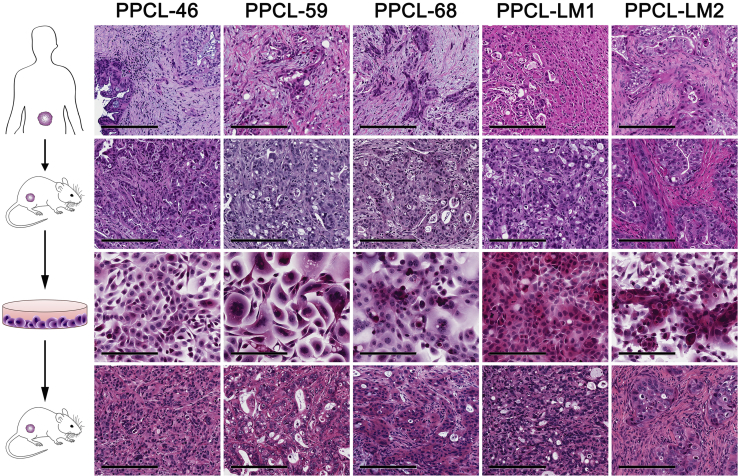
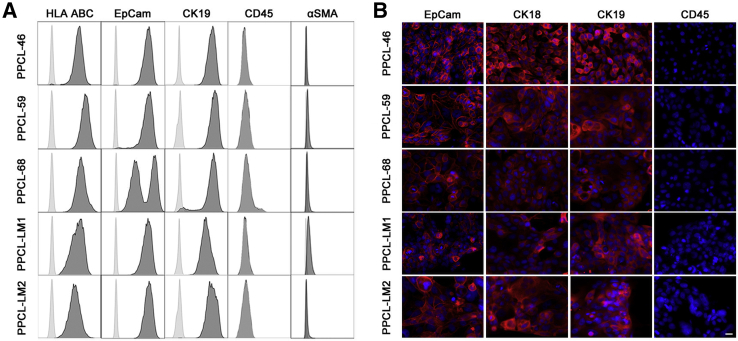
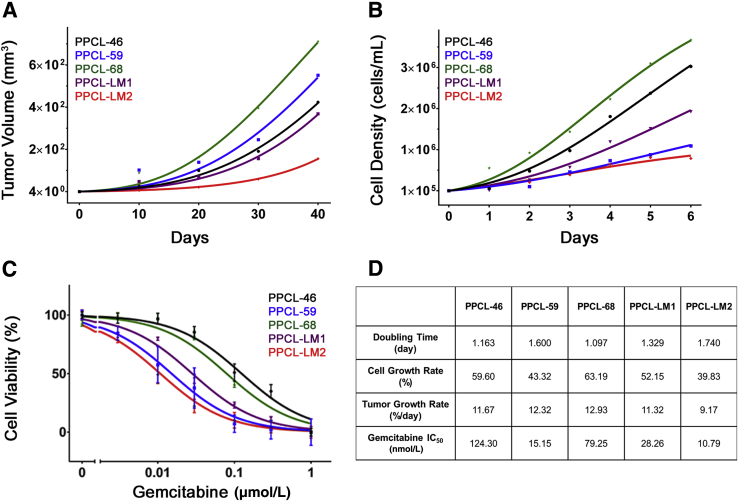
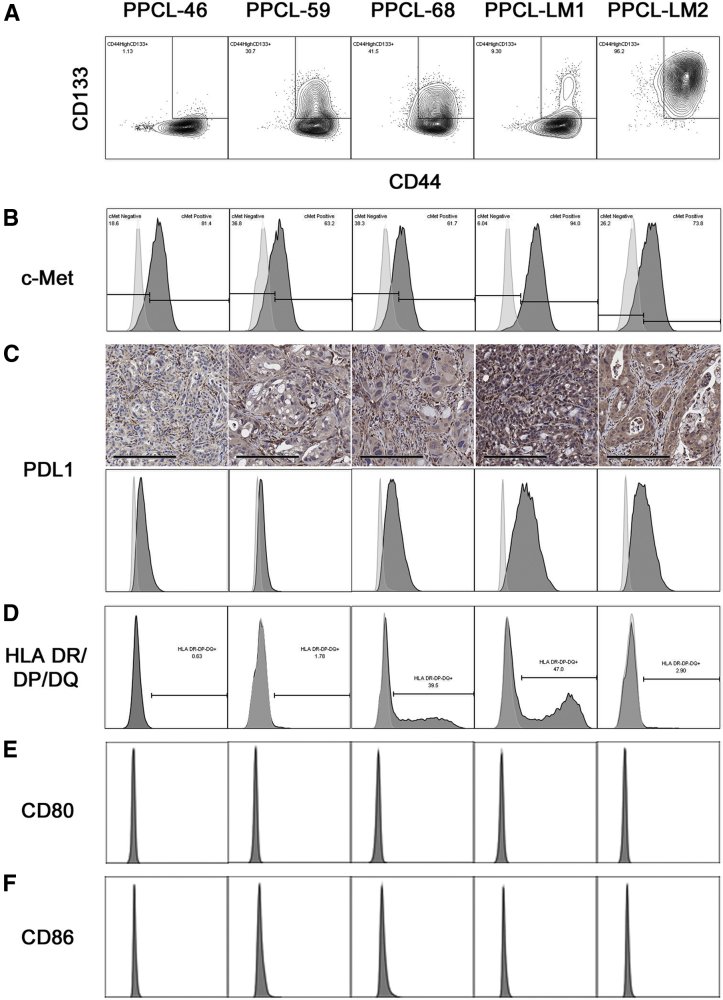
Commercially available, highly passaged pancreatic cancer (PC) cell lines are of limited translational value. Attempts to overcome this limitation have primarily consisted of cancer cell isolation and culture directly from human PC specimens. However, these techniques are associated with exceedingly low success rates. Here, we demonstrate a highly reproducible culture of primary PC cell lines (PPCLs) from patient-derived xenografts, which preserve, in part, the intratumoral heterogeneity known to exist in PC. PPCL expansion from patient-derived xenografts was successful in 100% of attempts (5 of 5). Phenotypic analysis was evaluated with flow cytometry, immunofluorescence microscopy, and short tandem repeat profiling. Importantly, tumorigenicity of PPCLs expanded from patient-derived xenografts was assessed by subcutaneous injection into nonobese diabeteic.Cg-Prkdc(scid)Il2rg(tm1Wjl)/SzJ mice. Morphologically, subcutaneous injection of all PPCLs into mice yielded tumors with similar characteristics to the parent xenograft. PPCLs uniformly expressed class I human leukocyte antigen, epithelial cell adhesion molecule, and cytokeratin-19. Heterogeneity within each PPCL persisted in culture for the frequency of cells expressing the cancer stem cell markers CD44, CD133, and c-Met and the immunologic markers human leukocyte antigen class II and programmed death ligand 1. This work therefore presents a reliable method for the rapid expansion of primary human PC cells and, thereby, provides a platform for translational investigation and, importantly, potential personalized therapeutic approaches.
Copyright © 2016 American Society for Investigative Pathology. Published by Elsevier Inc. All rights reserved.
Figures
References
-
- Rahib L., Smith B.D., Aizenberg R., Rosenzweig A.B., Fleshman J.M., Matrisian L.M. Projecting cancer incidence and deaths to 2030: the unexpected burden of thyroid, liver, and pancreas cancers in the United States. Cancer Res. 2014;74:2913–2921. - PubMed
-
- Koay E.J., Truty M.J., Cristini V., Thomas R.M., Chen R., Chatterjee D., Kang Y., Bhosale P.R., Tamm E.P., Crane C.H., Javle M., Katz M.H., Gottumukkala V.N., Rozner M.A., Shen H., Lee J.E., Wang H., Chen Y., Plunkett W., Abbruzzese J.L., Wolff R.A., Varadhachary G.R., Ferrari M., Fleming J.B. Transport properties of pancreatic cancer describe gemcitabine delivery and response. J Clin Invest. 2014;124:1525–1536. - PMC - PubMed
-
- Moore M.J., Goldstein D., Hamm J., Figer A., Hecht J.R., Gallinger S., Au H.J., Murawa P., Walde D., Wolff R.A., Campos D., Lim R., Ding K., Clark G., Voskoglou-Nomikos T., Ptasynski M., Parulekar W. Erlotinib plus gemcitabine compared with gemcitabine alone in patients with advanced pancreatic cancer: a phase III trial of the National Cancer Institute of Canada Clinical Trials Group. J Clin Oncol. 2007;25:1960–1966. - PubMed
-
- Baxter N.N., Whitson B.A., Tuttle T.M. Trends in the treatment and outcome of pancreatic cancer in the United States. Ann Surg Oncol. 2007;14:1320–1326. - PubMed
-
- Yunis A.A., Arimura G.K., Russin D.J. Human pancreatic carcinoma (MIA PaCa-2) in continuous culture: sensitivity to asparaginase. Int J Cancer. 1977;19:128–135. - PubMed
Publication types
MeSH terms
Grants and funding
LinkOut - more resources
Full Text Sources
Other Literature Sources
Medical
Research Materials
Miscellaneous
