


Efficacy of omega-3 highly unsaturated fatty acids in the treatment of depression
- PMID: 27103682
- PMCID: PMC9406129
- DOI: 10.1192/bjp.bp.114.160242
Efficacy of omega-3 highly unsaturated fatty acids in the treatment of depression
Abstract
Background: Trials evaluating efficacy of omega-3 highly unsaturated fatty acids (HUFAs) in major depressive disorder report discrepant findings.
Aims: To establish the reasons underlying inconsistent findings among randomised controlled trials (RCTs) of omega-3 HUFAs for depression and to assess implications for further trials.
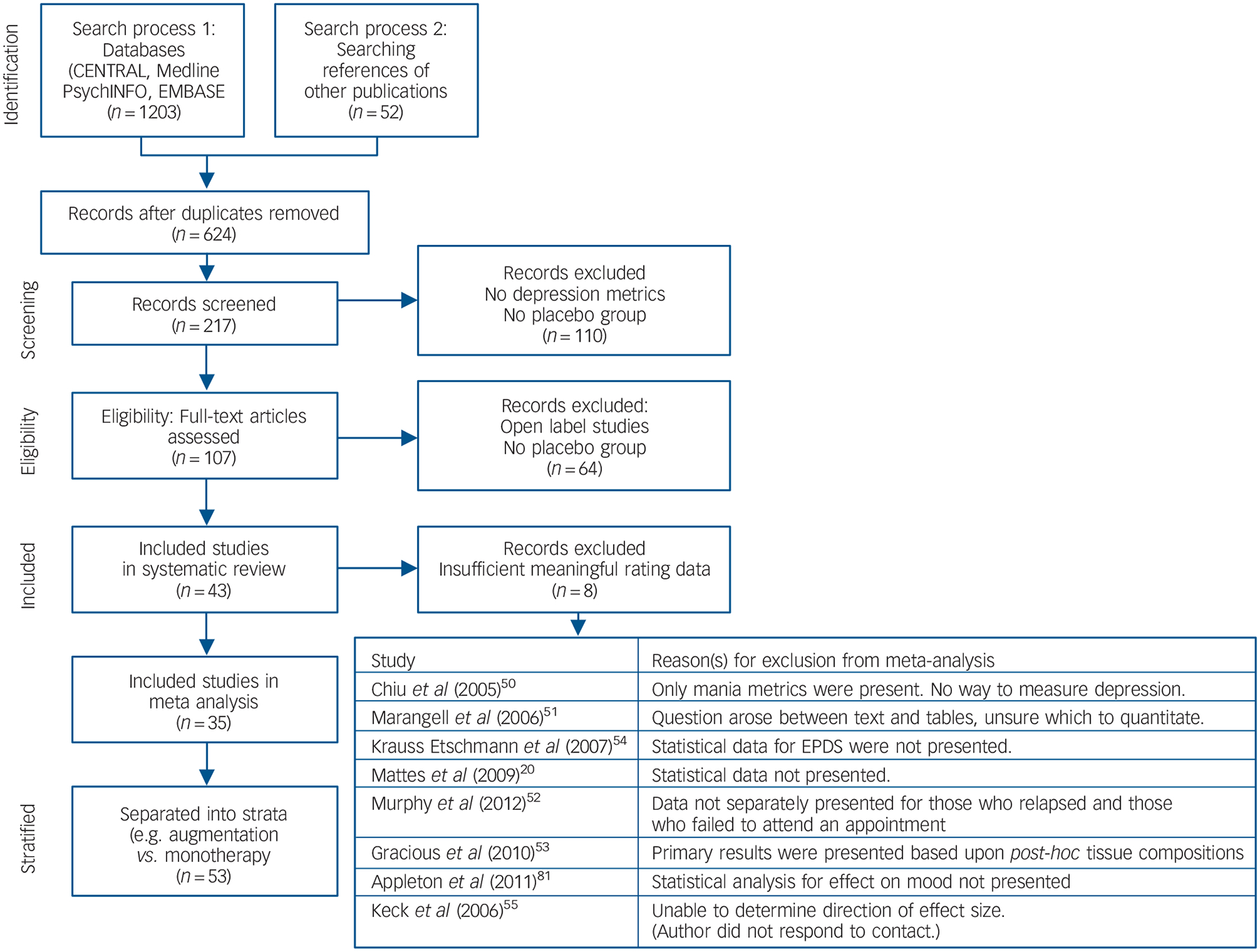
Method: A systematic bibliographic search of double-blind RCTs was conducted between January 1980 and July 2014 and an exploratory hypothesis-testing meta-analysis performed in 35 RCTs including 6665 participants receiving omega-3 HUFAs and 4373 participants receiving placebo.
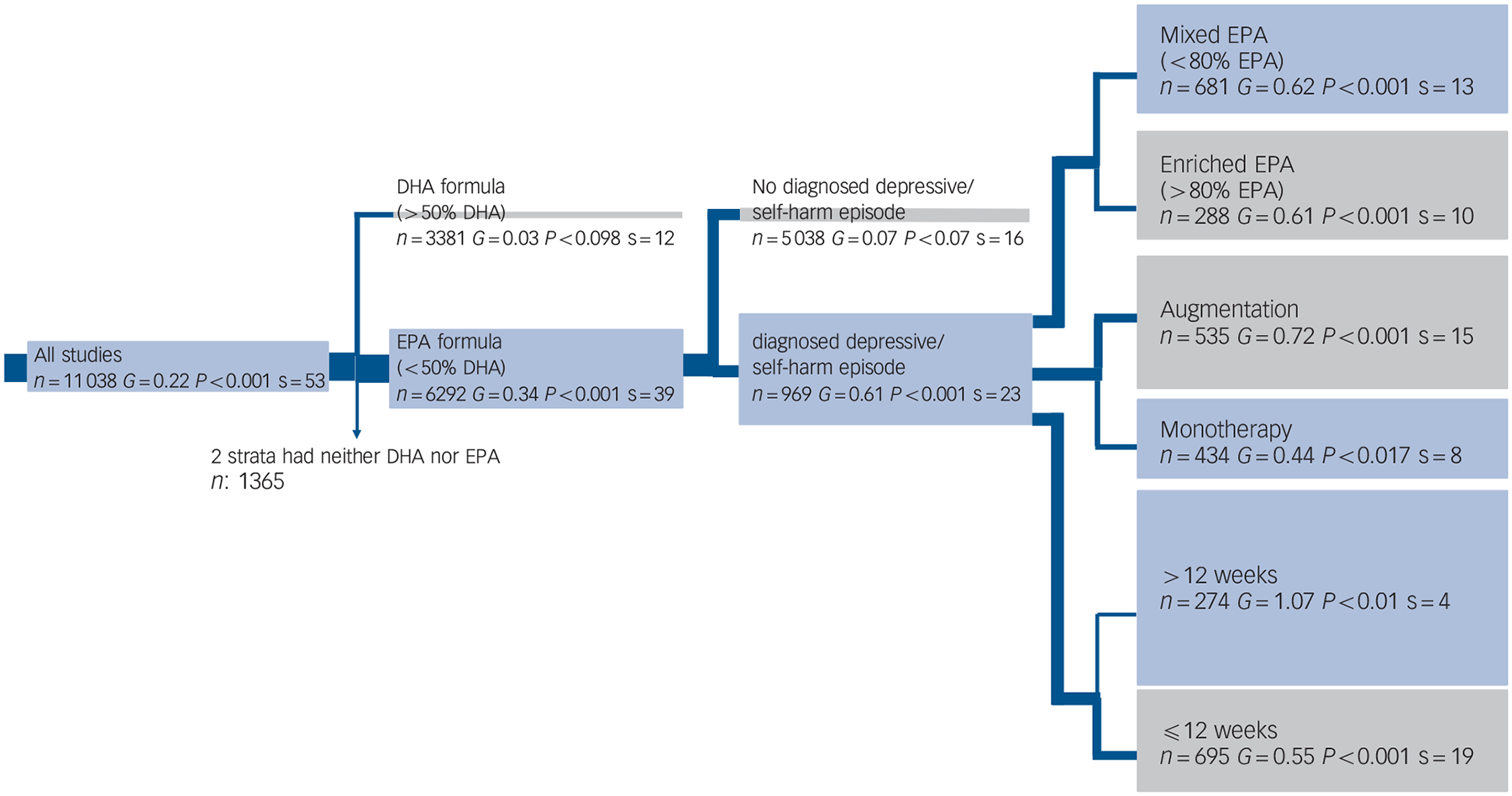
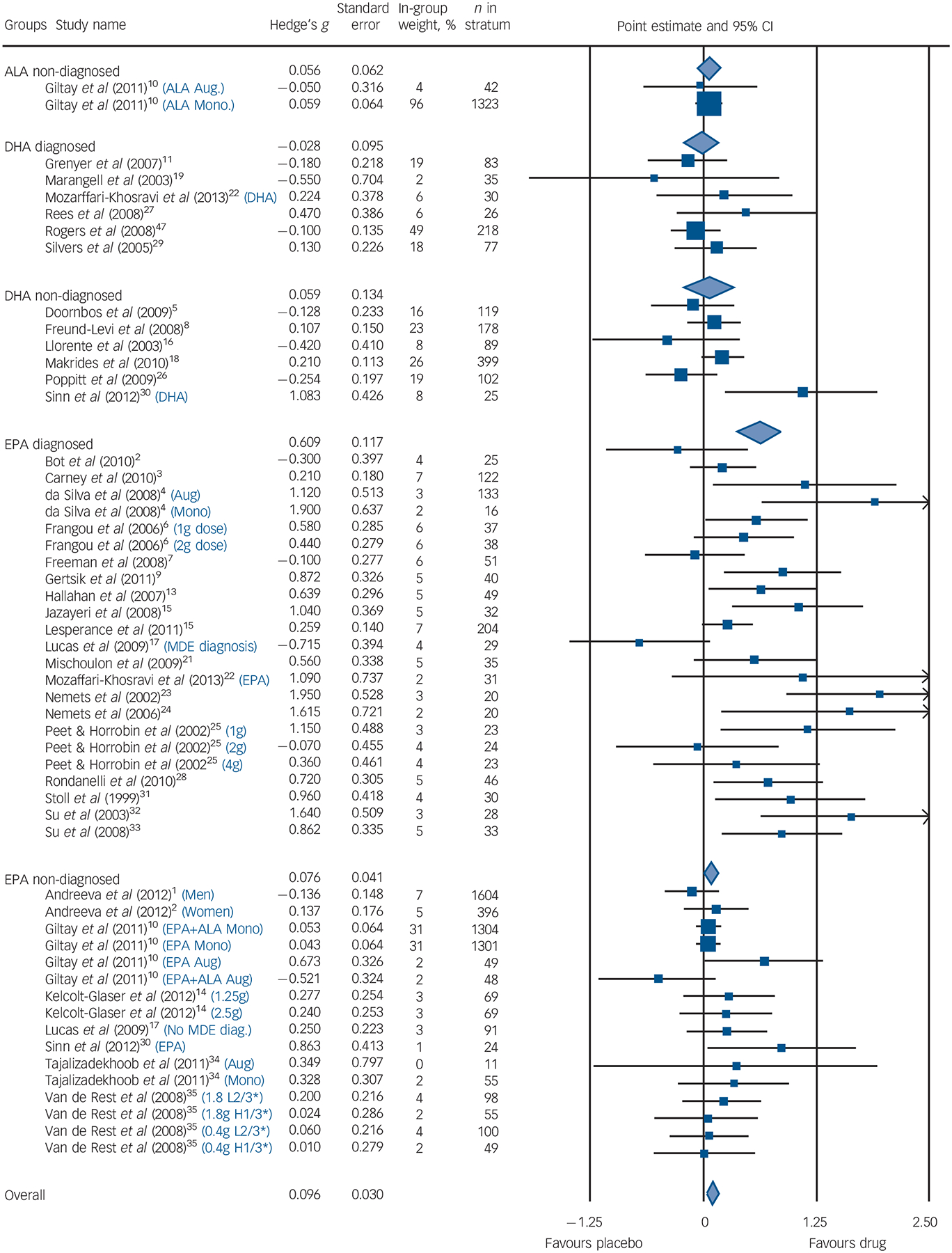
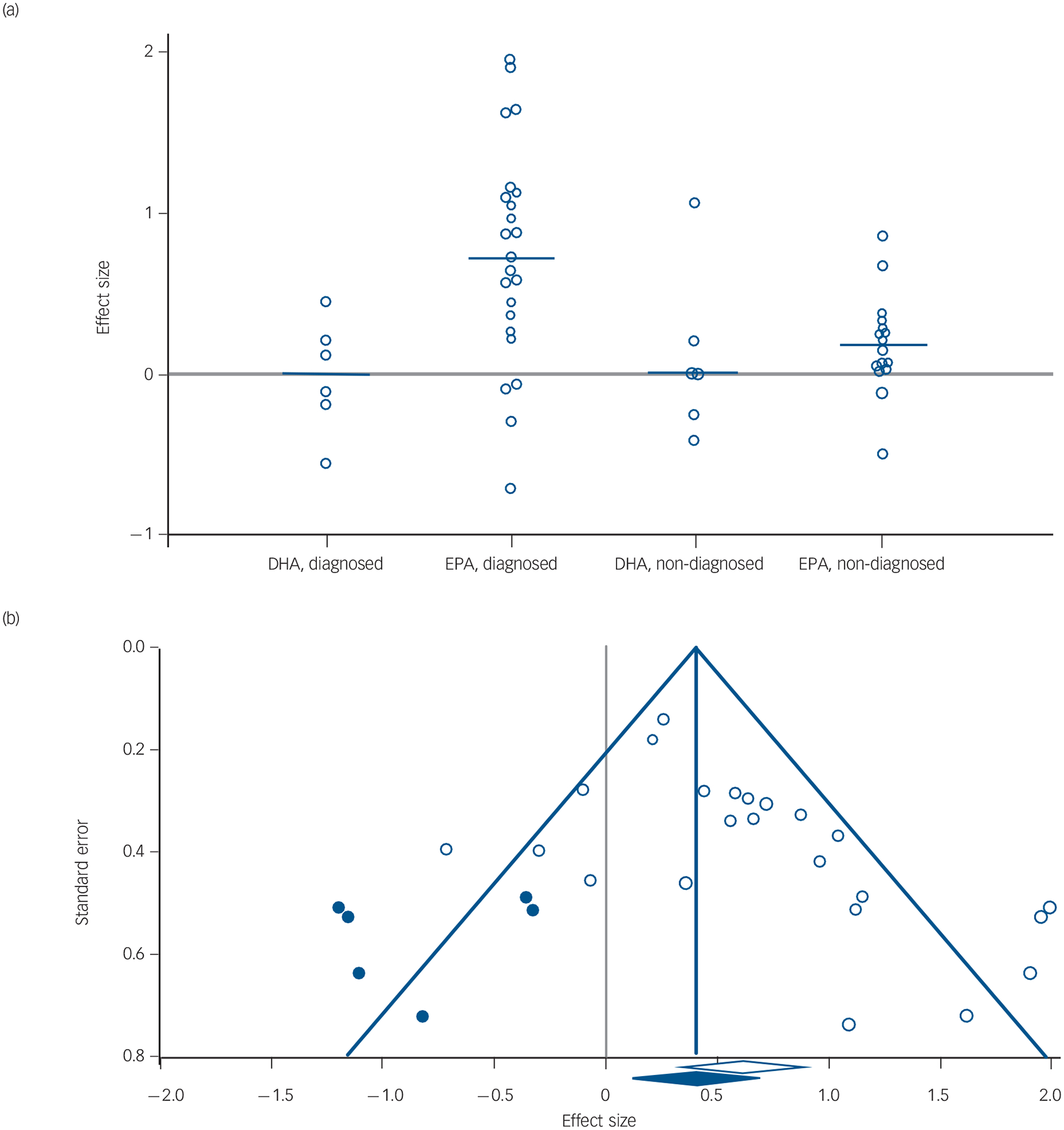
Results: Among participants with diagnosed depression, eicosapentaenoic acid (EPA)-predominant formulations (>50% EPA) demonstrated clinical benefits compared with placebo (Hedge's G = 0.61, P<0.001) whereas docosahexaenoic acid (DHA)-predominant formulations (>50% DHA) did not. EPA failed to prevent depressive symptoms among populations not diagnosed for depression.
Conclusions: Further RCTs should be conducted on study populations with diagnosed or clinically significant depression of adequate duration using EPA-predominant omega-3 HUFA formulations.
© The Royal College of Psychiatrists 2016.
Conflict of interest statement
Declaration of interest
None.
Figures
References
-
- Andreeva VA, Galan P, Torres M, Julia C, Hercberg S, Kesse-Guyot E. Supplementation with B vitamins or n-3 fatty acids and depressive symptoms in cardiovascular disease survivors: ancillary findings from the SUpplementation with FOLate, vitamins B-6 and B-12 and/or OMega-3 fatty acids (SU.FOL.OM3) randomised trial. Am J Clin Nutr 2012; 96: 208–14. - PubMed
-
- Bot M, Pouwer F, Assies J, Jansen EH, Diamant M, Snoek FJ, et al. Eicosapentaenoic acid as an add-on to antidepressant medication for comorbid major depression in patients with diabetes mellitus: a randomized, double-blind placebo-controlled study. J Affect Disord 2010; 126: 282–6. - PubMed
-
- da Silva TM, Munhoz RP, Alvarez C, Naliwaiko K, Kiss A, Andreatini R, et al. Depression in Parkinson’s disease: a double-blind, randomized, placebo-controlled pilot study of omega-3 fatty-acid supplementation. J Affect Disord 2008; 111: 351–9. - PubMed
-
- Doornbos B, van Goor SA, Dijck-Brouwer DA, Schaafsma A, Korf J, Muskiet FA. Supplementation of a low dose of DHA or DHA+AA does not prevent peripartum depressive symptoms in a small population based sample. Prog Neuropsychopharmacol Biol Psychiatry 2009; 33: 49–52. - PubMed
Publication types
MeSH terms
Substances
Grants and funding
LinkOut - more resources
Full Text Sources
Other Literature Sources
Medical
Research Materials
