MET expression during prostate cancer progression
- PMID: 27105539
- PMCID: PMC5058736
- DOI: 10.18632/oncotarget.8829
MET expression during prostate cancer progression
Abstract
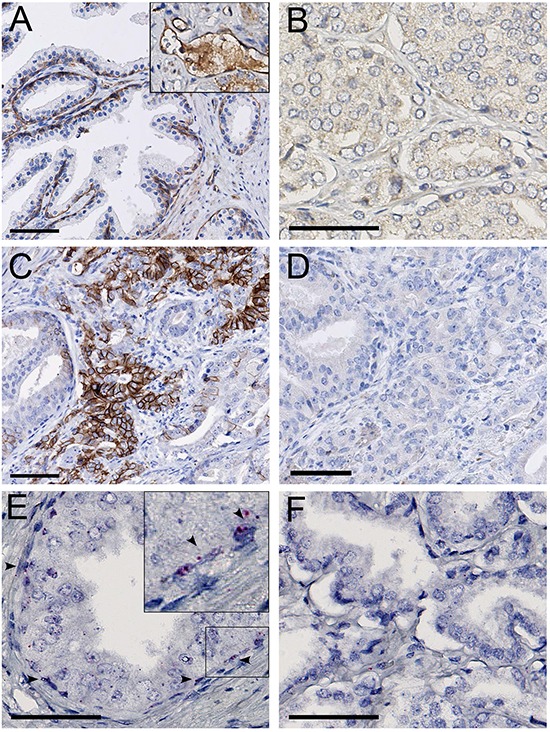
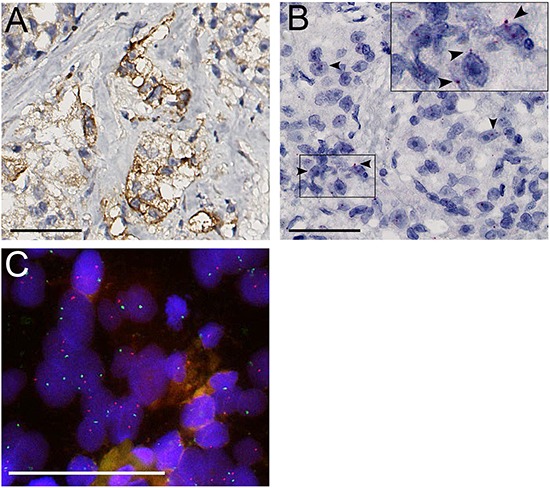
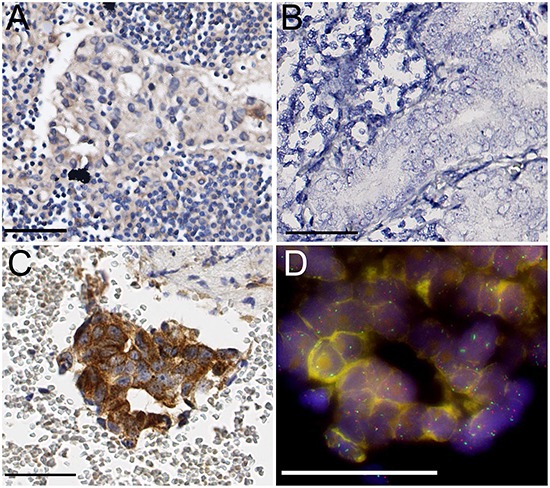
Tyrosine-kinase inhibitors of the hepatocyte growth factor receptor MET are under investigation for the treatment of hormone-refractory prostate cancer (HRPC) metastasis. Analysis of MET protein expression and genetic alterations might contribute to therapeutic stratification of prostate cancer patients. Our objective was to investigate MET on protein, DNA and RNA level in clinical prostate cancer at various stages of progression. Expression of MET was analyzed in hormone-naive primary prostate cancers (N=481), lymph node (N=40) and bone (N=8) metastases, as well as HRPC (N=54) and bone metastases (N=15). MET protein expression was analyzed by immunohistochemistry (D1C2 C-terminal antibody). MET mRNA levels and MET DNA copy numbers were determined by in situ hybridization. None of the hormone-naive primary prostate cancer or lymph node metastases demonstrated MET protein or mRNA expression. In contrast, MET protein was expressed in 12/52 (23%) evaluable HRPC resections. RNA in situ demonstrated cytoplasmic signals in 14/54 (26%) of the HRPC patients, and was associated with MET protein expression (p=0.025, χ2), in absence of MET amplification or polysomy. MET protein expression was present in 7/8 (88%) hormone-naive and 10/15 (67%) HRPC bone metastases, without association of HRPC (p=0.37; χ2), with MET polysomy in 8/13 (61%) evaluable cases. In conclusion, MET was almost exclusively expressed in HRPC and prostate cancer bone metastasis, but was not related to MET amplification or polysomy. Evaluation of MET status could be relevant for therapeutic stratification of late stage prostate cancer.
Keywords: MET; progression; prostate cancer; protein.
Conflict of interest statement
The authors have no conflict of interest.
Figures
References
-
- Zarnegar R, DeFrances MC. Expression of HGF-SF in normal and malignant human tissues. EXS. 1993;65:181–199. - PubMed
-
- Hurle RA, Davies G, Parr C, Mason MD, Jenkins SA, Kynaston HG, Jiang WG. Hepatocyte growth factor/scatter factor and prostate cancer: a review. Histol Histopathol. 2005;20:1339–1349. - PubMed
-
- Camp RL, Rimm EB, Rimm DL. Met expression is associated with poor outcome in patients with axillary lymph node negative breast carcinoma. Cancer. 1999;86:2259–2265. - PubMed
MeSH terms
Substances
LinkOut - more resources
Full Text Sources
Other Literature Sources
Medical
Miscellaneous